
 +1 844-445-5767
 +971 56-848-5757
 +91 921-208-0630
For Business & Service Inquiries
Sales Team
Project quotes, partnerships, implementation
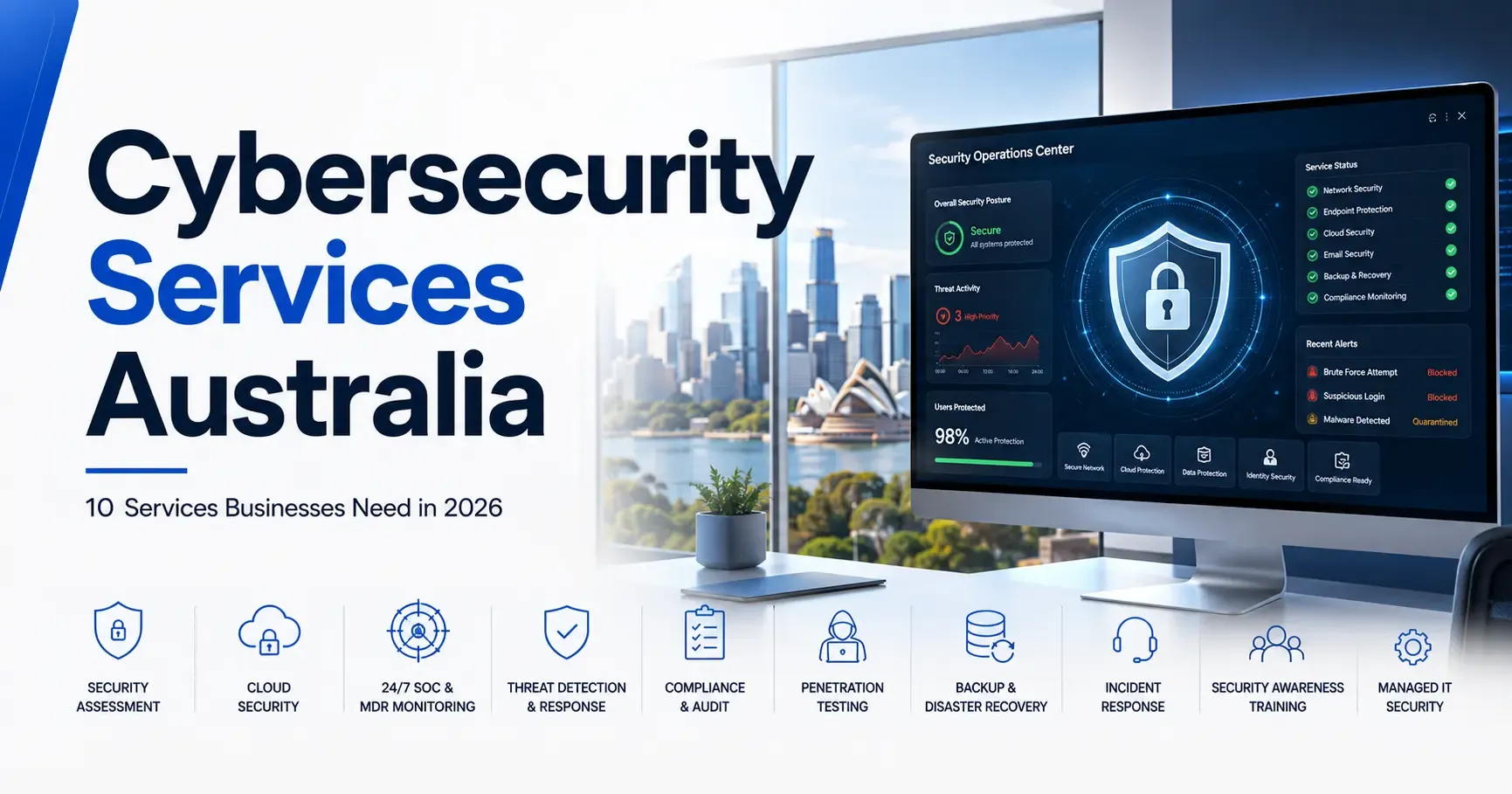
Australian businesses in 2026 need ten core cybersecurity services: a cyber risk assessment, compliance support, Essential Eight implementation, managed detection and response, cloud security, penetration testing, incident response planning, security awareness training, backup and disaster recovery, and virtual CISO services. Together, these protect your systems, data, and customers from the most common attacks.
Cybersecurity is no longer just an IT problem. It's a business survival issue. With more cloud adoption, remote work, digital payments, and stricter compliance expectations, the risk has shifted from "if" to "when."
This guide walks you through the real threats, the services that matter, penetration testing basics, compliance requirements, and what cybersecurity actually costs in Australia. Let's start with why this matters more than ever.
Cyberattacks against Australian businesses keep climbing. Attackers have gone professional, and they automate much of their work. That means even a small accounting firm or online store can be hit by the same tools used against large companies.
Small and medium businesses (SMEs) are often easy targets. Many run on tight budgets, lean IT teams, and outdated tools. Attackers know this, so they look for the weakest door rather than the biggest prize.
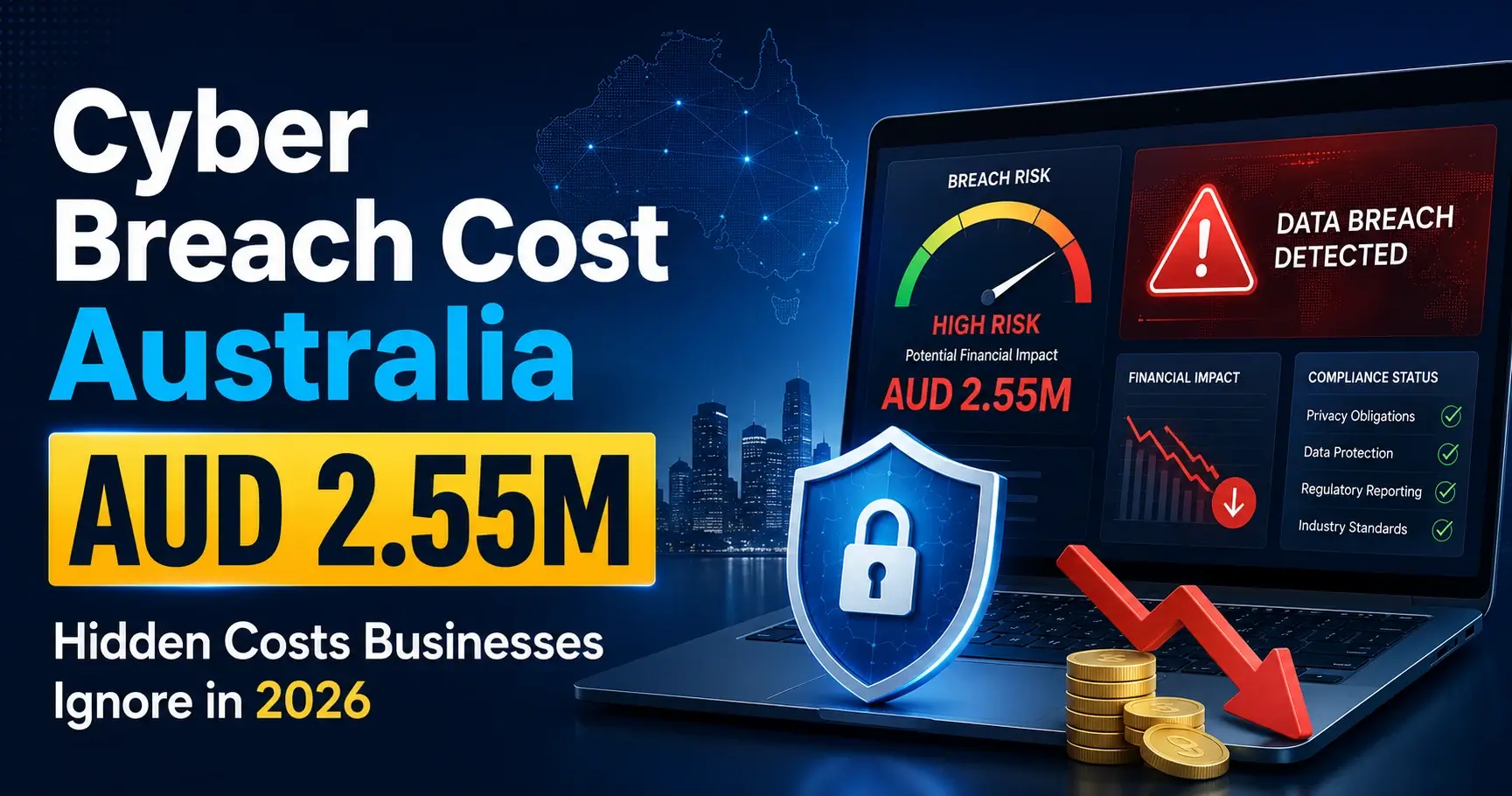
The cybersecurity breach cost in Australia can add up fast because one incident may create both direct and hidden business losses:
Antivirus software alone won't cut it anymore. Modern businesses need practical, layered cybersecurity services in Australia that cover prevention, monitoring, response, and recovery.
Quick takeaway: Treat cybersecurity as a core business cost, not an optional IT extra.
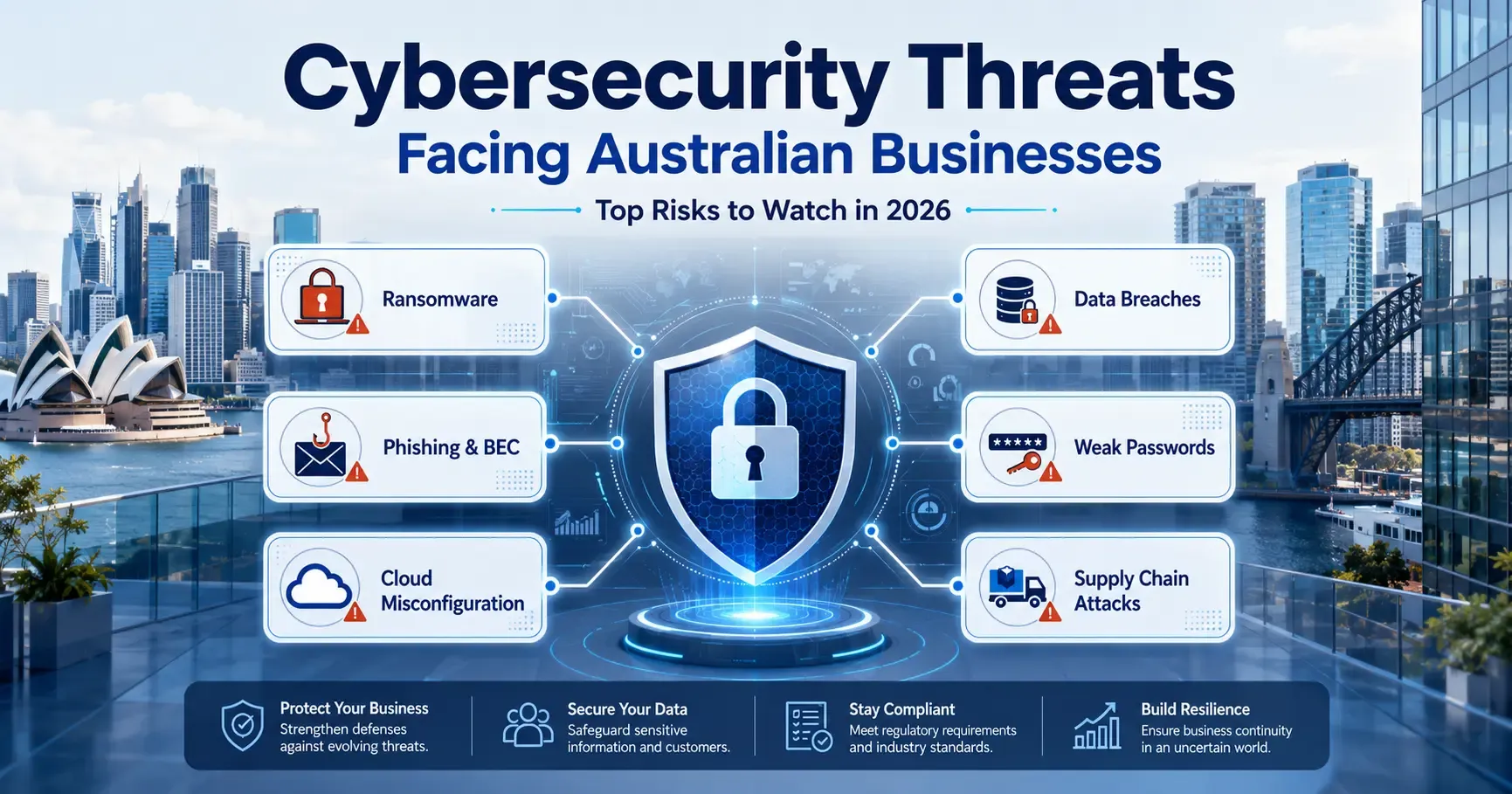
Knowing your enemy helps you spend wisely. Here are the most common cybersecurity threats facing Australian businesses right now.
Ransomware locks your files or entire systems, then demands payment to unlock them. A logistics firm might lose access to its dispatch software, or a clinic might lose patient records overnight.
Even if you pay, there's no guarantee you'll get your data back. Strong ransomware protection plus tested backups is your best defence.
Phishing uses fake emails to trick staff into clicking bad links or handing over passwords. Business email compromise (BEC) goes further.
Common examples include:
These scams cost Australian businesses millions each year, and they rely on human error rather than fancy hacking.
Most businesses now run on platforms like Microsoft 365, AWS, or Google Cloud. A single misconfigured setting can expose sensitive files to the public internet.
Common mistakes include open cloud storage, weak access permissions, and SaaS tools shared too widely. A regular cloud security review catches these before attackers do.
A data breach exposes information you're meant to protect, such as customer details, employee records, financial data, or confidential business files.
Beyond the cleanup cost, you may face mandatory reporting and lost contracts. Good data protection controls reduce both the chance and the impact.
Reused or simple passwords are still one of the easiest ways in. So is giving every staff member admin access "just in case."
Three controls make a big difference:
You can do everything right and still be hit through a supplier. If your software vendor, IT provider, or outsourced partner is breached, attackers can reach you too.
This is why vendor risk management matters. Check the security of the partners who can access your systems or data.
Quick takeaway: Most attacks exploit people, passwords, cloud settings, or trusted third parties—not exotic hacking. Fix the basics first.
Cybersecurity services are professional services that help your business protect its systems, networks, cloud platforms, applications, data, users, and daily operations from cyber threats.
They usually cover six areas:
The best cyber security companies Australia-wide focus on your business risk, not just technical reports. A good provider explains what matters in plain language and helps you decide where to spend first.
Here are the ten services that deliver the most protection for the money.
A cyber risk assessment finds the gaps in your defences before attackers do. It reviews your systems, networks, cloud tools, users, policies, and processes.
The result is a clear, prioritised list of what to fix first. This is the smartest place to start because it stops you spending on tools you don't need.
Cybersecurity compliance services help you meet security, privacy, customer, and industry requirements without the guesswork. They cover Essential Eight alignment, ISO 27001 readiness, audit preparation, policy creation, and security documentation.
These services are especially important for healthcare, fintech, SaaS, ecommerce, logistics, and professional services—any business handling sensitive data or chasing enterprise contracts.
The Essential Eight is Australia's recommended cybersecurity baseline, designed by the Australian Cyber Security Centre. It includes practical controls like:
Implementing these controls blocks a large share of common attacks and is often expected during compliance reviews.
MDR provides ongoing threat monitoring and rapid response, usually 24/7. It's ideal for businesses without a full internal security team.
If something suspicious happens at 2am, MDR specialists spot it and act before it becomes a major breach. Think of it as a security team on call without the full salary cost.
Cloud security services protect platforms like AWS, Azure, Google Cloud, Microsoft 365, SaaS applications, cloud storage, and remote access environments. They typically cover:
If most of your business operations run in the cloud, cloud security services are essential for maintaining visibility, reducing risk, and protecting sensitive data.
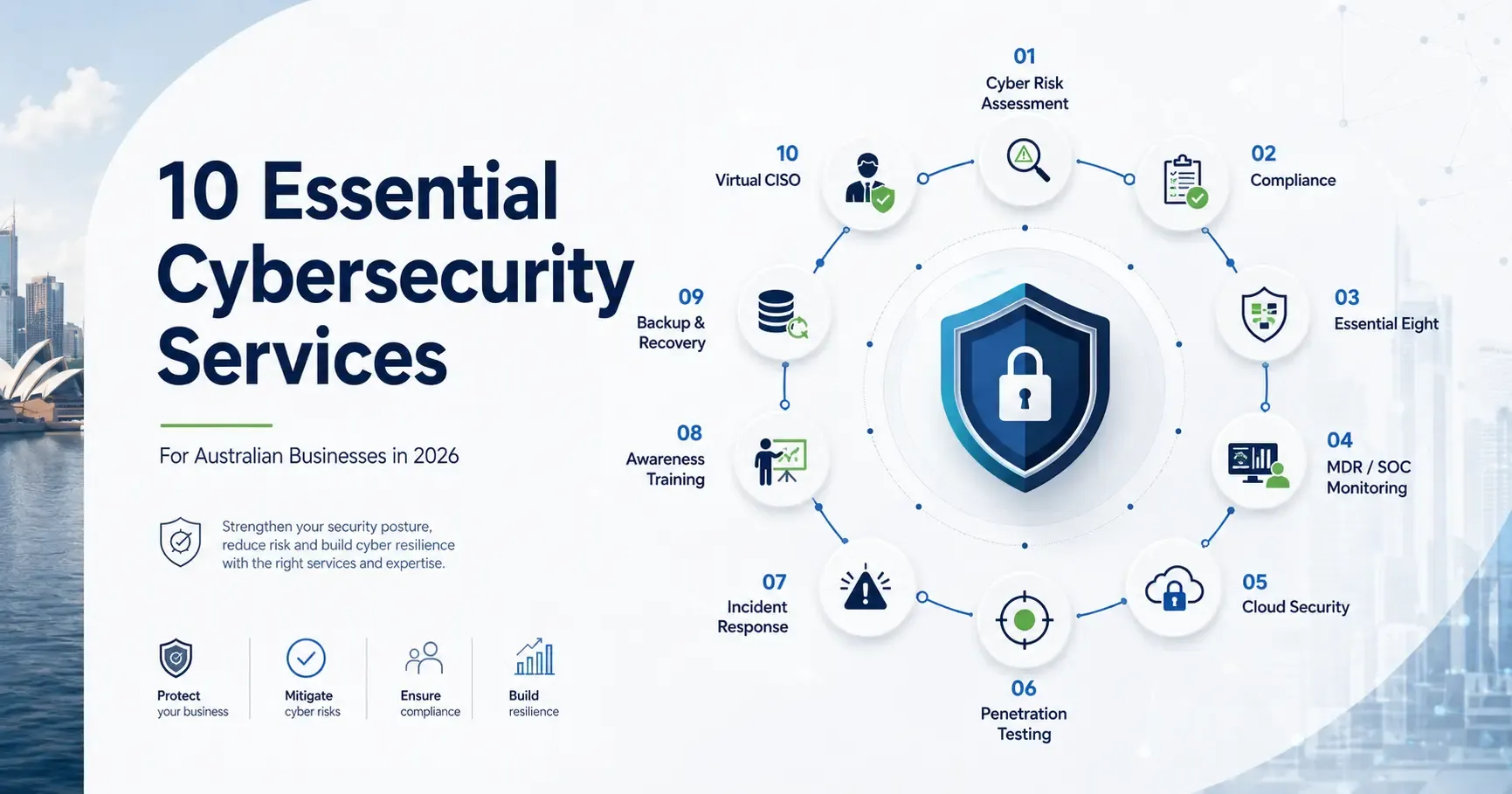
Penetration testing checks your systems the same way a real attacker would. It hunts for vulnerabilities in your websites, apps, APIs, cloud systems, and networks.
The goal is simple: find and fix weaknesses before criminals exploit them. For a deeper breakdown of testing scope, stages, timelines, and reports, read our penetration testing guide for Australian businesses.
An incident response plan is your step-by-step playbook for when an attack happens. A solid plan covers:
Having this ready turns chaos into a controlled process.
Most attacks start with a person clicking the wrong thing. Security awareness training teaches your team to spot phishing, scams, weak passwords, and unsafe data handling.
It's one of the cheapest ways to cut your risk, because it reduces human-error attacks across the whole business.
Backups protect your business continuity after ransomware, hardware failure, or accidental deletion. Strong setups include:
A backup you've never tested is just a hope. Testing proves you can actually restore.
A virtual CISO gives you expert cybersecurity leadership without hiring a full-time executive. They help with your security roadmap, budget, compliance, board reporting, and vendor risk.
This is one of the most affordable cybersecurity services in Australia for growing companies that need strategy but can't justify a six-figure hire yet.
Quick takeaway: Start with a risk assessment, then layer in MFA, backups, training, and monitoring as your budget allows.
Penetration testing comes up a lot during compliance and enterprise deals. Here's what you need to know.
Penetration testing is a controlled, ethical security test used to find vulnerabilities before attackers do. A skilled tester safely attempts to break into your systems, then reports exactly what they found and how to fix it.
It's like hiring someone to test your locks before a burglar does.
Different parts of your business need different tests:
Good times to test include:
A useful report goes beyond a list of problems. Look for:
Quick takeaway: A good pen test report should help your IT team act, not just tick a box.
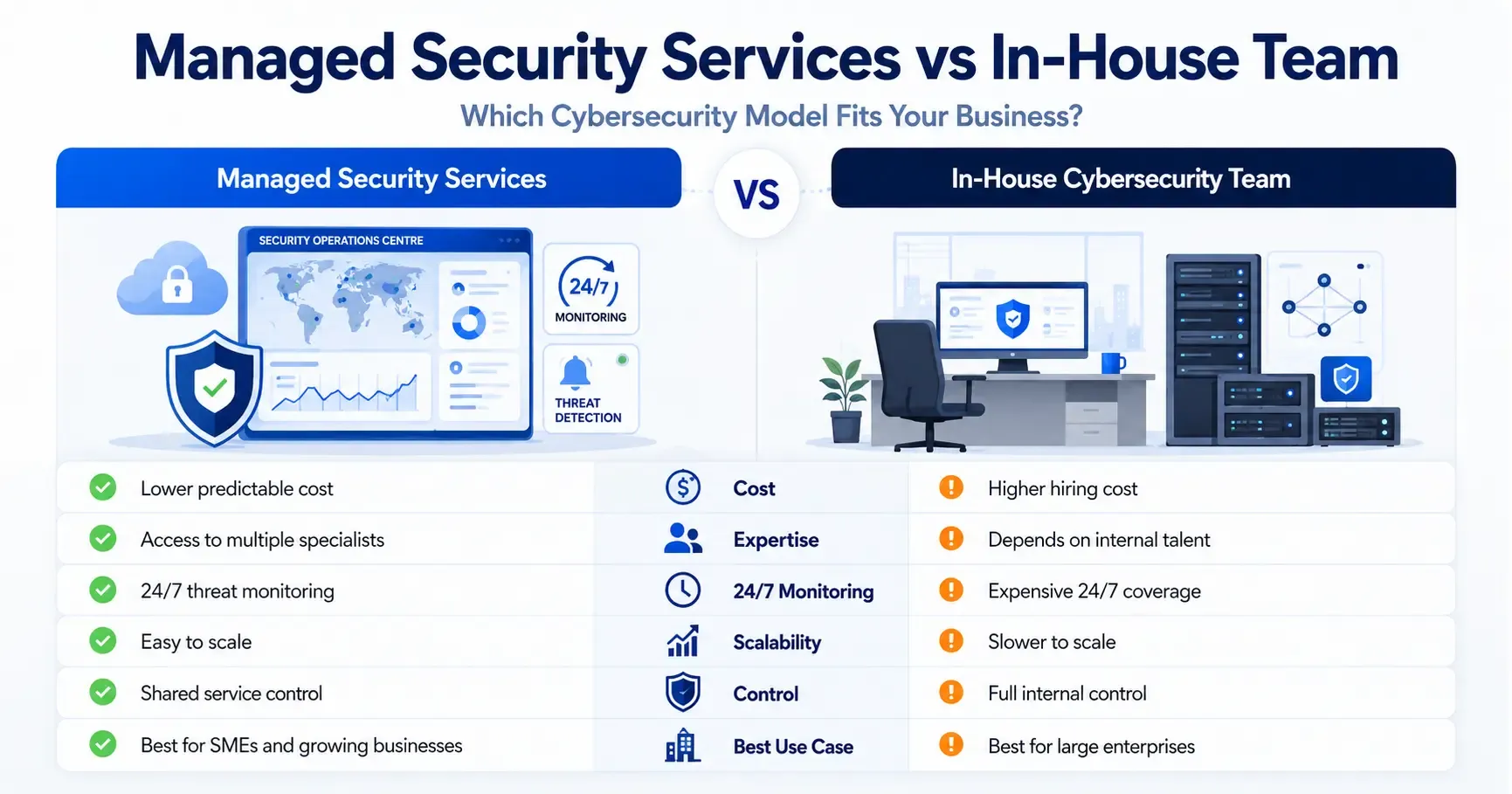
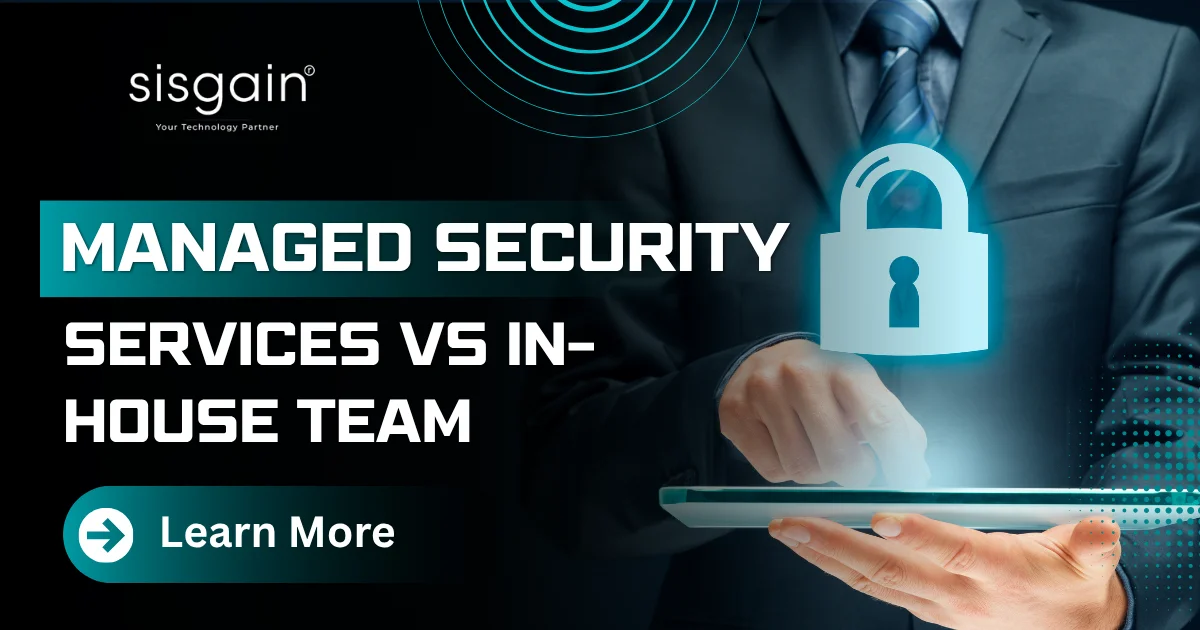
Should you outsource security or build your own team? Our managed security services vs in-house cybersecurity team comparison explains the cost, coverage, and control differences.
|
Factor |
Managed Security Services |
In-House Security Team |
|---|---|---|
|
Cost |
Lower and predictable |
Higher salary and hiring cost |
|
Expertise |
Access to multiple specialists |
Depends on hired employees |
|
24/7 Monitoring |
Usually available |
Expensive to maintain |
|
Scalability |
Easier to scale |
Slower to expand |
|
Control |
Shared with provider |
Full internal control |
|
Best For |
SMEs and growing businesses |
Large enterprises with complex needs |
For most SMEs, managed security services win on cost and expertise. You get specialists and round-the-clock threat monitoring without paying several full-time salaries.
An in-house team makes sense for large enterprises with bigger budgets, complex environments, and strict control needs. Many businesses also use a hybrid model: a small internal team handles day-to-day work while a provider covers monitoring, testing, and specialist skills.
Quick takeaway: If you don't have the budget for 24/7 in-house coverage, managed services are usually the smarter choice.
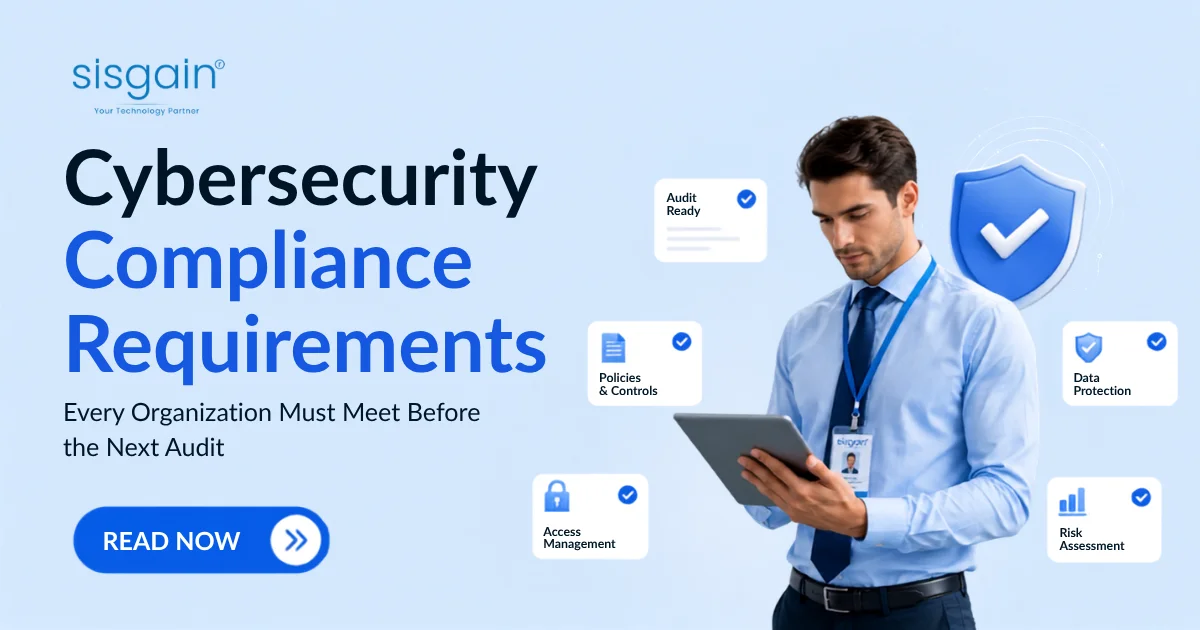
Cybersecurity compliance requirements simply mean meeting the security rules, audit expectations, and data protection obligations that apply to your business. Those rules depend on your industry, the data you hold, and what your customers expect.
Businesses handling personal data, healthcare data, payment data, or enterprise client data need stronger controls and clearer evidence.
Key areas to plan for:
Cybersecurity compliance services pull all of this together. They reduce your risk and prepare you for audits, enterprise contracts, and regulatory expectations, so a missed checklist item doesn't cost you a deal.
Quick takeaway: Compliance readiness often unlocks bigger contracts, not just lower risk.
There's no single price tag for cybersecurity. Cost depends on your needs and risk level.
Several factors shape your price:
A 10-person consultancy with simple needs will pay far less than a fintech handling payment data across multiple cloud platforms.
You don't need to buy everything at once. Affordable cybersecurity services in Australia let you build protection in stages. A sensible starting order:
This sequence covers the most common attacks first, at the lowest cost.
Steer clear of these common mistakes:
Quick takeaway: Spend on a plan first, then tools. Strategy saves more money than discounts.
Not all providers are equal. Before you sign, check that a provider offers:
The best cybersecurity companies Australia offers will talk about your business goals, not just technical jargon. If a provider can't explain what they'll do and why, keep looking.
Quick takeaway: Choose a partner who reduces your risk and explains it clearly, not one who only sells products.
Your industry shapes where to start. Here's a practical guide.
|
Business Type |
Prioritise First |
|---|---|
|
Small Business |
Risk assessment, MFA, backup, awareness training, cloud security review |
|
Healthcare |
Compliance services, data protection, MDR, incident response, backup and recovery |
|
Ecommerce |
Penetration testing, payment security, cloud security, fraud prevention, backup |
|
SaaS |
API penetration testing, cloud security, compliance readiness, MDR, secure development review |
|
Logistics |
Endpoint security, access control, backup, incident response, vendor risk management |
For small businesses, the basics deliver the biggest wins. A risk assessment, MFA, backups, training, and a cloud review cover most everyday threats.
For healthcare businesses, patient data and privacy come first. Compliance services, data protection, MDR, incident response, and tested backups protect both records and reputation.
For e-commerce businesses, money and customer data are the targets. Penetration testing, payment security, cloud security, fraud prevention, and backups keep your store trading safely.
For SaaS companies, your platform is the product. API penetration testing, cloud security, compliance readiness, MDR, and secure development reviews protect both your code and your clients.
For logistics companies, uptime and connected systems matter most. Endpoint security, access control, backups, incident response, and vendor risk management keep operations moving.
Australian businesses in 2026 need practical, risk-based cybersecurity, not just software. The services that matter most are risk assessment, compliance, Essential Eight, managed detection and response, cloud security, penetration testing, incident response, awareness training, backup, and virtual CISO support.
Don't wait for a cyberattack to act. The cheapest time to protect your business is before an incident, not during one. The right cybersecurity partner can help you protect data, reduce downtime, improve compliance, and build lasting customer trust.
If your business is looking for reliable cybersecurity services in Australia, our experts can help you assess risks, improve compliance, secure cloud systems, and build a practical cybersecurity roadmap.




Start Build Your
Next Digital Solution?
Let’s build scalable, future-ready digital solutions tailored to your business goals. Connect with our experienced technology consultants to discuss your vision, strategy, and growth opportunities — with zero obligation and complete transparency.
Get a free consultation and cost estimate for your digital solution
Our expert will contact you within 24 hours. Check your email for confirmation.
Partner with SISGAIN experts to build secure, scalable AI-powered IT Solutions that transform your business operations.









DUQE FREEZONE Quarter Deck, Queen Elizabeth 2, Mina Rashid, Dubai, UAE

100 Consilium Pl Suite 200, Scarborough, ON M1H 3E3, Canada

C-109, Sector 2, Noida, Uttar Pradesh 201301 India
Project quotes, partnerships, implementation
Open roles, referrals, campus hiring