
 +1 844-445-5767
 +971 56-848-5757
 +91 921-208-0630
For Business & Service Inquiries
Sales Team
Project quotes, partnerships, implementation
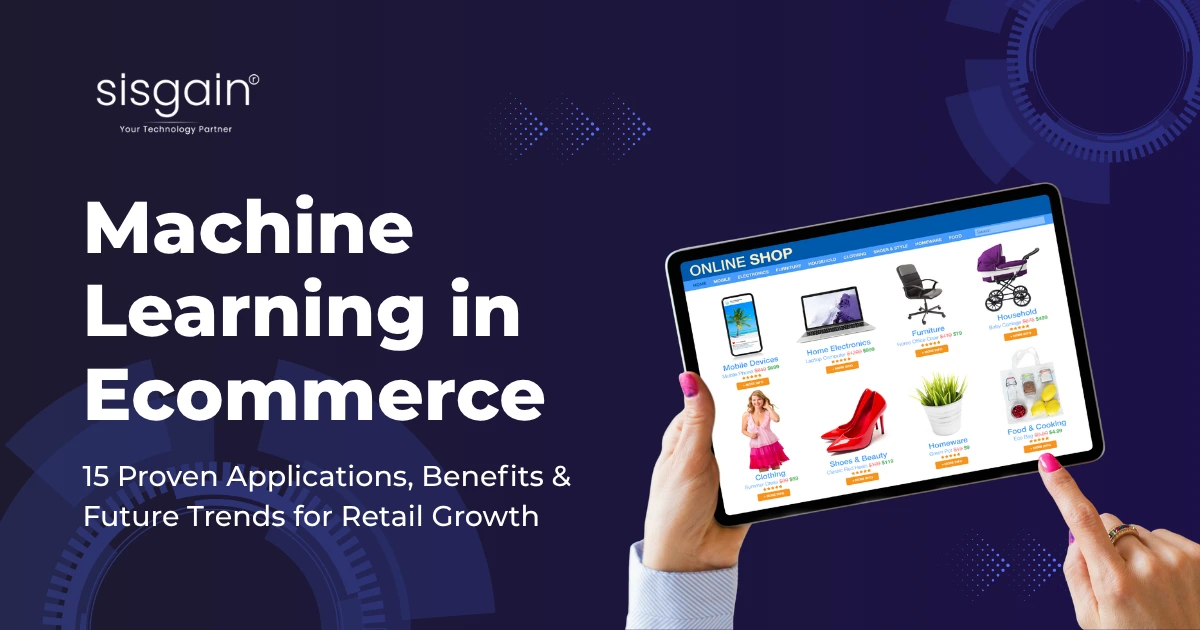
Machine learning in ecommerce is no longer optional for retailers who want to compete on speed, personalization, and margin. If you run an online store or lead technology at a retail brand, you are already competing against companies that use machine learning to predict demand, set prices, and recommend products in real time. This guide explains what machine learning for ecommerce is, why it matters, and the 15 applications driving measurable revenue growth. You will see real examples from Amazon, Walmart, Target, and the Shopify ecosystem, plus a clear build-versus-buy framework. By the end, you will know which ecommerce machine learning solutions fit your business and how to start. The global machine learning market reached $93.95 billion in 2025 and is projected to climb to $126.91 billion in 2026 (Precedence Research). Retail is one of the biggest drivers of that growth. The takeaway is simple: machine learning is now table stakes for serious online retailers. Key Takeaways Machine learning in ecommerce uses data to predict customer behavior, automate decisions, and personalize shopping at scale. The biggest wins come from recommendation engines, dynamic pricing, demand forecasting, and fraud detection. Amazon, Walmart, Target, and Shopify merchants all use machine learning models for ecommerce to grow revenue and cut costs. You can buy ready-made tools or build custom machine learning ecommerce solutions—your choice depends on budget, data, and how unique your needs are. Start with one high-impact use case, measure results, then expand. What Is Machine Learning in Ecommerce? Machine learning in ecommerce is software that learns from your store's data to make predictions and decisions without being manually programmed for every case. It studies past behavior—clicks, purchases, returns—and uses those patterns to improve future outcomes like recommendations, pricing, and stock levels. There are four main types you will encounter: Supervised Learning Supervised learning trains on labeled data where the answer is already known. You feed it past examples, and it learns to predict new ones. In ecommerce, this powers sales forecasting and customer churn prediction. Example: predicting which shoppers will buy again based on past orders. Unsupervised Learning Unsupervised learning finds patterns in data without labels. It groups similar items or customers on its own. This is the engine behind customer segmentation and product clustering. Example: grouping shoppers into segments like "deal hunters" or "premium buyers." Reinforcement Learning Reinforcement learning improves through trial and error, rewarding good outcomes. It adjusts decisions as it sees results. This suits dynamic pricing and real-time ad bidding. Example: testing price points and keeping the ones that lift profit. Deep Learning Deep learning uses layered neural networks to handle complex data like images and text. It needs more data but delivers stronger accuracy. This drives visual search and advanced chatbots. Example: identifying a product from a photo a customer uploads. Why Ecommerce Businesses Are Investing in Machine Learning If you want to grow revenue without growing headcount, machine learning is the most direct path. It automates decisions that used to require large teams and guesswork. Here is why retailers are investing now: Customer expectations are rising. Shoppers want personalized experiences across every channel. Data volume is too large for humans. Machine learning processes millions of data points in seconds. Margins are tight. Smarter pricing and inventory cut waste and protect profit. Competitors already use it. Falling behind on AI in retail means losing customers to faster rivals. Tools are more affordable. Cloud platforms have lowered the cost of entry sharply. The bottom line: machine learning turns your existing data into a competitive advantage. Top Benefits of Machine Learning for Ecommerce Businesses Machine learning delivers value across sales, operations, and customer experience. The benefits are measurable, not theoretical. The main benefits include: Higher conversion rates through personalized recommendations and search. Increased average order value from smart cross-sells and upsells. Lower operating costs through automation of repetitive tasks. Reduced inventory waste with accurate demand forecasting. Stronger fraud protection that saves money and builds trust. Better customer retention through churn prediction and timely outreach. Faster decisions backed by predictive analytics in ecommerce rather than guesswork. If you adopt even two or three of these, the return usually covers your investment quickly. 15 Powerful Machine Learning Ecommerce Applications Transforming Retail These are the machine learning ecommerce applications delivering the clearest results today. 1. Product Recommendation Engines A recommendation engine suggests products each shopper is most likely to buy. It works by analyzing browsing history, past purchases, and similar customers, then ranking items by predicted interest. The benefit is higher conversion and larger orders. Amazon reports that a large share of its sales come from recommendations. If you run a store with many products, this is the highest-impact place to start. Recommendation engines also reduce decision fatigue, helping shoppers find what they want faster. Most platforms now offer this feature, but custom models trained on your own data tend to perform better for niche catalogs. 2. Customer Segmentation Customer segmentation groups shoppers by behavior, value, or preference. It uses unsupervised learning to find natural clusters in your data without manual rules. The benefit is sharper marketing and better targeting. For example, you can separate one-time buyers from loyal customers and message each group differently. This raises campaign response rates and lowers wasted ad spend. Segmentation also reveals hidden segments you may not have known existed, such as high-value weekend shoppers. If your marketing feels generic, segmentation is the fastest fix. It powers everything from email targeting to personalized homepage layouts across your store. 3. Dynamic Pricing Dynamic pricing adjusts prices automatically based on demand, competition, and inventory. It uses machine learning to test price points and find the level that maximizes profit. The benefit is protected margins and more sales during peak and slow periods. Airlines and Amazon have used this for years, changing prices millions of times a day. For ecommerce, it means you never leave money on the table or sit on overpriced stock. Dynamic pricing works best with strong data on competitor prices and customer demand. If you sell in a competitive category, this application alone can lift profit noticeably. 4. Predictive Search Predictive search guesses what a shopper wants as they type. It uses machine learning to rank results by relevance and intent, not just keyword match. The benefit is faster product discovery and fewer abandoned searches. When someone types "run," it can surface running shoes before running shorts based on what most shoppers buy. This reduces friction and lifts conversion. Predictive search also handles typos and synonyms, so customers still find what they need. If shoppers leave because they cannot find products, better search is your priority. It directly improves both experience and revenue. 5. Demand Forecasting Demand forecasting predicts how much of each product you will sell. It uses past sales, seasonality, and trends to estimate future demand with high accuracy. The benefit is fewer stockouts and less overstock. Walmart uses demand forecasting across its supply chain to keep shelves stocked. For online retailers, accurate forecasts mean you buy the right amount at the right time. This frees up cash and reduces waste. Demand forecasting is one of the most reliable machine learning models for ecommerce because results are easy to measure. If inventory costs hurt your margins, start here. 6. Inventory Management Optimization Inventory optimization decides what to stock, where, and how much. It combines demand forecasts with supplier and warehouse data to set ideal stock levels. The benefit is lower carrying costs and faster fulfillment. For example, it can recommend moving stock closer to regions where demand is rising. This cuts shipping time and cost. Inventory optimization also flags slow-moving products before they tie up cash. If you manage multiple warehouses or SKUs, manual planning will not keep up. Machine learning handles the complexity and adjusts as conditions change, keeping your operation lean and responsive. 7. Fraud Detection Fraud detection spots suspicious transactions before they cost you money. It uses machine learning to learn normal buying patterns and flag anything unusual in real time. The benefit is fewer chargebacks and stronger customer trust. For example, it can catch a purchase made from an unusual location with a mismatched card. Rules-based systems miss new fraud tactics, but machine learning adapts as fraudsters change methods. This protects both revenue and reputation. If you process high transaction volumes, fraud detection pays for itself quickly. It also reduces false declines that frustrate legitimate customers. 8. Smart Ecommerce Chatbots Smart chatbots answer customer questions instantly, any time of day. They use natural language processing to understand questions and give relevant answers or actions. The benefit is faster support and lower service costs. For example, a chatbot can track an order, suggest a product, or process a return without human help. This frees your team for complex cases. Modern chatbots learn from past conversations and improve over time. If your support team is overwhelmed, a chatbot handles routine questions at scale. It also keeps customers engaged during off-hours when staff are unavailable. 9. Visual Search Visual search lets customers find products using a photo instead of words. It uses deep learning to match images to items in your catalog. The benefit is easier discovery, especially for fashion, home, and decor. For example, a shopper photographs a chair they like and finds similar ones in your store. This removes the struggle of describing products in words. Visual search increases engagement and conversion for visual categories. If you sell products people choose by look, this feature stands out. It also keeps shoppers on your site instead of searching elsewhere. 10. Voice Commerce Voice commerce lets customers shop using spoken commands. It uses machine learning to understand speech and complete tasks like reordering or searching. The benefit is convenience and a hands-free experience. For example, a customer can reorder a regular item through a smart speaker in seconds. Voice commerce is growing as smart devices spread across homes. It opens a new channel for repeat purchases. If your customers buy the same products often, voice makes reordering frictionless. While still maturing, voice commerce is worth testing for high-frequency, low-consideration purchases where speed matters most. 11. Customer Churn Prediction Churn prediction identifies customers likely to stop buying. It uses supervised learning to spot warning signs like fewer visits or longer gaps between orders. The benefit is the chance to win customers back before they leave. For example, it can flag a loyal buyer who has gone quiet, triggering a targeted offer. Keeping an existing customer costs far less than finding a new one. Churn prediction makes retention proactive instead of reactive. If your repeat purchase rate is slipping, this application protects your revenue base. It turns raw data into timely, profitable action. 12. Personalized Email Marketing Personalized email uses machine learning to send the right message to the right person at the right time. It analyzes behavior to choose products, timing, and content for each subscriber. The benefit is higher open rates, clicks, and sales. For example, it can email a shopper about an item they viewed but did not buy. This beats generic blasts every time. Personalized email also picks the best send time per customer. If email is a core channel for you, personalization sharply increases its return. It scales one-to-one marketing without extra staff. 13. Sentiment Analysis Sentiment analysis reads customer reviews, messages, and social posts to gauge how people feel. It uses natural language processing to classify text as positive, negative, or neutral. The benefit is fast insight into what customers love or hate. For example, it can flag a sudden spike in complaints about a product defect. This lets you act before the problem spreads. Sentiment analysis also reveals which features drive loyalty. If you collect lots of feedback but cannot read it all, this tool surfaces what matters. It turns scattered opinions into clear direction. 14. Supply Chain Optimization Supply chain optimization improves how products move from supplier to customer. It uses machine learning to predict delays, choose routes, and balance costs across the network. The benefit is faster delivery and lower logistics spend. For example, it can reroute shipments around a disruption automatically. This keeps orders on time even when conditions change. Supply chain optimization connects directly to demand forecasting and inventory planning. If shipping costs or delays hurt your business, this is a high-value area. Companies that master it gain a real edge in speed and reliability across markets. 15. AI Shopping Assistants AI shopping assistants guide customers through buying decisions like a personal sales associate. They use machine learning to ask questions, narrow choices, and recommend products that fit each need. The benefit is higher conversion and a more confident shopper. For example, an assistant can help a customer pick the right laptop by asking about budget and use. This replicates in-store help online. AI assistants also remember preferences for future visits. If your products require some explanation, an assistant reduces hesitation and returns. This is one of the fastest-growing areas in intelligent ecommerce solutions today. Real-World Examples of Machine Learning in Ecommerce The biggest retailers prove what machine learning can do at scale. Here is how leading brands use it. Amazon built its business on recommendation engines and dynamic pricing, changing prices millions of times a day and personalizing nearly every page. Walmart uses demand forecasting and inventory optimization across its supply chain to keep stock balanced and reduce waste. Target applies predictive analytics in ecommerce to anticipate what shoppers will buy and personalize offers. Shopify merchants access machine learning through built-in tools and apps for recommendations, fraud detection, and marketing, putting enterprise-grade AI within reach of smaller stores. The lesson is clear: machine learning works for both giants and growing brands. The difference is scale, not access. To see where these tools are headed, review the latest AI trends shaping retail technology. Machine Learning Models for Ecommerce Explained If you want to choose the right tool, it helps to know the models behind it. Each model fits a specific job. The most common machine learning models for ecommerce are: Collaborative filtering powers recommendations by matching shoppers with similar tastes. Classification models sort items or customers into groups, used in fraud detection and segmentation. Regression models predict numbers like future sales or price elasticity. Clustering models group similar customers or products without preset labels. Neural networks handle complex tasks like visual search and natural language. You rarely need to pick a model yourself—a good vendor or a team of skilled AI developers will match the model to your goal. Focus on the outcome you want, and let the model follow. Common Challenges of Implementing Ecommerce Machine Learning Machine learning delivers strong results, but the path has obstacles. Knowing them upfront helps you plan. The most common challenges are: Poor data quality. Models need clean, organized data to work well. Data silos. Information spread across systems is hard to combine. Lack of in-house skills. Few teams have machine learning experts on staff. High upfront cost for custom builds. Tailored solutions take time and budget. Privacy and compliance. Customer data must be handled within legal rules. Integration complexity. New tools must connect with your existing platform. Most of these are solvable. Clean your data first, start small, and bring in expert help where you lack skills. Future Trends in Machine Learning for Ecommerce If you want to stay ahead, watch where the technology is going. Several trends are shaping the next phase of AI in ecommerce. Key trends to watch: Agentic AI. Autonomous agents will handle full tasks, not just suggestions. Some experts predict AI Agents Could Replace Traditional Software in many workflows. Hyper-personalization. Stores will tailor every element of the experience to each visitor. Generative AI for content. Product descriptions, images, and ads created automatically. Smarter logistics. Advanced Logistics Technology Platforms in 2026 will use machine learning to predict and prevent delays. Faster storefronts. Modern Progressive Web App Frameworks will pair with machine learning for instant, personalized pages. The direction is clear: machine learning is moving from a feature to the foundation of how online stores run. How to Implement Machine Learning in Your Ecommerce Business If you are ready to start, follow a clear sequence. Jumping in without a plan wastes time and money. Here are the steps to implement machine learning ecommerce solutions: Define one clear goal. Pick a single use case like recommendations or forecasting. Audit your data. Make sure it is clean, complete, and accessible. Choose build or buy. Decide based on budget, timeline, and how unique your needs are. Run a pilot. Test on a small scale and measure against clear metrics. Measure results. Track conversion, revenue, or cost savings tied to the project. Scale what works. Expand to new use cases once you prove value. Start small, prove the return, then grow. This approach lowers risk and builds internal support. Build vs Buy Machine Learning Ecommerce Solutions If you are deciding how to get started, the choice usually comes down to build versus buy. Each path fits a different situation. Factor Buy (Ready-Made) Build (Custom) Upfront cost Lower Higher Time to launch Fast (days to weeks) Slower (weeks to months) Customization Limited Full control Best for Standard needs, smaller stores Unique needs, larger brands Maintenance Handled by vendor Your team or partner Competitive edge Shared with other users Unique to your business table { width: 100%; border-collapse: collapse; margin: 24px 0; font-size: 15px; line-height: 1.6; background: #ffffff; border: 1px solid #d9e2ec; border-radius: 10px; overflow: hidden; } table th { background: #0b2a4a; color: #ffffff; font-weight: 700; text-align: left; padding: 14px 16px; border: 1px solid #0b2a4a; } table td { padding: 13px 16px; border: 1px solid #d9e2ec; color: #1f2937; vertical-align: top; } table tr:nth-child(even) td { background: #f8fbff; } table tr:hover td { background: #eef6ff; } table p { margin: 0; } @media (max-width: 768px) { table { display: block; overflow-x: auto; white-space: nowrap; } } Choose buy if you need results fast and your needs are standard. Choose build if your needs are unique and you want an advantage competitors cannot copy. Many brands start by buying, then build custom High-Performance ML Solutions as they scale. Why Businesses Choose Custom Machine Learning Ecommerce Solutions If your business has unique data or workflows, custom solutions usually pay off. Off-the-shelf tools serve common needs, but they cannot match models trained on your exact business. Reasons businesses choose custom machine learning ecommerce solutions: Better accuracy from models trained on your own data. Full ownership of the technology and the data behind it. Tailored fit with your existing systems and processes. Lasting advantage that rivals using the same off-the-shelf tools cannot copy. Room to grow as your needs expand. Custom work takes more time and budget, so it suits brands with clear goals and enough scale to justify it. The right Ecommerce Application Development Services partner can build, integrate, and maintain these systems for you. Many leading AI servcies companies in USA specialize in this exact work. Your Next Step With Machine Learning Machine learning in ecommerce has moved from a competitive edge to a basic requirement for growth. The retailers winning today use it to personalize shopping, set smarter prices, forecast demand, and stop fraud before it costs them. You do not need to adopt all 15 applications at once. Pick the one that solves your biggest problem—whether that is low conversion, high inventory costs, or weak retention—and start there. Audit your data, run a small pilot, and measure the return before you scale. If your needs are standard, ready-made tools will get you moving fast. If your needs are unique, custom machine learning ecommerce solutions give you accuracy, ownership, and an edge competitors cannot copy. The opportunity ahead is real, and the brands that act now will lead their categories in 2026. If you are ready to build, partner with an expert team that can turn your data into measurable growth. Reach out today to explore custom machine learning ecommerce solutions built for your business—and take the first step toward a smarter, more profitable store.
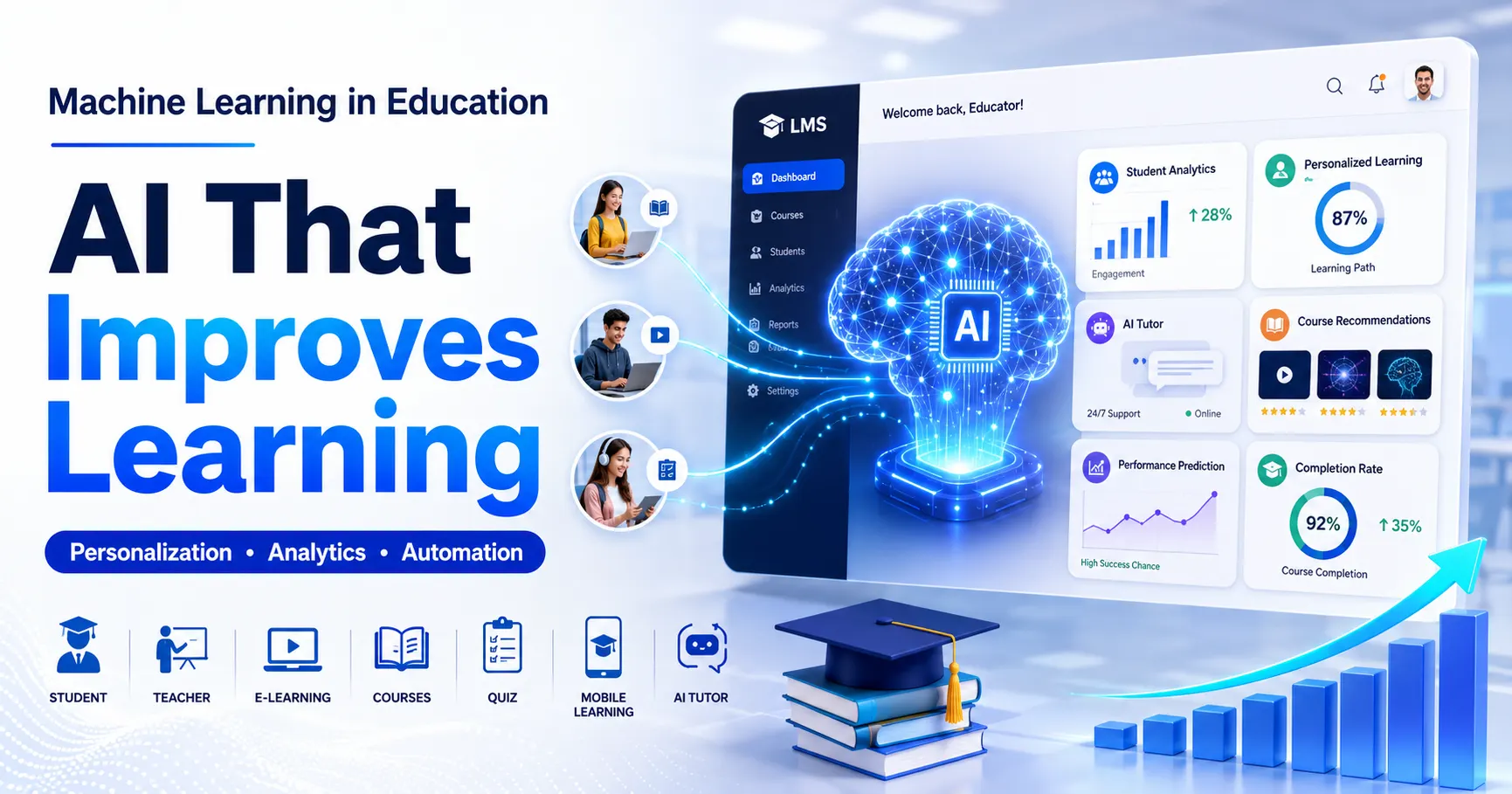
Machine Learning in Education & eLearning: Top Use Cases, Benefits, and Examples Quick answer: Machine learning in education uses algorithms to analyze learner data and personalize how students learn. It powers tailored learning paths, student performance prediction, automated grading, adaptive learning, and smart content recommendations — helping EdTech platforms, schools, universities, and LMS companies improve engagement, reduce manual work, and increase learning outcomes at scale. The numbers tell the story. According to Grand View Research, the global AI in education market was valued at USD 8.3 billion in 2025 and is projected to grow from USD 11.4 billion in 2026 to USD 57.2 billion by 2033. That kind of growth doesn't happen by accident — it happens because machine learning solves problems traditional learning systems never could, from personalized learning and student analytics to automated assessments and AI tutoring. For EdTech companies, schools, universities, and LMS businesses, the question is no longer whether to adopt machine learning. It's how fast you can do it before competitors do. This guide breaks down the top use cases, the real benefits, working examples, and a step-by-step path to implementation — so you can decide exactly where machine learning fits in your platform. What Is Machine Learning in Education? Machine learning in education is the use of data-driven algorithms to analyze how students learn and to automate or personalize parts of the learning experience. Instead of treating every learner the same, machine learning studies behavior — quiz scores, time on task, click patterns, completion rates — and adapts the content to fit each person. Here's the core idea. Traditional software follows fixed rules. Machine learning models learn from data and improve over time. Feed an ML model thousands of student interactions, and it starts predicting who's about to fall behind, which course someone should take next, and where a learner needs more practice. That shift — from static rules to adaptive intelligence — is what makes machine learning and education such a powerful combination. The data already exists inside every LMS. Machine learning turns it into action. Why Machine Learning in Education Matters for eLearning Platforms Every learning platform sits on a goldmine of data. Most platforms waste it. Machine learning changes that. It connects three things that modern learning depends on — data, automation, and personalization. Just as machine learning in food and restaurants helps businesses forecast demand and personalize customer experiences, the relationship between machine learning and education comes down to scale: a single teacher can't track 5,000 learners in real time, but a model can. Consider what that unlocks: Personalization at scale — every learner gets a path built around their pace, not the class average. Early intervention — at-risk students get flagged before they drop out, not after. Operational efficiency — grading, tracking, and recommendations run automatically. Smarter decisions — administrators see patterns across thousands of learners, not anecdotes. The payoff is direct. Higher completion rates. Better outcomes. Lower operating costs. That's why machine learning and education are converging faster than almost any other sector in EdTech. Top Use Cases of Machine Learning in Education & eLearning Machine learning isn't one feature — it's a toolkit. Here are the 12 use cases driving real results across education and eLearning platforms. Machine Learning Use Case What It Does Best For Personalized Learning Paths Adapts course flow based on learner progress, pace, and performance EdTech platforms, LMS systems, online schools Student Performance Prediction Predicts scores, learning gaps, and at-risk students before final exams Schools, universities, coaching platforms Smart Content Recommendations Suggests courses, lessons, videos, and exercises based on learner behavior eLearning apps, training platforms, course marketplaces Automated Grading Grades quizzes, assignments, and assessments with faster feedback Teachers, institutions, online assessment platforms Skill Gap Analysis Compares current learner skills with target roles, certifications, or career goals Corporate training, workforce learning, upskilling platforms 1. Personalized Learning Paths Machine learning builds a unique route through your course for every learner. The model analyzes performance, pace, and preferences, then sequences content to match. Research on personalized learning paths shows ML and reinforcement learning can optimize these routes based on real student behavior — not guesswork. 2. AI-Based Student Performance Prediction ML models predict how a student may perform before exam day. By analyzing past scores, attendance, engagement, study patterns, quiz attempts, and LMS activity, the system can forecast results and flag learners who may need support. Research published in PLOS ONE shows that machine learning can support student performance prediction in online learning environments when the model is trained on high-quality learning data. 3. Smart Content Recommendations Like Netflix for learning — the model suggests the next course, video, or exercise based on what similar learners completed and what each student needs. This recommendation logic is similar to how machine learning in entertainment and media helps streaming platforms personalize content and keep audiences engaged. More relevant learning content means higher engagement and completion. 4. Automated Assessments and Grading Machine learning grades quizzes, short answers, and even essays automatically. Teachers reclaim hours every week. Learners get feedback in seconds instead of days. 5. Adaptive Learning Systems The course adjusts in real time. Answer correctly, and the difficulty rises. Struggle, and the system serves easier content and extra practice — keeping every learner in their optimal zone. 6. Student Engagement Analytics ML tracks how learners interact with your platform — where they pause, skip, replay, or quit. These signals reveal which content works and which content loses people. 7. Intelligent Tutoring Systems AI tutors answer questions, explain concepts, and guide self-paced learners around the clock. They scale one-on-one support to thousands of students at once. 8. Dropout Risk Detection Machine learning spots the warning signs early — declining logins, missed deadlines, falling scores. Flag the risk, trigger an intervention, keep the learner enrolled. 9. Automated Course Progress Tracking No manual check-ins. The system tracks completion, milestones, and time-to-finish automatically, then surfaces progress to learners and instructors. 10. Skill Gap Analysis ML compares a learner's current skills against the target role or certification and pinpoints exactly what's missing. Essential for corporate training and upskilling programs. 11. Smart Exam Proctoring Machine learning monitors online exams — detecting unusual behavior, multiple faces, or screen switching — to protect integrity without a human watching every screen. 12. Learning Management System Optimization ML analyzes platform usage to optimize the LMS itself — faster navigation, better content placement, and features that match how learners actually behave. Benefits of Machine Learning for Education and eLearning Platforms For EdTech founders, LMS companies, training providers, and education institutions, these benefits are not just academic. They directly affect course completion, learner retention, instructor productivity, platform engagement, and long-term revenue growth. Better Personalized Learning Every learner gets content built for them — not for the average. Personalized pacing means faster progress for advanced students and more support for those who need it. Improved Student Outcomes Early intervention plus adaptive content equals higher scores and completion rates. When the system catches struggling learners early, fewer fall through the cracks. Higher Learner Engagement Relevant recommendations and adaptive difficulty keep people in flow. This is similar to how machine learning in travel and hospitality improves engagement through personalized offers, smart recommendations, and better customer experiences. Engaged learners finish courses — disengaged ones don't. Reduced Manual Work Automated grading, tracking, and recommendations free your team from repetitive tasks. Teachers teach. Admins strategize. Machines handle the rest. Better Decision-Making for Institutions Leaders get data-backed insights across thousands of learners — which programs work, where dropouts happen, and where to invest next. Scalable eLearning Experiences This is where machine learning and education truly pay off. One model can personalize learning for 100 students or 100,000 — at the same cost structure. Real-World Examples of Machine Learning in Education and eLearning Theory is one thing. Working systems are another. Here's how machine learning shows up in real platforms. Example 1: eLearning Course Recommendation Platforms analyze a learner's completed courses and behavior to suggest what to take next — the same recommendation logic that powers consumer apps, applied to learning catalogs. Example 2: Student Risk Prediction Universities use ML models to predict dropout risk from attendance, grades, and engagement data. PLOS ONE research confirms these models predict online learning outcomes with measurable accuracy — giving advisors time to act. Example 3: Adaptive Quiz Platform Duolingo is the classic case. Its early machine-learning work tackled when to resurface a vocabulary word or concept, then grew into models that adapt difficulty to each learner — as documented by IEEE Spectrum and Duolingo's own research team. Duolingo has also explained how its Birdbrain AI model helps personalize lessons by selecting exercises based on a learner's strengths, weaknesses, and current difficulty level. Example 4: AI Tutor for Self-Paced Learning Intelligent tutoring systems guide learners through problems step by step, explaining mistakes and adjusting hints based on where each student gets stuck. Example 5: Corporate Training Skill Analysis Training platforms run skill gap analysis across employees, map current abilities against role requirements, and assign the exact courses each person needs to close the gap. Example 6: University LMS Dropout Alerts A university LMS can use machine learning to analyze attendance, assignment submissions, quiz scores, and login frequency. When the system detects a learner at risk of dropping out, it can automatically alert faculty or advisors so they can intervene early. Example 7: Exam Preparation App Personalization An exam preparation app can use machine learning to identify weak topics, adjust question difficulty, and recommend revision plans. This helps students spend more time on areas where they need improvement instead of repeating topics they already understand. How Machine Learning Improves eLearning Platforms An eLearning platform without machine learning is a content library. An eLearning platform with machine learning is a learning engine. The difference plays out in four places: The learner experience — adaptive content and recommendations replace one-size-fits-all courses. The instructor workflow — automated grading and analytics replace hours of manual review. The admin dashboard — predictive insights replace guesswork about what's working. The business model — better retention and outcomes replace high dropout and churn. Add machine learning to an existing LMS and you don't just add features — you change what the platform is capable of. Machine Learning in Education vs Traditional Learning Systems The contrast is sharp. Here's how the two approaches stack up side by side. Capability Traditional Learning Systems Machine Learning in Education Content delivery Same content for everyone Personalized content per learner Progress tracking Manual tracking and check-ins Automated, real-time tracking Feedback Delayed feedback, days later Real-time feedback in seconds Assessments Fixed assessments for all Adaptive assessments that adjust Student insights Limited, reactive insights Predictive, proactive insights Course recommendations Manual selection by staff AI-based, automated recommendations Challenges of Using Machine Learning in Education Machine learning in education can create strong value, but it is not plug-and-play. Education platforms must manage student privacy, data quality, LMS integration, algorithm fairness, and user adoption before scaling ML features. Data Privacy and Security Student data is sensitive and heavily regulated. Any ML system must protect it with strong encryption, access controls, and compliance — especially in schools and universities. This makes education similar to regulated sectors like banking, where machine learning for BFSI must balance automation, risk control, data protection, and compliance. Compliance with Education Data Regulations Education platforms must also consider compliance requirements such as GDPR, FERPA, local data protection laws, and institutional privacy policies. Any machine learning system that handles student data should include consent management, secure data storage, role-based access, audit logs, and clear data retention rules. Data Quality Issues Models are only as good as the data behind them. Incomplete or messy learning data produces weak predictions. Clean, structured data comes first. Integration with Existing LMS Most institutions already run an LMS. The challenge is connecting ML models to that system without disrupting what already works. Bias in Algorithms If training data carries bias, the model carries it forward. Regular audits keep predictions fair across all learner groups. Teacher and Student Adoption Technology only works when people use it. Clear training and a focus on real benefits drive adoption from both teachers and learners. How to Implement Machine Learning in an Education or eLearning Platform A working ML solution follows a clear path. Skip steps and you waste budget. Follow them and you ship something that works. Step 1: Define the Business Goal Start with the outcome — reduce dropouts, lift completion rates, or automate grading. The goal decides everything that follows. No goal, no project. Step 2: Collect and Organize Learning Data Gather the data your goal needs — scores, engagement, completion, demographics. Clean it, structure it, and make sure it's accurate before any model touches it. Step 3: Choose the Right ML Use Case Match the goal to a use case from the list above. Want fewer dropouts? Build dropout risk detection. Want higher engagement? Start with recommendations. Step 4: Build and Train the ML Model Develop and train the model on your data. Test it, measure accuracy, and refine until predictions hold up against real outcomes. This is where machine learning for education becomes real. Step 5: Integrate ML into the Platform Connect the model to your LMS or app so it works inside the learner experience — not as a separate tool. Seamless integration drives adoption. Step 6: Monitor and Improve Models drift as behavior changes. Track performance, retrain on fresh data, and improve continuously. Machine learning for education is a cycle, not a one-time build. Future of Machine Learning in Education and eLearning The trajectory is steep. The AI in education market is on track to hit USD 57.2 billion by 2033, per Grand View Research — and machine learning sits at the center of that growth. The next stage of machine learning and education will be more predictive, conversational, and outcome-driven. Instead of only showing content, platforms will guide learners, generate study material, predict career readiness, and support teachers with real-time intelligence. What's coming next: Generative AI Development — powering AI tutors that create personalized explanations, learning content, and study support on demand. Real-time adaptive curricula — courses that rebuild themselves as learners progress. Deeper skill prediction — models that forecast which skills a learner will need next for their career. Voice and conversational learning — natural-language interfaces that make learning hands-free. The platforms that build these capabilities now will lead the market. The ones that wait will spend years catching up. How SISGAIN Helps Build Machine Learning Solutions for Education Knowing what to build is one thing. Building it is another. SISGAIN develops Machine Learning Solutions for education and eLearning platforms — from strategy through launch. What SISGAIN delivers: AI-based eLearning platforms — full platforms built with personalization and analytics from the ground up. LMS development — custom learning management systems with ML built in, not bolted on. Student analytics dashboards — real-time insights into engagement, performance, and risk. Course recommendation engines — models that suggest the right content to every learner. Adaptive learning systems — courses that adjust difficulty and content in real time. AI Chatbot & Virtual Assistant — intelligent tutoring assistants that answer learner questions, explain concepts, and scale one-on-one support. Mobile learning app development — learning experiences built for any device. Custom machine learning solutions — models built around your specific data and goals. SISGAIN helps education businesses move from idea to implementation with machine learning solutions built around real learning goals, platform needs, and user behavior. Ready to Build a Machine Learning Education Platform? If you want to add personalization, student analytics, automated grading, course recommendations, AI tutoring, or dropout prediction to your education platform, SISGAIN can help you build it from strategy to launch. Talk to our team and start building a smarter eLearning platform powered by machine learning. Book a Free Consultation Final Thoughts Machine learning and education are no longer experimental partners — they're the foundation of modern EdTech. Personalized paths. Predictive insights. Automated workflows. These aren't future features. They're what learners and institutions already expect. The market backs it up. From USD 8.3 billion in 2025 to a projected USD 57.2 billion by 2033, the direction is clear. The platforms that adopt machine learning early will own the next decade of learning. Start with one use case. Prove the value. Scale from there. That's how machine learning and education move from idea to impact. table { width: 100%; border-collapse: collapse; margin: 24px 0; font-size: 15px; line-height: 1.6; background: #ffffff; border: 1px solid #d9e2ec; border-radius: 10px; overflow: hidden; } table th { background: #0b2a4a; color: #ffffff; font-weight: 700; text-align: left; padding: 14px 16px; border: 1px solid #0b2a4a; } table td { padding: 13px 16px; border: 1px solid #d9e2ec; color: #1f2937; vertical-align: top; } table tr:nth-child(even) td { background: #f8fbff; } table tr:hover td { background: #eef6ff; } table p { margin: 0; } @media (max-width: 768px) { table { display: block; overflow-x: auto; white-space: nowrap; } }
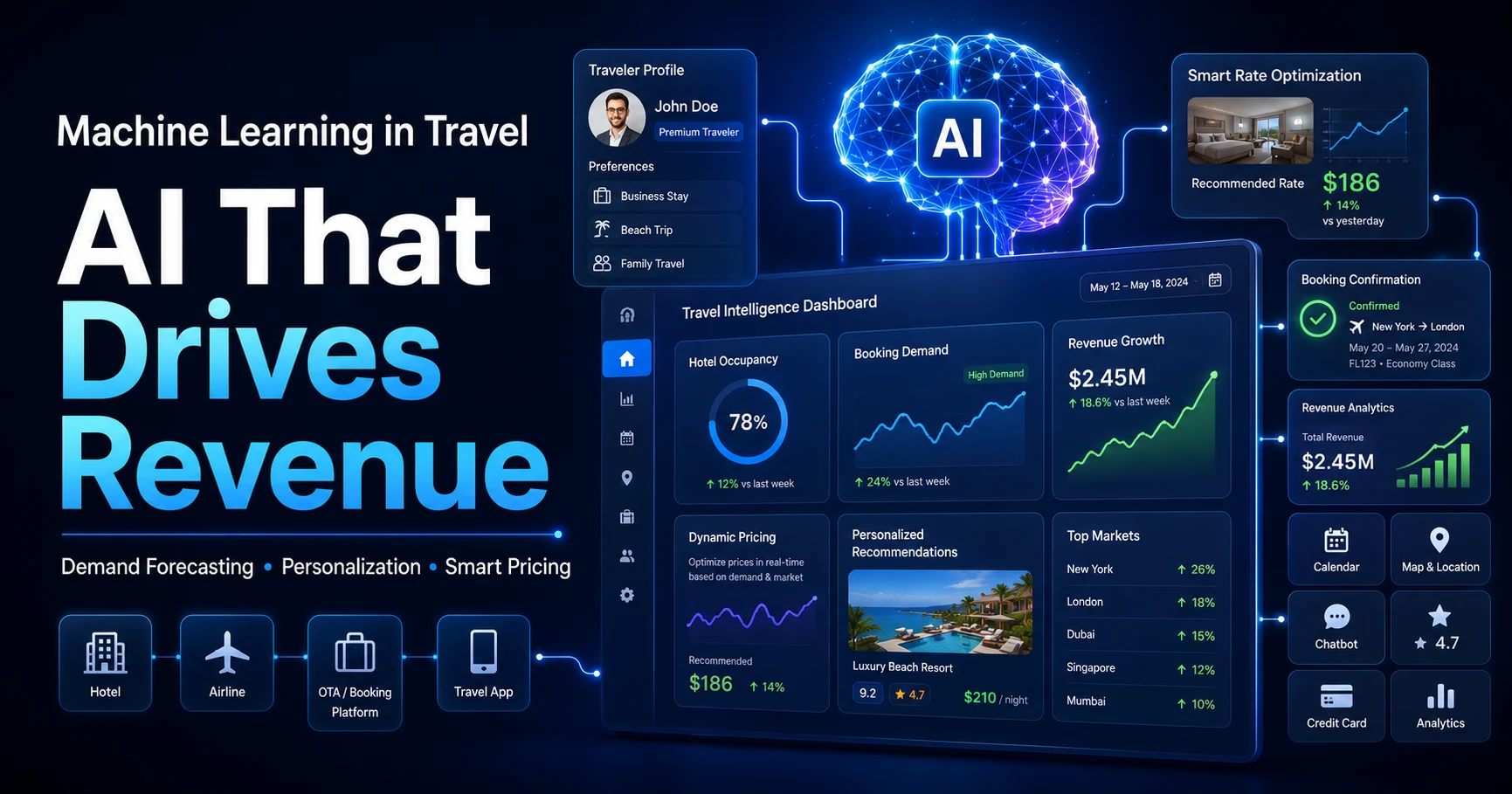
Machine Learning in Travel & Hospitality: How AI Helps Brands Predict Demand, Personalize Trips, and Increase Revenue Quick answer: Machine learning in travel and hospitality uses booking data, browsing behavior, guest profiles, reviews, pricing trends, and operational signals to predict demand, personalize trips, optimize prices, and automate guest service. For hotels, airlines, OTAs, travel apps, and tourism brands, the result is higher revenue, lower costs, better decisions, and more personalized guest experiences. Travel and hospitality businesses now compete on personalization, pricing accuracy, booking speed, guest service, and operational efficiency. A hotel must know when demand will rise. An airline must price seats without losing margin. A travel website must show the right destination, hotel, or package before the user leaves. This is where machine learning in hospitality becomes a practical business advantage. The shift is already visible across the industry. According to Research and Markets, the AI in Hospitality and Tourism Market was valued at USD 26.53 billion in 2026 and is projected to reach USD 75.66 billion by 2030, growing at a 29.9% CAGR. Guest behavior is moving in the same direction. Booking.com reported that 89% of consumers want to use AI in future travel planning, showing how fast artificial intelligence in hospitality and travel is becoming part of customer expectations. This guide explains what machine learning means for travel and hospitality, the strongest use cases, the business benefits, the challenges, and how brands can build AI-powered systems that improve revenue, operations, and guest loyalty. What Is Machine Learning in Travel & Hospitality? Machine learning is a branch of artificial intelligence that learns patterns from data and uses those patterns to make predictions, recommendations, and automated decisions. In travel and hospitality, it analyzes booking history, search behavior, customer profiles, guest reviews, pricing data, cancellation patterns, payments, and operational activity to help businesses make smarter decisions. AI is the broader technology that allows systems to perform intelligent tasks. ML is the part of AI that learns from data. When companies discuss AI and ML in hospitality, they usually mean practical tools such as demand forecasting systems, recommendation engines, revenue management platforms, guest chatbots, fraud detection systems, and review analysis tools. Instead of relying only on spreadsheets, assumptions, or manual pricing rules, travel and hospitality brands can use machine learning to predict what is likely to happen next and act faster. Common Data Sources Used by ML Models Machine learning models become stronger when they are trained on clean, relevant, and connected business data. Travel and hospitality brands usually use these data sources: Booking and reservation history — stay dates, lead times, booking channels, room types, routes, and cancellation behavior Website and app behavior — searches, clicks, filters, abandoned carts, viewed packages, and saved trips OTA search trends — demand patterns from online travel agencies and booking platforms Guest reviews and ratings — feedback, complaints, star ratings, sentiment, and service quality signals Seasonal demand — holidays, weekends, peak seasons, low seasons, and local travel cycles Local events — conferences, festivals, sports events, concerts, trade shows, and exhibitions Flight and hotel inventory — available seats, room inventory, occupancy, package availability, and service capacity Pricing data — historical prices, competitor prices, discounts, package rates, and revenue performance Loyalty program data — guest preferences, repeat bookings, rewards activity, and customer lifetime value Customer support conversations — chatbot logs, email queries, call center notes, and complaint history Payment and cancellation data — failed payments, refund requests, fraud signals, and cancellation probability PMS, CRM, booking engine, and analytics data — operational and customer data from connected systems Why Machine Learning Matters for Travel and Hospitality Brands Travel and hospitality businesses operate in a fast-changing environment. Demand can change because of weather, events, holidays, competitor pricing, flight delays, local restrictions, or customer behavior. Manual decision-making often reacts too late. ML in hospitality helps businesses predict these shifts earlier and respond with better pricing, staffing, marketing, and service decisions. Customers also expect more personalized travel experiences. They want hotels, trips, activities, offers, and support that match their interests, budget, location, and timing. Personalization at this scale is almost impossible manually, but it becomes practical with machine learning models that analyze customer behavior in real time. For business owners, the value is clear: Predict demand before peak or low periods affect revenue Personalize recommendations for every traveler or guest Optimize pricing based on real-time demand and competitor activity Reduce cancellations by identifying risky bookings early Automate guest support with chatbots and virtual assistants Improve staff planning using occupancy and demand forecasts Protect revenue through fraud detection and payment risk scoring Increase loyalty with personalized offers and better guest experiences In simple terms, machine learning helps travel and hospitality brands move from reactive decisions to predictive business growth. 15 Machine Learning Use Cases in Travel and Hospitality The strongest hospitality machine learning applications are directly connected to revenue, customer experience, operations, and retention. Below are the most valuable use cases for hotels, airlines, OTAs, travel apps, resorts, tourism companies, and transport businesses. 1. Demand Forecasting for Hotels, Airlines, and Travel Platforms Demand forecasting is one of the most valuable applications of machine learning in travel and hospitality. ML models analyze historical bookings, local events, holidays, seasonality, weather, search trends, competitor activity, and occupancy patterns to predict future demand. For hotels, this helps revenue teams estimate how many rooms are likely to sell on a specific date. For airlines, it helps forecast route demand. For travel platforms, it helps predict which destinations, packages, or experiences will attract more bookings. Better inventory planning Improved occupancy forecasting Smarter staff scheduling Stronger revenue planning Fewer last-minute pricing mistakes Better preparation for peak and low-demand periods 2. Dynamic Pricing and Revenue Management Dynamic pricing uses machine learning to adjust prices based on demand, availability, booking pace, competitor rates, customer behavior, seasonality, and market conditions. Hotels use it to set room rates. Airlines use it to price seats. Tour operators and travel platforms use it to price packages, experiences, and add-ons. Instead of using fixed pricing rules, ML models identify the price point most likely to maximize revenue without reducing conversion. For example, if a major event is increasing hotel searches in a city, the model can recommend higher room rates. If demand is low, it can suggest controlled discounts or bundled offers. Better room revenue Higher RevPAR Improved seat fill rates Better package profitability Improved occupancy during low-demand periods Stronger profit margin during high-demand periods 3. Personalized Travel Recommendations Recommendation engines help travel websites, hotel platforms, OTAs, and mobile apps suggest the most relevant destinations, hotels, flights, rooms, activities, restaurants, and add-ons for each user. These recommendations are based on browsing behavior, past bookings, budget, trip purpose, location, preferred dates, and similar customer behavior. This is also the foundation of automated content recommendations for travel websites. Instead of showing the same content to every visitor, ML-powered systems can display relevant travel guides, hotel packages, destination suggestions, local experiences, and offers based on user intent. This approach is similar to machine learning in entertainment and media, where recommendation engines personalize content based on user behavior, preferences, and engagement history. For example, a family traveler may see kid-friendly resorts, airport transfers, nearby dining options, and local experiences, while a business traveler may see hotels near a conference venue with early check-in options. This same recommendation logic is also used in machine learning in food and restaurants, where AI helps restaurants personalize menus, forecast demand, and improve customer experiences. For travel brands, these insights reduce decision fatigue, improve engagement, and increase booking conversion. 4. AI-Powered Trip Planning AI-powered trip planning uses machine learning and generative AI to create personalized itineraries based on dates, budget, interests, destination, travel history, and user preferences. It can recommend flights, hotels, restaurants, local attractions, transport options, and activities in one connected journey. Family trip planning Business travel planning Luxury travel planning Adventure travel suggestions Local attraction recommendations Multi-city itinerary planning 5. Smart Booking Experience A smart booking experience uses ML to understand what a user is likely to book and reduce friction in the booking journey. Travel websites and apps can rank search results, pre-fill preferences, show relevant filters, recommend packages, and display personalized offers based on user behavior. Fewer abandoned bookings Higher conversion rates Faster booking journeys Better user satisfaction More direct website bookings 6. Guest Segmentation and Customer Profiling Machine learning can group travelers and guests based on behavior, spending level, booking frequency, travel purpose, location, preferences, loyalty status, and engagement history. This helps brands understand their audience more clearly and personalize marketing, pricing, and service. Business travelers Family travelers Luxury guests Repeat guests Price-sensitive travelers Last-minute bookers High-value loyalty members Weekend travelers 7. Chatbots and Virtual Travel Assistants AI chatbots and virtual assistants help travel and hospitality businesses provide instant support. They can answer booking questions, handle cancellation requests, explain hotel policies, recommend rooms, share itinerary updates, support multiple languages, and guide users through the booking process. For hotels, airlines, and travel platforms, AI chatbot and virtual assistant solutions can reduce support workload while improving response speed and guest satisfaction. For hotels, chatbots can manage pre-arrival questions, room service requests, check-in instructions, late checkout queries, and upselling opportunities. For travel platforms, they can help users compare packages, understand visa requirements, check refund rules, and receive trip updates. 8. Review and Sentiment Analysis Travel and hospitality brands receive reviews across Google, OTAs, social media, surveys, and booking platforms. Manually reading every review is difficult, especially for hotel chains, airlines, and large travel platforms. Machine learning can analyze thousands of reviews and identify common themes, positive feedback, complaints, and sentiment trends. For example, a model can detect repeated complaints about check-in delays, room cleanliness, breakfast quality, Wi-Fi speed, staff behavior, or payment issues. This helps managers fix service problems before they damage reputation. 9. Cancellation Prediction Cancellation prediction models identify which bookings are more likely to cancel based on booking source, lead time, payment method, trip type, seasonality, customer behavior, price sensitivity, and past cancellation patterns. This insight helps hotels, airlines, and travel platforms act before revenue is lost. They can send reminders, offer flexible alternatives, request confirmation, promote non-refundable offers, or apply smarter overbooking rules where appropriate. 10. Fraud Detection and Payment Risk Scoring Fraud is a serious issue for OTAs, hotels, airlines, transport companies, and travel marketplaces. Machine learning can detect suspicious bookings, fake accounts, unusual payment behavior, refund abuse, loyalty fraud, and high-risk transactions in real time. Travel payment risk works much like machine learning for BFSI, where AI models detect fraud, score transaction risk, monitor unusual behavior, and protect financial data. 11. Smart Upselling and Cross-Selling Machine learning helps businesses recommend the right upgrade or add-on to the right customer at the right time. Hotels can recommend room upgrades, late checkout, spa bookings, dining offers, airport transfers, and local experiences. Travel platforms can recommend insurance, activity packages, extra baggage, seat upgrades, car rentals, and destination tours. Higher average order value More ancillary revenue Better guest experience More personalized offers Stronger customer lifetime value 12. Workforce and Staff Scheduling Hotels, resorts, restaurants, and travel support teams need the right number of staff at the right time. ML models can predict busy periods using occupancy, booking pace, check-in volume, local events, restaurant reservations, and guest service demand. This helps businesses schedule housekeeping teams, front desk staff, support agents, restaurant teams, drivers, and maintenance workers more accurately. It reduces both overstaffing and understaffing. 13. Predictive Maintenance for Hotels and Transport Predictive maintenance uses sensors, equipment data, service history, and machine learning models to predict when systems may fail. Hotels can use it for HVAC systems, elevators, kitchen equipment, lighting, and smart room devices. Airlines and transport companies can use it for vehicles, aircraft parts, fleet systems, and operational equipment. 14. Loyalty and Retention Prediction Machine learning can identify which guests are likely to return, which customers may stop booking, and which offers may increase loyalty. It analyzes booking frequency, spending behavior, review sentiment, engagement, loyalty activity, and service preferences. 15. Marketing Campaign Optimization Machine learning improves marketing by helping brands understand which customer is likely to respond to which offer, channel, message, and timing. It can optimize email campaigns, paid ads, retargeting, push notifications, landing pages, and customer journeys. Machine Learning in Travel vs Machine Learning in Hospitality Travel and hospitality overlap, but their business priorities are different. Travel focuses on movement, trip planning, bookings, and transport. Hospitality focuses on the stay, guest service, property operations, and on-site experience. Machine learning in hospitality is often more focused on guest personalization, room pricing, service quality, and operational efficiency. Area Travel Industry Hospitality Industry Main goal Improve trip planning, booking conversion, route demand, and customer support Improve guest experience, occupancy, room pricing, and property operations Common users Airlines, OTAs, travel apps, transport companies, tour operators Hotels, resorts, restaurants, serviced apartments, event venues Key ML use cases Dynamic fares, itinerary planning, smart search, fraud detection, travel recommendations Room pricing, guest segmentation, upselling, review analysis, predictive maintenance Data sources Bookings, routes, fares, searches, cancellations, customer behavior Reservations, loyalty data, reviews, PMS data, room inventory, service requests Business impact Higher booking conversion, better seat or package sales, lower fraud, better trip experience Higher RevPAR, better reviews, repeat stays, lower operating costs, stronger loyalty Benefits of Machine Learning in Travel and Hospitality The value of AI and ML in hospitality appears across revenue, marketing, operations, guest service, and customer retention. When used correctly, machine learning helps businesses make faster and more profitable decisions from data they already collect. Better Revenue Forecasting ML predicts high-demand and low-demand periods so businesses can plan pricing, inventory, staffing, and campaigns more accurately. This is especially useful for hotels, airlines, and travel platforms where revenue depends heavily on timing. Higher Booking Conversion Personalized search results, smart recommendations, relevant offers, and simplified booking journeys help convert more visitors into customers. When users see options that match their intent, they are more likely to complete the booking. Improved Guest Experience Artificial intelligence in hospitality helps brands personalize every stage of the journey, from discovery and booking to check-in, stay experience, support, and post-stay engagement. Guests receive faster service and more relevant offers. Lower Operational Costs Automation reduces manual work in pricing, reporting, customer support, staff planning, marketing, and maintenance. Predictive systems help teams prevent problems instead of reacting after they happen. Smarter Marketing and Retention Machine learning helps brands target the right customer with the right offer at the right time. This improves email campaigns, ads, push notifications, loyalty offers, and remarketing performance. How Machine Learning Improves Guest Experience Guest experience is one of the strongest areas where artificial intelligence in hospitality creates measurable value. Machine learning helps brands remember preferences, anticipate needs, and remove friction before, during, and after the trip. A returning guest may see their preferred room type, favorite dining option, loyalty reward, and personalized upgrade offer automatically. A business traveler may receive early check-in suggestions and transport options. A family traveler may see kid-friendly rooms, nearby attractions, and bundled experiences. Personalized hotel and room suggestions Faster check-in and booking support Multilingual chatbots Personalized offers and packages Real-time travel updates Better complaint handling Post-stay feedback analysis Loyalty-based recommendations Special occasion personalization How Machine Learning Helps Increase Revenue Machine learning increases revenue by improving pricing, conversion, upselling, retention, and marketing efficiency. It helps travel and hospitality companies earn more from existing traffic, customers, rooms, seats, and packages. With AI automation and workflow solutions, brands can automate pricing alerts, booking follow-ups, customer segmentation, support routing, and revenue-focused marketing workflows. Demand-based pricing: ML adjusts prices based on real-time demand and market conditions. Direct booking optimization: Personalized website experiences help reduce dependency on third-party channels. Better upselling: ML recommends upgrades and add-ons customers are more likely to buy. Reduced cancellations: Predictive models identify risky bookings earlier. Improved occupancy: Forecasting and pricing models help fill more rooms or seats. Personalized packages: Travel brands can bundle flights, hotels, activities, and transfers based on user intent. Better ad spend efficiency: ML identifies high-converting audiences and campaign timing. Loyalty optimization: Brands can target repeat guests with more relevant offers. Smarter retargeting: Abandoned searches and carts can be recovered with personalized messages. Higher customer lifetime value: Personalized service and retention campaigns increase repeat bookings. Machine Learning for Hotels, Travel Apps, Airlines, and Tourism Companies Different travel and hospitality businesses use machine learning in different ways. The best solution depends on the business model, data quality, customer journey, and revenue goals. For Hotels and Resorts Hotels and resorts use machine learning hospitality solutions to improve room pricing, guest segmentation, housekeeping scheduling, review analysis, loyalty offers, predictive maintenance, and smart upselling. For Travel Apps and OTAs Travel apps and online travel agencies use machine learning for personalized search, recommendation engines, dynamic packages, booking prediction, fraud detection, abandoned booking recovery, and automated content recommendations. For Airlines and Transport Companies Airlines and transport companies use ML for demand forecasting, route planning, dynamic pricing, customer support, disruption prediction, baggage tracking insights, and predictive maintenance. For Tourism and Destination Brands Tourism companies and destination brands use machine learning for visitor trend analysis, campaign targeting, itinerary personalization, local experience recommendations, and tourist behavior analysis. Image Placement: Add an image after the business-type section. Image Concept: A connected AI travel ecosystem with hotels, airlines, travel apps, tourists, booking platforms, review systems, and analytics connected to a central machine learning engine. Real-World Example: How a Travel Brand Can Use Machine Learning Imagine a mid-size travel booking platform that wants to increase bookings and reduce cancellations. Before using machine learning, the team manually reviews website traffic, booking trends, abandoned carts, customer feedback, and campaign results. Decisions are slow, and many opportunities are missed. After adopting machine learning, the platform can analyze search behavior, destination preferences, booking history, seasonality, price sensitivity, abandoned carts, and cancellation patterns. Based on this data, the system can show personalized packages, adjust prices, send targeted offers, predict cancellation risk, and recommend relevant travel add-ons. A demand forecasting model predicts which destinations will attract more searches and bookings. A dynamic pricing engine adjusts package prices based on demand and availability. A recommendation engine suggests hotels, activities, and add-ons based on user intent. A cancellation prediction model identifies risky bookings and triggers reminders or retention offers. A marketing optimization model targets users with personalized email and remarketing campaigns. The business result is more bookings, better customer experience, higher revenue, fewer cancellations, better marketing ROI, and stronger customer retention. Challenges of Using Machine Learning in Travel and Hospitality Machine learning can deliver strong returns, but implementation is not automatic. Many travel and hospitality businesses face challenges with data, systems, compliance, and adoption. Poor data quality: Incomplete, outdated, or duplicated data can reduce model accuracy. Disconnected systems: PMS, CRM, booking engines, payment systems, and OTA platforms may not be properly integrated. Privacy and compliance: Guest data must be handled securely and in line with regulations such as GDPR. Lack of real-time data: Delayed data can lead to delayed predictions and weaker decisions. Model accuracy: ML models need testing, monitoring, and retraining to stay reliable. Staff adoption: Teams may resist automated recommendations if they do not understand how the system works. Historical data dependency: Forecasting and personalization models need enough clean historical data to perform well. How Businesses Can Solve These Challenges The best approach is to start with one high-value use case instead of trying to automate everything at once. For example, a hotel can begin with demand forecasting or dynamic pricing. A travel website can start with recommendation engines or abandoned booking recovery. Businesses should clean and centralize data, integrate PMS, CRM, OTA, booking, payment, and analytics systems, use scalable cloud architecture, monitor model performance, and improve models with fresh data. Working with an experienced AI/ML development team can reduce risk and speed up implementation. How to Build a Machine Learning Solution for Travel and Hospitality A successful machine learning project needs a clear business goal, reliable data, the right model, strong integration, and continuous improvement. Businesses that want to turn booking, pricing, guest, and operational data into predictive insights can build custom machine learning solutions for travel and hospitality workflows. Step 1: Identify the Business Goal Start by choosing one measurable goal. This could be increasing booking conversion, improving pricing, reducing cancellations, automating support, improving guest experience, or increasing repeat bookings. Step 2: Collect and Prepare Data Collect relevant data from bookings, guest profiles, pricing history, reviews, website behavior, app activity, payments, cancellations, support conversations, and operations. Clean data is the foundation of accurate machine learning. Step 3: Choose the Right ML Model Different goals need different models. Recommendation models are used for personalization. Forecasting models are used for demand prediction. Classification models can predict cancellations or customer segments. NLP models analyze reviews and support messages. Anomaly detection models identify fraud and unusual behavior. Step 4: Integrate with Existing Systems The ML solution should connect with the systems your business already uses, including PMS, CRM, booking engine, mobile app, website, payment gateway, OTA platforms, review platforms, and analytics dashboards. Step 5: Test, Monitor, and Improve Machine learning models should be tested before full deployment and monitored after launch. As new booking, customer, and operational data becomes available, models should be retrained and improved. Future of Machine Learning in Travel and Hospitality The next generation of AI-powered hospitality solutions will be more conversational, predictive, and autonomous. Instead of only showing dashboards, AI systems will recommend actions and, in some cases, automate them. AI travel agents that plan and book complete trips Hyper-personalized guest journeys Voice-based hotel and travel booking Real-time pricing engines Predictive hotel operations AI-powered loyalty programs Autonomous customer support Generative AI for itinerary planning Smart hotel automation Predictive tourism analytics Image Placement: Add an image before the conclusion. Image Concept: A futuristic hotel and travel app interface where an AI assistant helps a traveler plan a trip, book a hotel, choose experiences, receive personalized recommendations, and manage the full travel journey. Why Choose SISGAIN for Machine Learning Travel and Hospitality Solutions? SISGAIN helps travel and hospitality businesses build custom AI and ML platforms that improve personalization, pricing, operations, customer support, and revenue. Whether you run a hotel group, airline, OTA, travel app, resort, tourism company, or transport platform, SISGAIN can develop machine learning hospitality solutions tailored to your business goals. Our team builds AI-powered hospitality solutions that connect with your existing systems and turn business data into real-time decisions. From recommendation engines and demand forecasting to chatbots and revenue management tools, SISGAIN helps brands move from manual workflows to intelligent digital platforms. Custom machine learning development for travel and hospitality use cases AI recommendation engine development for websites, apps, and booking platforms Demand forecasting software for hotels, airlines, and travel companies Dynamic pricing solutions for rooms, flights, packages, and services Travel chatbot development for bookings, support, FAQs, and upselling Hotel revenue management tools powered by AI and ML models Customer segmentation systems for personalized marketing and loyalty Review and sentiment analysis tools for guest feedback and reputation management OTA, PMS, CRM, and booking engine integration for connected data workflows Secure cloud-based platforms designed for scalability and performance AI-powered booking personalization to improve direct conversions Ready to build smarter travel and hospitality software? Talk to Our AI Experts Final Thoughts Machine learning is becoming a growth engine for travel and hospitality businesses. It helps companies predict demand, personalize trips, automate guest service, optimize pricing, reduce cancellations, improve loyalty, and increase revenue. The brands that win will be those that use their data wisely, start with clear business goals, and build scalable AI systems that support both customers and internal teams. Whether you manage a hotel, airline, OTA, travel app, or tourism business, machine learning can help turn your data into better decisions and stronger business outcomes. table { width: 100%; border-collapse: collapse; margin: 24px 0; font-size: 15px; line-height: 1.6; background: #ffffff; border: 1px solid #d9e2ec; border-radius: 10px; overflow: hidden; } table th { background: #0b2a4a; color: #ffffff; font-weight: 700; text-align: left; padding: 14px 16px; border: 1px solid #0b2a4a; } table td { padding: 13px 16px; border: 1px solid #d9e2ec; color: #1f2937; vertical-align: top; } table tr:nth-child(even) td { background: #f8fbff; } table tr:hover td { background: #eef6ff; } table p { margin: 0; } @media (max-width: 768px) { table { display: block; overflow-x: auto; white-space: nowrap; } }
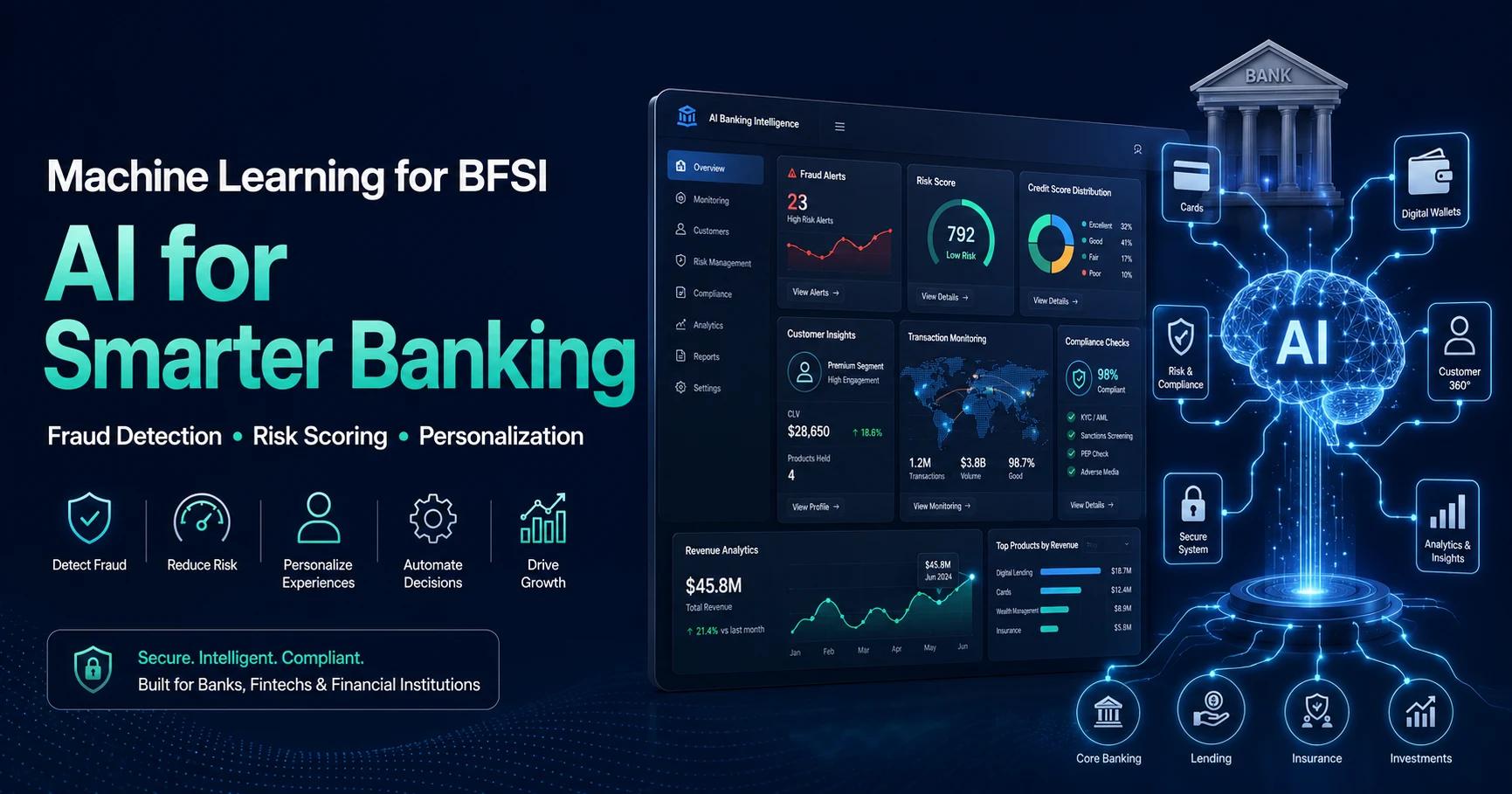
Machine Learning for BFSI: How AI Helps Banks and Financial Firms Detect Fraud, Reduce Risk and Personalize Customer Experiences Quick answer: Machine learning for BFSI uses algorithms that learn from financial data to detect fraud, score credit risk, automate compliance, and personalize banking. Banks, fintechs, lenders, and insurers use it to make faster, safer, and smarter decisions—cutting fraud losses, reducing loan defaults, and lowering compliance costs at scale. Fraud is getting more sophisticated. Customers expect instant, personalized service. Regulators demand tighter controls. And the volume of financial data is growing faster than any human team can review. For banks, fintech startups, NBFCs, insurers, and payment companies, these pressures are colliding at once. Machine learning offers a way through. By learning patterns from massive datasets, machine learning for BFSI helps financial firms spot fraud in milliseconds, predict who might default on a loan, flag suspicious transactions, and tailor product recommendations to each customer. This guide breaks down the most valuable machine learning use cases in banking and finance, the benefits and challenges of adoption, the data you'll need, and a practical roadmap to get started. Whether you lead a bank, lending platform, or insurance company, you'll find concrete ideas you can act on. Why BFSI Companies Need Machine Learning Now The market is moving quickly. According to Research and Markets, the AI in BFSI market is set to grow from $101.2 billion in 2025 to $140.54 billion in 2026. Market Research Future projects the AI and advanced machine learning in BFSI market will grow at a 14.25% CAGR from 2025 to 2035. Fraud is rising in parallel. Alloy reports that consumer fraud losses jumped 25% year over year, topping $12.5 billion in 2024. Juniper Research estimates financial institutions will spend $21.1 billion on fraud detection and prevention in 2025, climbing to $39.1 billion by 2030. These numbers point to one conclusion: manual systems can't keep up. Machine learning in the banking industry has shifted from a competitive edge to an operational necessity. What Is Machine Learning for BFSI? Machine learning for BFSI is the use of self-learning algorithms to analyze financial data and make predictions or decisions without being explicitly programmed for every scenario. BFSI stands for Banking, Financial Services, and Insurance. Instead of relying only on fixed rules ("flag any transaction over $10,000"), machine learning models study historical patterns. They learn what normal behavior looks like for each customer, then identify anomalies that signal fraud, risk, or opportunity. These AI-powered banking solutions improve over time. The more data they process, the sharper their predictions become—making them ideal for the high-volume, high-stakes world of finance. Why Machine Learning Matters in the Banking Industry Traditional banking systems were built on static rules and manual review. They struggle with three modern realities: data volume, speed, and complexity. Machine learning in banking solves all three. It processes millions of transactions in real time, adapts to new fraud tactics automatically, and uncovers subtle patterns humans would never spot. The result is lower losses, faster service, and better decisions. For decision-makers, the appeal is simple. AI ML in banking turns raw data into a strategic asset—one that protects the institution and improves the customer experience at the same time. AI ML in Banking vs Traditional Banking Systems Factor Traditional Systems AI/ML Systems Decision logic Fixed, rule-based Adaptive, learns from data Fraud detection Reactive, after the fact Real-time, predictive Speed Slow, manual review Milliseconds, automated Scalability Limited by staff Scales with compute False positives High Significantly reduced Personalization Generic Tailored per customer Compliance Manual, error-prone Automated, auditable Choose AI/ML systems if real-time speed, scale, and accuracy matter more than the simplicity of rule-based tools. Fraud Detection and Transaction Monitoring Fraud detection is the flagship use case for AI in banking. Machine learning models analyze each transaction against a customer's normal behavior—location, amount, merchant type, time of day—and assign a risk score in milliseconds. When something looks off, the system flags or blocks it instantly. Unlike rule-based filters, banking fraud detection AI learns continuously, so it adapts as fraudsters change tactics. A practical example: a card used in two countries within minutes triggers an alert not because a rule says so, but because the model recognizes the pattern as statistically improbable for that user. Credit Risk Scoring and Loan Decisioning Credit risk scoring with machine learning goes far beyond traditional credit scores. Models weigh hundreds of variables—income patterns, spending behavior, repayment history—to predict the likelihood of default. This benefits both sides. Lenders approve more good borrowers while avoiding bad ones. According to Tavant, AI can reduce loan default rates by 20–40%, depending on implementation quality and data availability. For NBFCs and lending platforms, AI-driven loan decisioning means faster approvals, fairer assessments, and stronger portfolio performance. Want to make faster, safer, and smarter financial decisions? Build machine learning solutions that help your BFSI business detect fraud, assess credit risk, and improve customer experiences. Talk to an AI Expert AML Monitoring and Suspicious Activity Detection Anti-money laundering (AML) compliance is notoriously inefficient. Flagright reports that up to 95% of AML alerts worldwide are false positives—costing institutions millions in wasted investigation time. AML machine learning fixes this. By combining rule-based analytics with AI, models distinguish genuine suspicious activity from harmless anomalies. Research from CGI and Verafin shows machine learning can sharply reduce false positives while maintaining regulatory compliance. Fewer false alarms means investigators focus on real threats, and the institution stays compliant without ballooning headcount. KYC and Customer Onboarding Automation KYC (Know Your Customer) checks are costly. Celent estimates banks spend $37.1 billion globally on KYC compliance operating costs. KYC automation in banking uses machine learning to verify identities, scan documents, and screen against watchlists in seconds. This reduces manual due diligence, speeds up onboarding, and cuts costs—all while improving accuracy. For fintechs and digital banks, faster onboarding directly improves conversion. Customers who breeze through verification are far less likely to abandon signup. Personalized Banking Recommendations AI banking personalization tailors products and advice to each customer. Machine learning analyzes spending habits, life stage, and goals to recommend the right credit card, savings plan, or loan at the right moment. This matters because customers expect it. Generic offers feel like noise; relevant ones feel like service. Personalization increases cross-sell rates and deepens customer loyalty. Similar recommendation engines also power machine learning in ecommerce, where AI delivers personalized product recommendations, improves customer engagement, and increases conversion rates. Customer Churn Prediction Acquiring a new customer costs far more than keeping one. Machine learning identifies customers likely to leave—based on signals like declining transactions, reduced logins, or complaint history. With predictive analytics in banking, teams can intervene early: a timely offer, a check-in call, or a fee waiver. Catching churn risk before the customer walks out the door protects revenue and lifetime value. The same predictive analytics models are widely used in machine learning in travel and hospitality to identify guests at risk of leaving, personalize offers, and improve customer retention. Payment Risk Scoring and Real-Time Payments As real-time payments grow, so does fraud exposure. There's no time for manual review when money moves in seconds. Machine learning scores each payment instantly, weighing risk factors before the transaction clears. AI-powered payment risk monitoring lets payment companies approve legitimate transactions smoothly while blocking fraudulent ones—protecting both speed and security. Wealth Management and Investment Insights Machine learning in finance is reshaping wealth management. Robo-advisors use algorithms to build and rebalance portfolios based on a client's goals and risk tolerance. Beyond automation, models surface investment insights by analyzing market data, news sentiment, and historical trends. This helps wealth firms offer data-driven advice at scale—serving more clients without sacrificing quality. Insurance Claims Processing and Risk Assessment Insurers use machine learning to speed up claims and sharpen underwriting. Models assess claim validity, detect fraudulent filings, and estimate payouts automatically. On the underwriting side, AI in financial services analyzes risk factors to price policies more accurately. Faster claims improve customer satisfaction, while better risk assessment protects the insurer's bottom line. Regulatory Compliance and Risk Reporting Compliance is a moving target. AI compliance automation helps BFSI firms keep pace by monitoring transactions, generating audit-ready reports, and flagging regulatory breaches automatically. Financial risk analytics powered by machine learning gives leaders a real-time view of exposure across the business. Instead of scrambling at quarter's end, teams get continuous, accurate reporting—reducing both risk and manual effort. Customer Support Automation and AI Chatbots AI chatbots handle routine queries around the clock—balance checks, payment reminders, card freezes—freeing human agents for complex issues. Modern chatbots understand natural language and pull from customer data to give personalized answers. This cuts support costs, reduces wait times, and improves satisfaction. Many BFSI firms partner with specialists for AI chatbot development services to build assistants tuned for financial workflows. Cybersecurity and Anomaly Detection Banks are prime targets for cyberattacks. Machine learning strengthens defenses by learning what normal network and user behavior looks like, then flagging anomalies that signal intrusion. This anomaly detection catches threats traditional security tools miss—like unusual login patterns or data access. Paired with robust cybersecurity services, AI-driven monitoring adds a powerful, adaptive layer of protection. Benefits of Machine Learning for BFSI Lower fraud losses through real-time, predictive detection Reduced loan defaults—up to 20–40% with quality implementation Fewer false positives in AML and transaction monitoring Faster onboarding via KYC automation Lower compliance costs through automation Higher customer retention with churn prediction and personalization Better decisions powered by financial risk analytics Scalability that grows with data, not headcount How Machine Learning Helps Different BFSI Businesses Business Type Top ML Use Cases Banks Fraud detection, credit scoring, personalization Fintech startups Payment risk scoring, KYC automation, chatbots NBFCs Loan decisioning, credit risk analytics Insurance companies Claims processing, risk assessment, fraud detection Lending platforms Default prediction, faster approvals Payment companies Real-time payment risk scoring Wealth management firms Robo-advisory, investment insights Credit unions Churn prediction, member personalization Data Required to Build Machine Learning Solutions for BFSI Machine learning models are only as good as their data. BFSI firms typically need: Transaction data — amounts, timestamps, merchants, locations Customer profiles — demographics, account history, KYC records Behavioral data — login patterns, app usage, spending habits Credit data — repayment history, outstanding debt, credit bureau records External data — watchlists, market data, fraud databases Clean, well-labeled, and securely stored data is the foundation. Poor data quality is the most common reason ML projects underperform. Challenges of Implementing Machine Learning in Banking and Finance Adoption isn't without hurdles: Data silos — fragmented systems make data hard to unify Regulatory complexity — finance is heavily regulated, and models must be explainable Bias risk — poorly trained models can produce unfair outcomes Legacy infrastructure — old core systems resist integration Talent gaps — skilled ML engineers are scarce Security and privacy — financial data demands the highest protection The good news: each challenge has a known solution. With the right strategy and partner, they're manageable. Step-by-Step Roadmap to Implement Machine Learning in BFSI Define the business problem. Start with one high-value use case—fraud, credit risk, or churn. Audit your data. Assess quality, completeness, and accessibility. Build the data pipeline. Integrate sources and clean the data. Develop and train models. Choose algorithms suited to the problem and validate rigorously. Test for accuracy and bias. Ensure the model is fair, explainable, and compliant. This phased validation process is also essential in machine learning in education and eLearning, where AI models are evaluated for accuracy and fairness before being deployed across learning platforms. Deploy and integrate. Connect the model to live workflows and core systems. Monitor and retrain. Track performance and refresh the model as patterns shift. Partnering with experienced machine learning development services can compress this timeline and reduce risk at every stage. Planning to implement machine learning in your bank, fintech platform, lending business, or insurance company? SISGAIN can help you design, develop, and integrate secure AI/ML solutions built for BFSI workflows. Book a Free Consultation Build vs Buy: Ready-Made AI Tools or Custom ML Software? Factor Ready-Made Tools Custom ML Software Setup speed Fast Slower Upfront cost Lower Higher Customization Limited Fully tailored Integration Generic Built for your stack Competitive edge Shared with others Unique to you Long-term value Recurring fees Owned asset Choose ready-made tools if you need speed and have standard needs. Choose custom ML software if you require deep integration, unique workflows, and a lasting competitive advantage. Future Trends of Machine Learning in BFSI Generative AI for customer service, reporting, and document analysis Explainable AI to meet rising regulatory demands for transparency Federated learning to train models without exposing sensitive data AI agents that handle multi-step financial tasks autonomously Hyper-personalization powered by richer real-time data According to Precedence Research, machine learning already leads AI adoption in financial services, accounting for a 40.4% technology share in 2025—while generative AI is the fastest-growing segment. Machine Learning Beyond BFSI Machine learning isn't limited to finance. The same techniques drive results across industries. Explore how it's applied in food and restaurants, entertainment and media, travel and hospitality, education and eLearning, and e-commerce and retail. How SISGAIN Can Help BFSI Companies Use Machine Learning SISGAIN builds secure, scalable, and compliant AI/ML solutions designed for the realities of financial workflows. Our services include: Custom machine learning software development tailored to your use case Banking software development services for modern, secure platforms Fintech app development services for startups and digital banks Fraud detection software and payment risk monitoring solutions Credit risk analytics for smarter lending decisions AI chatbot development for 24/7 customer support Compliance automation software to streamline AML and KYC Data integration and automation to unify scattered systems Financial analytics dashboards for real-time insight Secure cloud-based BFSI platforms built to scale From strategy to deployment, SISGAIN delivers AI-powered banking solutions and fintech machine learning solutions that fit your business. Want to use machine learning to detect fraud faster, reduce financial risk, automate compliance, and personalize banking experiences? SISGAIN can help you build secure, scalable, and compliant AI/ML solutions for banks, fintechs, lenders, insurers, and financial platforms. Book a Free Consultation Machine Learning Is Becoming Essential for Modern BFSI Growth The case for machine learning in finance is no longer theoretical. With the AI in BFSI market climbing toward $140 billion in 2026 and fraud losses rising every year, financial firms that delay adoption risk falling behind on cost, security, and customer experience. Start small. Pick one high-value use case—fraud detection, credit scoring, or KYC automation—prove the value, then scale. The institutions that act now will define the next decade of banking and finance. If you're ready to explore what machine learning can do for your bank, fintech, lending business, or insurance company, SISGAIN is here to help you build it. table { width: 100%; border-collapse: collapse; margin: 24px 0; font-size: 15px; line-height: 1.6; background: #ffffff; border: 1px solid #d9e2ec; border-radius: 10px; overflow: hidden; } table th { background: #0b2a4a; color: #ffffff; font-weight: 700; text-align: left; padding: 14px 16px; border: 1px solid #0b2a4a; } table td { padding: 13px 16px; border: 1px solid #d9e2ec; color: #1f2937; vertical-align: top; } table tr:nth-child(even) td { background: #f8fbff; } table tr:hover td { background: #eef6ff; } table p { margin: 0; } @media (max-width: 768px) { table { display: block; overflow-x: auto; white-space: nowrap; } }
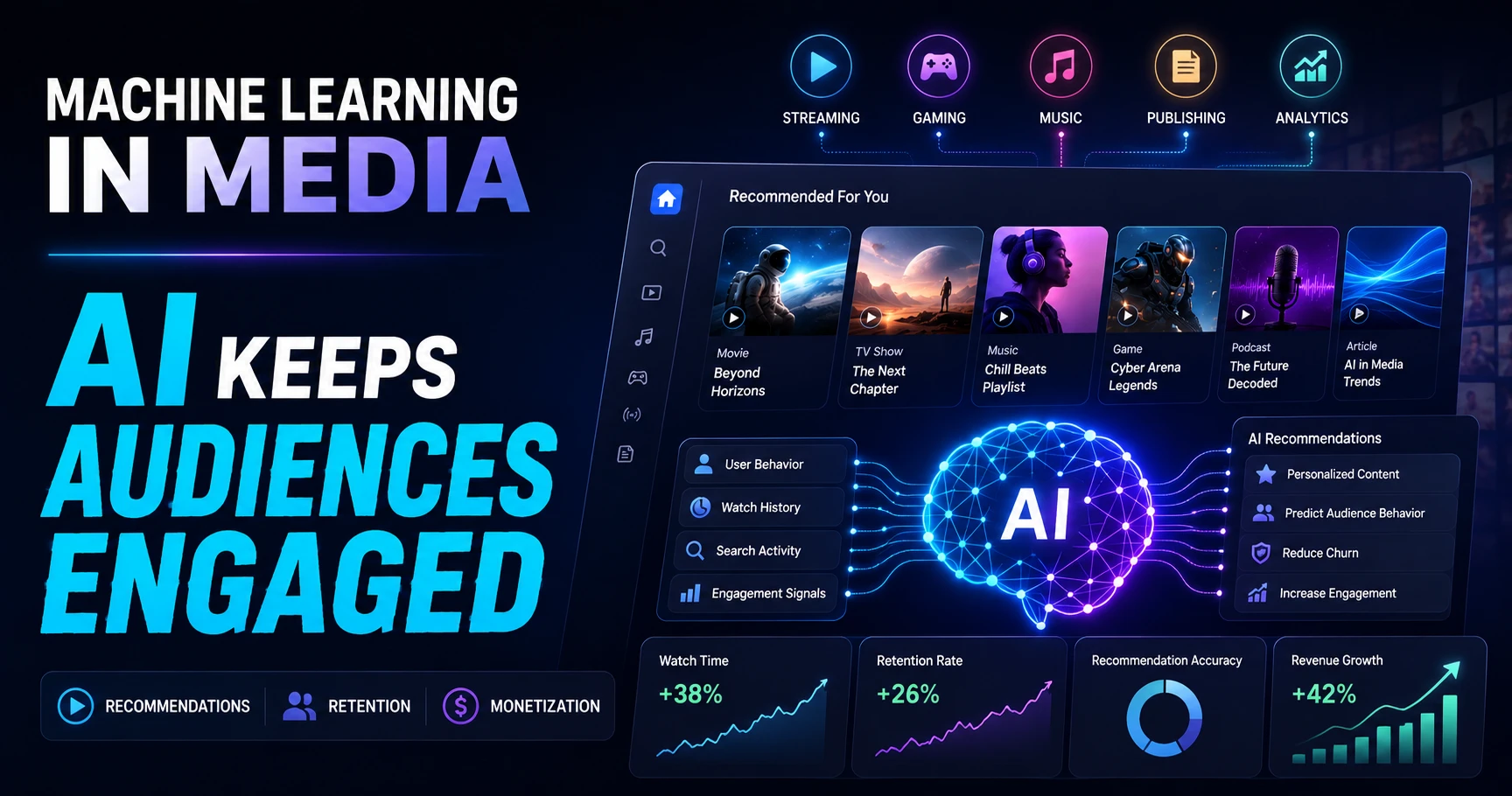
Machine Learning in Entertainment & Media: How AI Helps Platforms Recommend Better Content and Keep Audiences Engaged Quick answer: Machine learning in entertainment and media helps OTT platforms, streaming apps, gaming platforms, music apps, publishers, and creator platforms recommend better content, personalize user journeys, predict audience behavior, reduce churn, improve monetization, and increase audience engagement. Entertainment and media businesses are no longer competing only on content volume. They are competing on attention, personalization, retention, watch time, and revenue growth. With thousands of movies, shows, songs, videos, games, podcasts, and articles available instantly, users expect platforms to recommend relevant content without making them search endlessly. This is how machine learning is changing the entertainment industry: it helps platforms move from generic content delivery to personalized, data-driven experiences. Instead of showing the same homepage to every user, machine learning studies audience behavior and recommends content that matches individual interests, habits, and intent. What Is Machine Learning in Entertainment and Media? Machine learning in entertainment and media means using AI algorithms to analyze user behavior, content performance, viewing patterns, listening habits, search activity, engagement signals, and platform usage. These insights help media businesses improve recommendations, personalize content feeds, predict churn, automate content workflows, optimize ads, and make smarter revenue decisions. For example, a streaming app can use machine learning to understand what a user watches, what they skip, what they search for, when they return, and which genres they prefer. Based on this behavior, the platform can recommend movies, series, videos, songs, podcasts, or articles that the user is more likely to enjoy. Machine learning can be used across many entertainment and media models, including OTT platforms, video streaming apps, music platforms, gaming platforms, news websites, digital publishing platforms, creator marketplaces, and interactive entertainment businesses. Why Entertainment and Media Platforms Need Machine Learning Modern media users expect fast, relevant, and personalized experiences. They do not want to scroll through large content libraries or repeat the same searches every time they open an app. They expect platforms to understand their interests, viewing habits, language preferences, and content intent. For media businesses, this creates both a challenge and an opportunity. A poor discovery experience can reduce watch time, increase churn, and lower subscription value. A strong recommendation and personalization system can improve engagement, increase retention, support ad revenue, and make the platform more valuable for users. Machine learning helps entertainment and media platforms solve key business problems such as: Low content discovery rates High user churn Poor recommendation accuracy Low watch time or session duration Weak ad targeting performance Limited audience understanding Unclear content investment decisions Manual content tagging and metadata issues Low subscription conversion Difficulty personalizing experiences at scale Why Content Recommendation Is the Core of Modern Media Platforms Content recommendation is one of the most valuable machine learning use cases in media and entertainment because it directly affects discovery, watch time, retention, and revenue. When users find relevant content quickly, they stay longer. When recommendations feel random or repetitive, they lose interest and move to another platform. A machine learning recommendation engine works like a smart digital curator. It studies user behavior, content metadata, engagement history, and similar audience patterns to suggest content that feels personally relevant to each user. For OTT, streaming, music, gaming, and publishing platforms, better recommendations can support: Higher watch time More repeat visits Better user satisfaction Lower churn Higher ad impressions Better subscription value More content consumption from the existing library How AI Helps Platforms Recommend Better Content AI content recommendation works by collecting user behavior data and matching it with content signals. The platform learns what each user likes, ignores, finishes, shares, saves, or replays. Over time, the system becomes better at predicting what the user may want next. A content recommendation system may use signals such as: Watch, read, listen, or play history Search queries Likes, dislikes, ratings, and saves Completion rate Skip behavior Rewatch or replay activity Preferred genres, topics, creators, or formats Time of day and device type Location and language preferences Behavior of similar users For example, if a user frequently watches crime documentaries and completes most of them, the platform can recommend similar documentaries, podcasts, short videos, or articles related to that interest. This improves content discovery and keeps the user engaged. Machine Learning vs Traditional Content Discovery Traditional content discovery depends on manual categories, trending lists, and static rules. Machine learning-powered discovery adapts to each user and improves as more data becomes available. Traditional Content Discovery Machine Learning-Powered Content Discovery Shows similar content feeds to most users Creates personalized feeds for each user Depends on manual categories and tags Learns from user behavior and engagement signals Promotes mainly trending or featured content Recommends content based on personal interest Requires users to search more Helps users discover content faster Struggles with large content libraries Helps surface relevant deep-catalog content This is why media platforms should not only publish more content. They should also invest in smarter discovery systems that help users find the right content faster. Machine Learning Use Cases in Media and Entertainment Machine learning use cases in media and entertainment go beyond recommendation engines. From audience behavior prediction and churn prevention to ad targeting, monetization, automated metadata tagging, content planning, gaming personalization, and fraud detection, machine learning helps platforms improve both user experience and business performance. 1. Personalized Content Recommendations Personalized recommendations are one of the strongest applications of machine learning in entertainment and media. Platforms can recommend movies, shows, songs, podcasts, videos, articles, games, and creator content based on individual user behavior. Machine learning models can combine collaborative filtering, content-based filtering, and real-time engagement signals to build a more accurate recommendation experience. This helps users discover content they may not find through manual browsing. Business benefits Higher watch time and session duration Better user satisfaction More repeat visits Lower content discovery friction Stronger platform loyalty 2. AI-Powered Content Personalization AI-powered content personalization allows platforms to customize the homepage, search results, content rows, notifications, email campaigns, and in-app experiences for each user. Instead of showing the same content to everyone, the platform adjusts based on user preferences and behavior. The same personalization technology is widely used in machine learning in ecommerce, where AI recommends products, personalizes shopping experiences, and increases customer engagement. For example, a music platform may show workout playlists in the morning, relaxing tracks at night, and new releases based on the listener’s favorite artists. A news platform may recommend business news to one user and sports updates to another. Business benefits More relevant user experiences Higher engagement rates Better content consumption Improved retention Stronger customer loyalty 3. Audience Behavior Prediction Predictive analytics in media helps platforms understand what users may do next. Machine learning can predict what users are likely to watch, read, listen to, click, skip, complete, share, or abandon. Audience behavior prediction is valuable because it helps media businesses make proactive decisions. Instead of waiting for users to leave, platforms can identify behavior patterns early and adjust recommendations, notifications, offers, or content placement. Business benefits Better audience understanding Smarter content planning More accurate retention campaigns Improved subscription strategy Better platform decision-making 4. Viewer Retention and Churn Prediction Viewer retention AI helps platforms identify users who may become inactive or cancel their subscriptions. Machine learning models can detect warning signals such as reduced watch time, fewer app visits, unfinished content, increased skips, or lower engagement with recommendations. Once the platform identifies at-risk users, it can trigger personalized retention campaigns. These may include content recommendations, reminders, discounts, trial extensions, personalized playlists, or exclusive content suggestions. Business benefits Lower churn Better customer lifetime value More effective retention campaigns Improved subscription stability Higher repeat engagement 5. AI Audience Segmentation Traditional segmentation often depends on basic demographics. AI audience segmentation goes deeper by grouping users based on behavior, content preferences, engagement patterns, subscription status, and monetization potential. For example, a streaming platform can create segments such as weekend binge-watchers, sports-focused viewers, premium subscribers, inactive users, family-content viewers, or high-engagement documentary fans. Business benefits Better marketing targeting More relevant recommendations Improved ad performance Smarter content acquisition decisions Better retention planning 6. Content Performance Analytics Media analytics software powered by machine learning can help businesses understand which content performs well and why. It can analyze views, watch time, completion rate, drop-off points, shares, comments, likes, subscriptions influenced, and revenue contribution. This helps media companies decide which content to promote, renew, license, produce, or remove. Instead of relying only on creative intuition, decision-makers can use data to support content strategy. Business benefits Better content investment decisions Smarter licensing strategy Improved production planning Stronger ROI tracking Better content library performance 7. AI Video Recommendation for OTT and Streaming Platforms AI for OTT platforms and AI in streaming platforms are now closely connected with recommendation engines. OTT businesses use machine learning to power personalized homepages, “continue watching” suggestions, similar-title recommendations, trending content by segment, and localized content suggestions. AI video recommendation is especially useful for platforms with large content libraries. It helps users discover relevant movies, shows, episodes, trailers, and short-form videos without wasting time searching. Business benefits Increased watch time Better content discovery Higher subscription value Lower user drop-off Improved user satisfaction Want to improve recommendations and keep users watching longer? Build an AI-powered recommendation engine designed around your media platform, content library, audience behavior, and monetization goals. Talk to an AI Expert 8. Search Personalization and Smart Content Discovery A basic search bar is no longer enough for modern media platforms. Machine learning and natural language processing can improve search by understanding user intent, correcting typos, ranking results personally, and recommending related content. For example, if a user searches for “action movie with a car chase,” the platform can understand the context and show relevant results even if the exact title is not included in the query. Business benefits Faster content discovery Lower search abandonment Better user experience Higher engagement Improved platform stickiness 9. AI-Powered Ad Targeting in Media AI ad targeting in media helps platforms show more relevant ads to the right audience segments. Machine learning can analyze user behavior, content preferences, engagement history, location, device type, and conversion signals to improve advertising performance. Instead of showing the same ad to every viewer, platforms can deliver more relevant ad experiences while helping advertisers reach audiences more likely to respond. Business benefits Higher ad revenue Better advertiser ROI Improved campaign targeting Less irrelevant advertising Stronger monetization 10. Media Monetization AI Media monetization AI helps platforms make smarter revenue decisions. Similar AI-powered pricing and personalization strategies are transforming machine learning in travel and hospitality, where hotels and travel businesses optimize pricing, bookings, and guest experiences using predictive analytics. Machine learning can support subscription pricing, freemium-to-paid conversion, paywall personalization, premium content suggestions, bundle recommendations, and ad revenue optimization. For example, a digital publisher can use machine learning to decide when to show a paywall, which users are likely to subscribe, and what type of offer may convert them. Business benefits Higher revenue per user Better subscription conversion Improved upselling More effective ad monetization Smarter pricing decisions 11. AI in Content Creation and Production Workflows Machine learning and generative AI development can support creative and production teams by automating repetitive tasks. It can help with script analysis, content tagging, video editing assistance, audio cleanup, caption generation, trailer generation, scene detection, and thumbnail selection. This does not mean AI replaces creative teams. Instead, it helps editors, producers, marketers, and content managers reduce manual work, organize assets faster, and focus more on creative strategy. Business benefits Faster production workflows Lower manual workload Better content packaging Faster publishing Improved production efficiency 12. Automated Content Tagging and Metadata Generation Large content libraries need accurate metadata. Machine learning can automatically tag content based on genre, mood, topic, language, actor, scene type, duration, content rating, and audience suitability. This enriched metadata improves recommendations, search results, content organization, and discovery. With AI automation and workflow solutions, media platforms can reduce manual tagging work and make large content libraries easier to manage. Business benefits Better content search More accurate recommendations Faster content uploads Improved categorization Better discovery across large libraries 13. Sentiment Analysis for Audience Feedback Machine learning and natural language processing can analyze reviews, comments, ratings, social media conversations, support tickets, and app store feedback. Sentiment analysis helps platforms understand whether audiences feel positive, negative, or neutral about content, features, campaigns, or platform experiences. For example, a streaming company can analyze social media reactions after a new show release to understand audience response and adjust marketing strategy. Business benefits Faster feedback analysis Better content planning Improved brand reputation Stronger audience understanding Better product decisions 14. Trend Prediction for Content Planning Machine learning helps media companies identify future content trends by analyzing watch behavior, search trends, social media conversations, creator activity, regional preferences, seasonal patterns, and genre growth. This helps platforms make better decisions about content production, licensing, acquisition, and promotion. It also reduces the risk of investing in content that does not match audience demand. Business benefits Smarter content investment Better production planning Improved licensing decisions Faster response to audience demand Stronger competitive advantage 15. Gaming and Interactive Entertainment Personalization Machine learning in entertainment is also valuable for gaming and interactive platforms. It can analyze player behavior, personalize game recommendations, adjust difficulty levels, improve matchmaking, predict churn, detect fraud, and personalize in-game offers. For gaming businesses, personalization helps players stay engaged without feeling frustrated or bored. It also supports stronger monetization and better community growth. Business benefits Higher player engagement Better player retention Improved matchmaking Smarter in-game monetization Better user experience 16. Fraud Detection and Content Security Entertainment and media platforms face risks such as fake accounts, bot activity, payment fraud, subscription abuse, ad fraud, fake engagement, spam comments, and piracy signals. Machine learning can detect unusual behavior patterns and flag suspicious activity faster than manual systems. The same AI-driven fraud detection models are widely used in machine learning for BFSI, where banks and financial institutions identify suspicious transactions, payment fraud, and account anomalies in real time. For example, if an account streams content from different regions within an impossible time frame, the system can detect the anomaly and trigger a security response. Business benefits Better revenue protection Safer platform activity Improved advertiser trust Stronger content security Lower operational risk Benefits of Machine Learning in Entertainment The benefits of machine learning in entertainment are directly connected to better content discovery, stronger audience engagement, improved retention, smarter monetization, faster production workflows, and more confident business decisions. Improves content recommendations for each user Increases audience engagement and session duration Reduces churn with predictive retention insights Personalizes content feeds, search results, and notifications Improves audience segmentation and campaign targeting Supports better content planning and licensing decisions Increases ad revenue through smarter targeting Improves subscription conversion and upselling Automates repetitive production workflows Improves content discovery across large libraries Protects platforms from fraud, bots, and subscription abuse Supports stronger data-driven business decisions How Machine Learning Helps Different Entertainment and Media Businesses Business Type How Machine Learning Helps OTT Platforms Personalized recommendations, viewer retention, subscription growth, and content ranking. Streaming Apps AI video recommendation, watch-time improvement, churn prediction, and personalized homepages. Music Platforms Song recommendations, playlist personalization, listener analytics, and mood-based discovery. News Platforms Article personalization, reader segmentation, paywall optimization, and engagement analytics. Gaming Platforms Player retention, matchmaking, dynamic difficulty adjustment, and in-game personalization. Digital Publishers Content performance analytics, reader engagement, ad targeting, and subscription conversion. Creator Platforms Creator discovery, audience insights, content ranking, monetization support, and community growth. What Data Is Required to Build AI-Powered Media Platforms? Machine learning works best when media platforms have clean, connected, and structured data. The accuracy of recommendations, churn prediction, audience segmentation, and monetization insights depends on the quality of the data used by the system. Useful data for AI-powered media platforms includes: User profiles Watch, listen, read, or play history Search behavior Likes, dislikes, ratings, and saves Completion rate Skip behavior Content metadata Subscription data Payment and billing data Ad interaction data Device and location data Social sharing data Review and comment data Support tickets App usage data For growing platforms, the first step is usually not building a complex AI model. The first step is organizing data properly so machine learning can deliver accurate and useful results. Challenges of Implementing Machine Learning in Media Platforms Machine learning can create strong business value, but implementation requires planning. Media companies need the right data infrastructure, content metadata, privacy controls, and integration strategy. Common challenges include: Poor data quality Disconnected content and user data Cold-start problems for new users Cold-start problems for new content Privacy and data protection requirements Bias in recommendations Over-personalization Content diversity issues Integration with existing platforms Measuring recommendation quality correctly Balancing engagement with user trust These challenges can be solved with the right data strategy, responsible AI approach, software architecture, and continuous model improvement. Best Practices for Using Machine Learning in Entertainment and Media To get the best results from machine learning, entertainment and media businesses should focus on clean data, responsible personalization, user privacy, content diversity, and continuous model improvement. A recommendation engine should not only increase engagement but also build user trust. Start with one high-impact use case such as recommendations or churn prediction Use clean and structured content metadata Protect user privacy and follow data protection standards Balance personalization with content diversity Measure business outcomes such as watch time, retention, and revenue Keep improving models based on real user behavior Step-by-Step Roadmap to Implement Machine Learning in Entertainment and Media Define the business goal: Decide whether you want to improve recommendations, reduce churn, increase watch time, optimize ads, or improve monetization. Audit platform and audience data: Review user profiles, search behavior, watch history, subscription data, content metadata, and ad interactions. Organize content metadata: Add structured tags for genre, mood, actors, topics, language, duration, format, and audience suitability. Choose the first ML use case: Start with a high-impact area such as a recommendation engine, churn prediction, audience segmentation, or ad targeting. Build or integrate the model: Connect machine learning models with your OTT, streaming, gaming, publishing, or media platform. Test with real users: Measure recommendation accuracy, watch time, search success, engagement, retention, and revenue impact. This phased implementation approach is also followed in machine learning in education and eLearning, where AI models are validated and optimized before being deployed across larger learning environments. Improve based on feedback: Keep refining the model as user behavior, content performance, and business goals change. Scale across the platform: Expand machine learning into search, ads, monetization, content planning, and customer support. Planning to add machine learning to your OTT, streaming, gaming, or digital media platform? SISGAIN can help you design, develop, and integrate AI solutions that improve personalization, engagement, retention, monetization, and platform growth. Book a Free Consultation Build vs Buy: Should Media Businesses Use Ready-Made AI Tools or Custom ML Software? Media businesses can use ready-made AI tools, custom machine learning software, or a hybrid approach. The right choice depends on business size, platform complexity, content library, user data, and monetization goals. Option Best For Limitation Ready-Made AI Tools Small platforms needing basic personalization or quick testing. Limited customization, data control, and business logic. Custom ML Software OTT platforms, streaming apps, gaming platforms, and media companies with unique workflows. Requires planning, data strategy, and development. Hybrid Approach Businesses with existing systems and partial AI needs. Needs strong integration and data architecture. For platforms with unique content libraries, user behavior patterns, subscription models, advertising needs, or monetization goals, custom ML software provides stronger long-term control, scalability, and competitive advantage. Future Trends of Machine Learning in Entertainment and Media The future of machine learning in media will focus on deeper personalization, real-time recommendations, responsible AI, and smarter monetization. Platforms will use AI not only to recommend content but also to improve production, distribution, advertising, and audience relationships. Important future trends include: Hyper-personalized content feeds AI-powered recommendation engines Generative AI-assisted content production Predictive audience analytics Real-time content ranking AI-powered ad monetization Personalized paywalls Voice and visual search Interactive entertainment personalization AI-powered creator discovery Multilingual content personalization Responsible AI recommendations Machine Learning Beyond Entertainment and Media Machine learning is not limited to entertainment and media platforms. The same technology is helping businesses across industries predict demand, personalize experiences, reduce risk, automate operations, and improve decision-making. Machine learning in food and restaurants supports demand forecasting, restaurant inventory optimization, and customer personalization. Machine learning for BFSI helps banks and financial platforms detect fraud, assess credit risk, and improve customer segmentation. In travel and hospitality, machine learning improves booking predictions, pricing, guest personalization, and operational planning. Education and eLearning platforms use machine learning to personalize learning paths, track student progress, and improve engagement. E-commerce and retail businesses use machine learning for product recommendations, inventory forecasting, pricing, customer retention, and sales growth. How SISGAIN Can Help Entertainment and Media Businesses Use Machine Learning SISGAIN helps entertainment and media businesses build practical, scalable, and revenue-focused AI solutions. Whether you want to improve content recommendations, personalize user experiences, reduce churn, optimize ad revenue, or build an AI-powered OTT, streaming, gaming, or digital media platform, our team can support the complete development journey. Our services include: Custom machine learning software development AI-powered media platform development OTT app development Streaming app development Recommendation engine development Media analytics software AI-powered content personalization Audience engagement analytics AI chatbot development Content management system integration Cloud-based media platform development Adtech and monetization software Data integration and automation Want to recommend better content, keep audiences engaged, reduce churn, and grow your media platform with AI? SISGAIN can help you build custom machine learning solutions designed around your audience, content library, platform architecture, and revenue goals. Book a Free Consultation Conclusion: Machine Learning Is Becoming the Growth Engine of Modern Media Platforms Entertainment and media platforms can no longer rely only on content libraries, manual promotion, or generic user experiences. Users expect platforms to understand their interests and recommend relevant content instantly. Machine learning transforms media platforms from static content libraries into intelligent digital experiences. It helps businesses recommend better content, personalize user journeys, predict audience behavior, reduce churn, optimize ads, and make smarter content investment decisions. For OTT platforms, streaming apps, gaming platforms, music apps, publishers, and creator platforms, machine learning is becoming a long-term growth engine. The right implementation starts with clean data, clear business goals, responsible AI practices, and a technology partner that understands both machine learning and media platform development. table { width: 100%; border-collapse: collapse; margin: 24px 0; font-size: 15px; line-height: 1.6; background: #ffffff; border: 1px solid #d9e2ec; border-radius: 10px; overflow: hidden; } table th { background: #0b2a4a; color: #ffffff; font-weight: 700; text-align: left; padding: 14px 16px; border: 1px solid #0b2a4a; } table td { padding: 13px 16px; border: 1px solid #d9e2ec; color: #1f2937; vertical-align: top; } table tr:nth-child(even) td { background: #f8fbff; } table tr:hover td { background: #eef6ff; } table p { margin: 0; } @media (max-width: 768px) { table { display: block; overflow-x: auto; white-space: nowrap; } }
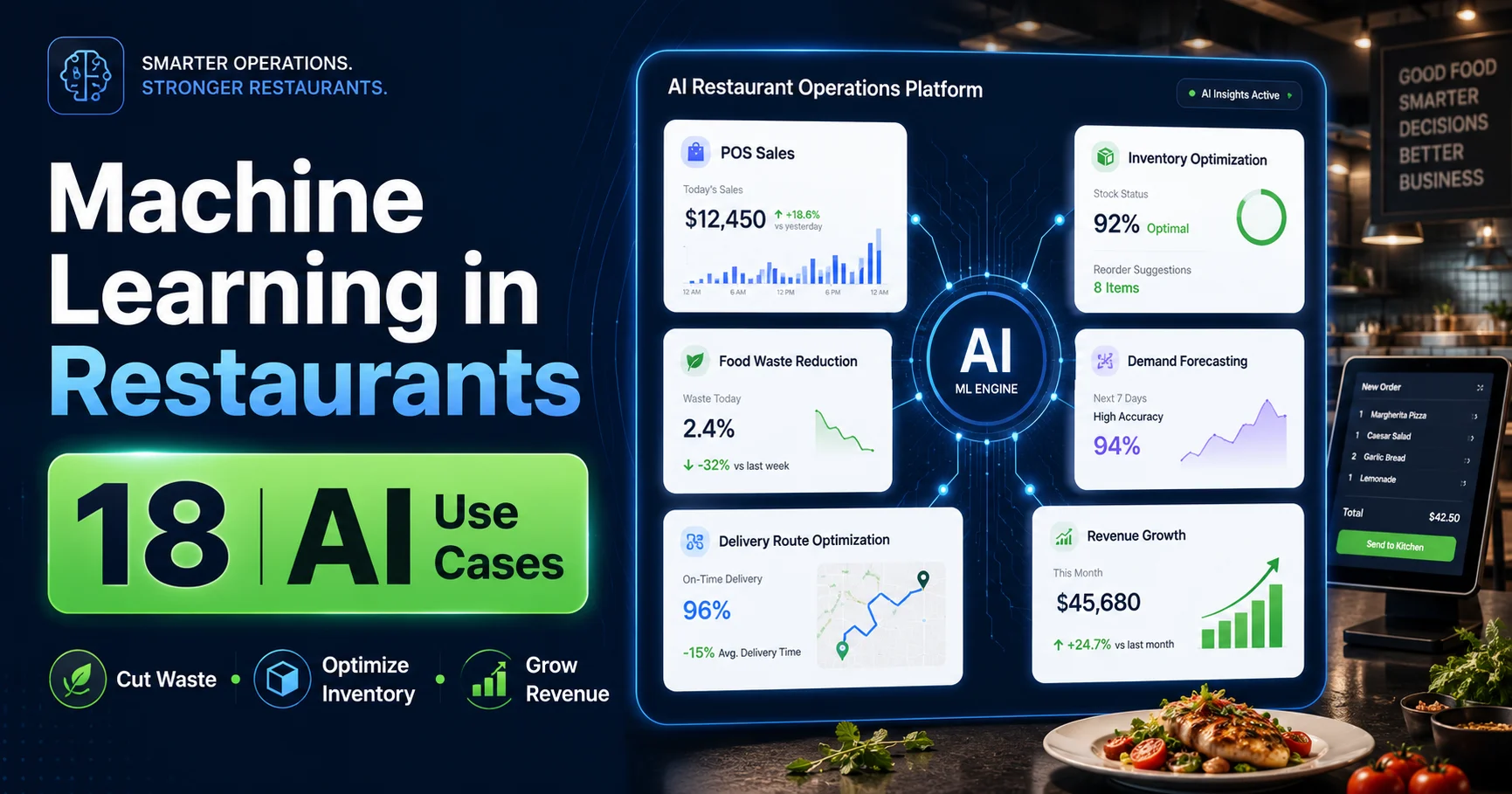
18 AI Use Cases to Cut Waste, Optimize Inventory & Grow Revenue in 2026 TL;DR: Machine learning helps food and restaurant businesses forecast demand, cut waste, optimize inventory, personalize customer experiences, and grow revenue. In 2026, the most impactful use cases include demand forecasting, AI-powered inventory management, food waste reduction, and dynamic pricing—each turning everyday data into smarter, faster decisions. Food and restaurant businesses lose margin every day through inaccurate demand forecasting, overstocked inventory, food waste, delivery delays, and disconnected POS data. Machine learning helps operators predict demand, automate inventory decisions, reduce waste, and improve profitability with real-time data. Machine learning changes that math. By learning from your sales, inventory, and customer data, it predicts what's coming and tells you what to do about it. The AI in food and beverages market is forecast to grow from $13.39 billion in 2025 to $18.34 billion in 2026, according to Mordor Intelligence—a clear signal that food businesses are moving from curiosity to commitment. This guide breaks down the most practical use cases of machine learning in food and restaurants, from AI-powered inventory management and predictive analytics for restaurants to delivery optimization, personalization, and food quality monitoring. Whether you run a single café, a QSR chain, a food delivery startup, or a fast-growing cloud kitchen, these applications can help you turn everyday operational data into measurable business growth. Who Should Read This Guide? This guide is written for food and restaurant decision-makers who want to reduce waste, improve forecasting, automate operations, and increase profitability with AI and machine learning. Restaurant owners QSR and franchise operators Cloud kitchen brands Food delivery startups Cafés, bakeries, and multi-location food businesses Food manufacturers and F&B technology leaders What Is Machine Learning in Food & Restaurants? Machine learning is a type of AI that learns patterns from data and makes predictions without being explicitly programmed for each task. In a restaurant, that means feeding the system your historical sales, inventory counts, weather, and customer behavior. The model finds patterns humans miss—like the fact that rainy Tuesdays spike soup orders by 30%—and uses them to forecast, recommend, and automate. Unlike traditional software that follows fixed rules, machine learning for restaurants improves over time. The more data it sees, the sharper its predictions get. AI vs Machine Learning in Restaurants: What’s the Difference? AI and machine learning are often used together, but they are not exactly the same. In restaurant operations, AI is the broader system that automates decisions, while machine learning is the part that learns from data and improves predictions over time. Term Meaning in Restaurants Artificial Intelligence Technology that automates decisions, recommendations, customer support, forecasting, and restaurant operations. Machine Learning A branch of AI that learns from sales, inventory, customer, and operational data to make better predictions. Predictive Analytics Uses machine learning models to forecast demand, sales, staffing needs, inventory usage, and customer behavior. Why Food Businesses Are Investing in Machine Learning Food businesses are investing in machine learning because the benefits are directly connected to cost control, revenue growth, customer experience, and operational efficiency. Waste is expensive. AI tools helped one grocery program cut food waste by 14.8% per store, according to ReFED. Demand is unpredictable. Predictive analytics for restaurants forecast sales by hour, day, and location—so you prep the right amount. Labor is tight. Smart scheduling matches staff to demand instead of guesswork. Customers expect personalization. AI in restaurants tailors recommendations and promotions to each guest. Adoption is accelerating. Around 33% of restaurants globally now use AI for inventory management, per Railwaymen, and that share is climbing fast. Machine Learning vs Traditional Restaurant Software The difference comes down to one word: prediction. Feature Traditional Software Machine Learning Decision logic Fixed rules Learns from data Forecasting Manual or historical averages Predictive and adaptive Improvement over time Static Gets smarter with more data Inventory Tracks what you have Predicts what you'll need Personalization One-size-fits-all Tailored per customer Anomaly detection Limited Flags fraud, waste, errors Traditional software records the past. Machine learning predicts the future. That's the shift. Best Machine Learning Use Cases by Restaurant Goal The best machine learning use case depends on the business problem you want to solve first. For most food businesses, the highest ROI comes from forecasting, inventory optimization, waste reduction, and customer retention. Business Goal Best Machine Learning Use Case Reduce food waste Demand forecasting and inventory optimization Lower food cost AI-powered inventory management Improve delivery speed Route and ETA optimization Increase repeat orders Personalized recommendations and churn prediction Improve staffing Workforce demand forecasting Protect revenue Fraud detection and anomaly monitoring Improve reviews Sentiment analysis and reputation monitoring Scale locations Multi-location sales forecasting Use Case 1: Demand Forecasting with Predictive Analytics for Restaurants Guesswork costs money. Over-prep and you waste food; under-prep and you lose sales. Restaurant demand forecasting uses machine learning to predict orders by hour, day, location, and season. It factors in weather, holidays, local events, and past trends. One large restaurant chain study published in ScienceDirect found machine learning and deep learning models meaningfully improved forecast accuracy over traditional methods. The result: tighter prep, less waste, and staff scheduled to match real demand. Business impact: Better demand forecasting helps reduce over-preparation, prevent lost sales, improve staff planning, and increase daily profitability. Use Case 2: AI in Restaurant Inventory Management Inventory is where money quietly leaks out. AI-powered inventory management tracks stock in real time, predicts usage, and flags when to reorder. Machine learning in restaurant inventory connects sales data to purchasing, so you stop over-ordering perishables. Studies cited by Loman AI suggest restaurants can save up to 5% of total revenue through AI inventory optimization. For multi-location operators, restaurant inventory optimization keeps every site stocked correctly without manual counts. Business impact: AI in restaurant inventory management helps lower food costs, reduce stockouts, prevent over-ordering, and improve purchasing decisions across one or multiple locations. Use Case 3: Food Waste Reduction Through AI and Machine Learning Roughly a third of food produced globally is wasted. Restaurants carry a big share of that bill. AI food waste reduction works by predicting demand accurately, then matching prep and purchasing to it. The system spots waste patterns before they happen—an over-ordered ingredient, a slow-moving dish, a recurring end-of-night dump. ReFED reports AI solutions delivered a 14.8% average reduction in food waste per store. Less waste means lower costs and a smaller environmental footprint. Business impact: Food waste reduction improves margins, supports sustainability goals, and helps restaurants make purchasing and prep decisions based on real demand. Use Case 4: Personalized Customer Recommendations Generic menus convert poorly. Personalized ones don't. Restaurant personalization AI studies each customer's order history and preferences, then recommends dishes they're likely to want. Think of how streaming services suggest shows—the same machine learning technology powers both experiences. If you're interested in how recommendation engines transform digital platforms, explore our guide on Machine Learning in Entertainment & Media. The same principle is now applied to restaurant menus to increase engagement and average order value. This lifts average order value and brings guests back more often. Similar recommendation engines also drive online retail success through personalized shopping experiences, demand forecasting, and customer retention, as covered in our guide on Machine Learning in Ecommerce. Business impact: Personalized recommendations can increase average order value, repeat purchases, customer loyalty, and campaign performance. Use Case 5: Dynamic Pricing and Smart Promotions Static prices leave money on the table. Machine learning enables dynamic pricing—adjusting prices based on demand, time of day, inventory, and local events. The same predictive pricing strategies are widely used in hotels and airlines, making our guide on Machine Learning in Travel & Hospitality a useful resource for understanding cross-industry AI applications. It also targets promotions to the right customers at the right moment, instead of blanket discounts that erode margin. Happy hour, but smarter. Business impact: Dynamic pricing and smart promotions help restaurants protect margins, fill slow periods, and avoid unnecessary blanket discounts. Use Case 6: Menu Engineering and Menu Optimization Every menu has stars and duds. Most owners can't tell which is which. Machine learning analyzes sales, margins, and ordering patterns to rank each dish by popularity and profitability. It tells you what to promote, reprice, redesign, or cut. The outcome is a leaner, more profitable menu built on data instead of intuition. Business impact: Menu optimization helps identify high-margin dishes, remove underperforming items, and design menus around profit and demand. Want to reduce food waste, forecast demand, and automate restaurant inventory with machine learning? SISGAIN builds custom AI and ML solutions for restaurants, cloud kitchens, food delivery startups, and multi-location food businesses. Build My Restaurant AI Roadmap Use Case 7: Customer Churn Prediction and Retention Losing a regular costs more than acquiring a new guest. Machine learning spots the warning signs—fewer visits, smaller orders, lower engagement—before a customer disappears. It flags at-risk guests so you can win them back with a targeted offer. Retention becomes proactive instead of reactive. Business impact: Churn prediction helps restaurants retain regular customers before they stop ordering, reducing customer acquisition costs. Use Case 8: Restaurant POS Data Analytics Your POS holds a goldmine. Most of it goes unused. Machine learning restaurant POS analytics turns raw transaction data into clear insights—peak hours, top combos, slow periods, and upsell opportunities. Restaurant predictive analytics built on POS data help you decide what to stock, when to staff, and how to sell. Pairing this with custom POS software development unlocks the full value of that data. Business impact: Restaurant POS data analytics turns transaction data into decisions for inventory, staffing, upselling, promotions, and sales forecasting. Use Case 9: Kitchen Operations and Order Time Prediction Slow tickets kill the guest experience. Machine learning predicts how long each order will take based on kitchen load, dish complexity, and staffing. It helps sequence tickets, set accurate wait times, and smooth out bottlenecks during rushes. Faster kitchens, happier customers. Business impact: Order time prediction improves kitchen speed, wait-time accuracy, customer satisfaction, and delivery reliability. Use Case 10: Staff Scheduling and Workforce Planning Overstaff and you burn payroll. Understaff and service suffers. AI restaurant automation aligns schedules with forecasted demand. The model predicts busy and slow periods, then suggests the right number of staff for each shift. You cut labor costs without sacrificing service quality. Business impact: Smarter staff scheduling reduces unnecessary labor cost while keeping enough team members available during peak demand. Use Case 11: Food Delivery Route and Time Optimization Late deliveries lose customers. Inefficient routes lose money. Machine learning food delivery systems calculate the fastest routes in real time, factoring in traffic, distance, and driver location. They predict accurate delivery times and re-route on the fly when conditions change. For delivery-first brands, this is the core of strong food delivery app development solutions. Business impact: Delivery optimization reduces late orders, improves driver efficiency, lowers fuel and delivery costs, and improves customer satisfaction. Use Case 12: Fraud Detection in Food Delivery and Payments Fraud eats into already-thin margins. Machine learning flags suspicious activity—fake orders, refund abuse, stolen payment cards—by spotting patterns that don't fit normal behavior. These fraud detection models use the same core techniques applied in banking and financial services, as explained in our guide on Machine Learning for BFSI. It catches problems in real time, before they cost you. For high-volume delivery operations, this protection pays for itself. Business impact: Fraud detection protects revenue by identifying fake orders, refund abuse, payment fraud, and suspicious customer behavior in real time. Use Case 13: Review Sentiment Analysis and Reputation Management You can't read every review. Machine learning can. Sentiment analysis scans reviews and social posts, then sorts them as positive, negative, or neutral. It surfaces recurring complaints—slow service, cold food, a problem location—so you fix issues before they spread. Your reputation stays ahead of the conversation. Business impact: Sentiment analysis helps restaurants detect recurring complaints, protect brand reputation, and improve service quality across locations. Use Case 14: Food Quality Control and Safety Monitoring A single safety lapse can sink a brand. Machine learning monitors temperature, freshness, and storage conditions, then flags risks before they become violations. Computer vision can even inspect food for quality and consistency. The result is safer food and fewer compliance headaches. Business impact: AI food quality monitoring helps reduce safety risks, improve consistency, support compliance, and protect customer trust. Use Case 15: Sales Forecasting for Multi-Location Restaurants Scaling multiplies complexity. Each location behaves differently. Machine learning forecasts sales per location, accounting for local demand, demographics, and trends. Chains get a unified view of performance and location-specific predictions for inventory, staffing, and marketing. One model, every site. Business impact: Multi-location forecasting gives chains better control over inventory, staffing, marketing, purchasing, and location-level performance. Use Case 16: AI Voice Ordering and Drive-Thru Automation AI voice ordering allows restaurants, QSRs, and drive-thru brands to take customer orders faster with natural language systems. The system understands menu items, modifiers, combos, and customer preferences, then sends accurate orders directly to the POS or kitchen display system. For high-volume restaurants, AI voice ordering reduces wait times, improves order accuracy, and allows staff to focus on food preparation and customer service. Business impact: Faster ordering, shorter queues, better order accuracy, and lower pressure on front-line staff. Use Case 17: Predictive Maintenance for Kitchen Equipment Kitchen equipment failures can disrupt operations, delay orders, and increase repair costs. Machine learning models can monitor equipment usage, temperature, performance, and maintenance history to predict when ovens, fryers, refrigerators, or prep machines may fail. This allows restaurants and cloud kitchens to schedule maintenance before breakdowns happen. Business impact: Less downtime, fewer emergency repairs, better food safety, and smoother kitchen operations. Use Case 18: AI Procurement and Supplier Optimization Food businesses often deal with changing supplier prices, inconsistent availability, and manual purchasing decisions. Machine learning can compare supplier pricing, ingredient quality, delivery reliability, and demand forecasts to recommend smarter purchasing decisions. For multi-location operators, AI procurement can help standardize buying, reduce cost leakage, and improve supply chain visibility. Business impact: Better supplier decisions, lower purchasing costs, improved availability, and stronger control over food margins. Bonus Use Case: AI Chatbots and Smart Customer Support Customers want answers now, not during business hours. AI chatbots handle reservations, orders, and FAQs around the clock. They understand natural language, take orders accurately, and escalate to humans when needed. Support gets faster and cheaper at the same time. Benefits of Machine Learning in Food and Restaurant Businesses The payoff is measurable. Lower costs: Less waste, leaner inventory, smarter staffing. Higher revenue: Better forecasting, personalization, and pricing. Faster decisions: Real-time insights instead of gut feel. Better experience: Quicker service and tailored recommendations. Easier scaling: Predictions that work across one site or a hundred. How Machine Learning Helps Different Food Businesses Every food business has different pain points. Machine learning meets each one. Business Type Top Machine Learning Use Case QSR chains Demand forecasting and drive-thru speed Cloud kitchens Inventory and delivery optimization Cafés and bakeries Waste reduction and menu engineering Fine dining Personalization and reservations Food delivery startups Route optimization and fraud detection Food manufacturers Quality control and demand planning Cloud kitchens, in particular, benefit from purpose-built cloud kitchen software solutions that tie forecasting, inventory, and delivery into one system. Data Required to Build Machine Learning Solutions for Restaurants Good models need good data. Here's what fuels them: Sales data: Transaction history from your POS. Inventory data: Stock levels, usage, and purchasing records. Customer data: Order history, preferences, and loyalty activity. External data: Weather, holidays, and local events. Operational data: Staffing, prep times, and delivery logs. The cleaner and more complete your data, the better your predictions. Start collecting now, even before you build. Challenges of Implementing Machine Learning in Food Businesses It's not plug-and-play. Know the hurdles upfront. Data quality: Messy or incomplete data weakens predictions. Integration: Connecting POS, inventory, and delivery systems takes work. Cost: Custom solutions require upfront investment. Skills gap: Most teams lack in-house ML expertise. Adoption: Staff need training to trust and use the tools. None of these are dealbreakers. Each has a clear fix—usually the right partner and a phased rollout. Step-by-Step Roadmap to Implement Machine Learning in Restaurants Start small. Prove value. Then scale. Stage 1: Identify the problem. Pick one painful, measurable issue—waste, forecasting, or scheduling. Stage 2: Gather your data. Pull sales, inventory, and customer records into one place. Stage 3: Choose build or buy. Decide between a ready-made tool and a custom solution (more on this below). Stage 4: Run a pilot. Test the model on one location or one use case. This phased implementation approach is common across industries, including digital learning platforms, where organizations deploy AI incrementally to improve outcomes. Learn more in our guide on Machine Learning in Education & eLearning. Stage 5: Measure results. Track waste, sales, or labor against your baseline. Stage 6: Scale. Roll out what works across more locations and use cases. This is where machine learning development services earn their keep—handling the technical build, data integration, model development, and deployment while you focus on operations. Need a machine learning roadmap for your restaurant, cloud kitchen, or food delivery business? Our team can help you identify the highest-ROI use case, connect your data sources, and build a practical AI implementation plan. Book a Free AI Consultation Build vs Buy: Ready-Made AI Tools or Custom ML Software? The right choice depends on your needs and scale. Factor Ready-Made Tools Custom ML Software Setup speed Fast Slower Cost Lower upfront Higher upfront Customization Limited Full control Scalability Varies Built for your scale Best for Small operators, single sites Chains, complex operations Choose ready-made tools if you need quick wins on a budget. Choose custom restaurant software development services if you run multiple locations, have unique workflows, or want a system that grows with you. Future Trends of Machine Learning in Food & Restaurants for 2026 and Beyond AI is moving from pilot to practice. According to IFT, AI is rapidly transforming how food systems operate—enabling smarter decisions, automation, and new business models. Here's what's next: AI inside everyday operations, not just experiments, per Aptean. Generative AI for menus, marketing, and customer support. Hyper-personalization at the individual customer level. Fully automated kitchens and drive-thrus, with early adopters already seeing double-digit gains, per Kantar. Predictive everything—from supply chain to staffing. The businesses building these capabilities now will lead the market tomorrow. Machine Learning Beyond Food and Restaurants The same techniques drive results across industries. If you operate in more than one space, explore how machine learning applies elsewhere: Machine learning in entertainment and media: helps platforms personalize content, predict audience demand, automate recommendations, and improve engagement. Machine learning for BFSI: supports fraud detection, credit scoring, risk analysis, customer segmentation, and financial automation. Machine learning in travel and hospitality: improves dynamic pricing, guest personalization, booking predictions, and operational planning. Machine learning in education and eLearning: enables personalized learning paths, student performance analytics, automated assessments, and retention prediction. Machine learning in e-commerce and retail: powers product recommendations, inventory forecasting, dynamic pricing, customer retention, and demand planning. The underlying principle holds everywhere: data in, smarter decisions out. How SISGAIN Can Help Food and Restaurant Businesses Use Machine Learning Most food businesses know they need machine learning. Few have the in-house team to build it. That's the gap SISGAIN fills. SISGAIN builds custom machine learning software for food and restaurant businesses, end to end. Services include: Custom machine learning software development tailored to your operations Restaurant software development and POS software integration Food delivery app development with route and time optimization AI-powered inventory management solutions and restaurant inventory optimization software Predictive analytics dashboards for demand and sales forecasting Cloud kitchen management software for delivery-first brands AI chatbot development for orders and support Customer loyalty and recommendation systems Data integration and automation across your tools Whether you need a single solution or a full transformation, SISGAIN delivers software built for the way food businesses actually run. Expert Review Reviewed by SISGAIN AI & Software Development Team This guide is based on practical experience in AI software development, machine learning solutions, restaurant software development, POS integration, food delivery app development, predictive analytics, and business automation for operational use cases. Machine Learning Is Becoming a Growth Engine for Food Businesses The shift is already underway. Machine learning in food restaurants has moved from nice-to-have to competitive necessity. The wins are clear: less waste, sharper forecasts, leaner inventory, happier customers, and stronger margins. Start with one use case, prove the value, then scale across your operation. The food businesses investing in machine learning now will have a clear advantage in 2026 and beyond. The right solution can help you forecast demand, reduce waste, optimize restaurant inventory, improve delivery speed, personalize customer experiences, and scale operations with confidence. Ready to turn your restaurant data into measurable growth? Book a free consultation with SISGAIN and build a practical machine learning roadmap for your food business. Sources & References This guide uses industry research and market data from trusted food technology, AI, and restaurant industry sources. Recommended references to cite include: Mordor Intelligence: AI in Food and Beverages Market ReFED: Food waste reduction and AI solutions ScienceDirect: Machine learning and deep learning for restaurant demand forecasting IFT: AI transformation in food systems Deloitte or similar industry research on restaurant AI adoption table { width: 100%; border-collapse: collapse; margin: 24px 0; font-size: 15px; line-height: 1.6; background: #ffffff; border: 1px solid #d9e2ec; border-radius: 10px; overflow: hidden; } table th { background: #0b2a4a; color: #ffffff; font-weight: 700; text-align: left; padding: 14px 16px; border: 1px solid #0b2a4a; } table td { padding: 13px 16px; border: 1px solid #d9e2ec; color: #1f2937; vertical-align: top; } table tr:nth-child(even) td { background: #f8fbff; } table tr:hover td { background: #eef6ff; } table p { margin: 0; } @media (max-width: 768px) { table { display: block; overflow-x: auto; white-space: nowrap; } }
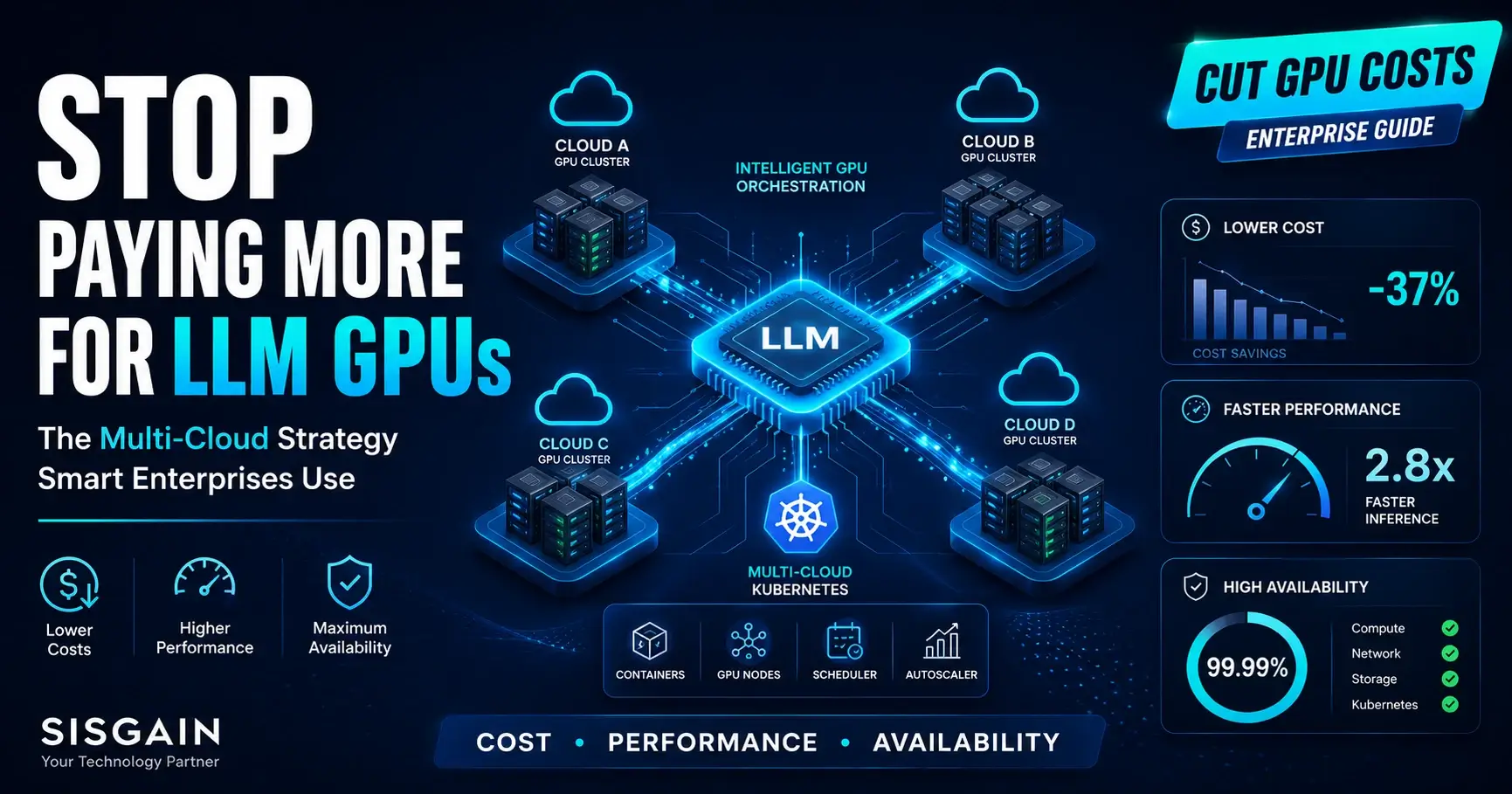









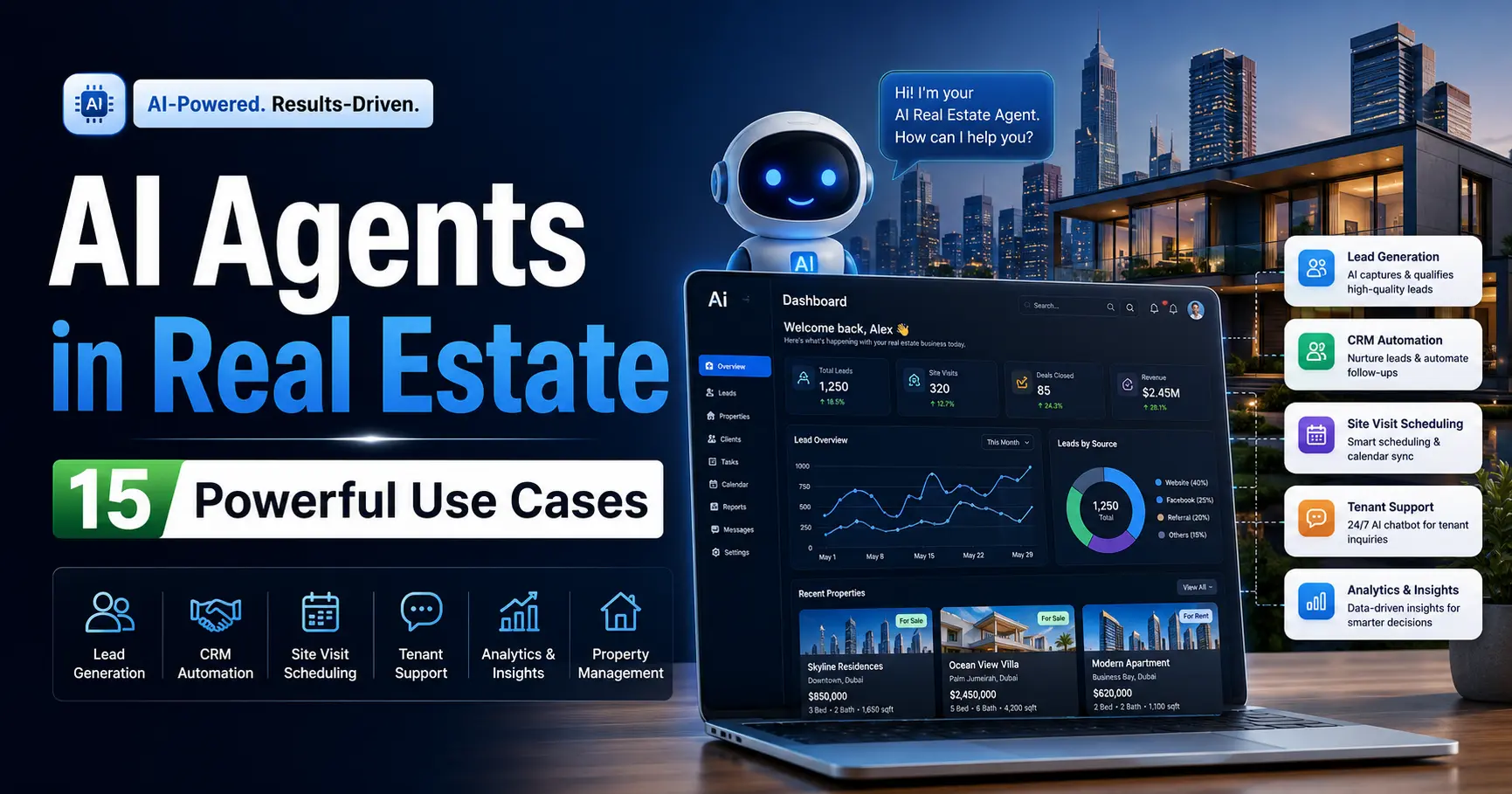



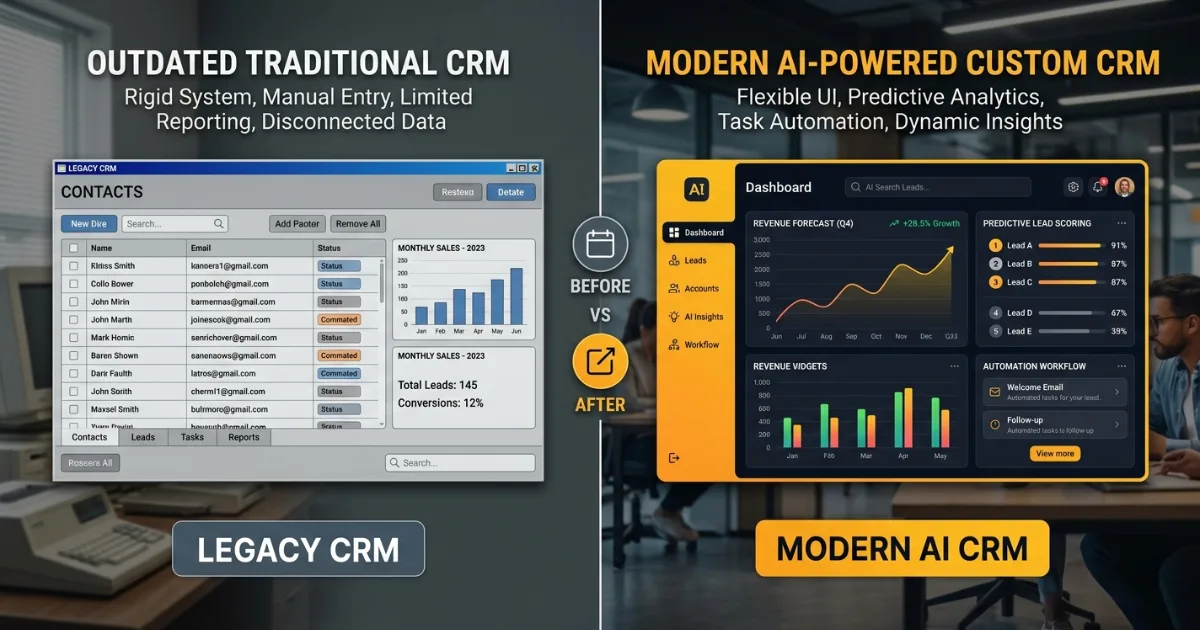
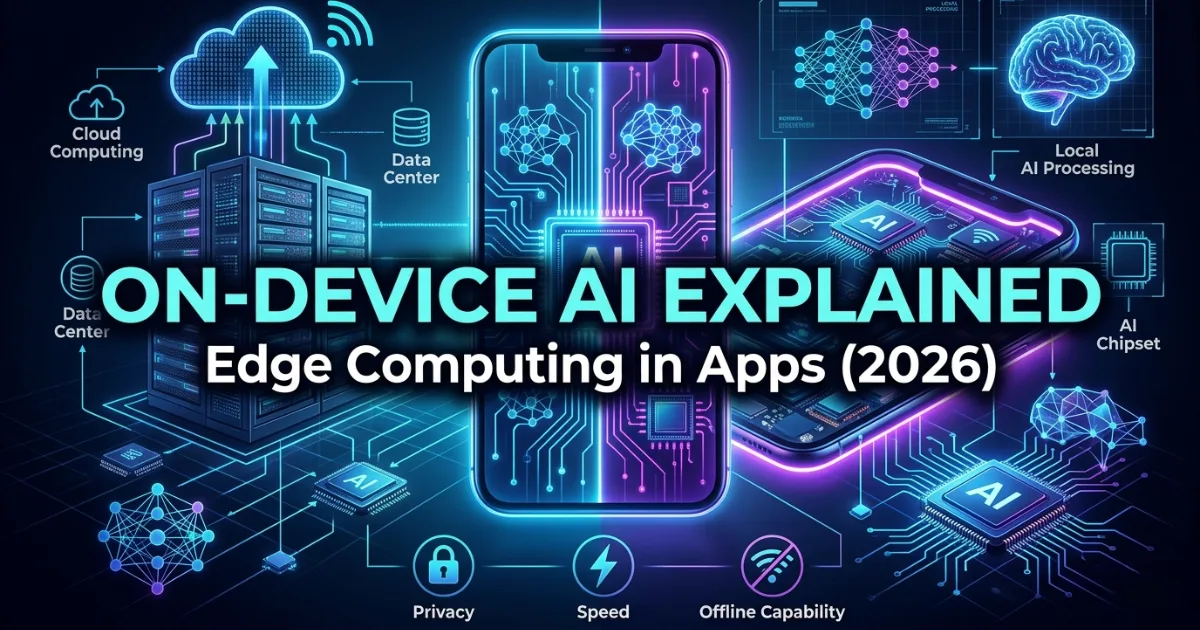

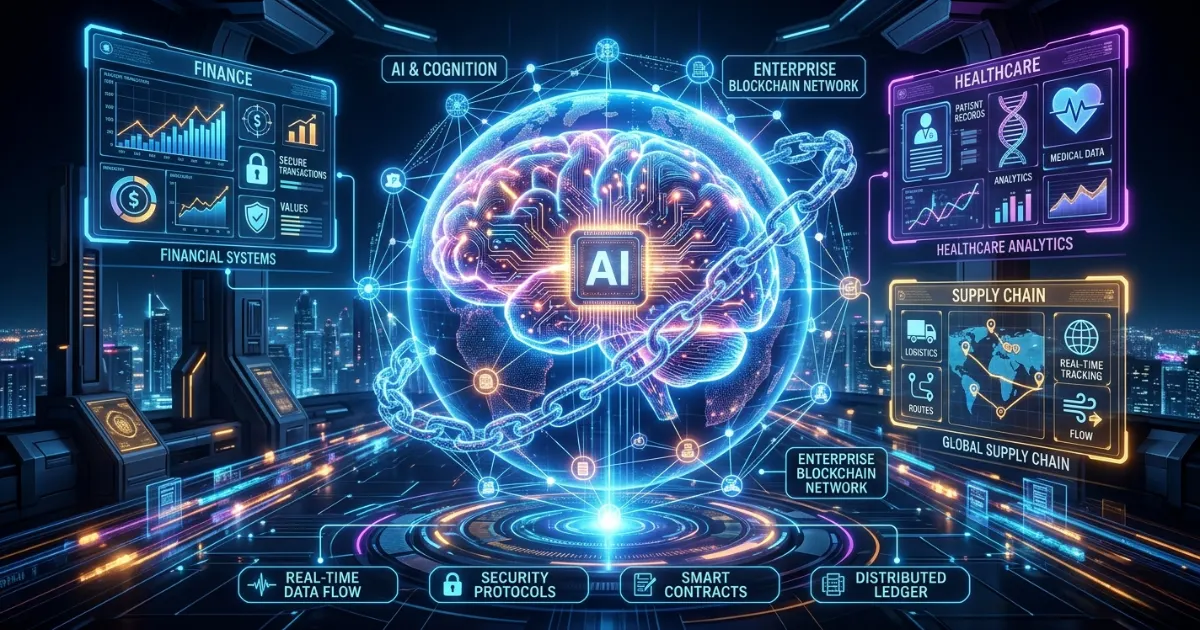


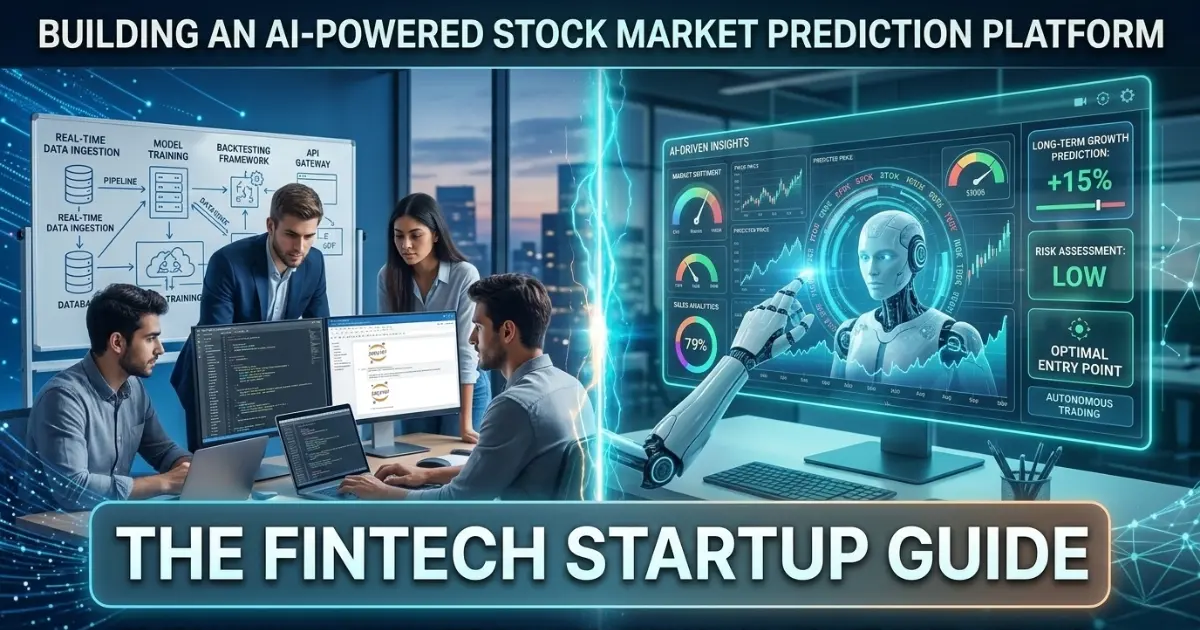








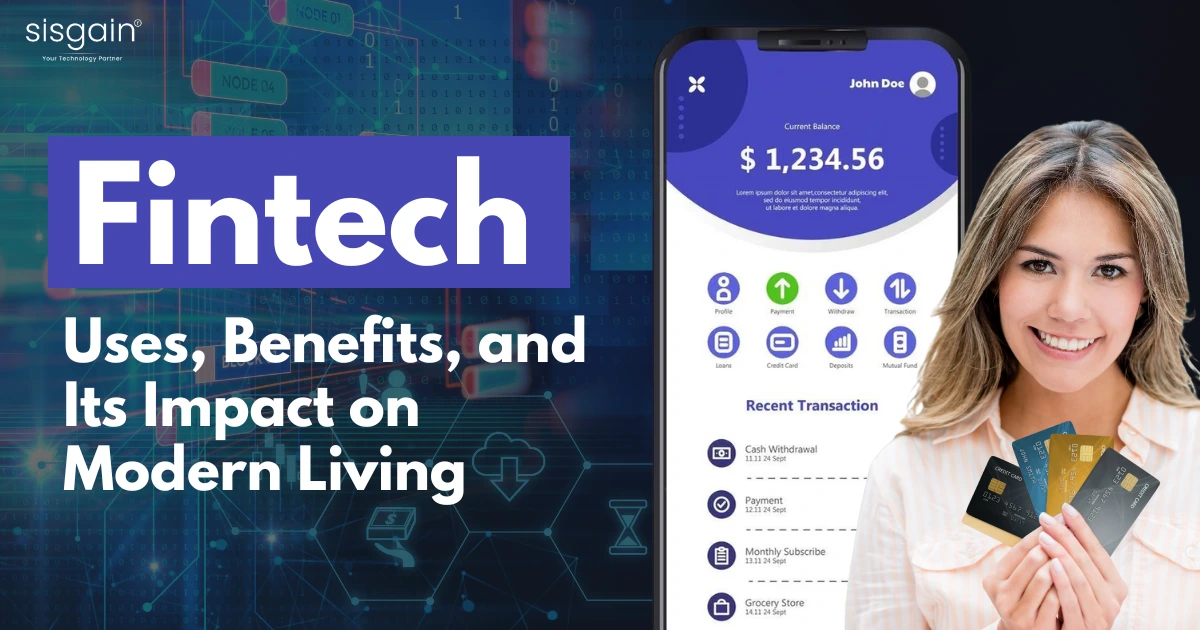


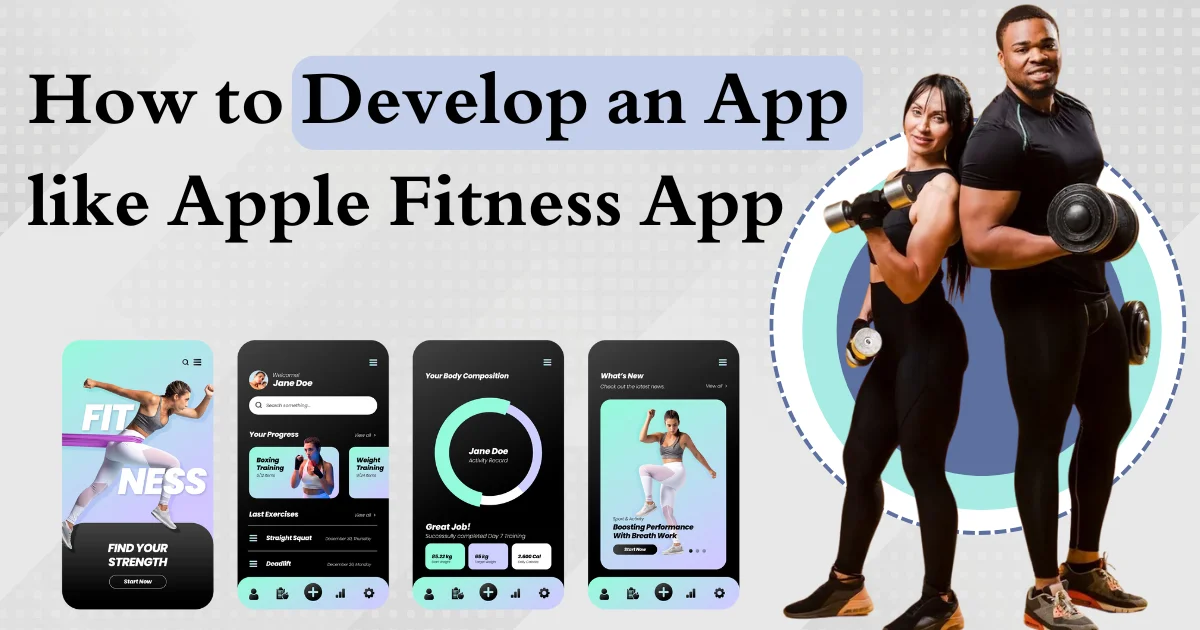




















Start Build Your
Next Digital Solution?
Let’s build scalable, future-ready digital solutions tailored to your business goals. Connect with our experienced technology consultants to discuss your vision, strategy, and growth opportunities — with zero obligation and complete transparency.
Get a free consultation and cost estimate for your digital solution
Our expert will contact you within 24 hours. Check your email for confirmation.
Partner with SISGAIN experts to build secure, scalable AI-powered IT Solutions that transform your business operations.









DUQE FREEZONE Quarter Deck, Queen Elizabeth 2, Mina Rashid, Dubai, UAE

100 Consilium Pl Suite 200, Scarborough, ON M1H 3E3, Canada

C-109, Sector 2, Noida, Uttar Pradesh 201301 India
Project quotes, partnerships, implementation
Open roles, referrals, campus hiring