
 +1 844-445-5767
 +971 56-848-5757
 +91 921-208-0630
For Business & Service Inquiries
Sales Team
Project quotes, partnerships, implementation

Google is expanding the creative capabilities of the Gemini app with the beta launch of Lyria 3, a new AI-powered music generation model designed to help users create original soundtracks in seconds. The update marks a significant step in Google’s push toward multimodal AI tools that combine text, image, video, and now music creation within a single platform. What Lyria 3 Brings to the Gemini App With Lyria 3, users can generate 30-second music tracks by simply describing an idea in text or uploading a photo or video for inspiration. The AI then composes a complete track based on the prompt — including melody, instrumentation, and even lyrics. Unlike earlier versions, users no longer need to write their own lyrics. Gemini automatically generates them while offering adjustable controls for: Musical style Vocal tone Tempo Overall mood The model is designed to produce more realistic and musically complex compositions compared to previous iterations, reflecting advancements in generative audio modeling. Each AI-generated song also comes with custom AI-created cover art, enhancing its usability for social sharing and creative projects. Integration With YouTube Creators Lyria 3 is also being integrated into YouTube’s Dream Track for Shorts, expanding access for content creators looking to generate background music quickly for short-form videos. All generated audio includes SynthID watermarking, Google’s AI content identification technology, ensuring transparency and traceability of AI-created music. Availability and Rollout The music generation feature is currently rolling out in beta on desktop for users aged 18 and above, with mobile support expected soon. This release reinforces Google’s broader AI strategy of embedding generative capabilities directly into consumer-facing tools. As demand grows for intelligent creative platforms, innovations like Lyria 3 are shaping the future of digital content production. For businesses exploring similar innovations, investing in advanced AI Application Development can unlock new opportunities in generative media, user engagement, and creative automation across industries. As generative AI continues to expand beyond text and image creation into full multimedia production, Google’s latest move positions Gemini as a serious player in the evolving AI-powered creative ecosystem.Source - A new way to express yourself: Gemini can now create music
Hong Kong — Robinhood has taken a decisive step deeper into onchain finance, unveiling a public testnet for its own Ethereum-based blockchain designed to support tokenized equities, round-the-clock trading and decentralized finance integrations. The new network, dubbed Robinhood Chain, is built on Arbitrum — one of Ethereum’s most prominent layer-2 frameworks — and marks the brokerage firm’s most ambitious infrastructure move yet as digital assets and real-world tokenization accelerate across global markets. Announced during CoinDesk’s Consensus Hong Kong conference, the testnet follows six months of private experimentation and will open the door for developers to build publicly ahead of a planned mainnet launch later this year. From Brokerage App to Blockchain Operator Robinhood’s latest initiative reflects a broader shift sweeping financial services, where traditional trading platforms are evolving into blockchain-native ecosystems. These developments are rapidly becoming central to wider fintech trends in 2026, as firms seek faster settlement, global accessibility and programmable compliance. According to Johann Kerbrat, Robinhood’s Senior Vice President and General Manager of Crypto, the decision to build its own chain was less about chasing transaction speed and more about anchoring itself in Ethereum’s deep liquidity and developer community. “What we wanted was the security of Ethereum, the liquidity that is available on EVM chains and the Ethereum ecosystem,” Kerbrat said, while emphasizing the importance of tailoring infrastructure for regulated assets like stocks and ETFs. Tokenized Assets at the Core Unlike many high-performance rollups optimized for speculative trading, Robinhood Chain is being architected specifically for tokenized traditional securities. The network aims to allow users to self-custody digital representations of equities, exchange-traded funds and other financial instruments through Robinhood’s crypto wallet, while seamlessly bridging to Ethereum-based DeFi applications. The platform also plans to enable 24/7 trading — a sharp contrast to legacy market hours — signaling how tokenization could redraw the boundaries of global capital markets. This move builds on Robinhood’s earlier foray into digital securities. Last year, the company introduced tokenized U.S. stocks and ETFs for European customers, complete with dividend payouts and extended trading windows. Those assets were initially issued on Arbitrum, though their overall value still trails behind rival token issuers such as xStocks and Ondo Global Markets. Layer-2s Evolve Beyond Scaling Robinhood’s timing is notable. Ethereum’s roadmap has recently shifted renewed attention to strengthening its base layer, with upgrades aimed at lowering fees and easing congestion — developments that challenge the long-standing argument that layer-2 networks exist solely to scale the main chain. Kerbrat suggested Robinhood had already anticipated this evolution. “For us, it was never really about scaling Ethereum or doing faster transactions,” he said. “We wanted to customize the chain and make it optimized for traditional assets being tokenized.” That philosophy aligns with a growing industry narrative: layer-2 networks as specialized environments rather than generic throughput engines. Increasingly, firms — including large financial institutions working alongside blockchain development companies — are crafting application-specific chains that bake in regulatory controls, identity layers and compliance tooling. Compliance-First Design Because tokenized securities must adhere to different legal frameworks across jurisdictions, Robinhood Chain is being structured with regulatory flexibility in mind. Kerbrat noted that future blockchain ecosystems are likely to fragment into purpose-built networks — some focused on payments, others on institutional finance, and still others on consumer crypto services. This approach echoes recent debates sparked by Ethereum co-founder Vitalik Buterin, who has argued that rollups dealing with real-world assets may need to accept different decentralization trade-offs to satisfy regulators. Robinhood, Kerbrat said, has long assumed such compromises would be unavoidable. “We’ve always been building with the idea that there are different compliance requirements based on the jurisdiction, and all these things can be embedded into the chain.” What Comes Next With the testnet now live, developers can access tooling, documentation and standard Ethereum frameworks to begin experimenting on the network. Robinhood plans to gradually expand functionality ahead of mainnet, including test-only stock tokens and deeper wallet integrations. The rollout underscores how major financial platforms are no longer content merely offering crypto trading — they are becoming infrastructure providers themselves. As institutional interest in tokenization rises and demand grows for sophisticated digital-asset platforms — from equity rails to bitcoin application development — Robinhood’s blockchain gamble could position the firm at the heart of the next generation of market plumbing. Whether Robinhood Chain ultimately becomes a cornerstone for regulated onchain finance remains to be seen. But its debut signals one thing clearly: the race to tokenize Wall Street has entered a new, more infrastructural phase.
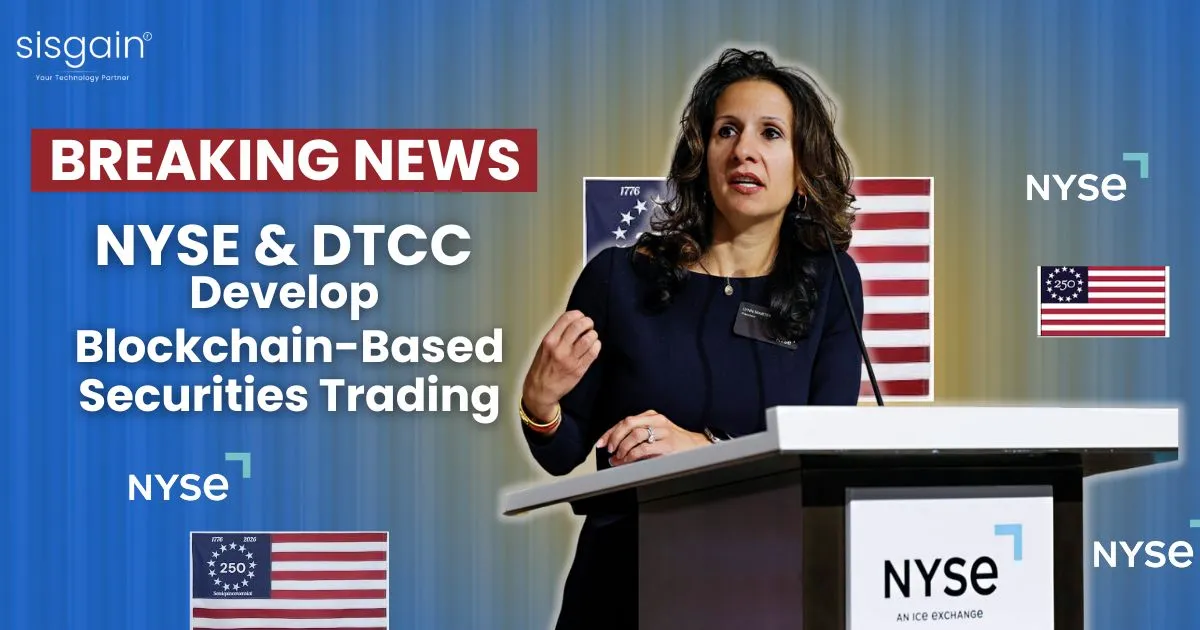
The global financial system is approaching a pivotal inflection point. When Lynn Martin, President of NYSE Group, confirmed that the New York Stock Exchange is developing blockchain-based securities trading infrastructure, it underscored a deeper transformation underway across capital markets. Alongside similar initiatives from the Depository Trust & Clearing Corporation (DTCC), the move signals that traditional market leaders are preparing for a future defined by continuous trading, real-time settlement, and digitally native assets. For decades, securities trading has relied on complex, intermediary-heavy systems built for an era of limited connectivity and fixed trading hours. Today, those constraints are increasingly misaligned with a global economy that operates around the clock. The NYSE and DTCC initiatives aim to close that gap—bringing market infrastructure closer to the speed, transparency, and flexibility modern businesses demand. Why Traditional Market Infrastructure Is Being Rethought Despite decades of technological progress, post-trade settlement in most equity markets still operates on timelines measured in days rather than seconds. Multiple reconciliation layers, jurisdictional complexities, and manual processes continue to introduce unnecessary cost and risk into the system. According to Lynn Martin, President of NYSE Group, these inefficiencies are no longer sustainable in a global, digital-first economy. Martin has emphasized that the NYSE sees modern market infrastructure as a responsibility, not an option. While tokenization has long been discussed as a potential solution, she has noted that progress was limited by the absence of reliable, end-to-end settlement mechanisms. Tokenized assets often relied on traditional fiat settlement rails, forcing markets to fall back on legacy processes and diluting the efficiency gains that digital assets promised. That equation is now changing. Martin has pointed out that advances in regulated digital settlement instruments and distributed ledger systems allow exchanges like NYSE to align asset issuance, trading, settlement, and custody within a single, integrated framework. By applying these innovations at institutional scale, NYSE aims to reduce friction, enhance transparency, and build a more resilient foundation for the next generation of securities markets. 24/7 Trading and the New Market Reality One of the most transformative aspects of NYSE’s initiative is the concept of continuous trading. A blockchain-enabled platform capable of supporting 24/7 access to U.S.-listed equities and ETFs challenges the long-held assumption that markets must shut down overnight or on weekends. For institutional investors, this opens new strategies for liquidity management and risk mitigation across time zones. For businesses, it offers more responsive access to capital markets—particularly during periods of volatility when timing can be critical. Fractional ownership further expands participation, allowing investors to access high-value securities with lower capital commitments. Over time, this could significantly broaden market participation and deepen liquidity pools. DTCC’s Role in Building Trust at Scale While trading platforms attract attention, settlement and custody remain the backbone of market confidence. DTCC’s move to tokenize real-world assets under regulatory guidance reflects a pragmatic approach to innovation—one that prioritizes investor protection and operational continuity. By ensuring tokenized securities carry the same ownership rights, entitlements, and safeguards as traditional instruments, DTCC is addressing a core concern among institutional participants: trust. This regulatory alignment is essential for large-scale adoption and positions tokenization as an evolution rather than a disruption. The combination of exchange-driven innovation and clearinghouse-grade settlement infrastructure creates a foundation capable of supporting enterprise-scale activity. Beyond Equities: Enterprise Applications of Tokenized Infrastructure Although equities and ETFs are the immediate focus, the broader implications extend into multiple areas of enterprise finance. Corporate actions, collateral management, cross-border payments, and supply-chain-linked financing all stand to benefit from shared, programmable infrastructure. When asset data, ownership records, and settlement logic exist within a synchronized system, businesses gain unprecedented visibility and control. Automated processes reduce reconciliation overhead while improving accuracy and auditability. This evolution is particularly impactful for multinational organizations navigating complex regulatory environments and currency exposures. The Business Growth Advantage For businesses, modernized market infrastructure translates directly into growth opportunities. Faster settlement improves cash flow predictability. Reduced intermediaries lower transaction costs. Continuous markets provide greater flexibility in capital planning. Companies that integrate digital asset capabilities early can also explore new funding models, including tokenized debt or equity instruments tailored to specific investor segments. These innovations can shorten fundraising cycles and unlock new pools of capital. As adoption accelerates, demand is growing for specialized Blockchain Development Services that help enterprises connect legacy systems with emerging market infrastructure securely and efficiently. Raising the Bar for Digital Asset Platforms Early tokenized trading platforms often fell short of institutional expectations. Limited functionality, restricted trading hours, and incomplete investor rights constrained their usefulness. Dividends, governance participation, tax handling, and privacy controls were frequently absent. The new generation of platforms being developed by market incumbents aims to close that gap. By incorporating the full feature set of traditional exchanges, these systems are designed to support real-world trading at scale—not just experimental use cases. Lower transaction costs and improved asset utility may also allow investors to earn incremental returns on digital holdings, strengthening the economic case for participation. Technology Maturity and Market Readiness Distributed ledger systems have evolved significantly over the past decade. Advances in scalability, privacy layers, and interoperability now make it possible to support high-volume trading environments without compromising performance or compliance, reflecting the growing maturity of Blockchain Technology across enterprise use cases. This maturity addresses many of the challenges that hindered earlier exchange-led experiments. Market infrastructure providers are no longer building from scratch; they are integrating proven components into carefully governed systems. The result is a more realistic path toward parity between on-chain and traditional trading environments—one that balances innovation with stability. The Strategic Role of Technology Partners As financial institutions modernize, collaboration with experienced implementation partners becomes increasingly important. Integrating trading, settlement, custody, and compliance systems requires deep technical expertise and domain knowledge. Enterprises often rely on a trusted Blockchain software development company to design architectures that meet regulatory, performance, and security requirements while remaining adaptable to future market changes. Similarly, established Blockchain Development companies are playing a growing role in helping institutions transition from pilot projects to production-grade platforms capable of supporting global operations. A Long-Term Shift, Not an Overnight Change Despite the momentum, industry leaders acknowledge that transformation will be gradual. Hybrid models—where traditional and tokenized systems operate in parallel—are likely to persist for years. However, the direction of travel is clear. As core infrastructure providers commit resources and regulatory bodies provide frameworks, the balance will steadily shift toward on-chain ownership and settlement. This transition will be driven not by novelty, but by measurable gains in efficiency, transparency, and capital mobility. What This Means for the Global Economy A more efficient securities market has implications beyond finance. Faster capital formation supports innovation, entrepreneurship, and job creation. Improved transparency strengthens investor confidence and market resilience. For emerging markets and cross-border investors, unified digital infrastructure reduces friction and levels the playing field. Over time, this could lead to more inclusive participation in global capital markets. The convergence of regulation, institutional leadership, and advanced distributed ledger systems is setting the stage for a more connected financial ecosystem, one built for a digital-first world. Looking Ahead: The Next Phase of Market Evolution Industry experts increasingly view the coming years as a critical window. As platforms mature and regulatory clarity improves, adoption is expected to accelerate rapidly. By mid-decade, many analysts anticipate functional parity between traditional and tokenized markets, driven by incumbent institutions applying their scale and credibility to emerging systems. The involvement of entities like NYSE and DTCC suggests this shift will be structural rather than speculative, reshaping how assets are issued, traded, and managed worldwide. Reinventing Trust for the Digital Age The push by NYSE and DTCC toward blockchain-based securities trading represents more than technological experimentation—it reflects a reimagining of market trust and efficiency. By modernizing core infrastructure while preserving regulatory safeguards, these institutions are laying the groundwork for the next generation of capital markets. For businesses, investors, and technology providers, the message is clear: the future of securities trading will be continuous, programmable, and digitally native. Organizations that prepare now—strategically and technologically—will be best positioned to thrive as this transformation unfolds.
On September 2, Oracle reportedly initiated a new workforce shift that sent shockwaves through its Kansas City offices. The layoffs, which affected an unspecified number of employees, particularly those who had joined Oracle through its 2021 acquisition of Cerner, mark another chapter in the company’s ongoing restructuring journey. While Oracle remains a technology giant with global influence, its healthcare-focused subsidiary, Oracle Health, is navigating turbulent waters—balancing the challenges of customer dissatisfaction, federal contract struggles, and rising expectations around artificial intelligence (AI). This workforce shift is not just a corporate move. It highlights the broader evolution of healthcare IT, the risks of large-scale acquisitions, and the critical role of innovation in shaping the future of patient care. For healthcare providers, it also raises a fundamental question: Is Oracle Health the right partner for their digital transformation journey, or should they look toward custom healthcare software development for more tailored solutions? Oracle, Cerner, and the Healthcare Expansion Strategy In late 2021, Oracle made headlines with its $28 billion acquisition of Cerner, a leading electronic health records (EHR) provider headquartered in Kansas City. The deal, finalized in 2022, brought more than 28,000 employees into Oracle’s ecosystem and signaled the company’s aggressive push into healthcare. Oracle’s vision was ambitious: integrate Cerner’s EHR expertise with Oracle’s cloud infrastructure, artificial intelligence, and database strength to create a new era of healthcare delivery. By modernizing health systems and streamlining workflows, Oracle aimed to become the dominant player in healthcare IT. However, acquisitions of this scale rarely come without friction. While Oracle gained access to a vast healthcare customer base, it also inherited Cerner’s long-standing issues—complex implementations, customer service complaints, and stiff competition from other EHR giants like Epic. The Kansas City Layoffs: What We Know The September 2 layoffs in Kansas City came with little warning. Local station KMBC 9 reported that employees in Oracle’s Kansas City offices—once the proud home of Cerner—received termination letters. While Oracle has not disclosed the exact number of affected workers, sources confirmed that the cuts were significant. These layoffs follow a broader pattern. Just weeks earlier, the Silicon Valley Business Journal reported that Oracle had laid off around 300 employees in California. Online forums and social media posts from employees also suggest that Oracle’s cloud infrastructure and IT support divisions were hit hard. For Kansas City, a region once thriving with Cerner’s presence, the cuts add to the economic ripple effects of Oracle’s takeover. The company has already closed two offices and reduced local staffing by more than 5,000 jobs since finalizing the acquisition. Employee Sentiment and Internal Challenges Inside the company, morale has been shaken. Several employees described the atmosphere as one of uncertainty, pointing to repeated restructuring cycles and a loss of institutional knowledge. A healthcare CIO interviewed by KLAS Research captured the frustration: “Oracle Health has done several restructurings and has lost talent. It seems like they have lost a lot of their skilled implementation resources. We have had to re-explain a lot of things, and they have made a lot of suggestions that haven’t worked.” Such feedback suggests a widening skills gap. With seasoned Cerner professionals leaving and newer teams struggling to fill the void, healthcare clients are experiencing inconsistent support. In industries as sensitive as healthcare IT, such disruptions can impact patient care, compliance, and trust. Customer Base Reaction: Frustration vs. Optimism A 2025 KLAS Research study offered a candid look at how Oracle Health customers feel three years into the acquisition. The results were mixed: Customer Losses: Oracle Health has lost 57 unique acute care customers since the Cerner deal, including 12 large systems with more than 1,000 beds. Many cited poor customer service and unfulfilled promises as key reasons. Frustration: Providers expressed dissatisfaction with Oracle Health’s responsiveness and product enhancements. Some opted to switch vendors entirely. Optimism in AI: On the flip side, Oracle’s AI-driven innovations—especially the Clinical AI Agent—have generated genuine excitement. For healthcare providers, these findings underline a key point: while Oracle Health is making strides with advanced technologies, its ability to deliver reliable, consistent service is still under scrutiny. Clinical AI Agent: The Silver Lining Perhaps the most promising development within Oracle Health is its Clinical AI Agent. Designed to assist clinicians by providing real-time insights and workflow automation, the tool has earned strong reviews from early adopters. According to KLAS: “Nearly all respondents live with Oracle Health’s Clinical AI Agent are highly satisfied, describing it as meaningful technology that is applicable across clinical settings.” Healthcare organizations testing the AI tool have reported: Reduced time spent on repetitive tasks. Better patient engagement and decision support. Optimized workflows in high-pressure clinical environments. These advances mirror a larger trend in the healthcare software industry: the shift toward intelligent, patient-centric solutions. For providers considering alternatives, custom healthcare software development can offer similarly tailored AI-driven features—without the growing pains of a mega-vendor’s restructuring. The VA EHR Modernization Project: A Lingering Challenge Beyond Kansas City, Oracle Health is entangled in one of the U.S. government’s most scrutinized healthcare IT programs: the Veterans Affairs (VA) EHR Modernization Project. The contract, initially projected at $16.1 billion, has ballooned to independent estimates as high as $49.8 billion. Delays, performance issues, and safety concerns have led to financial penalties for Oracle and a temporary pause in rollouts during 2023. Oracle has responded by promising AI-driven automation to accelerate testing and onboarding. Seema Verma, EVP of Oracle Health, emphasized automation as a solution to reduce deployment timelines and costs. However, questions remain: Can AI truly save the VA program? Or is the troubled project another example of over-promised, under-delivered technology? For many healthcare executives, the VA project serves as a cautionary tale. It underscores the importance of working with a healthcare software development company that prioritizes customization, accountability, and long-term support. Workforce Shifts in Tech and Healthcare IT Oracle’s restructuring is not an isolated case. Across the tech industry, giants like Amazon, Google, and Microsoft have also trimmed their workforces to align with new AI-driven priorities. But healthcare IT has unique dynamics. Hospitals, clinics, and health systems require stability, compliance, and precision. Layoffs that destabilize vendor teams can directly affect patient safety and operational efficiency. This is why many providers are exploring alternatives such as: Custom healthcare software development tailored to their workflows. Telemedicine software development to meet growing demand for virtual care. Patient engagement software to strengthen provider-patient relationships. Remote patient monitoring software to extend care beyond hospital walls. These approaches reduce dependency on single large vendors and provide agility that mass-market EHR platforms often lack. Expert Opinions: A Divided Outlook The industry remains divided on Oracle Health’s future. Some analysts see the workforce shifts as necessary growing pains, enabling Oracle to focus resources on AI innovation and cloud infrastructure. Others warn that ongoing customer attrition may erode Oracle’s position in healthcare IT. One thing is clear: the company’s ability to stabilize its workforce while delivering on AI promises will determine whether optimism translates into lasting trust. Lessons for Healthcare Providers and IT Leaders For decision-makers in healthcare IT, Oracle’s Kansas City layoffs offer valuable lessons: Vendor Stability Matters: Workforce reductions can affect customer support and implementation quality. Customization is Critical: Off-the-shelf solutions may not meet unique hospital needs. Custom healthcare software development offers flexibility and control. AI is the Future—but Needs Balance: While AI tools can streamline workflows, they must be deployed with strong support and accountability. Diversification Reduces Risk: Relying on multiple vendors for different solutions (EHR, telemedicine, remote monitoring) can provide resilience. What’s Next for Oracle Health? The road ahead for Oracle Health remains uncertain. Will the Kansas City workforce shift mark a turning point toward leaner, AI-focused innovation—or will it deepen customer dissatisfaction and attrition? Much depends on: Oracle’s ability to retain top healthcare IT talent. The success of AI solutions like the Clinical AI Agent. Stabilization of the VA EHR Modernization Project. Restoring customer confidence through service improvements. For now, the Kansas City layoffs symbolize both risk and opportunity: risk for employees and customers facing disruption, and opportunity for Oracle to redefine itself as a leader in AI-driven healthcare. Conclusion Oracle’s workforce shift in Kansas City reflects more than just corporate restructuring. It highlights the challenges of large-scale healthcare acquisitions, the promise of AI, and the growing demand for reliable, flexible digital health solutions. For healthcare organizations, the lesson is clear: while mega-vendors like Oracle Health may shape industry headlines, sustainable digital transformation often comes from custom healthcare software development—solutions built with precision, scalability, and patient outcomes in mind. As the industry watches Oracle’s next moves, one truth remains: in healthcare IT, innovation must be paired with stability, service, and trust.































Start Build Your
Next Digital Solution?
Let’s build scalable, future-ready digital solutions tailored to your business goals. Connect with our experienced technology consultants to discuss your vision, strategy, and growth opportunities — with zero obligation and complete transparency.
Get a free consultation and cost estimate for your digital solution
Our expert will contact you within 24 hours. Check your email for confirmation.
Partner with SISGAIN experts to build secure, scalable AI-powered IT Solutions that transform your business operations.









DUQE FREEZONE Quarter Deck, Queen Elizabeth 2, Mina Rashid, Dubai, UAE

100 Consilium Pl Suite 200, Scarborough, ON M1H 3E3, Canada

C-109, Sector 2, Noida, Uttar Pradesh 201301 India
Project quotes, partnerships, implementation
Open roles, referrals, campus hiring