
 +1 844-445-5767
 +971 56-848-5757
 +91 921-208-0630
For Business & Service Inquiries
Sales Team
Project quotes, partnerships, implementation
In 2026, businesses are hemorrhaging revenue without even realizing it. Studies show that 78% of companies lose potential customers simply because they lack a proper system to track, nurture, and follow up on leads — costing the average business $127,000 annually in missed opportunities. On top of that, a modest 5% monthly customer churn compounds into a staggering 46% annual loss, forcing teams to run twice as fast just to stay in place. Customer acquisition already costs 5–7 times more than retention. If your sales, marketing, and support teams are still juggling spreadsheets, disconnected emails, and scattered notes, you’re not just inefficient — you’re leaving money on the table every single day. That’s exactly why CRM software services have become non-negotiable in 2026. These aren’t just tools anymore; they’re strategic growth engines powered by AI, automation, and real-time insights. Whether you’re a bootstrapped startup in Delhi struggling with lead follow-ups or a global enterprise managing thousands of customer touchpoints across continents, the right CRM software services can transform chaos into clarity, boost retention by up to 36%, and deliver an average ROI of $8.71 for every $1 invested. In this comprehensive guide, we break down everything decision-makers need to know: what CRM software services actually are, the core services every business should consider, must-have 2026 features, transparent pricing breakdowns, a side-by-side comparison (including custom solutions), small business vs. enterprise realities, a step-by-step selection guide, proven benefits, emerging trends, and answers to the questions business owners ask most. By the end, you’ll know exactly how to choose — and implement — CRM software services in India or globally that drive real results. Ready to stop losing leads and start scaling smarter? Let’s dive in. What Are CRM Software Services? At its core, a Customer Relationship Management (CRM) system is a centralized platform that helps businesses manage interactions with current and potential customers across sales, marketing, customer service, and beyond. It stores contact details, tracks deal pipelines, automates workflows, and turns raw data into actionable insights. But here’s the crucial distinction in 2026: CRM software (off-the-shelf platforms like Salesforce or HubSpot) versus CRM software services (the expert-led consulting, development, implementation, and ongoing support that makes any CRM actually work for your business). CRM software services go far beyond buying a subscription. They encompass end-to-end expertise: from strategy workshops that map your unique customer journey to custom CRM development that builds a system tailored to your workflows, CRM implementation services that roll it out without disruption, seamless integrations, data migrations, ongoing customizations, and 24/7 maintenance. There are three main types of CRM systems: Operational CRM: Focuses on automating sales, marketing, and service processes. Analytical CRM: Delivers deep insights, predictive analytics, and reporting. Collaborative CRM: Improves communication across teams and departments. The best modern solutions blend all three — especially when delivered as full CRM software services by experienced partners who understand your industry, scale, and geography. For businesses in India and global markets alike, partnering with a specialized CRM development company ensures solutions that comply with local data laws (like DPDP in India), scale with rupee-to-dollar operations, and integrate with popular local tools. Core CRM Software Services Explained Successful CRM adoption isn’t about the software alone — it’s about the expert services wrapped around it. Here are the seven core CRM software services every growing business should evaluate. CRM Consulting & Strategy CRM consulting & strategy is the foundational phase where experts analyze your current sales processes, customer lifecycle, pain points, and growth objectives to create a tailored CRM roadmap. What it is: A series of workshops, audits, and stakeholder interviews that define requirements, select the right tech stack, and design architecture before a single line of code is written. Benefits: Aligns technology directly with business goals instead of forcing generic processes. Identifies quick wins that deliver ROI within weeks. Reduces implementation risks by 70%+ through proper planning. Future-proofs your system for AI and scalability. Use cases: A Delhi-based e-commerce startup used CRM strategy consulting to map their buyer journey across Instagram, WhatsApp, and website — resulting in 45% faster lead qualification. A manufacturing enterprise in India re-engineered their B2B sales funnel, cutting sales cycle time by 30%. Custom CRM Development When off-the-shelf solutions fall short, custom CRM development builds a bespoke platform from the ground up (or heavily extends existing ones). What it is: Full-cycle development of AI-powered, scalable CRM software that mirrors your exact workflows — from lead scoring algorithms to mobile-first interfaces. Benefits: Eliminates “square peg in round hole” frustration. Embeds industry-specific logic (e.g., real estate deal stages or healthcare compliance). Delivers superior user adoption because it feels native to your team. Offers complete data ownership and security control. Use cases: Real estate brokers in India use custom CRMs with property matching engines and automated site-visit scheduling. Healthcare providers deploy custom systems that integrate patient records with appointment booking while maintaining HIPAA-equivalent privacy. One logistics firm saw a 52% jump in on-time deliveries after custom development tied CRM directly to fleet tracking. CRM Implementation & Deployment CRM implementation services turn strategy and development into a live, productive system — without the downtime horror stories. What it is: Secure setup, data configuration, user training, change management, and phased rollout. Benefits: Zero operational disruption during go-live. High user adoption rates (often 90%+ within first month). Immediate value realization instead of months of “learning curve.” Built-in success metrics and KPIs from day one. Use cases: A mid-sized fintech company in India migrated 15,000 customer records and trained 80 users in just six weeks — achieving full productivity in under 30 days. CRM Integration Services No CRM lives in isolation. CRM integration services connect your new system with everything else you already use. What it is: Seamless API connections to ERP, marketing automation, accounting tools (Tally, QuickBooks), email (Gmail/Outlook), WhatsApp Business, payment gateways, and more. Benefits: Single source of truth across departments. Eliminates manual data entry (saving 20–30 hours/week per team). Triggers automated workflows across tools. Unlocks 360-degree customer views. Use cases: E-commerce brands integrate CRM with Shopify and Google Analytics for real-time abandoned-cart recovery. Enterprises sync with SAP or Oracle ERP for end-to-end order-to-cash visibility. CRM Migration Services Switching platforms? CRM migration services make the move painless and risk-free. What it is: Secure data extraction, cleansing, mapping, transfer, and validation from legacy systems (Excel, old CRMs, or even paper records). Benefits: Zero data loss guarantee. Minimal (or zero) downtime. Clean, enriched data ready for AI insights. Faster time-to-value post-migration. Use cases: Companies moving from Zoho or Salesforce to custom solutions often use migration services to preserve years of historical deal data while modernizing. CRM Customization & Enhancement Even the best system needs tweaks. CRM customization & enhancement keeps your platform evolving. What it is: Adding custom modules, dashboards, automation rules, role-based access, and new features as your business grows. Benefits: Adapts instantly to new market conditions or regulations. Improves user experience continuously. Unlocks hidden efficiencies unique to your operations. Use cases: A growing startup added WhatsApp automation and AI chatbots; an enterprise added predictive maintenance alerts for B2B clients. Also Read - AI CRM Development 2026: Trends, Features & Cost Guide CRM Maintenance & Support CRM maintenance & support ensures your investment stays secure, fast, and up-to-date. What it is: Proactive monitoring, bug fixes, security patches, performance optimization, and regular feature upgrades. Benefits: 99.9% uptime. Ongoing ROI through continuous improvement. Peace of mind with dedicated experts. Use cases: Global businesses rely on 24/7 support across time zones — especially valuable for India-based teams serving US/EU clients. Must-Have CRM Features in 2026 The best CRM software services in 2026 deliver these non-negotiable capabilities: AI-powered insights: Predictive lead scoring, churn risk detection, next-best-action recommendations, and automated summarization of calls/emails. Automation: Workflow builders that handle follow-ups, task assignment, email sequences, and approval processes without human intervention. Omnichannel communication: Unified inbox for email, WhatsApp, SMS, social media, voice calls, and live chat — with AI routing. Analytics dashboard: Real-time customizable dashboards showing pipeline health, revenue forecasts, customer lifetime value, and ROI metrics. Advanced 2026 additions include voice CRM (speak to update records), generative AI for content creation, and hyper-personalization engines. CRM Pricing Breakdown Pricing for CRM software services depends on several factors: Business size and user count Level of customization and AI features Number of integrations and data volume Implementation complexity Ongoing support tier Deployment model (cloud vs. on-premise/hybrid) Rough ranges in 2026 (India/global perspective): Small businesses (1–50 users): ₹50,000–₹5 lakh one-time development + ₹800–₹2,800/user/month subscription or maintenance. Custom development starts around ₹80,000–₹3.5 lakh. Mid-size (51–250 users): ₹15–50 lakh implementation + ₹4,000–₹12,000/user/month. Enterprises (250+ users): ₹35 lakh+ for custom solutions, often with enterprise licensing or managed services at ₹1–5 lakh/month. Custom CRM development services in India frequently offer better value than global SaaS subscriptions long-term because you avoid per-user inflation and own the IP. Comparison Table: CRM Software Services vs. Platforms Provider / Service Type Key Features Approx. Pricing (2026) Best For Small Businesses Best For Enterprises Ideal Use Cases Off-the-Shelf (e.g., Salesforce, HubSpot, Zoho) AI basics, standard automation, pre-built templates $14–$100+/user/month (subscription) Quick setup, low upfront cost When heavy customization not needed Standard sales pipelines, marketing teams Custom CRM Development Services (e.g., SISGAIN) Fully tailored AI, industry-specific logic, deep integrations, complete ownership Custom: ₹80k–₹3.5L+ development + flexible maintenance Startups needing exact fit without bloat Complex workflows, data sovereignty needs Real estate, healthcare, manufacturing, logistics Hybrid (Platform + Services) Base platform + heavy customization Platform fee + $10k–$150k+ services Growing teams wanting scalability Regulated industries Mid-market scaling with compliance Recommendation: For most Indian and global businesses seeking true differentiation, custom CRM development services from experienced partners like SISGAIN deliver the highest long-term ROI and flexibility. Their end-to-end approach — from strategy to maintenance — has helped clients across 40+ countries streamline operations and accelerate growth. Also Read - How to Build an Agentic AI-Powered CRM in 2026 (Step-by-Step Guide) CRM for Small Businesses vs. Enterprises Small businesses need speed, affordability, and simplicity. Focus on quick wins: lead capture, basic automation, mobile access, and low monthly costs. Custom light-touch development often beats generic platforms. Enterprises demand scalability, security, compliance, advanced analytics, and complex integrations. They benefit most from CRM implementation services, migration expertise, and AI-driven predictive capabilities across global teams. The gap is closing in 2026 thanks to cloud-native, modular services that let small teams start simple and scale enterprise-grade features as they grow. How to Choose the Right CRM Service: Step-by-Step Guide Audit your current state — Map processes, identify leaks, calculate churn cost. Define must-have outcomes — Revenue targets, retention goals, specific workflows. Assess internal capabilities — Do you have IT resources or need full services? Shortlist providers — Prioritize those offering true CRM software services (not just software). Request demos & PoCs — Test with your real data. Evaluate total cost of ownership — Include implementation, training, and 3-year maintenance. Check references & GEO fit — Especially for CRM software services in India serving global clients. Sign with clear SLAs — Data security, timelines, support response. Benefits of CRM Software Services Higher ROI: Up to 300% increase in conversion rates and $8.71 return per dollar. Automation saves time: Teams reclaim 20–40% of administrative hours. Improved customer retention: Personalized experiences boost loyalty by 36%+. Data-driven decisions: Real-time insights replace gut feel. Scalability without chaos: Grow from 10 to 1,000 users seamlessly. Competitive edge: Especially for businesses using custom CRM development. Latest CRM Trends in 2026 AI everywhere: Predictive analytics, agentic AI that acts autonomously on your behalf. Voice & Conversational CRM: Update records, qualify leads, or generate reports by speaking. Hyper-personalization: AI crafts experiences based on real-time behavior. Cloud-first & composable CRM: Modular, no-code enhancements. Privacy-first & ethical AI: Built-in compliance with global and Indian regulations. Integrated MarTech stacks: CRM as the central nervous system. Conclusion + Next Steps In 2026, the businesses winning aren’t necessarily the ones with the biggest marketing budgets — they’re the ones with the smartest customer relationships. CRM software services deliver exactly that: clarity, automation, insights, and scalability that turn every interaction into revenue. Whether you need full custom CRM development, expert CRM implementation services, or ongoing optimization, the right partner makes all the difference. Ready to stop losing leads and start building lasting customer relationships? Get a Free CRM Consultation today or Contact Us for Custom CRM Development. Our team of CRM experts (with proven delivery across India and 40+ countries) will map your unique needs and show you exactly how much revenue you could be adding in the next 90 days.
Businesses in 2026 face intense competition for customer attention. AI-powered CRM software development transforms how companies manage relationships, predict behaviors, and drive revenue. Unlike traditional systems that store data reactively, modern AI CRM platforms analyze patterns in real time, automate workflows, and deliver proactive insights. If you're a business owner, startup founder, or enterprise leader seeking custom CRM development services, this guide covers everything: market trends, must-have features, industry use cases, development process, and realistic AI CRM development cost estimates. SISGAIN, a trusted CRM software development company, specializes in building scalable, intelligent CRM solutions tailored to your needs. Whether you want cloud-based CRM solutions, mobile CRM app development, or full enterprise CRM development, partnering with experts ensures faster ROI and competitive edge. What is AI CRM? AI CRM stands for Artificial Intelligence-powered Customer Relationship Management. It is the next-generation version of traditional CRM systems, enhanced with advanced AI technologies. At its core, AI CRM combines machine learning (ML), natural language processing (NLP), predictive analytics, and generative AI. These tools help businesses automatically handle routine tasks, accurately forecast future outcomes, and deliver highly personalized experiences to customers at scale. In simple terms: Traditional CRM systems mainly record what has already happened — such as past interactions, deals closed, or support tickets. AI in CRM goes much further: it analyzes data in real time to predict what is likely to happen next and recommends the smartest actions to take. This turns your CRM from a passive database into a proactive intelligence partner that guides your team toward better decisions. For example, instead of manually scoring leads or guessing the best follow-up email, an AI-powered CRM can automatically identify high-potential prospects, suggest personalized messages, and even flag customers who might churn soon — giving your sales, marketing, and service teams a clear advantage. Real-world impact: Businesses using AI in their CRM are 83% more likely to exceed their sales goals compared to those that don’t. Moreover, adoption of AI and big data technologies in CRM is expected to surge by 97% between 2025 and 2030, showing how quickly this shift is happening across industries. This evolution makes AI-powered CRM software development especially valuable for companies that want to move beyond basic data storage and unlock smarter, faster, and more profitable customer relationships. Why AI-Powered CRM Software Development Matters in 2026 The global CRM market is experiencing massive growth. In 2025, it was valued at approximately $90–113 billion, with projections showing continued strong expansion through the 2030s at a CAGR of around 12–14%. The AI in CRM segment alone reached about $11 billion in 2025 and is growing rapidly at a much higher pace. This surge is not surprising. Businesses today generate enormous amounts of customer data from multiple channels — websites, mobile apps, social media, emails, phone calls, and in-store interactions. Managing this data effectively has become a major competitive advantage. Key Drivers Fueling Demand for AI-Powered CRM in 2026 Several powerful factors are pushing companies toward smarter CRM solutions: Exploding data volumes from omnichannel customer interactions make manual handling impossible. Rising customer expectations for hyper-personalization — people now expect experiences tailored specifically to them. Need for automation — Sales representatives often spend 25–30% of their time (roughly 10–12 hours per week) on repetitive data entry and admin tasks instead of actual selling. Shift toward cloud-based CRM solutions that offer easy scalability, automatic updates, and real-time access from anywhere. Growth of hybrid and field teams, which increases the demand for reliable mobile CRM app development with offline capabilities. Key Benefits of AI in CRM Integrating AI in CRM delivers tangible advantages that directly impact your bottom line: Predictive analytics: Forecast sales opportunities, customer churn risk, and lifetime value with 80–90%+ accuracy in well-implemented systems. Intelligent automation: Automatically handle data entry, lead scoring, email responses, task assignments, and workflow triggers — freeing your team for high-value work. Personalization at scale: Deliver the right message, offer, or next-best action to each customer individually, even across thousands of interactions. Stronger ROI: Many organizations report significant returns, with some studies showing an average of $8.71 in value for every $1 invested in CRM systems featuring AI capabilities. Proactive customer service: Spot potential issues before customers complain, enabling you to resolve problems early and improve satisfaction. In short: AI-powered CRM software development transforms your customer relationship system from a simple record-keeping tool into a strategic growth engine. It helps businesses achieve higher conversion rates, reduce customer churn, shorten sales cycles, and empower teams to work more efficiently. Companies that invest in modern custom CRM development services today are positioning themselves to outperform competitors who continue using outdated, manual systems. Also Read - AI Lead Scoring & Churn Prevention in Custom CRM CRM Development Trends 2026: What’s Shaping the Future 2026 marks the year AI moves from experimental to operational in CRM. Here are the top CRM development trends 2026: Agentic AI and Autonomous Workflows — Gartner predicts 40% of enterprise apps will feature task-specific AI agents by end of 2026 (up from <5% in 2025). These agents qualify leads, draft outreach, recommend strategies, and even execute routine tasks independently. Hyper-Personalization with Unified Data — CRMs integrate customer data platforms (CDPs) for real-time, context-aware experiences across channels. Generative AI Integration — Content generation (emails, reports, summaries), conversation summarization, and dynamic journey orchestration. Over 65% of businesses already use GenAI in CRM, with users 83% more likely to hit sales targets. Mobile-First and Edge AI — Mobile CRM app development explodes with offline sync, real-time notifications, and on-device processing for privacy and speed. Composable and iPaaS Integrations — Seamless connections with ERP, marketing automation, e-commerce, and third-party tools. No more data silos. Voice and Conversational Interfaces — Voice-activated CRM, advanced chatbots, and natural language queries. Predictive Everything — Lead scoring, churn prediction, revenue forecasting, and next-best-action recommendations become table stakes. Privacy-First and Compliant AI — With stricter regulations, built-in governance, explainable AI, and secure cloud architectures matter more. Cloud-based CRM solutions dominate due to lower upfront costs, automatic updates, and scalability—87%+ of companies now prefer them. Mini Summary: 2026 CRM systems evolve from record-keeping tools into intelligent operating systems for customer-centric growth. AI CRM vs Traditional CRM: A Detailed Comparison Choosing the right CRM can make a huge difference to your business performance. Understanding how AI-powered CRM differs from traditional CRM helps you see why investing in custom CRM development is often worth it in 2026. Traditional CRM systems mainly act as digital filing cabinets — they store customer information and past interactions. AI-powered CRM, on the other hand, works like an intelligent assistant. It not only stores data but also analyzes it in real time, predicts future outcomes, and automatically suggests the best next steps. Here’s a side-by-side comparison to make the differences crystal clear: Aspect Traditional CRM AI-Powered CRM Business Impact Data Handling Manual data entry and static records Automatic capture, data enrichment, and real-time analysis 50–70% less admin time for your team Lead Scoring Manual or simple rule-based scoring Predictive machine learning models (often 89%+ accuracy) Better lead prioritization and higher conversion rates Forecasting Based on historical averages and gut feeling Dynamic ML predictions (up to 91% accuracy) More reliable sales and revenue planning Personalization Basic customer segmentation 1:1 hyper-personalized customer journeys at scale 5–15% revenue uplift Customer Service Reactive (respond only when customer complains) Proactive issue detection and automated resolution Lower customer churn and higher satisfaction Automation Limited to simple rules Intelligent workflows and autonomous AI agents 25–40% productivity gains Reporting Historical dashboards only Predictive insights + actionable recommendations Truly actionable intelligence Deployment & Cost Often on-premise with high maintenance Cloud/SaaS-based, highly scalable, AI features add 10–30% cost but deliver faster ROI Quicker time-to-value (usually 3–6 months) ROI Example Solid but limited returns 245–421% ROI depending on business size Significantly higher long-term returns Key Insight: Traditional CRM is a system of record — it tells you what has already happened. AI CRM is a system of intelligence — it tells you what is likely to happen next and recommends the smartest actions to take. Businesses that continue using outdated legacy CRM systems risk falling behind. Their competitors who adopt AI in CRM gain a clear edge through smarter sales enablement, better customer experiences, faster decision-making, and stronger overall growth. Bottom Line: If your business wants to stay competitive in 2026 and beyond, moving from a traditional CRM to an intelligent AI-powered CRM is no longer optional — it’s becoming essential for sustainable success. Core Features of Modern AI-Powered CRM Software When you invest in AI-powered CRM software development, choosing the right features is crucial for long-term success. Modern AI CRMs go far beyond basic contact management — they act as intelligent platforms that automate tasks, predict outcomes, and deliver personalized customer experiences. Here are the most important features every business should look for in 2026: Predictive Analytics CRM Uses AI and machine learning to score leads automatically, predict which customers might leave (churn prediction), calculate customer lifetime value (CLV), and forecast future sales accurately. This helps your team focus on the most promising opportunities. CRM Automation Tools Eliminates repetitive manual work by automatically handling data entry, orchestrating workflows, sequencing emails, and assigning tasks to the right team members at the right time. Generative AI Capabilities Powered by advanced AI, this feature can draft professional emails, summarize long meetings or calls, create marketing content, and provide deep insights from customer conversations — saving your team hours every week. Real-Time Personalization Delivers the right message or offer to each customer at the perfect moment. It includes next-best-action recommendations and dynamic pricing or promotions based on real-time customer behavior. Omnichannel Support Provides a single, unified view of every customer interaction across all channels — email, phone calls, live chat, social media, and in-app messages. Your team sees the complete customer journey in one place. Mobile CRM Functionality Includes native mobile apps with offline access, push notifications for important updates, and GPS integration. This is especially useful for field sales and service teams who are often on the move. Advanced Integrations Seamlessly connects with other business tools such as ERP systems, marketing automation platforms, e-commerce stores, payment gateways, and even IoT devices — eliminating data silos. Analytics & Dashboards Offers customizable reports, beautiful visual insights, and smart anomaly detection so you can quickly spot problems or opportunities. Security & Compliance Includes strong protections like role-based access control, data encryption, detailed audit trails, and built-in readiness for regulations such as GDPR and HIPAA — critical for protecting sensitive customer data. Voice & Conversational AI Allows users to interact naturally with the system through intelligent chatbots, voice search, and virtual assistants. Additional Boost for Sales Teams: Many modern CRMs also include sales enablement software features such as AI coaching for sales reps, smart content recommendations, and real-time buyer signal tracking. These tools help sales teams perform better and close deals faster. For Enterprise Needs: If you are building or buying an enterprise CRM development solution, you should also consider advanced capabilities like multi-tenancy (supporting multiple departments or companies securely), sophisticated governance tools, high system availability (99.99% uptime), and the ability to train custom AI models on your own data. Quick Tip: Prioritize features based on your business size, industry, and current pain points. A good CRM software development company can help you select and customize the right mix of features for maximum ROI. CRM System Development Process: Step-by-Step A reliable CRM software development company follows a structured CRM system development process: Discovery & Requirements (2–4 weeks) — Workshops to map pain points, user journeys, integrations, and success KPIs. Design & Architecture (4–6 weeks) — UI/UX wireframes, database schema, AI model selection, cloud architecture. Development (3–9+ months) — Agile sprints for backend (Node.js/Python/.NET), frontend (React/Vue), mobile (React Native/Flutter), AI/ML integration. AI Integration — Embedding predictive models, NLP, GenAI via APIs or custom training. Testing & QA — Functional, performance, security, AI accuracy testing. Deployment & Training — Cloud rollout, user training, data migration. Maintenance & Optimization — Ongoing updates, model retraining, support. Mobile CRM app development requires extra focus on responsive design, security, and offline capabilities. Timeline: MVP in 3–6 months; full enterprise solution 9–18 months. Industry-Specific Use Cases for AI CRM Custom CRM development shines when tailored to verticals. Here are real-world examples: Healthcare: Patient 360-degree view with secure data. Appointment scheduling automation and no-show prediction. Personalized care plans and compliance tracking. AI for claims processing and predictive readmission risks. Retail: Omnichannel customer profiles linking online/offline behavior. Inventory-linked recommendations and dynamic pricing. Churn prediction for loyalty programs. Predictive analytics for demand forecasting. BFSI (Banking, Financial Services, Insurance): Fraud detection in real time. Personalized financial advice and next-best product offers. Credit risk assessment with alternative data. Automated KYC/onboarding and compliance reporting. AI chatbots for 24/7 support. Other sectors like manufacturing (supply chain CRM), real estate (lead nurturing), and professional services (project-based client management) also benefit hugely from CRM integration services. Example: A retail chain using AI CRM saw 40% sales uplift through hyper-personalized recommendations. A bank reduced fraud losses and improved customer satisfaction via conversational AI. Cloud-Based CRM Solutions vs On-Premise: Which to Choose? Cloud-based CRM solutions lead in 2026 for most businesses: Faster deployment and automatic scaling. Lower initial capex, pay-as-you-grow. Built-in security updates and AI capabilities. Easier CRM integration services with modern tools. On-premise suits highly regulated industries needing full data control, but maintenance costs are higher. Hybrid models are rising for enterprises balancing control and agility. Mobile CRM App Development: Empowering Field Teams In 2026, mobile CRM app development is non-negotiable. Features include: Real-time data sync. Offline mode with automatic reconciliation. GPS for location-based insights (e.g., nearby clients). Voice-to-text notes and AR previews in some retail cases. Push alerts for hot leads or issues. Development often uses cross-platform frameworks like React Native or Flutter for cost efficiency and faster updates. Cost Guide: AI CRM Development Cost in 2026 One of the most common questions business owners ask is: “How much does it cost to develop a CRM in 2026?” The answer depends on several factors — such as the features you need, whether you want a simple MVP or a full enterprise solution, the complexity of AI integration, and where your development team is located. Below is a clear breakdown of AI CRM development cost based on realistic 2026 market estimates. AI CRM Development Cost Breakdown (2026 Estimates) Project Type Key Features Included Timeline Estimated Cost (USD) Basic Custom CRM (MVP) Core contact management, deals pipeline, basic automation 3–5 months $30,000 – $80,000 AI-Enhanced Mid-Tier CRM Predictive lead scoring, chatbots, mobile app, key integrations 5–9 months $80,000 – $150,000 Advanced AI CRM Generative AI, advanced analytics, omnichannel support, custom ML models 6–12 months $150,000 – $300,000 Enterprise CRM Development Full feature suite, complex integrations, high-level security, multi-tenancy 9–18 months $200,000 – $500,000+ What Influences the AI CRM Development Cost? Several factors can increase or decrease the final price: AI/ML Integration: Adding basic AI through ready-made APIs is more affordable. Developing custom machine learning models can add $20,000 to $150,000 depending on complexity. Mobile CRM App Development: Building a native or cross-platform mobile app usually adds $30,000 to $100,000. Integrations & Compliance: Connecting your CRM with ERP, marketing tools, payment gateways, or meeting strict regulations (GDPR, HIPAA, etc.) can add $15,000 to $70,000+. Development Team Location: Working with an experienced offshore CRM software development company (like teams in India) can significantly reduce costs while maintaining high quality. Onshore development in the US or Europe is usually more expensive. Ongoing Maintenance Costs: After launch, plan for 15–25% of the initial development cost per year. This covers hosting, updates, bug fixes, and regular retraining of AI models. Important Note: These are average ranges. The exact AI CRM development cost for your project will be determined after a detailed requirements analysis. Is AI CRM Development Worth the Investment? Yes — when done right, it is a smart business investment rather than just an expense. Many companies recover their investment within 6 to 12 months through: Higher sales productivity Reduced manual work Better customer retention Increased revenue from personalized experiences Pro Tip: Don’t try to build everything at once. Start with a Minimum Viable Product (MVP) to test the solution with real users, gather feedback, and then scale it gradually. A reliable CRM software development company will provide transparent scoping, clear milestones, and phased delivery to help you manage costs and risks effectively. Why Choose SISGAIN for AI CRM Development SISGAIN stands out as a leading CRM software development company with deep expertise in AI software development services, custom CRM development, mobile CRM app development, and enterprise CRM solutions development. With years of experience delivering healthcare, retail, BFSI, and other industry-specific solutions, SISGAIN combines technical excellence with business acumen. Clients praise their flexible platforms, post-launch support, and ability to build secure, scalable systems. Key Advantages: End-to-end CRM system development process from discovery to optimization. Strong focus on AI integration in CRM development—predictive models, automation, GenAI. Expertise in cloud-based CRM solutions and seamless CRM integration services. Proven track record in mobile CRM application development. Cost-effective yet high-quality delivery with agile methodologies. Commitment to compliance, security, and measurable ROI. Whether you need a startup-friendly SaaS CRM or complex enterprise CRM development, SISGAIN tailors solutions to drive real business outcomes. How to Get Started with Your AI CRM Project Starting your AI-powered CRM software development journey doesn’t have to be complicated. By following a simple, step-by-step approach, you can move from idea to a powerful, results-driven CRM system with minimal risk. Here’s a clear 5-step guide to help you get started smoothly: Define Clear Business Goals Start by identifying what you want to achieve with the new CRM. Common goals include improving sales productivity, reducing customer churn, increasing customer retention, shortening sales cycles, or delivering better personalized experiences. Clear goals help the development team build a solution that directly supports your business objectives. Assess Your Current Systems and Data Quality Take a close look at your existing CRM (or other tools) and evaluate what’s working and what’s not. Check the quality of your customer data — clean, accurate data is essential for AI to deliver reliable predictions and insights. This step helps identify gaps and avoid carrying over old problems into the new system. Partner with an Expert Custom CRM Development Services Provider Choose a reliable CRM software development company that specializes in AI CRM development. Look for a partner with proven experience in custom CRM development, mobile CRM app development, and enterprise CRM solutions. A good partner will guide you throughout the process and help you avoid common pitfalls. Begin with Discovery Workshops Once you’ve selected your development partner, conduct detailed discovery sessions. These workshops help map out your specific requirements, user needs, integrations, and success metrics. This collaborative phase ensures the final CRM is perfectly aligned with your business. Start with an MVP and Scale Gradually Instead of building the entire system at once, begin with a Minimum Viable Product (MVP). This allows you to launch a working version quickly, test it with real users, gather feedback, and make improvements. Once validated, you can scale the CRM by adding advanced AI features, more integrations, or additional modules over time. Ready to Transform Your Customer Relationships? Don’t let outdated systems hold your business back. Book a free consultation with SISGAIN today or get a demo of how an intelligent AI-powered CRM can work for your specific business. Our expert team will carefully assess your needs, provide a clear customized roadmap, and give you a transparent cost estimate — all at no obligation. Take the first step toward smarter sales, stronger customer loyalty, and higher revenue. Final Thoughts AI-powered CRM software development in 2026 is no longer a luxury—it’s a strategic necessity for businesses aiming to thrive amid rising customer expectations and data complexity. By investing in custom CRM development services from a proven CRM software development company like SISGAIN, you gain intelligent automation, predictive power, and personalized engagement that drive sustainable growth. Don’t let outdated systems hold you back. Book a demo or get a free consultation today to explore how tailored cloud-based CRM solutions, AI features, and mobile CRM app development can transform your operations.
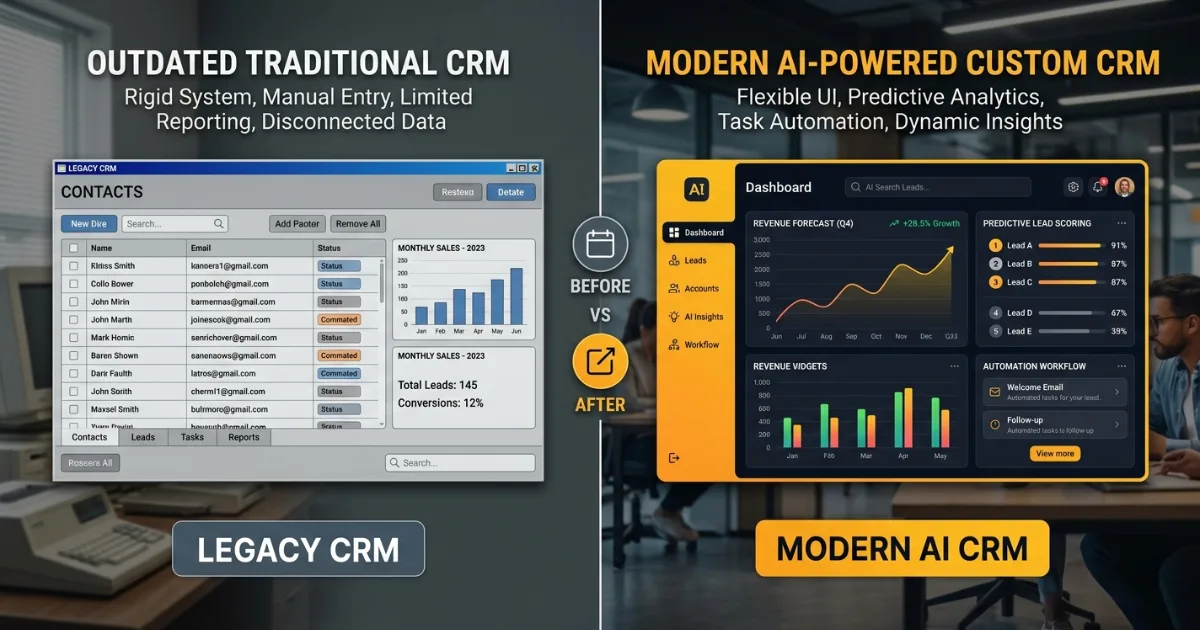
In today’s hyper-competitive market, businesses lose millions every year to unqualified leads that never convert and loyal customers who quietly churn. Only 27% of marketing-qualified leads handed to sales teams are actually ready to buy, while industries like telecom and e-commerce see average churn rates hovering between 22-25%. Yet companies using AI predictive lead scoring and churn prediction CRM systems report 20-30% higher conversion rates, up to 30% lower churn, and 300-400% first-year ROI on lead-generation efforts. This 2026 guide dives deep into how AI-powered predictive analytics transforms custom CRM development. You’ll learn exactly how these systems work, why off-the-shelf CRMs fall short, must-have features, real-world use cases, implementation steps, challenges, future trends, and more. Whether you’re a startup founder scaling sales or an enterprise leader optimizing retention, this guide equips decision-makers with actionable insights to build smarter, future-proof customer relationship platforms. AI-powered predictive lead scoring uses machine learning to analyze behavioral, demographic, and historical data to rank leads by conversion probability. Churn prediction CRM models forecast which customers are at risk of leaving, enabling proactive retention. Integrated into custom CRM development, these tools boost conversions by 20-30%, reduce churn by up to 30%, and deliver 138% higher ROI on lead generation compared to traditional methods. What is AI-Powered Predictive Lead Scoring? AI-powered predictive lead scoring is a smart, automated system that ranks every lead from 0 to 100 based on how likely it is to become a paying customer. Think of it like a GPS for your sales team. Traditional methods rely on fixed rules you create manually — for example, “add 10 points if someone downloads a whitepaper.” These rules stay the same and often miss important signals. AI changes everything. It continuously studies thousands of data points from your CRM, marketing automation tools, website behavior, email replies, call notes, and even external buyer-intent signals. The system learns what actually leads to sales and updates scores in real time. How It Works (Simple Breakdown) Here’s the entire process explained in four straightforward steps: Data Collection The AI pulls together every piece of information about a lead — both basic details (job title, company size, industry) and live actions (pages visited, emails opened, demo requests). Pattern Recognition Machine learning scans the data to discover hidden connections that humans usually miss. For example, it might find that leads who check your pricing page and ask for a demo within 48 hours convert five times more often than others. Probability Scoring Every lead instantly receives a clear score between 0 and 100. This score shows the exact percentage chance the lead will turn into a customer — and it updates automatically as the lead’s behavior changes. Continuous Learning After every deal closes (won or lost), the AI retrains itself using the new outcome. This built-in learning loop makes the predictions smarter and more accurate with every passing week. The result? Your sales team spends time only on the hottest leads, while mid-tier prospects get smart automated nurturing — all without any manual tweaking. Traditional vs. AI-Based Lead Scoring Comparison To make the difference easy to understand, here’s a clear comparison between the old-school rule-based method and modern AI-powered predictive scoring. Aspect Traditional (Rule-Based) AI-Powered Predictive Scoring Scoring Method Manual points system created by humans Machine learning trained on real historical outcomes Accuracy Usually only 15-25% effective 40-60%+ (often delivers up to 75% higher conversions) Adaptability Static – rules never change unless you update them manually Dynamic – automatically updates and improves with new data Data Used Limited to basic info (job title, company size, simple actions like form fills) Hundreds of signals (behavior, website activity, email engagement, buyer intent, and more) Time to Value Takes weeks to set up and maintain the rules Ready in days; gets smarter and more accurate every day ROI Basic / baseline results 300-400% return in the first year Bottom line: AI scoring completely removes guesswork and human bias. Your sales team can instantly focus on the hottest prospects while the system automatically nurtures mid-tier leads — saving time and dramatically boosting results. What is Churn Prediction in CRM? Churn prediction is a smart AI system that looks at your customer data and predicts which customers are likely to leave, cancel their subscription, or stop using your product — often weeks or even months before it actually happens. In simple terms, “churn” means a customer walking away. Instead of waiting until they cancel, the AI spots early warning signs and raises a red flag. A churn prediction CRM then automatically sends alerts to your team, launches personalized retention offers, or triggers helpful outreach — all before the customer decides to leave. Why Churn Prediction Matters for Business Growth Keeping existing customers is far easier and cheaper than finding new ones. Here’s why this matters: Acquiring a new customer costs 5 to 25 times more than keeping an existing one. Increasing customer retention by just 5% can boost your profits by 25% to 95%. In subscription businesses like SaaS, reducing churn by even 1% can add millions of dollars to your annual recurring revenue (ARR). By predicting churn early, your business can take action fast, save money, protect revenue, and build stronger, longer-lasting customer relationships. Key Churn Indicators (Early Warning Signals) AI churn prediction works by constantly watching your customer data for early “red flags” — small changes that often show a customer is thinking about leaving. Here are the six most common warning signs the system looks for: Declining product usage Customers start logging in less often, stop using important features, or spend much less time inside your app. Support ticket spikes A sudden increase in complaints, bug reports, or unresolved problems. Negative sentiment Low Net Promoter Scores (NPS), unhappy survey replies, or frustrated tone in emails and call recordings. Financial signals Late payments, requests to downgrade their plan, or using fewer seats/licenses than before. Engagement drop-off Fewer email opens, missing webinars, or reduced activity in your community or forum. Competitor signals Customers mentioning rival tools or services in support chats or feedback forms. The real advantage of AI? It can spot these patterns across thousands of customers at the same time — something that would be impossible for any human team to track manually. This early detection gives your business time to step in and fix issues before customers actually leave. How AI Works in Lead Scoring & Churn Prediction (Step-by-Step) AI doesn’t replace your sales or customer success team — it makes them smarter and more effective by delivering precise predictions. Here’s a simple, step-by-step explanation of how AI powers both lead scoring and churn prediction: 1. Data Collection AI starts by gathering large amounts of information from multiple sources. For lead scoring, it collects: CRM records Marketing automation data Website behavior (using tools like Google Analytics or Hotjar) Email opens and clicks Call transcripts Third-party buyer intent signals For churn prediction, it also looks at: Billing and payment history Support tickets Actual product usage data Customer survey responses The more complete the data, the better the AI can make accurate predictions. 2. Data Processing & Cleaning Raw data is often messy. In this step, the AI: Fixes or removes missing information Deletes duplicate records Standardizes formats (so everything is consistent) It also handles a common challenge called “class imbalance” — especially in churn prediction, where only 5–15% of customers actually leave. The system learns how to work well even when churn cases are rare. 3. Feature Engineering This is where AI gets really smart. It creates new, meaningful variables (called “features”) from the raw data. Examples include: “Days since last login” “Trend in email open rates over the past month” “Number of times a lead visited the pricing page in the last 7 days” “Sentiment score (positive/negative) from support conversations” These engineered features help the AI discover hidden patterns that directly influence whether a lead will convert or a customer will churn. 4. Machine Learning Models The cleaned and enriched data is then fed into machine learning models. Different models are used depending on the need: Logistic Regression — A simple and fast starting model for basic yes/no predictions (will convert or will churn). Random Forest — Good at handling complex relationships and showing which factors matter most. XGBoost — Currently one of the most popular and accurate models for structured data. It’s fast and delivers excellent results. Neural Networks / Deep Learning — Used when working with large amounts of unstructured data like text (emails, call notes) or when dealing with very complex patterns. These models are trained using historical data — for example, “this lead eventually became a customer in 45 days” or “this customer churned after 6 months.” Performance is measured using metrics like AUC-ROC (a score above 0.85 is considered very good) and precision-recall curves. Final Output: The AI delivers real-time scores and risk probabilities (e.g., “This lead has an 87% chance of converting” or “This customer has a 42% risk of churning in the next 30 days”). These insights appear directly on your CRM dashboard, so your team can take immediate action. Also Read - Agentic AI in CRM: Automate 70% of Customer Workflows Role of Custom CRM Development Off-the-shelf CRM platforms like Salesforce or HubSpot are good starting points, but they come with a big limitation — they force your unique business processes into their fixed templates. Custom CRM development solves this problem by building a system specifically designed for your business. It gives you complete control over how the software works, looks, and grows with you. Why Businesses Choose Custom CRM Over Off-the-Shelf Solutions Here are the main reasons companies prefer building a custom CRM: Unlimited Flexibility You can design the system exactly the way your team works. For example, you can create special AI models for healthcare that follow strict privacy rules (HIPAA), or for fintech that detect fraud patterns unique to banking. Seamless AI Integration AI features like predictive lead scoring and churn prediction can be built directly into the CRM from the beginning. You don’t have to depend on external APIs or pay extra licensing fees every time you want to add or improve AI capabilities. Better Scalability & Data Control A custom CRM can easily handle millions of customer records as your business grows. Most importantly, your sensitive customer data stays on your own secure infrastructure instead of a third-party cloud. Faster Return on Investment (ROI) There is no unnecessary “bloatware” — only the features your sales, marketing, and support teams actually need. This makes the system simpler to use and helps you see results much faster. Leading custom CRM development companies like SISGAIN specialize in creating AI-native platforms. They build predictive lead scoring and churn prevention features right from day one. Their solutions are tailored to match your exact workflows, can scale globally, and deliver clear improvements in sales performance and customer retention — all without locking you into a generic platform’s limitations. Key Benefits of AI-Powered CRM Integrating AI into your CRM delivers powerful, measurable advantages that directly impact your revenue and growth. Here are the top 7 benefits explained in simple terms: Increased Conversions AI helps your sales team focus on the most promising leads (the vital 20% that usually bring 80% of results). As a result, companies typically see 20-30% higher close rates compared to traditional methods. Reduced Churn The system predicts which customers are at risk of leaving with 85-90% accuracy. This early warning allows your team to take proactive steps, often cutting customer churn by up to 30%. Sales & Marketing Automation Repetitive tasks become automatic. The AI can automatically assign hot leads to the right salesperson, trigger personalized email sequences, and run nurture campaigns at scale — saving hundreds of hours every month. Actionable Insights Real-time dashboards show exactly why some deals get won and others are lost. You can also discover which product features keep customers loyal and which ones need improvement. Higher ROI AI-powered CRMs deliver strong financial returns. Businesses often achieve 138% better results from lead generation efforts and see 300-400% payback on their AI investment within the first year. Better Team Productivity Sales representatives spend 30-40% less time manually qualifying leads. Instead, they can focus on what they do best — building relationships and closing deals. Hyper-Personalization AI analyzes customer behavior and delivers the right message, offer, or recommendation at exactly the right time. This level of personalization significantly increases customer satisfaction and long-term customer lifetime value. These benefits work together to create a smarter, more efficient, and highly profitable customer relationship system. Also Read - Why Businesses Are Investing in AI-Powered Hyper-Personalization CRM Systems Real-World Use Cases Seeing how AI-powered predictive lead scoring and churn prevention work in actual businesses makes the value crystal clear. Here are four practical examples from different industries: SaaS A growing SaaS company built AI churn prediction into its custom CRM. The system automatically flagged accounts showing warning signs — such as customers using key features less often and giving lower NPS scores. The company quickly launched personalized “win-back” campaigns and smart product recommendations. Results: Churn dropped by 25%, gross retention improved by 3 percentage points in just 6 months, and they saved hundreds of thousands of dollars in annual recurring revenue (ARR). Healthcare A telehealth platform integrated predictive analytics into its custom CRM to spot patients who might miss follow-up appointments or switch to another provider. The AI carefully analyzed appointment history, patient portal activity, and the tone of support conversations. When risk was detected, the system triggered proactive steps like personalized reminders and direct calls from care coordinators. Results: Patient retention increased by 23%, and appointment no-show rates decreased significantly. E-commerce An online retailer added predictive lead scoring to its custom CRM, especially for shoppers who abandoned their carts and for high-value repeat buyers. The system automatically sent dynamic discount offers and loyalty rewards based on each customer’s score. Results: Churn among the most valuable customers fell by 22%, and the conversion rate from scored leads jumped by 30%. Fintech A fast-growing lending startup used AI-powered lead scoring across credit applications, digital behavior patterns, and alternative data sources. The custom CRM helped qualify leads more accurately and also monitored approved borrowers for early signs of repayment difficulty. When risks appeared, the team could step in with timely support. Results: Qualified leads increased by an impressive 215%, sales team efficiency improved by 30%, and churn among borrowers decreased noticeably. These real examples show that whether you run a SaaS product, healthcare service, e-commerce store, or fintech business, integrating AI into a custom CRM can deliver fast, measurable improvements in both customer acquisition and retention. Must-Have Features in an AI CRM (2026) When building or upgrading your CRM in 2026, certain AI-powered features are essential. These features turn your CRM from a simple contact database into a smart, proactive growth engine. Here are the must-have features every modern AI CRM should include: 1. Predictive Dashboards Live, visual dashboards that show real-time lead scores and customer churn risk. You can instantly see color-coded heatmaps — green for hot leads or safe customers, red for high-risk ones — helping your team prioritize efforts at a glance. 2. Real-Time Churn Alerts The system sends instant notifications to your team via Slack, Microsoft Teams, or email whenever a customer shows signs of churning. Each alert comes with clear recommended actions, so your customer success team can respond quickly and effectively. 3. Intelligent Segmentation AI automatically groups your customers and leads into smart segments based on their behavior, engagement level, and predicted lifetime value. This makes it easy to run targeted marketing campaigns and personalized sales strategies without manual work. 4. Automation Workflows AI triggers automatic actions based on scores and predictions. For example, it can send personalized emails, SMS messages, or schedule follow-up calls the moment a lead’s score changes or a customer’s risk level rises. 5. AI Recommendations Engine The system acts like a smart assistant by suggesting the best next steps. Example: “Offer a 20% discount to this at-risk customer” or “Call this high-scoring lead today — they are very likely to convert.” 6. Explainable AI One of the most important features for trust and adoption. Instead of a mysterious black-box score, the AI clearly explains why a lead received a high score or why a customer is flagged as high-risk. You can see the top factors influencing each prediction, making it easier for your team to understand and act confidently. These features work together to make your CRM intelligent, automated, and highly actionable — helping you win more deals and retain more customers in 2026 and beyond. Tools & Technologies Machine Learning Frameworks: Scikit-learn (quick prototyping), XGBoost/LightGBM (production accuracy), TensorFlow and PyTorch (deep learning for unstructured data). CRM APIs & Integrations: Native connectors to Salesforce, HubSpot, Zoho, plus custom REST/GraphQL APIs. Data Platforms: BigQuery, Snowflake, or self-hosted data lakes for real-time processing. MLOps Tools: MLflow or Kubeflow for model versioning, monitoring, and retraining. Implementation tip: Start with Scikit-learn for MVP, then scale to XGBoost in production for the best balance of speed and performance. Challenges & Solutions Implementing AI-powered predictive lead scoring and churn prevention in a custom CRM is highly rewarding, but it also comes with some common challenges. The good news is that each challenge has practical, proven solutions. Here’s a clear breakdown of the major challenges businesses face and how to overcome them: Challenge Description Solution Data Quality Customer data is often incomplete, outdated, or scattered across different systems (siloed). Implement strong data governance policies and use automated data cleansing pipelines to keep information clean and reliable. Integration Complexity Connecting the new AI CRM with existing legacy systems and tools can be difficult and time-consuming. Use low-code iPaaS platforms (integration Platform as a Service) and modern microservices architecture to simplify and speed up integrations. Cost & Expertise High upfront investment and shortage of skilled AI talent make it hard for many companies to get started. Partner with experienced custom CRM providers like SISGAIN for a complete turnkey solution. You can also begin with affordable cloud-based managed services to reduce costs and complexity. Model Bias & Explainability AI decisions sometimes appear as a “black box,” making teams hesitant to trust the predictions. Adopt explainable AI techniques (such as SHAP values) so you can clearly see why the AI made a particular prediction. Conduct regular model audits to ensure fairness and build team confidence. By addressing these challenges early with the right strategies and expert support, businesses can successfully deploy AI in their CRM and enjoy smooth, long-term results. Future Trends (2026+) The world of CRM is evolving rapidly. By 2026 and beyond, AI will transform CRM systems from simple databases into intelligent, proactive assistants that anticipate customer needs before they even arise. Here are the most important future trends shaping AI CRM development: 1. Generative AI in CRM Generative AI will automatically create personalized content for your team. It can write custom sales emails, business proposals, renewal offers, and retention messages tailored to each customer’s behavior and preferences — saving hours of manual work while improving response rates. 2. Real-Time Analytics Thanks to edge computing, AI will deliver predictions in less than a second. Instead of waiting for daily or hourly reports, your team will see live updates on lead scores, churn risks, and customer behavior as they happen, enabling instant decision-making. 3. Hyper-Personalization at Scale Advanced AI agents will analyze multiple types of data — text, voice, video, and browsing behavior — to deliver truly personalized experiences. Every customer touchpoint (emails, app notifications, website messages, or calls) will feel individually crafted, significantly boosting engagement and loyalty. 4. Conversational AI & Autonomous Agents Future chatbots and AI agents will go far beyond answering questions. They will proactively engage customers, negotiate contract renewals, suggest upsells, and even handle entire retention conversations with natural, human-like dialogue. 5. Privacy-First AI With stricter data privacy laws, new techniques like federated learning and on-device AI models will become standard. These methods allow AI to learn from customer data without storing or sharing sensitive information, helping businesses stay compliant while still delivering powerful insights. Conclusion AI-powered predictive lead scoring and churn prevention are no longer nice-to-haves they’re competitive necessities in 2026. By embedding these capabilities into a custom CRM, businesses gain precision targeting, proactive retention, and explosive ROI that generic platforms simply cannot match. The winners will be those who act now: build intelligent systems that learn, adapt, and deliver personalized experiences at scale. Ready to transform your customer relationships? Partner with SISGAIN, a trusted custom CRM development provider, to design and deploy an AI-native platform tailored to your exact business needs. Their expert team delivers scalable, secure, and future-proof solutions that drive measurable growth in conversions, retention, and revenue.

Agentic AI in CRM: Building Self-Driving Customer Systems That Automate 70% of Workflows.In today's fast-paced business landscape, CRM systems are often bogged down by manual tasks that drain productivity. According to a 2025 Gartner report, sales teams spend up to 60% of their time on administrative work, leading to inefficiencies and missed opportunities. Meanwhile, McKinsey's 2026 AI adoption survey reveals that 78% of US enterprises are demanding advanced automation to handle growing customer data volumes. Enter agentic AI in CRM—a revolutionary approach that empowers autonomous CRM systems to handle complex decisions independently, automating up to 70% of workflows like lead qualification, follow-ups, and customer support.This guide dives deep into agentic AI CRM development, exploring how it evolves beyond traditional automation to create self-driving CRM platforms. You'll learn the core concepts, technical architecture, a step-by-step developer roadmap, real-world case studies, and actionable strategies for implementation. Whether you're a startup founder seeking sales automation or an enterprise CTO building custom AI agents for CRM automation, this article provides the insights needed to leverage agentic AI for competitive advantage. By the end, you'll understand why agentic AI CRM is essential for 2026 and how to start building your own autonomous CRM systems.What is Agentic AI in CRM?Agentic AI in CRM refers to the integration of autonomous AI agents into customer relationship management systems, enabling them to act independently on goals without constant human intervention. Unlike traditional CRM tools that rely on predefined rules, agentic AI uses large language models (LLMs) and machine learning to reason, plan, and execute tasks dynamically. These AI agents can interpret customer data, make decisions, and adapt workflows in real-time, turning a static CRM into a self-driving platform.To clarify, traditional CRM automation is rule-based think if-then scripts in tools like Salesforce or HubSpot that trigger emails based on fixed conditions. In contrast, agentic AI CRM systems employ intelligent agents that learn from interactions, predict outcomes, and optimize processes autonomously. This shift allows for more nuanced handling of customer journeys, such as prioritizing leads based on behavioral patterns rather than simple demographics, which aligns closely with the concept of AI-powered hyper-personalization in CRM, where AI analyzes deep customer insights to deliver highly tailored experiences.Here's a comparison table to illustrate the differences:AspectRule-Based CRM AutomationAgentic AI CRM SystemsDecision-MakingStatic rules (e.g., if lead score > 50, send email)Dynamic reasoning (e.g., analyze conversation sentiment and predict next best action)AdaptabilityLimited to predefined scenariosSelf-optimizing based on real-time data and feedbackComplexity HandlingHandles simple, repetitive tasksManages complex, multi-step workflows like personalized sales negotiationsHuman InvolvementHigh for setup and adjustmentsMinimal; agents act autonomously with oversightScalabilityScales linearly with rules addedScales exponentially through learning and multi-agent collaborationExamplesAutomated email drips in MarketoAI sales assistants in custom-built systems using LangChain for orchestration This table highlights why agentic AI CRM development is gaining traction: it reduces dependency on rigid scripts and empowers businesses to build AI-powered CRM workflow automation that feels intuitive and proactive.Why Agentic AI is Transforming CRM in 2026The CRM landscape in 2026 is being reshaped by agentic AI due to several converging trends. First, the explosion of customer data—Forrester predicts that US companies will manage 2.5 times more data by 2027 than in 2023—demands smarter systems to process it without overwhelming teams. Agentic AI CRM addresses this by automating data analysis and insights generation.Second, the need for sales automation is acute amid economic pressures. A 2026 Salesforce State of Sales report shows that 65% of US sales reps struggle with productivity, pushing enterprises toward autonomous CRM systems that handle routine tasks. Third, the rise of AI-native SaaS platforms, like those from OpenAI and Anthropic, enables seamless integration of LLMs into CRM, fostering self-driving CRM platforms that evolve with business needs.Finally, competitive pressures to improve sales productivity are intensifying. Deloitte's 2026 AI in Enterprise survey indicates that companies adopting agentic AI see a 25% uplift in sales efficiency. For US startups and SaaS companies, this means agentic AI CRM development isn't optional—it's a pathway to outpacing rivals in customer engagement and revenue growth.Core Capabilities of Agentic AI CRM SystemsAgentic AI CRM systems offer transformative features that directly impact business outcomes. Below is a table outlining key capabilities, their business impacts, and development approaches:CapabilityBusiness ImpactDevelopment ApproachAutonomous Lead QualificationReduces manual screening time by 50%, boosting conversion rates by 30% (per HubSpot data)Use LLMs like GPT-4o with tools like CrewAI to build agents that score leads via natural language processing on emails and interactionsPredictive Customer InsightsImproves retention by 25% through proactive recommendationsIntegrate machine learning models (e.g., via Scikit-learn) with CRM data lakes for pattern recognition and forecastingAI Sales AssistantsIncreases deal closure speed by 40% by automating outreach and negotiationsDevelop using AutoGen for multi-agent systems that simulate sales conversations and integrate with APIs like Salesforce EinsteinSelf-Optimizing WorkflowsCuts operational costs by 35% through continuous improvementEmploy reinforcement learning frameworks like Stable Baselines, orchestrated with n8n for workflow automationAI Customer Support AgentsHandles 70% of inquiries autonomously, reducing support tickets by 60%Build with LangChain for chaining LLM prompts and integrating voice APIs for real-time responses These capabilities make agentic AI CRM a cornerstone for businesses aiming to automate CRM workflows efficiently.Real CRM Workflows That Agentic AI Can AutomateAgentic AI excels in automating real-world CRM workflows, turning manual processes into autonomous operations. For lead qualification, an AI agent can analyze incoming inquiries from web forms or emails, scoring them based on intent signals like keyword usage or browsing history. For instance, in a SaaS company, the agent might qualify a lead as "hot" if it detects phrases like "pricing for enterprise" and automatically schedule a demo.Automated follow-ups are another prime area. Traditional systems send generic emails, but agentic AI CRM can craft personalized messages based on past interactions. Imagine an agent reviewing a prospect's abandoned cart and sending a tailored discount offer, increasing response rates by 45% as seen in Shopify case studies.In predictive support, agents monitor customer behavior to anticipate issues. For example, if usage data shows a drop in logins, the agent could proactively send troubleshooting guides or escalate to human support, reducing churn by 20% according to Zendesk benchmarks.Marketing optimization involves A/B testing campaigns autonomously. An AI agent could adjust email subject lines in real-time based on open rates, optimizing for higher engagement. Pipeline management benefits too: agents forecast deal probabilities and recommend actions, like nudging stalled opportunities with custom content.These examples demonstrate how agentic AI CRM development can create self-driving CRM platforms that handle end-to-end automation, freeing teams for strategic work.Architecture of an Agentic AI CRM SystemBuilding an agentic AI CRM system requires a layered architecture to ensure scalability and reliability. Let's break it down.Data LayerThis foundation aggregates customer data from sources like databases, APIs, and real-time streams. Technologies like Snowflake or MongoDB store structured and unstructured data, while tools like Apache Kafka handle ingestion. In agentic AI CRM, this layer uses vector databases (e.g., Pinecone) for embedding customer interactions, enabling fast retrieval for AI agents.AI Agent LayerHere, autonomous agents are built using frameworks like LangChain for prompt chaining or CrewAI for collaborative multi-agent setups. Agents leverage LLMs (e.g., Claude or GPT series) to reason and act. For example, a sales agent might query the data layer for lead history, decide on an action, and execute it via tools.Orchestration LayerThis coordinates agents and workflows. Tools like AutoGen manage multi-agent interactions, while n8n or Temporal handle sequencing and retries. Orchestration ensures agents don't conflict, such as prioritizing a support agent over a sales one during high-priority issues.Integration LayerThis connects the system to external CRM platforms via APIs (e.g., HubSpot API, Salesforce REST). It also integrates with third-party services like email (SendGrid) or calendars (Google Calendar). Security protocols like OAuth ensure compliant data flow.These layers interact seamlessly: Data feeds agents, agents request orchestration for complex tasks, and integrations execute actions in the real world. This architecture supports AI-powered CRM workflow automation, making agentic AI CRM development robust for enterprise use.Developer Roadmap: How to Build Agentic AI CRM SystemsDeveloping agentic AI CRM systems follows a structured roadmap. Here's a step-by-step guide for developers and architects.Step 1: Define Automation GoalsStart by mapping CRM pain points. Conduct stakeholder interviews to identify workflows like lead nurturing or support ticketing. Set measurable KPIs, such as reducing response time from 24 hours to 2 hours. Use tools like Miro for diagramming goals, ensuring alignment with business objectives in agentic AI CRM development.Step 2: Choose LLM InfrastructureSelect an LLM provider like OpenAI or Anthropic based on cost, latency, and capabilities. For US enterprises, consider compliance with GDPR or CCPA. Set up infrastructure using AWS Bedrock or Azure AI for hosting. Test models on sample data to ensure accuracy in tasks like sentiment analysis.Step 3: Build Autonomous AgentsUse frameworks like CrewAI to create agents. For a lead qualification agent, define its tools (e.g., CRM API access) and prompts (e.g., "Analyze this email for purchase intent"). Implement multi-agent systems with AutoGen for collaboration, such as a researcher agent feeding data to a decision-maker agent. Code example in Python:Python from crewai import Agent, Task, Crew researcher = Agent( role='Lead Researcher', goal='Gather lead data', backstory='Expert in CRM data analysis', tools=[crm_api_tool] ) qualifier = Agent( role='Lead Qualifier', goal='Score and qualify leads', backstory='Sales automation specialist', tools=[llm_scoring_tool] ) task1 = Task(description='Fetch lead details', agent=researcher) task2 = Task(description='Qualify based on data', agent=qualifier) crew = Crew(agents=[researcher, qualifier], tasks=[task1, task2]) result = crew.kickoff() This builds AI agents for sales automation effectively.Step 4: Integrate CRM APIsConnect agents to CRM systems using SDKs. For Salesforce, use the REST API to read/write records. Implement webhooks for real-time triggers, ensuring error handling with retries via Temporal. Test integrations in a staging environment to avoid disrupting live data.Step 5: Add Governance and ComplianceIncorporate monitoring with tools like LangSmith for tracing agent actions. Address hallucinations by grounding agents with retrieval-augmented generation (RAG). Ensure security through role-based access and data encryption. For US businesses, comply with SOC 2 standards, auditing agents for bias.Following this roadmap, developers can create autonomous CRM systems that scale.Case Study: Building an Agentic CRM Automation SystemConsider TechFlow, a US-based SaaS company specializing in project management tools. Facing slow lead conversion (average 45 days), they partnered with a CRM automation development company to build an agentic AI CRM system.The implementation used LangChain for agent orchestration and integrated with HubSpot APIs. Key agents included a lead qualifier that analyzed inbound emails and a follow-up agent that generated personalized sequences.Post-launch, TechFlow saw a 35% increase in conversion rates, with lead response times dropping from 12 hours to under 1 hour. Manual workflow hours reduced by 60%, freeing sales teams for high-value deals. Quantifiable results: Pipeline velocity improved by 28%, and annual revenue grew by $1.2M from automated upsells. This case underscores the ROI of agentic AI in CRM for SaaS firms.Challenges When Building Agentic AI CRM SystemsDespite benefits, agentic AI CRM development faces hurdles.Poor data quality can lead to inaccurate decisions. Solution: Implement data cleansing pipelines using Pandas or Talend before feeding into agents.AI hallucinations—where agents generate false info—pose risks. Mitigate with RAG techniques, pulling verified data from CRM sources.Security and compliance are critical, especially with sensitive customer data. Use encrypted APIs and regular audits; tools like Vault for secrets management help.System integration complexity arises from disparate tools. Address by adopting microservices architecture and testing with Postman.These solutions ensure reliable autonomous CRM systems.Future of Agentic AI CRM PlatformsLooking ahead, agentic AI CRM will evolve into autonomous sales pipelines that predict and close deals end-to-end. Voice-driven CRM systems, powered by models like Whisper, will enable hands-free interactions. Multi-agent AI ecosystems will see agents collaborating across departments, while predictive revenue systems forecast with 90% accuracy using advanced ML.By 2028, IDC predicts 50% of US enterprises will adopt these, driving agentic AI CRM development further.How Businesses Can Start Implementing Agentic AITo adopt agentic AI CRM, begin with a pilot project—automate one workflow like lead scoring. Assess your tech stack for compatibility with tools like CrewAI. Partner with a CRM automation development company for expertise. Train teams on oversight, and measure success with metrics like automation coverage. Budget for LLM costs, starting small to scale.Final ThoughtsAgentic AI in CRM represents the future of customer management, enabling self-driving systems that automate workflows and drive growth. By embracing this technology, businesses can achieve unprecedented efficiency.Ready to build your agentic AI CRM? Book a free consultation with our expert team for custom AI and CRM development services tailored to your needs.

Introduction: The End of Generic Customer Experiences For years, businesses relied on generic marketing strategies to reach customers. Email campaigns were sent to thousands of users with identical messaging, CRM databases stored static customer records, and marketing teams relied on broad segmentation to target audiences. While these approaches once worked, today’s digital customers expect far more than generic interactions. Modern consumers are constantly exposed to highly personalized digital experiences. From product recommendations on e-commerce platforms to curated content on streaming services, personalization has become the standard rather than the exception. As a result, businesses that still rely on traditional CRM workflows are rapidly losing customer attention, engagement, and loyalty. This shift has led to the rise of the hyper personalized customer experience, where every interaction is tailored based on individual customer behavior, preferences, real-time actions, and predictive insights. Instead of sending one campaign to thousands of customers, companies now deliver unique experiences to every individual user across websites, mobile apps, emails, and digital platforms. Traditional CRM systems were never designed for this level of intelligence. Most legacy CRM tools focus on storing customer information rather than actively analyzing behavior. They track contacts, deals, and communications but struggle to understand deeper customer intent or predict future actions. In a world where customers expect instant relevance, these outdated systems often fall short. This is where the concept of hyper personalization CRM is transforming customer relationship management. Modern CRM platforms are no longer passive databases. They are intelligent ecosystems powered by artificial intelligence, behavioral analytics, and real-time data processing. These platforms continuously analyze customer interactions across multiple touchpoints and generate actionable insights that help businesses deliver highly relevant experiences. The rapid growth of digital channels has also created a massive explosion of customer data. Every click, search query, product view, and transaction generates valuable behavioral signals. However, raw data alone does not create meaningful customer experiences. Businesses need advanced technologies capable of interpreting this data instantly and translating it into personalized actions. This growing demand has accelerated the adoption of AI driven personalization CRM platforms. Artificial intelligence can process enormous datasets, identify patterns in customer behavior, and predict what users are likely to do next. By combining machine learning algorithms with CRM data, businesses can automatically trigger personalized recommendations, targeted offers, and contextual messaging that resonate with individual customers. For example, an AI-powered CRM platform can detect when a customer repeatedly views a specific product category, predict purchase intent, and automatically deliver personalized offers or content recommendations. These insights allow businesses to engage customers at the exact moment when they are most likely to convert. Another major shift shaping modern CRM strategies is the need for real-time decision making. In the digital economy, customer preferences change rapidly. A user browsing your website today may not be interested in the same product tomorrow. Businesses therefore need CRM systems capable of analyzing customer signals instantly and adjusting experiences dynamically. Real-time personalization is now becoming a core competitive advantage. Companies that understand customer intent at the right moment can dramatically increase engagement, conversions, and retention. Those relying on delayed analytics or manual campaign strategies risk losing customers to more agile competitors. To keep pace with these evolving expectations, organizations are increasingly investing in advanced customer personalization software. These platforms combine artificial intelligence, predictive analytics, and behavioral tracking to deliver truly individualized customer journeys. However, implementing such systems often requires significant technical expertise. Many organizations are turning to specialized partners for CRM development and AI-driven solutions that can be customized to their business processes. Working with a custom ai development company allows enterprises to build intelligent CRM platforms tailored to their specific data infrastructure, customer journeys, and marketing strategies. As businesses move toward more intelligent customer engagement strategies, one thing is becoming increasingly clear: generic customer interactions are no longer sustainable. Companies that want to remain competitive must adopt CRM systems capable of delivering real-time insights, predictive recommendations, and highly personalized engagement. In today’s competitive digital landscape, organizations that invest in a crm system with personalization features are not simply upgrading their technology stack—they are redefining how they build relationships with customers. What Is Hyper-Personalization in CRM? To understand the value of modern CRM innovation, it is important to first clarify what hyper-personalization actually means. While many organizations claim to offer personalized experiences, most traditional systems only provide basic personalization. Hyper-personalization takes this concept significantly further. Basic personalization typically relies on simple data points such as a customer’s name, location, or purchase history. For example, a marketing email may greet a customer by name or recommend products based on past purchases. While this approach can improve engagement slightly, it lacks the depth needed to truly understand individual customer behavior. CRM hyper personalization, on the other hand, uses artificial intelligence, machine learning, and advanced analytics to analyze large volumes of customer data in real time. Instead of relying solely on historical information, hyper-personalized systems continuously monitor behavioral signals and adapt interactions dynamically. This means that customer experiences are no longer based on static segments but on continuously evolving insights. Every click, page view, interaction, and behavioral pattern becomes part of a larger data ecosystem that allows businesses to predict customer needs with remarkable accuracy. At the core of this transformation is the use of advanced AI customer insights platforms. These platforms analyze complex behavioral datasets and generate actionable intelligence about customer preferences, interests, and intent. By understanding these patterns, businesses can deliver targeted recommendations and personalized experiences that feel intuitive and relevant. One of the most important technologies enabling hyper-personalized CRM systems is predictive personalization software. Predictive analytics algorithms analyze past behavior to forecast future actions. For instance, they can determine when a customer is most likely to make a purchase, churn, or engage with specific content. Predictive models also allow CRM platforms to identify high-value customers and prioritize engagement strategies accordingly. This level of intelligence helps businesses allocate marketing resources more effectively and focus on opportunities with the highest conversion potential. Another key component of hyper-personalized CRM systems is behavioral tracking. Advanced platforms use customer behavior analytics CRM technologies to monitor how users interact with digital platforms. This includes tracking website navigation patterns, product views, search behavior, engagement with marketing campaigns, and more. When these behavioral signals are analyzed collectively, businesses gain a comprehensive understanding of each customer's journey. Instead of treating users as anonymous website visitors, companies can recognize intent signals and respond with highly relevant interactions. Equally important is the role of customer journey mapping software. Hyper-personalization requires businesses to understand every stage of the customer lifecycle—from initial awareness to post-purchase engagement. Journey mapping tools help organizations visualize how customers move through various touchpoints and identify opportunities for personalized engagement. For example, a CRM system may detect when a user repeatedly visits a pricing page but has not completed a purchase. Based on this insight, the system can trigger personalized incentives, targeted content, or direct sales outreach to move the customer toward conversion. Hyper-personalized CRM platforms also integrate intelligent recommendation engines. These systems analyze behavioral data and automatically suggest products, services, or content that align with a customer’s interests. Similar technologies are widely used by leading digital companies such as e-commerce platforms and streaming services to deliver highly engaging experiences. Another defining feature of hyper-personalization is automation. AI-powered CRM systems can trigger personalized actions automatically based on real-time customer behavior. These triggers might include personalized emails, targeted push notifications, customized landing pages, or dynamic website content. Automation ensures that personalized experiences can be delivered at scale without overwhelming marketing teams. Instead of manually managing campaigns, businesses can rely on intelligent systems that continuously optimize customer engagement strategies. Ultimately, hyper-personalization transforms CRM from a passive customer database into an intelligent decision-making engine. It enables businesses to understand customers on a deeper level, anticipate their needs, and deliver experiences that feel genuinely relevant. As customer expectations continue to evolve, organizations that adopt hyper-personalized CRM strategies will be far better positioned to build meaningful relationships, increase customer loyalty, and drive long-term growth. Why Hyper-Personalization Is the Future of CRM Digital markets have become intensely competitive over the last decade. Businesses are no longer competing only on price or product quality—they are competing on customer experience. In a world where customers can switch brands with a single click, companies that fail to deliver meaningful and relevant interactions risk losing their audience to competitors that understand them better. This shift in market dynamics is one of the main reasons why organizations are rapidly adopting hyper-personalized CRM strategies. Modern customers expect brands to understand their needs, preferences, and behavior. They want recommendations that feel relevant, communication that respects their interests, and experiences that adapt to their actions in real time. Generic marketing campaigns and static CRM records cannot meet these expectations. Hyper-personalization bridges this gap by transforming CRM systems into intelligent platforms capable of delivering individualized experiences across the entire customer lifecycle. Instead of relying on broad segments such as “new customers” or “returning users,” businesses can create highly tailored interactions for each individual. At the center of this transformation is personalized marketing automation. AI-powered CRM systems can analyze large datasets and automatically trigger personalized marketing actions based on behavioral signals. For example, if a customer abandons a shopping cart, the system can send a customized follow-up message with relevant product suggestions. If a user frequently browses a specific category, the CRM platform can recommend similar products or content that matches their interests. This level of automation significantly improves marketing efficiency. Campaigns no longer rely on guesswork; instead, they are driven by real-time insights and predictive intelligence. Another major driver behind hyper-personalized CRM adoption is the growing importance of data-driven customer journeys. Businesses today interact with customers across multiple channels including websites, mobile applications, social media platforms, email campaigns, and customer support systems. Managing these interactions manually is nearly impossible. This is where hyper personalized customer journey software becomes essential. These systems continuously track how customers move through different touchpoints and identify patterns that reveal their intent. By understanding the complete journey, businesses can design experiences that feel seamless and highly relevant. For example, a customer who first discovers a brand through social media may later visit the website, browse product pages, and eventually subscribe to email updates. A hyper-personalized CRM platform can connect all these interactions and respond with tailored messaging that aligns with the customer’s stage in the buying process. A strong customer data personalization platform also allows organizations to unify information from multiple sources. CRM systems can integrate data from marketing tools, sales platforms, analytics software, and customer service applications. When all these data streams are connected, businesses gain a much clearer understanding of customer behavior. The business impact of hyper-personalization is significant. Organizations that successfully implement personalized CRM strategies often report measurable improvements in performance metrics. Companies using advanced personalization techniques frequently experience higher conversion rates because customers receive offers and recommendations that align closely with their interests. Instead of broadcasting generic campaigns, businesses deliver targeted experiences that motivate users to take action. Retention rates also improve dramatically. When customers feel understood and valued, they are far more likely to remain loyal to a brand. Personalized interactions create a sense of relevance and connection that encourages long-term engagement. Another critical benefit is the increase in customer lifetime value. By continuously delivering relevant experiences, businesses can encourage repeat purchases, cross-selling opportunities, and deeper customer relationships over time. As digital competition continues to intensify, hyper-personalization is quickly evolving from a competitive advantage into a business necessity. Companies that invest in intelligent CRM technologies today will be better positioned to build stronger relationships with customers and maintain a sustainable advantage in increasingly crowded markets. How AI Powers Hyper-Personalized CRM Systems The effectiveness of hyper-personalization largely depends on the ability to process and interpret massive volumes of customer data. Modern organizations generate enormous datasets from website activity, mobile applications, social media interactions, customer support conversations, and transactional systems. Without advanced technologies, transforming this data into meaningful customer insights would be extremely difficult. Artificial intelligence has therefore become the foundation of modern hyper-personalized CRM platforms. AI enables CRM systems to analyze behavioral patterns, predict customer intent, and automatically deliver personalized experiences at scale. Through machine learning algorithms and intelligent automation, CRM platforms can evolve from simple record-keeping tools into powerful decision-making engines. Below are the core AI technologies that power hyper-personalized CRM systems. AI Customer Insights Engines One of the most important components of a modern CRM platform is the AI customer insights platform. These engines analyze vast datasets to uncover patterns in customer behavior that would otherwise remain hidden. Traditional analytics tools typically rely on historical reports. AI-powered systems, however, continuously process real-time data and adapt to new information as it becomes available. For example, AI algorithms can track how customers interact with websites, which products they explore, how long they stay on specific pages, and what type of content they engage with most frequently. These behavioral signals provide valuable clues about customer preferences and purchase intent. Advanced customer behavior tracking CRM software takes this analysis further by identifying micro-patterns in user activity. AI models can recognize subtle shifts in behavior that indicate increased buying interest, declining engagement, or potential churn risk. Once these patterns are identified, CRM systems can automatically trigger relevant marketing or sales actions. This might include personalized content recommendations, targeted promotions, or proactive customer support outreach. By continuously learning from new data, AI insights engines become more accurate over time, allowing businesses to refine their customer engagement strategies and improve decision-making. Predictive Personalization Another powerful capability of AI-powered CRM platforms is predictive personalization. Instead of reacting to customer behavior after it occurs, predictive models anticipate future actions and enable businesses to respond proactively. Using predictive personalization software, CRM systems analyze historical behavior, demographic information, and interaction patterns to forecast what customers are likely to do next. These predictions can include purchase probability, product preferences, engagement likelihood, or even potential churn. For instance, if a customer regularly purchases products within a specific category every few weeks, predictive algorithms can estimate when they are most likely to buy again. The CRM platform can then send personalized recommendations or special offers at precisely the right moment. Another important feature is the integration of a CRM software with AI recommendation engine. These systems automatically suggest products, services, or content that align with individual customer interests. Recommendation engines are widely used by leading digital platforms because they significantly increase engagement and sales opportunities. When integrated into CRM systems, they enable businesses to deliver highly targeted suggestions across websites, email campaigns, mobile applications, and digital advertising platforms. Predictive personalization allows companies to shift from reactive marketing to proactive engagement, ensuring that customer interactions are timely, relevant, and highly effective. Real-Time Personalization While predictive analytics is powerful, modern customer engagement strategies also require immediate responsiveness. Customers interact with brands in real time, and businesses must respond just as quickly. This is where CRM with real time personalization features becomes essential. Real-time personalization technologies analyze customer behavior as it happens and instantly adapt the user experience. For example, when a visitor browses a website, the CRM system can dynamically adjust product recommendations, promotional banners, or content suggestions based on the user’s browsing behavior. If the system detects a high purchase intent signal, it can immediately present a personalized offer or discount. These capabilities are powered by advanced real time customer engagement software that processes customer signals within milliseconds. Instead of waiting for scheduled marketing campaigns, businesses can respond to customer actions at the exact moment they occur. Real-time personalization is particularly valuable in industries where customer decisions are influenced by immediate context, such as e-commerce, travel bookings, and digital services. By combining predictive analytics with real-time decision making, AI-powered CRM systems create highly adaptive customer experiences that feel intuitive and responsive. Key Features of AI-Powered Hyper-Personalization CRM Systems To successfully deliver hyper-personalized experiences, modern CRM platforms incorporate several advanced features that transform how businesses interact with customers. Below are some of the most important capabilities that define an AI-powered hyper-personalization CRM system. Behavioral Tracking Engine At the core of personalization lies the ability to understand customer behavior. Advanced customer behavior tracking CRM software monitors how users interact with digital platforms, including page visits, search queries, product exploration, and content engagement. These insights help businesses identify patterns that reveal customer interests and purchase intent. AI Recommendation Engine A powerful CRM software with AI recommendation engine enables businesses to automatically suggest relevant products, services, or content based on individual user behavior. Recommendation engines analyze past interactions and continuously refine suggestions to maximize engagement and conversion potential. Customer Journey Intelligence Understanding the entire customer lifecycle is essential for effective personalization. Customer journey mapping software allows businesses to visualize how customers move through different stages of the buying process. By identifying key touchpoints and behavioral signals, organizations can design highly targeted engagement strategies that guide customers toward conversion. Predictive Analytics Dashboard A predictive analytics dashboard powered by predictive personalization software provides real-time insights into customer trends and future behaviors. These dashboards allow marketing and sales teams to identify high-value opportunities, forecast customer actions, and optimize engagement strategies. Automated Personalization Campaigns Modern CRM systems support CRM for personalized marketing automation, allowing businesses to create dynamic campaigns triggered by specific customer actions. These campaigns can automatically send personalized emails, product recommendations, promotional offers, or content updates without manual intervention. Omnichannel Personalization Customers interact with brands through multiple channels, including websites, mobile apps, social media, and customer support platforms. A comprehensive customer experience personalization platform ensures that personalization remains consistent across all these touchpoints. Omnichannel personalization allows businesses to maintain a unified customer experience regardless of how or where users engage with the brand. Benefits of Hyper-Personalization CRM for Businesses Adopting hyper-personalized CRM technologies provides organizations with a wide range of strategic advantages. These benefits go beyond simple marketing improvements and can significantly impact overall business performance. 1. Higher Conversion Rates A hyper personalized customer experience increases the likelihood that customers will respond positively to marketing messages. When users receive recommendations or offers that match their interests, they are far more likely to complete a purchase or take the desired action. 2. Improved Customer Retention Customer loyalty is strongly influenced by relevance and convenience. CRM platforms that support CRM hyper personalization allow businesses to deliver experiences that feel meaningful and valuable, encouraging customers to remain engaged over the long term. 3. Increased Marketing ROI With AI powered CRM personalization, businesses can target marketing campaigns with much greater precision. Automated personalization ensures that marketing resources are focused on customers who are most likely to respond, improving overall campaign efficiency. 4. Deeper Customer Insights AI-driven analytics tools provide detailed insights into customer behavior, preferences, and purchasing patterns. These insights help organizations refine their strategies and continuously improve the quality of customer interactions. 5. Competitive Advantage Companies that adopt advanced personalization strategies gain a significant advantage in crowded digital markets. By delivering exceptional customer experiences, businesses can differentiate themselves and build stronger relationships with their audiences. Industries Adopting Hyper-Personalization CRM Hyper-personalization is not limited to a single industry. Organizations across multiple sectors are adopting advanced CRM technologies to deliver more engaging and relevant customer experiences. E-commerce Online retailers rely heavily on AI based customer personalization software to recommend products, personalize website content, and optimize marketing campaigns. Personalized product recommendations have become one of the most powerful drivers of online sales. Healthcare Healthcare providers are increasingly using personalization technologies to improve patient engagement. By leveraging customer experience personalization platforms, healthcare organizations can deliver tailored communication, appointment reminders, and treatment recommendations. Finance Financial institutions use AI-powered CRM systems to analyze customer behavior and offer personalized financial products. These insights help banks and fintech companies improve customer satisfaction while increasing cross-selling opportunities. SaaS Software companies use hyper-personalized CRM strategies to guide users through onboarding processes, recommend features, and optimize customer journeys. This approach helps improve product adoption and reduce churn. Travel and Hospitality Travel platforms and hospitality businesses rely on personalization to recommend destinations, customize travel packages, and deliver tailored promotional offers. Personalized experiences help these companies increase bookings and improve customer loyalty. As more industries recognize the value of personalization, hyper-personalized CRM systems are quickly becoming a central component of modern digital business strategies. How to Implement Hyper Personalization in CRM Many businesses recognize the value of personalization but struggle with execution. Implementing a hyper personalization CRM strategy requires more than simply adding automation tools. It involves building a data-driven ecosystem where customer insights, artificial intelligence, and marketing automation work together to deliver individualized experiences. Organizations searching for how to implement hyper personalization in CRM must follow a structured approach that aligns technology with customer engagement strategies. Below is a practical step-by-step framework that businesses can follow. Step 1: Collect and Centralize Customer Data The foundation of any personalization strategy is data. Businesses must first gather customer information from multiple touchpoints to create a unified profile of each user. Data sources typically include: CRM databases Website behavior tracking Mobile application interactions Email engagement data Purchase history and transaction records Customer support conversations Social media interactions When these datasets are unified into a centralized system, businesses gain a 360-degree view of customer behavior. This allows companies to understand how users interact with their brand across the entire digital ecosystem. Modern customer data personalization platforms help integrate data streams from different systems so that insights are not isolated across departments. Instead, marketing, sales, and support teams can access the same behavioral intelligence. Without centralized data, personalization becomes fragmented and inconsistent. Step 2: Use AI for Customer Insights Once data is collected, the next step is to transform raw information into actionable insights. Artificial intelligence plays a critical role in this stage. AI algorithms analyze large volumes of behavioral data and identify patterns that reveal customer intent, interests, and engagement preferences. Businesses often deploy behavioral analysis tools that can: Track browsing behavior Identify product interests Analyze engagement frequency Detect purchase signals Predict churn risk These capabilities allow companies to understand how customers interact with their brand and what motivates their decisions. Advanced AI customer insights platforms continuously analyze new data and refine predictions over time. This allows CRM systems to evolve and become more accurate in identifying opportunities for personalized engagement. Step 3: Create Micro Customer Segments Traditional CRM segmentation often relies on basic categories such as location, age group, or purchase history. However, hyper-personalization requires much deeper segmentation. Businesses must create micro-segments based on behavioral patterns, preferences, and engagement signals. For example: Users browsing specific product categories Customers likely to purchase within the next week High-value returning buyers Customers showing early churn indicators These micro-segments enable businesses to tailor messaging and recommendations much more precisely. Instead of sending the same campaign to thousands of users, companies can deliver customized experiences to highly specific audience groups. Step 4: Automate Personalization Campaigns Once behavioral insights and micro-segments are established, businesses can begin automating personalized interactions. Modern CRM platforms support CRM for personalized marketing automation, allowing organizations to trigger personalized campaigns based on customer behavior. Examples of automation triggers include: Abandoned cart reminders with product recommendations Personalized discount offers for returning customers Content recommendations based on browsing history Follow-up emails after specific user actions These campaigns can run continuously without manual intervention. AI algorithms monitor behavioral signals and trigger personalized responses automatically. This level of automation ensures that businesses can scale personalization efforts across thousands or even millions of users. Step 5: Optimize the Customer Journey Using Predictive Insights The final step in hyper-personalization is continuous optimization. AI-powered CRM systems use predictive analytics to refine customer journeys and improve engagement strategies over time. Predictive models can forecast: Likelihood of purchase Customer lifetime value Churn probability Product preferences With these insights, businesses can adjust messaging, timing, and recommendations to maximize engagement and conversions. Companies that follow this structured implementation approach can transform their CRM systems into intelligent platforms capable of delivering truly personalized customer experiences. Why Businesses Choose Custom CRM Personalization Solutions While many CRM platforms offer basic personalization features, most off-the-shelf systems are not designed to support advanced hyper-personalization strategies. Businesses implementing AI-driven personalization often encounter limitations with standard CRM tools, particularly when dealing with complex customer journeys, large datasets, or enterprise-level integrations. As a result, many organizations invest in custom CRM personalization solutions tailored to their specific business requirements. Custom CRM systems allow companies to design personalization frameworks that align with their industry, customer behavior patterns, and operational workflows. Limitations of Off-the-Shelf CRM Platforms Pre-built CRM software is typically designed for general use cases. While these tools offer useful features, they often lack the flexibility needed for advanced personalization strategies. Common limitations include: Limited AI integration capabilities Restricted customization options Generic automation workflows Data integration challenges Scalability limitations These restrictions can prevent businesses from implementing deep personalization strategies that rely on real-time data processing and advanced analytics. Advantages of Custom CRM Personalization Solutions Organizations investing in hyper personalization CRM development gain several strategic advantages. Tailored Business Workflows Custom CRM systems can be designed around specific business processes. Instead of forcing teams to adapt to rigid software structures, companies can create workflows that match their operational requirements. Advanced AI Integration Custom solutions allow organizations to integrate advanced machine learning models, recommendation engines, and behavioral analytics platforms. This makes CRM personalization software development significantly more powerful than standard CRM tools. Enterprise Scalability Large organizations require CRM systems capable of handling millions of customer interactions and data points. Custom platforms are built with scalability in mind, allowing businesses to grow without performance limitations. Data Ownership and Control Many businesses prefer to maintain full ownership of their customer data rather than relying on third-party platforms. Custom CRM architectures provide greater control over data storage, security, and governance. Security and Compliance Enterprises operating in regulated industries often require strict compliance with data protection standards. Custom CRM systems can be designed to meet these security requirements while supporting personalization strategies. Companies seeking advanced CRM capabilities often work with a specialized crm software development company that understands enterprise architecture and AI integration. Additionally, partnering with a custom ai development company allows businesses to build intelligent algorithms tailored to their specific customer engagement goals. Through personalized CRM software development, organizations can create powerful platforms that deliver highly relevant customer experiences at scale. Choosing the Best CRM for Personalized Customer Experience As hyper-personalization becomes a strategic priority, many organizations are searching for the best CRM for personalized customer experience. However, selecting the right platform requires careful evaluation of several critical factors. AI Capabilities The most important feature of a modern CRM platform is its ability to leverage artificial intelligence. Businesses should look for systems capable of behavioral analysis, predictive analytics, and automated recommendations. AI-powered systems enable deeper insights and more accurate personalization strategies. Real-Time Personalization A modern CRM system with personalization features must be capable of responding instantly to customer behavior. Real-time personalization allows businesses to adapt website experiences, marketing campaigns, and recommendations based on live user interactions. Data Integration Effective personalization requires unified customer data. CRM platforms must be able to integrate information from multiple sources, including marketing tools, analytics systems, e-commerce platforms, and customer service software. Strong data integration ensures that personalization efforts remain consistent across all channels. Marketing Automation Automation plays a crucial role in scaling personalization strategies. CRM systems should support advanced automation workflows capable of triggering personalized campaigns based on customer behavior. This includes automated email sequences, targeted messaging, and dynamic content delivery. Scalability Businesses should choose CRM solutions that can scale with their growth. Enterprise-level systems must support large datasets, complex customer journeys, and high interaction volumes. Organizations often work with an enterprise CRM development company to ensure their CRM infrastructure can support future expansion. Security and Compliance Customer data protection is essential for maintaining trust and meeting regulatory requirements. CRM platforms must provide robust security features including encryption, access control, and compliance with global data protection standards. Selecting the right CRM platform ensures that businesses can deliver personalized experiences while maintaining operational reliability and security. Future of AI Hyper-Personalization CRM Systems The next generation of CRM platforms will be far more intelligent than today's systems. Advances in artificial intelligence are rapidly transforming how businesses manage customer relationships. One of the most exciting developments is the rise of Agentic AI powered CRM in 2026. Agentic AI refers to autonomous systems capable of making decisions and executing tasks without constant human intervention. In CRM environments, autonomous AI agents will be able to analyze customer behavior, initiate conversations, deliver recommendations, and manage engagement strategies automatically. These systems will move beyond simple automation toward fully intelligent customer relationship management. Another emerging trend is Emotion AI. This technology analyzes voice tone, facial expressions, and text sentiment to understand customer emotions. By detecting emotional signals, CRM platforms can adjust communication strategies to create more empathetic and meaningful interactions. Voice-based personalization is also becoming increasingly important. As voice assistants and conversational AI continue to grow, businesses will need CRM systems capable of delivering personalized voice interactions. Predictive customer journey mapping will further enhance personalization capabilities. AI will be able to forecast entire customer journeys and recommend optimal engagement strategies at each stage. Ultimately, the future of AI CRM software development lies in creating systems capable of delivering highly adaptive and intelligent experiences across every touchpoint. The evolution of hyper personalized customer journey software will redefine how businesses interact with customers, moving from reactive communication toward proactive engagement. Why Enterprises Are Partnering with CRM Development Companies Implementing AI-powered CRM personalization strategies is technically complex. Enterprise systems must integrate multiple technologies including artificial intelligence, machine learning, behavioral analytics, automation tools, and large-scale data infrastructure. As a result, many organizations choose to partner with specialized CRM development providers. A professional CRM development company USA can design advanced CRM architectures tailored to enterprise requirements. These companies have experience building scalable platforms capable of handling high volumes of customer interactions. Enterprises often require complex integrations between CRM systems, marketing platforms, data warehouses, and third-party software tools. Development partners ensure these integrations function seamlessly. Additionally, a specialized enterprise CRM development company can implement advanced personalization features such as predictive analytics, behavioral tracking engines, and AI recommendation systems. Companies investing in CRM development for personalized marketing gain access to custom-built platforms that align perfectly with their customer engagement strategies. Working with experienced CRM developers allows businesses to accelerate implementation timelines while ensuring technical reliability and long-term scalability. Conclusion Customer expectations are evolving rapidly, and businesses can no longer rely on generic marketing strategies or traditional CRM platforms. The rise of hyper personalization CRM systems is transforming how organizations understand and engage with their customers. By leveraging artificial intelligence, predictive analytics, and real-time behavioral insights, businesses can create highly relevant experiences that resonate with individual users. AI technologies now enable AI powered CRM personalization that can anticipate customer needs, automate personalized interactions, and optimize engagement strategies across multiple channels. Organizations that invest in advanced customer personalization software gain a significant competitive advantage. They can increase conversion rates, improve customer retention, and build stronger long-term relationships with their audiences. As digital ecosystems continue to evolve, personalized CRM platforms will become the foundation of modern customer engagement strategies. Businesses that adopt AI-driven CRM personalization today will be far better positioned to succeed in the increasingly competitive digital economy.
For more than a decade, CRM systems have promised efficiency. Yet in reality, most US sales teams still spend hours updating records, logging calls, qualifying leads manually, and building reports that should already exist. The modern sales stack became bigger — but not smarter. In 2026, that changes. A new shift is redefining how revenue teams operate: Agentic AI in CRM. Unlike traditional automation that simply follows predefined rules, agentic systems make contextual decisions, initiate actions independently, and continuously optimize outcomes. Instead of reminding a rep to follow up, the system analyzes buyer behavior, drafts a personalized message, schedules the outreach, and adapts the strategy based on engagement signals. This evolution is giving rise to a new category of AI-powered CRM software — platforms that don’t just store data but act on it. For sales leaders facing rising acquisition costs, longer deal cycles, and higher revenue accountability, traditional CRM automation for sales teams is no longer enough. Efficiency is no longer the goal. Autonomy is. Across SaaS, fintech, healthcare technology, and enterprise services in the United States, forward-thinking companies are shifting from workflow automation to fully autonomous CRM systems. The focus is no longer on reducing clicks — it’s on delegating decisions. This article explores how US sales teams are transitioning from manual CRM management to intelligent, self-operating revenue systems — and what it takes to build, adopt, and scale Agentic AI in CRM successfully in 2026. What Is Agentic AI in CRM? A Deep Conceptual Foundation To understand why this shift matters, we must first define what makes Agentic AI in CRM fundamentally different from traditional automation. For years, CRM systems relied on rule-based logic: “If lead fills form → assign to SDR.” “If an email opened → send a follow-up.” “If the deal stage changes → notify the manager.” That’s automation. But automation follows instructions. Agentic systems pursue outcomes. From Automation to Autonomy Traditional CRM automation reduces repetitive work. However, it still depends heavily on human input, manual triggers, and predefined workflows. Sales teams remain responsible for interpreting signals, making decisions, and adjusting strategy. Autonomous CRM systems, on the other hand, operate with goal-driven intelligence. They are built on AI agents capable of: Contextual reasoning Multi-step task execution Continuous learning from outcomes Independent decision-making within defined boundaries Instead of waiting for a rule to trigger, an AI agent proactively evaluates pipeline health, detects deal risk, identifies engagement gaps, and initiates corrective action. This is where AI agents for sales become transformative. They are not scripts. They are adaptive digital teammates. Core Components of Agentic CRM Architecture Modern AI-powered CRM software in 2026 typically includes four foundational layers: Perception Layer Collects and interprets data from emails, calls, CRM entries, calendars, and third-party platforms. Reasoning Layer Large Language Models (LLMs) and decision engines analyze context, buyer intent, and probability models. Action Layer The system executes tasks — sending emails, adjusting lead scores, scheduling meetings, generating reports, or escalating deals. Learning Loop Outcomes are fed back into the system to refine decision accuracy and improve future performance. Together, these layers power what we now call Intelligent CRM platforms 2026 — systems that function less like databases and more like autonomous revenue engines. Traditional CRM vs AI-Powered CRM vs Agentic CRM Capability Traditional CRM AI-Powered CRM Software Agentic AI in CRM Data Storage Yes Yes Yes Rule-Based Automation Limited Advanced Advanced Predictive Insights No Yes Yes Autonomous Decision-Making No Limited Yes Multi-Step Task Execution Manual Semi-Automated Fully Contextual & Adaptive Continuous Self-Optimization No Partial Built-In The key distinction is intent. Traditional platforms store information. AI-enhanced platforms analyze information. But Agentic AI in CRM acts on information with autonomy aligned to revenue goals. Why This Matters in 2026 In increasingly competitive US markets, incremental efficiency gains are no longer enough. Sales teams need systems that: Identify high-value prospects automatically Adjust messaging strategies dynamically Predict pipeline risk before it becomes visible Orchestrate end-to-end AI-driven sales workflow automation This is not about replacing sales teams. It is about augmenting them with autonomous execution capacity. In essence, Agentic AI in CRM transforms the CRM from a passive system of record into an active system of execution. Why US Sales Teams Are Moving Toward Autonomous CRM Systems in 2026 The shift toward Autonomous CRM systems in the United States is not a trend driven by hype. It is a structural response to growing sales complexity, revenue pressure, and operational inefficiency. In 2026, American sales teams are operating in a fundamentally different environment than they were even three years ago. Buyer journeys are longer, stakeholders are more informed, competition is AI-enhanced, and revenue predictability is under constant scrutiny from boards and investors. Manual CRM workflows simply cannot keep up. Rising Sales Complexity Modern B2B sales cycles in the US often involve: 6–10 decision-makers Multi-channel engagement (email, LinkedIn, webinars, calls, ads) Intent data signals from multiple platforms Highly personalized buyer expectations Traditional CRM automation for sales teams relies on linear workflows. But real-world buying behavior is nonlinear. This is where AI-driven sales workflow automation becomes critical. Instead of reacting to isolated triggers, autonomous systems evaluate: Engagement patterns Deal momentum Buyer sentiment Competitive signals Then they dynamically adjust follow-ups, prioritize outreach, and recommend next steps — often before a human rep recognizes the need. In industries like SaaS, fintech, cybersecurity, and healthcare technology, this shift is already separating high-growth companies from stagnant ones. Revenue Pressure & Forecasting Accountability US companies in 2026 operate in an environment of capital efficiency. Growth is still important — but predictable growth is essential. CROs and RevOps leaders are under pressure to: Improve forecast accuracy Reduce pipeline leakage Increase sales velocity Maximize revenue per rep Traditional dashboards show data. They do not prevent problems. AI-powered CRM software equipped with agentic capabilities can: Detect stalled deals automatically Flag high-risk accounts before churn signals become visible Reallocate pipeline focus in real time Run autonomous forecasting models This is a major reason why Agentic AI in CRM is gaining executive-level attention. It reduces human bias in forecasting and creates a more resilient revenue engine. Rising Labor Costs & Sales Team Burnout Another driving force is economic reality. In the US: SDR turnover rates remain high Sales compensation structures are increasingly complex Hiring budgets are under scrutiny Sales representatives spend a significant portion of their time on: CRM updates Data enrichment Follow-up scheduling Report generation These tasks do not directly generate revenue. By deploying AI agents for sales, companies are shifting routine pipeline management to intelligent systems. The result: Reps focus on closing, not logging Managers spend less time auditing CRM hygiene Administrative overhead decreases This is not about replacing human sellers — it is about augmenting them with autonomous support that scales without burnout. Competitive Pressure from Early AI Adopters Perhaps the most powerful driver is competitive asymmetry. Organizations that adopt Intelligent CRM platforms 2026 are already seeing: Faster response times More personalized engagement Higher conversion rates More accurate pipeline prioritization As AI adoption spreads across US tech companies, late adopters risk structural disadvantage. We are seeing parallels with early cloud adoption in the 2010s — once the shift happens, it becomes irreversible. Companies exploring broader AI Agent Adoption in tech companies strategies are increasingly integrating CRM autonomy as a foundational layer, not an experimental add-on. The Strategic Reality The move toward autonomous CRM systems is not just a technological upgrade. It represents a redefinition of how revenue operations function. Manual CRM management creates operational friction.Basic automation creates efficiency.But Agentic AI in CRM creates leverage. In 2026, leverage — not labor — is the new competitive advantage in US sales. From Manual to Autonomous: How the Transition Actually Happens (Step-by-Step Framework) Moving toward Agentic AI in CRM is not a switch you flip overnight. For US companies, especially mid-market and enterprise organizations, the transition from manual workflows to Autonomous CRM systems happens in structured phases. The companies succeeding in 2026 are not replacing their CRM. They are evolving it. Below is a proven transition framework. Phase 1: Workflow & Friction Mapping Before implementing AI, organizations must first identify where manual friction exists. This phase includes: Mapping end-to-end sales workflows Identifying repetitive administrative tasks Measuring time spent on non-revenue activities Detecting bottlenecks in pipeline progression Typical high-friction areas include: Manual lead qualification Follow-up tracking CRM data enrichment Forecast preparation Deal stage management This diagnostic stage ensures that CRM automation for sales teams aligns with measurable operational pain points rather than vague innovation goals. US RevOps leaders increasingly treat this phase as a revenue audit rather than a technology upgrade. Phase 2: Implement AI Sales Automation Tools (Assisted Intelligence) The second stage introduces structured automation — but with intelligence layered on top. This is where AI sales automation tools are integrated into existing systems. Common implementations include: Predictive lead scoring based on behavioral signals Automated meeting scheduling with contextual personalization AI-driven email sequencing Smart task prioritization based on deal probability At this stage, the CRM remains human-supervised. However, AI-powered CRM software begins influencing decision-making rather than simply logging activity. This is the bridge between automation and autonomy. Phase 3: Deploy AI Agents for Sales (Task-Level Autonomy) Once assisted intelligence is stable, companies begin deploying AI agents for sales that operate semi-independently. Examples of task-level AI agents: Prospect Research AgentAutomatically gathers company insights, news updates, funding events, and competitor signals before outreach. Deal Risk Detection AgentFlags stalled opportunities based on engagement decline or sentiment analysis. Follow-Up Optimization AgentDetermines ideal timing and messaging tone based on historical performance patterns. Unlike traditional automation triggers, these agents evaluate context continuously. This marks the beginning of real AI-driven sales workflow automation — where systems initiate action instead of waiting for manual prompts. Phase 4: Orchestrated Multi-Agent Revenue System (Workflow Autonomy) At this stage, organizations move beyond isolated AI features and implement coordinated agent networks. Here’s what changes: Lead routing becomes self-optimizing Pipeline prioritization adjusts dynamically Forecast models update automatically Outreach sequences adapt in real time Multiple AI agents collaborate under defined revenue goals. For example:A prospect engagement agent detects renewed interest → signals the pipeline prioritization agent → triggers personalized follow-up → alerts the account executive → updates forecasting models. This is what defines Autonomous CRM systems in 2026. The CRM evolves from a system of record into a system of execution. Phase 5: Strategic Autonomy & Continuous Learning The final stage is not just automation — it is strategic delegation. Here, Agentic AI in CRM systems: Continuously refine engagement models Adapt messaging based on win/loss analysis Adjust sales velocity strategies across segments Run scenario-based revenue simulations This level of sophistication often requires deeper architectural planning and alignment with broader AI strategies, including: custom AI app development collaboration with specialized AI Development Companies support from a CRM Development Company experienced in building agentic architectures Organizations serious about building an agentic AI powered CRM treat it as infrastructure — not a feature layer. The Critical Implementation Principle The transition from manual to autonomous does not eliminate human oversight. It shifts the human role from executor to strategist. Sales reps focus on relationship-building.Managers focus on coaching.Executives focus on revenue architecture. Meanwhile, intelligent systems handle: Administrative repetition Pattern recognition Predictive adjustments Real-time workflow orchestration This is why Intelligent CRM platforms 2026 are no longer viewed as experimental tools. They are becoming operational foundations. The companies leading this transformation understand one simple truth: Autonomy is not about replacing people.It is about amplifying their decision-making capacity at scale. Real-World Use Cases of Agentic AI in CRM Theory explains potential. Use cases prove value. In 2026, Agentic AI in CRM is no longer a conceptual innovation — it is actively transforming revenue operations across SaaS, fintech, healthcare technology, manufacturing, and enterprise services in the United States. Below are real-world applications where Autonomous CRM systems are delivering measurable impact. Autonomous Lead Qualification & Prioritization One of the most powerful use cases of AI agents for sales is intelligent lead qualification. Traditional systems rely on: Static scoring models Demographic filters Manual SDR review Agentic systems evaluate: Behavioral engagement patterns Website activity Email response velocity Content consumption depth Buying intent signals from third-party platforms Instead of assigning a score once, the system continuously recalculates opportunity value. For example:If a mid-market SaaS buyer suddenly engages with pricing pages, attends a webinar, and downloads a comparison guide, the AI agent automatically reprioritizes that lead, triggers immediate outreach, and adjusts messaging tone. This level of AI-driven sales workflow automation ensures that sales teams focus only on high-probability deals. Result: Faster response time Higher conversion rates Reduced SDR workload Pipeline Acceleration & Deal Risk Detection Pipeline stagnation is a silent revenue killer in US enterprises. With AI-powered CRM software, agentic systems monitor: Drop in communication frequency Negative sentiment during sales calls Competitive mentions Delayed decision timelines If a deal shows early risk indicators, the AI agent can: Recommend alternative engagement strategies Trigger executive-level outreach Suggest revised pricing approaches Escalate internally for intervention Instead of waiting for end-of-quarter surprises, Autonomous CRM systems proactively stabilize pipeline health. This transforms CRM from reactive reporting to predictive protection. AI-Powered Sales Coaching & Performance Optimization Another emerging application of Intelligent CRM platforms 2026 is autonomous coaching. Using call transcripts, sentiment analysis, and objection patterns, AI agents can: Identify recurring objections Recommend improved messaging frameworks Analyze talk-to-listen ratios Highlight high-performing behavioral patterns For new SDRs, this reduces ramp-up time.For experienced reps, it sharpens performance. Rather than relying solely on manual call reviews, AI agents for sales provide real-time feedback loops — improving both individual and team performance. This is especially impactful in high-growth SaaS companies where scaling sales teams quickly often creates consistency challenges. Revenue Forecasting Without Manual Spreadsheets Forecasting remains one of the most stressful responsibilities for US sales leaders. Traditional forecasting depends on: Rep-submitted projections Manual adjustments Subjective deal confidence Agentic systems use: Historical close rates Behavioral engagement intensity Economic indicators Segment-level performance trends With AI-driven sales workflow automation, forecasts update dynamically as new signals emerge. If multiple late-stage deals show reduced engagement, the system adjusts revenue projections automatically and alerts leadership. This creates: Greater board-level confidence Reduced forecast bias Faster strategic pivots For finance and RevOps teams, this alone justifies investment in advanced AI-powered CRM software. Multi-Channel Outreach Orchestration Modern B2B buyers interact across channels: Email LinkedIn Webinars Events Paid retargeting SMS Manually coordinating these touchpoints is inefficient and inconsistent. Agentic systems coordinate engagement sequences autonomously. Example:If a prospect ignores email but engages on LinkedIn, the AI agent shifts outreach focus.If webinar attendance increases interest, follow-ups accelerate automatically.If engagement drops, the cadence adjusts. This orchestration layer is a defining characteristic of next-generation Autonomous CRM systems. Customer Expansion & Upsell Intelligence Agentic CRM systems do not stop at acquisition. They analyze: Product usage data Support tickets Renewal timelines Expansion signals If usage exceeds contract limits or adoption patterns increase, the system flags upsell opportunities automatically. This is particularly powerful in subscription-based SaaS and fintech environments, where expansion revenue drives valuation. The Bigger Pattern Across all these use cases, one pattern emerges: Traditional CRM documents activity.AI-powered CRM analyzes activity.But Agentic AI in CRM acts on activity autonomously. These systems reduce decision latency, eliminate repetitive oversight, and continuously optimize revenue execution. In 2026, the question for US companies is no longer whether AI belongs in CRM.The real question is how quickly they can deploy intelligent, self-operating systems without falling behind competitors. The Technology Behind Autonomous CRM Systems (Deep Technical Breakdown) To fully understand the power of Agentic AI in CRM, it is essential to look beyond features and examine the architecture. In 2026, Autonomous CRM systems are not powered by a single algorithm. They are built on layered AI infrastructure combining language models, decision engines, orchestration frameworks, and real-time data systems. Below is a breakdown of the core technological components that enable true autonomy. Large Language Models (LLMs) as the Reasoning Engine At the heart of modern AI-powered CRM software are advanced Large Language Models. These models enable: Natural language understanding Context-aware response generation Intent detection Sentiment analysis Conversational drafting When integrated properly, LLMs allow AI agents to: Draft highly personalized outreach Interpret call transcripts Analyze email engagement patterns Summarize deal notes automatically However, LLMs alone do not create autonomy. They provide reasoning capability — not structured decision-making. Retrieval-Augmented Generation (RAG) for Context Accuracy One of the biggest risks in enterprise AI systems is hallucination or context drift. To address this, advanced Intelligent CRM platforms 2026 implement Retrieval-Augmented Generation (RAG). RAG enables AI agents to: Pull verified CRM records Access historical interaction logs Retrieve product documentation Reference compliance policies Before generating outputs or decisions, the system grounds itself in real-time, verified company data. This significantly improves reliability in revenue-critical environments. Multi-Agent Orchestration Frameworks True AI agents for sales operate within coordinated systems. Rather than a single AI model handling everything, modern architectures deploy multiple specialized agents, such as: Lead Qualification Agent Engagement Optimization Agent Forecasting Agent Risk Detection Agent Pipeline Prioritization Agent These agents communicate through orchestration layers that define: Decision hierarchies Action permissions Escalation protocols Revenue goals This orchestration layer is what transforms automation into AI-driven sales workflow automation. Instead of isolated tasks, workflows become goal-oriented and adaptive. Vector Databases & Contextual Memory Systems Traditional CRM systems rely on structured relational databases. Agentic systems introduce vector databases, which enable: Semantic search across communication history Pattern recognition across deals Context similarity matching For example:If a prospect in the healthcare sector raises a pricing objection similar to a previously won deal, the AI agent can retrieve the successful negotiation pattern and recommend a comparable strategy. This persistent contextual memory is foundational to Autonomous CRM systems. Real-Time Analytics & Event Streaming Modern revenue systems operate in real time. To enable continuous evaluation, agentic architectures integrate: Event streaming pipelines Real-time behavioral tracking Engagement scoring updates Automated risk recalibration When a prospect opens an email, attends a webinar, or interacts with product demos, signals are processed immediately. This allows AI agents to adjust outreach strategies dynamically — a key differentiator in competitive US markets. Feedback Loops & Reinforcement Learning The final layer of maturity in Agentic AI in CRM is adaptive learning. Systems analyze: Win/loss outcomes Engagement effectiveness Messaging performance Sales velocity metrics Based on outcomes, AI models refine scoring mechanisms, communication styles, and prioritization rules. Over time, the CRM becomes increasingly aligned with the organization’s unique sales DNA. This is why companies serious about building an agentic AI powered CRM often require specialized engineering support, including: custom AI app development Collaboration with experienced AI Development Companies Guidance from a CRM Development Company capable of integrating AI layers securely Enterprise-level autonomy requires architectural precision — not just API integrations. Security & Enterprise Considerations in Architecture For US companies, especially in regulated industries, technical design must also address: Data encryption at rest and in transit Access control frameworks Audit trails for AI decisions Human override mechanisms Compliance with CCPA and sector-specific regulations Well-designed AI-powered CRM software includes transparency layers that log AI-generated actions, ensuring accountability. The Architectural Reality Autonomous CRM systems are not “smart plugins.”They are structured AI ecosystems layered over CRM infrastructure. Traditional CRM = Database.AI-powered CRM = Analytics + Insights.Agentic CRM = Reasoning + Execution + Continuous Optimization. Understanding this technological foundation helps decision-makers evaluate vendors realistically — separating surface-level automation from true autonomous capability. Security, Compliance & Ethical Concerns (US Market Focus) As US companies accelerate adoption of Agentic AI in CRM, one concern consistently surfaces at the executive level: Can autonomous systems be trusted with revenue-critical data and decisions? This is not a minor question. Sales CRMs contain: Personally identifiable information (PII) Financial projections Contractual discussions Competitive intelligence Strategic pipeline data Deploying Autonomous CRM systems without robust governance frameworks can introduce operational and legal risk. In 2026, responsible AI deployment is no longer optional — it is a board-level priority. Data Privacy & Regulatory Compliance In the United States, AI-driven CRM implementations must account for: CCPA (California Consumer Privacy Act) and CPRA amendments Industry-specific regulations (e.g., HIPAA in healthcare tech, FINRA in fintech) State-level AI governance initiatives emerging across multiple jurisdictions Advanced AI-powered CRM software must provide: Clear data processing disclosures Role-based access controls Data minimization strategies Opt-out and deletion compliance workflows When designed properly, AI-driven sales workflow automation can actually strengthen compliance by: Automatically documenting interactions Logging AI-generated decisions Creating immutable audit trails Reducing manual data entry errors Autonomy, when governed correctly, improves transparency. AI Decision Accountability & Auditability One of the biggest risks in deploying AI agents for sales is opaque decision-making. For example:If an AI system deprioritizes certain leads or reallocates pipeline focus, leadership must understand why. Enterprise-grade Intelligent CRM platforms 2026 implement: Explainable AI frameworks Decision logs with timestamped reasoning Human override capabilities Escalation protocols This ensures that autonomy does not mean lack of oversight. In practice, well-designed Autonomous CRM systems operate under defined boundaries:AI can recommend and execute actions within strategic guardrails — but high-risk decisions still require human validation. This balance between automation and governance defines mature adoption. Bias, Fairness & Ethical Selling AI models trained on historical sales data may unintentionally reinforce bias patterns. Examples include: Favoring certain geographies or industries Underprioritizing smaller businesses Replicating past demographic patterns Responsible deployment of Agentic AI in CRM requires: Regular bias audits Diverse training datasets Continuous model monitoring Ethical review checkpoints US enterprises increasingly require AI systems to align with internal ethical AI frameworks before full deployment. Ethical selling is not just reputational — it is regulatory and strategic. Data Security & Infrastructure Protection Given the centrality of CRM to revenue operations, security architecture must include: End-to-end encryption (at rest and in transit) Zero-trust access models Multi-factor authentication Network segmentation Secure API integrations Organizations exploring building an agentic AI powered CRM often collaborate with experienced: AI Development Companies CRM Development Company partners Enterprise-grade cloud providers Security cannot be an afterthought layered onto AI. It must be embedded in the architecture from day one. Human Oversight: The Critical Safeguard Despite rapid advances in AI-powered CRM software, mature organizations maintain human-in-the-loop systems for: High-value deal approvals Pricing changes Strategic account escalations Sensitive communication Agentic systems excel at pattern recognition and execution.Humans remain essential for judgment, relationship nuance, and ethical oversight. The most successful US companies treat AI agents as collaborators — not replacements. The Governance Principle The question is no longer whether Autonomous CRM systems are secure.The real question is whether they are designed responsibly. When implemented with: Transparent decision logs Regulatory compliance alignment Clear accountability frameworks Ethical safeguards Agentic AI in CRM becomes not only efficient — but trustworthy. And in US enterprise environments, trust is the true competitive advantage. Agentic AI vs Traditional CRM Automation: A Direct Comparison To understand the real shift happening in 2026, it’s important to separate incremental automation from true autonomy. Many US organizations believe they are “AI-enabled” because they use workflow triggers, predictive scoring, or automated email sequences. While these features improve efficiency, they do not represent Agentic AI in CRM. The difference is structural. Traditional automation executes predefined rules.Agentic systems pursue revenue goals using contextual reasoning and adaptive decision-making. Below is a clear breakdown of how Autonomous CRM systems differ from traditional CRM automation. Core Capability Comparison Dimension Traditional CRM Automation AI-Powered CRM Software Agentic AI in CRM Primary Function Execute predefined rules Provide predictive insights Make contextual decisions aligned with revenue goals Workflow Logic If/Then triggers Predictive scoring + automation Goal-driven multi-step orchestration Human Dependency High Moderate Strategic oversight only Lead Scoring Static or rule-based Predictive models Continuously adaptive with behavioral recalibration Deal Management Manual updates Assisted recommendations Autonomous risk detection and intervention Outreach Prebuilt sequences Personalized suggestions Context-aware, self-adjusting communication Forecasting Rep-submitted estimates Predictive analytics dashboards Dynamic, continuously updated autonomous projections Learning Mechanism None Periodic retraining Continuous feedback loop and self-optimization Execution Scope Task-level Task + insight level End-to-end AI-driven sales workflow automation Key Strategic Differences Execution vs. Intention Traditional CRM automation for sales teams focuses on task efficiency — reducing clicks and manual entries. Agentic AI in CRM focuses on outcome optimization — increasing win rates, accelerating deal velocity, and reducing pipeline risk. The system does not simply complete tasks. It evaluates whether those tasks move the deal forward. Static Rules vs. Adaptive Reasoning Traditional automation depends on rigid logic trees. Example:“If no reply in 3 days → send follow-up email.” In contrast, AI agents for sales evaluate: Buyer engagement intensity Time-of-day responsiveness Industry behavior patterns Competitive signals Then determine whether to follow up, change messaging tone, escalate, or pause outreach. This flexibility defines modern Intelligent CRM platforms 2026. Reporting vs. Real-Time Intervention Standard CRM dashboards show what happened. Autonomous systems act before problems escalate. For example:If multiple late-stage deals show declining engagement, an agentic system can: Trigger executive-level outreach Adjust forecast probability Recommend strategic intervention This is the shift from visibility to proactive execution — a hallmark of advanced AI-powered CRM software. Efficiency vs. Leverage Traditional automation improves efficiency by reducing repetitive effort. Agentic autonomy creates leverage by allowing a smaller sales team to operate with: Faster response cycles Smarter prioritization Reduced oversight burden More consistent execution In high-growth US tech environments, this difference directly impacts revenue scalability. Why This Distinction Matters in 2026 Many organizations mistakenly assume that upgrading automation equals modernization. However, as competition intensifies and buyers become more sophisticated, incremental improvements are no longer sufficient. Companies adopting true Autonomous CRM systems gain: Reduced decision latency Improved forecast reliability Higher revenue per representative Stronger strategic alignment between sales and leadership The shift from rule-based automation to agentic autonomy is not cosmetic.It represents a structural redesign of how revenue operations function. In 2026, the companies that understand this distinction will build systems that act.Those that do not will continue managing dashboards instead of driving outcomes. ROI – What US Companies Are Gaining in 2026 For US sales leaders, innovation without measurable return is noise.The rapid adoption of Agentic AI in CRM is not happening because it is futuristic — it is happening because it produces quantifiable financial outcomes. In 2026, companies implementing Autonomous CRM systems are reporting gains across efficiency, revenue velocity, forecasting accuracy, and operating margin. Below is how ROI is materializing in real business terms. 1. Reduction in Administrative Overhead In traditional environments, sales representatives spend 25–40% of their time on: CRM updates Follow-up tracking Lead research Reporting and forecasting preparation By implementing AI-powered CRM software with agentic capabilities, companies are reducing manual CRM management time by 30–50%. The result: More selling time per rep Higher revenue per headcount Lower operational drag For mid-market SaaS companies, this alone can represent millions in incremental annual revenue without increasing hiring. 2. Faster Lead Response & Increased Conversion Rates Speed remains one of the strongest predictors of conversion. With AI-driven sales workflow automation, organizations are achieving: Near-instant lead prioritization Automated contextual follow-ups Dynamic outreach adjustments Instead of waiting hours or days for manual action, AI agents initiate engagement within minutes when buying signals spike. Companies using advanced AI sales automation tools are reporting: 15–25% higher MQL-to-SQL conversion Improved early-stage engagement rates Reduced drop-off in the qualification phase The impact compounds across the funnel. 3. Improved Pipeline Velocity Agentic systems continuously analyze: Deal stagnation patterns Engagement drop-offs Buyer sentiment signals Competitive risks By proactively intervening, AI agents for sales help prevent stalled opportunities. Organizations deploying Autonomous CRM systems have observed: Shorter sales cycles Reduced pipeline leakage Higher close rates in late-stage deals Even a 5–10% improvement in close rate can dramatically alter annual revenue performance in enterprise environments. 4. Higher Forecast Accuracy Forecasting accuracy directly affects: Hiring decisions Marketing budgets Investor confidence Strategic expansion plans Traditional forecasting often relies on rep-submitted confidence levels — a method prone to bias. By leveraging behavioral data, historical trends, and dynamic probability modeling, Intelligent CRM platforms 2026 provide continuously updated revenue projections. US companies adopting Agentic AI in CRM report: Reduced forecast variance Fewer end-of-quarter surprises Stronger alignment between finance and sales For publicly accountable organizations, this level of predictability has significant strategic value. 5. Reduced Hiring Pressure Sales headcount expansion is expensive. By integrating advanced CRM automation for sales teams, companies can: Scale outreach without proportional hiring Maintain performance with leaner teams Reduce SDR burnout and turnover Instead of hiring additional personnel to manage complexity, organizations leverage agentic systems to amplify existing teams. This shift from labor-based scaling to leverage-based scaling is one of the defining ROI factors of 2026. 6. Long-Term Compounding Intelligence Perhaps the most underestimated ROI driver is learning accumulation. Because AI-powered CRM software continuously refines models based on win/loss data and engagement outcomes, performance improves over time. Each quarter, the system becomes more aligned with: Industry nuances Buyer behavior trends Segment-specific messaging effectiveness Competitive positioning patterns This compounding intelligence effect transforms CRM from a static tool into a strategic asset. The Financial Reality Traditional CRM systems store data.Autonomous systems generate leverage. Companies implementing AI-driven sales workflow automation are not just improving efficiency — they are reshaping revenue economics. The ROI of Agentic AI in CRM in 2026 can be summarized across four dimensions: Time reclaimed Revenue accelerated Risk reduced Predictability strengthened In competitive US markets, those four factors determine long-term growth sustainability. The question is no longer whether AI belongs inside CRM.The question is how quickly organizations can operationalize autonomy before competitors widen the performance gap. How to Start Building an Agentic AI Powered CRM (Strategic Implementation Guide) Understanding the value of Agentic AI in CRM is one thing. Implementing it responsibly and effectively is another. For US organizations, especially mid-market and enterprise companies, transitioning toward Autonomous CRM systems requires structured planning, technical clarity, and cross-functional alignment. Below is a strategic roadmap for leaders serious about building long-term AI capability rather than layering superficial automation. Step 1: Define the Level of Autonomy You Actually Need Not every organization requires full workflow autonomy on day one. There are typically three maturity levels: Level 1 – Assistive Intelligence AI supports reps with recommendations, lead scoring, and drafting assistance. Level 2 – Task-Level Autonomy AI agents independently execute specific workflows such as follow-ups, prioritization, and deal risk alerts. Level 3 – Workflow-Level Autonomy Coordinated multi-agent systems manage pipeline prioritization, forecasting updates, outreach sequencing, and risk intervention dynamically. Before investing, leadership should define: Which workflows create the most friction Where decision latency affects revenue What level of human oversight is required This prevents over-engineering while ensuring ROI alignment. Step 2: Audit Your CRM Infrastructure Not all CRM systems are architecturally ready for agentic layering. A proper audit should evaluate: Data cleanliness and structure API flexibility Integration ecosystem maturity Security frameworks Reporting logic consistency Since AI-driven sales workflow automation depends heavily on data quality, incomplete or inconsistent CRM records can undermine autonomy. Organizations exploring broader AI Agent Adoption in tech companies strategies often begin with this data foundation review. Autonomy is only as strong as the data it reasons with. Step 3: Decide Between Buy, Customize, or Hybrid Companies typically choose one of three paths: Off-the-Shelf AI-Powered CRM Software Fast implementation but limited customization. Custom AI Layer on Existing CRM Integrating agentic capabilities through custom APIs and AI orchestration. Fully Customized Intelligent CRM Platform Designing architecture aligned with unique sales workflows. Organizations with complex pipelines or regulated environments often lean toward custom solutions through: custom AI app development Specialized AI Development Companies A CRM Development Company experienced in enterprise-grade systems This approach allows deeper integration, stronger security alignment, and long-term scalability. Step 4: Start with a Controlled Pilot Instead of organization-wide deployment, begin with: A specific sales segment A defined product line A single region A subset of SDR teams Track measurable KPIs: Response time improvement Close rate change Administrative time reduction Forecast accuracy variance Pilots allow calibration before scaling autonomy across the organization. This measured rollout reduces operational risk while validating ROI. Step 5: Establish Governance & Human Oversight Even the most advanced Autonomous CRM systems require governance. Implementation plans must define: Which decisions AI can execute independently Which actions require approval Escalation thresholds Audit logging protocols Bias monitoring procedures Human-in-the-loop design remains essential, particularly in enterprise and regulated industries. Autonomy should increase control, not reduce accountability. Step 6: Build for Continuous Optimization Organizations serious about building an agentic AI powered CRM treat it as a living system. This includes: Regular performance reviews Model retraining cycles Sales feedback loops Win/loss pattern analysis Continuous workflow refinement The competitive advantage compounds when AI agents learn from real revenue outcomes over time. The Strategic Mindset Shift Implementing Agentic AI in CRM is not a technology project. It is a revenue architecture transformation. Sales leaders must shift from asking: “How can we automate more tasks?” to asking: “How can we redesign our revenue engine around autonomous execution?” Companies that approach this strategically — rather than reactively — are building scalable systems capable of adapting to market volatility, buyer complexity, and growth pressure. In 2026, autonomy is not a luxury feature.It is a structural advantage. The Future of Intelligent CRM Platforms Beyond 2026 If 2026 marks the mainstream adoption of Agentic AI in CRM, the years beyond will define its full strategic impact. What we are witnessing today is only the first phase of autonomy — task execution and workflow orchestration. The next evolution of Intelligent CRM platforms 2026 will extend far beyond internal sales support. The CRM is no longer becoming smarter.It is becoming self-optimizing infrastructure. Below are the major shifts already emerging. 1. Self-Optimizing Revenue Engines Future Autonomous CRM systems will not just execute workflows — they will continuously redesign them. Instead of relying on static playbooks, agentic systems will: Identify underperforming sales sequences Run micro-experiments across messaging variations Automatically adjust segmentation strategies Optimize outreach timing based on macroeconomic trends The CRM will evolve from a reactive tool into a system that actively experiments and improves revenue strategy without waiting for quarterly reviews. This creates a compounding intelligence loop that strengthens performance over time. 2. Fully Autonomous Outbound Prospecting Today, AI assists outbound campaigns.Beyond 2026, it will independently orchestrate them. Advanced AI agents for sales will: Identify ideal customer profiles dynamically Monitor market signals in real time Detect company expansion or funding events Initiate hyper-personalized multi-channel outreach This will move AI-driven sales workflow automation from supportive engagement to proactive revenue generation. In competitive US markets, the ability to detect and act on opportunity before competitors do will redefine sales advantage. 3. AI-to-AI Negotiation Environments As businesses increasingly adopt AI systems, future CRM environments may involve AI agents interacting with AI-enabled buyer systems. Potential developments include: Automated scheduling negotiation Dynamic pricing simulations Contract risk analysis Proposal adjustments based on buyer engagement probability While human oversight will remain essential for strategic decisions, routine negotiations may become partially autonomous. This represents a significant expansion of what AI-powered CRM software can influence. 4. Deep Integration with Enterprise Intelligence Systems The next generation of Autonomous CRM systems will integrate more tightly with: ERP platforms Marketing automation systems Customer success software Financial forecasting tools Product usage analytics Rather than operating as a standalone revenue database, CRM will become part of a unified enterprise intelligence layer. This convergence will allow AI systems to: Predict expansion revenue based on product usage Adjust sales priorities based on supply chain constraints Align revenue forecasting with financial planning in real time In this environment, CRM autonomy becomes organizational autonomy. 5. Predictive Market Strategy Modeling Future Agentic AI in CRM systems may simulate strategic outcomes before decisions are implemented. For example: What happens to revenue if pricing increases by 5%? How does pipeline velocity change under budget tightening? Which vertical markets show early expansion signals? Using historical data, market indicators, and behavioral analytics, CRM platforms may offer scenario modeling as a built-in capability. This shifts CRM from an operational tool to a strategic advisory engine. 6. Ethical & Regulatory AI Maturity As autonomy deepens, governance frameworks will mature alongside it. Expect future Intelligent CRM platforms 2026 and beyond to include: Built-in bias monitoring dashboards Automated compliance validation Decision transparency scoring AI ethics audit reports Trust will become a competitive differentiator. Companies that implement responsible Agentic AI in CRM architectures will be better positioned to scale in regulated industries and enterprise markets. The Long-Term Vision Beyond 2026, CRM will no longer be defined by data entry, dashboards, or reporting modules. It will function as: A decision engine A revenue orchestrator A continuous learning system A strategic forecasting advisor Organizations that begin building autonomy today are not just improving efficiency — they are laying the foundation for adaptive, intelligent revenue ecosystems. The companies that hesitate may find themselves competing against systems that operate faster, learn continuously, and execute without friction. The future of CRM is not incremental automation.It is coordinated intelligence at scale. Conclusion – The Shift from Data Entry to Decision Delegation For years, CRM systems have been positioned as productivity tools. They helped sales teams track interactions, store contacts, and generate reports. But in practice, they also created operational drag — requiring constant updates, manual oversight, and repetitive administrative effort. In 2026, that model is becoming obsolete. The emergence of Agentic AI in CRM marks a structural shift in how revenue organizations operate. The CRM is no longer just a system of record. It is becoming a system of execution — capable of reasoning, acting, and continuously optimizing outcomes. Traditional CRM automation for sales teams improved efficiency.AI-powered CRM software improved insights.But Autonomous CRM systems are redefining responsibility. They qualify leads dynamically.They detect pipeline risk early.They orchestrate outreach across channels.They update forecasts in real time.They learn from win/loss outcomes and refine strategy continuously. This evolution represents a move from data entry to decision delegation. For US sales leaders facing rising acquisition costs, tighter margins, and increased accountability, autonomy is not about replacing human talent. It is about amplifying it. Sales professionals remain responsible for relationships, negotiation, and strategic thinking.AI agents handle repetition, pattern detection, and execution at scale. Organizations that embrace AI-driven sales workflow automation are gaining leverage — reclaiming time, increasing close rates, and building predictable revenue systems. Those that delay risk operating at human speed in a market that increasingly moves at machine speed. The question is no longer whether AI belongs inside CRM.The question is whether your CRM is ready to act — not just record. In the years ahead, competitive advantage will not come from having more data.It will come from having systems capable of making better decisions with it. That is the promise — and the power — of Agentic AI in CRM.
In 2026, customer relationship management is no longer about storing data or triggering reminders. It is about building systems that think, decide, and act autonomously to drive revenue, reduce churn, and deliver hyper-personalized experiences at scale. Agentic AI represents the defining shift in enterprise software this year. These are autonomous AI systems that plan multi-step workflows, interact with tools and data sources, collaborate with other agents, and execute tasks toward defined business goals — all with minimal human intervention. Traditional CRMs are reactive: a sales rep logs a call, the system updates a record, and alerts fire only when rules are met. An agentic AI-powered CRM is proactive. It detects a high-value lead entering the pipeline, qualifies it against 17 behavioral signals, drafts personalized outreach, books meetings, updates forecasts, and escalates only when confidence drops below a threshold. Gartner predicts that by the end of 2026, 40% of enterprise applications will embed task-specific AI agents — up from less than 5% in 2025. Organizations that treat CRM as a passive database will fall behind those treating it as an autonomous revenue engine. This guide is written for CTOs, founders, product managers, and enterprise technology leaders who want to move beyond off-the-shelf AI features and build (or deeply customize) an intelligent CRM system that delivers measurable competitive advantage. You will receive a complete, production-ready blueprint — from business alignment to architecture, implementation, security, and ROI modeling. What Is an Agentic AI-Powered CRM? An agentic AI CRM is a customer data platform augmented with autonomous AI agents that own outcomes across the customer lifecycle. These agents use large language models (LLMs), reasoning engines, memory systems, and tool-calling capabilities to plan, execute, and adapt workflows in real time. Key DifferencesAspectTraditional CRMAI-Enabled CRM (2023–2025)Agentic AI CRM (2026+)Core BehaviorData storage + manual workflowsPredictive insights + recommendationsAutonomous planning, execution, and adaptationDecision MakingRule-basedProbabilistic scoringGoal-directed multi-step reasoningAutomation ScopeTrigger → ActionSuggestion → Human approvalEnd-to-end workflow ownershipHuman RolePrimary executorSupervisor of suggestionsHigh-level strategist and exception handlerExample“Lead score > 70 → notify rep”“Lead score 82, here’s why”“New inbound lead → qualify → research → outreach → book meeting → update forecast” Core capabilities of agentic AI CRM systems in 2026 include: Autonomous task execution — Agents complete full workflows (e.g., lead-to-opportunity conversion) without human prompts. Predictive sales forecasting at the deal, territory, and company level, updated in real time. AI-driven customer segmentation that evolves hourly based on behavioral signals. Self-optimizing workflows — Agents monitor their own performance and adjust strategies (e.g., A/B testing email sequences automatically). Multi-agent collaboration — A “Sales Orchestrator” agent coordinates with “Research,” “Compliance,” “Finance,” and “Support” agents. For businesses still evaluating platforms before committing to custom development, refer to this foundational resource on how to choose the right CRM in 2026. Step 1: Define Business Objectives Before Development Never start with technology. Begin with outcomes. Key questions to answer in a cross-functional workshop (sales, marketing, customer success, finance, IT): What are the top three revenue or retention goals for the next 18 months? Where are the biggest customer lifecycle friction points (lead response time, handoff delays, churn signals, support resolution time)? Which processes consume the most manual effort (lead qualification, follow-up sequencing, ticket routing, forecasting)? What systems must the CRM integrate with (ERP, marketing automation, billing, support desk, data warehouse)? Recommended framework: Outcome Mapping Canvas Goal → e.g., “Increase win rate from 28% to 42%” Current bottlenecks → List with data (average response time, manual hours per week) Agent ownership → Which agent(s) will own the outcome? Success metrics → Primary (win rate) + guardrail (customer satisfaction score) Human oversight points — Where must a human remain in the loop? Document these in a living Notion or Confluence page that becomes the source of truth for every agent prompt and evaluation metric. Step 2: Identify High-Impact CRM Use Cases for AI Agents Focus on use cases where autonomy delivers disproportionate ROI and risk is manageable. High-ROI agent use cases in 2026: Automated lead qualification — Agent pulls firmographic data, enriches via APIs, analyzes website behavior and intent signals, scores, and routes or nurtures. AI sales assistants — Multi-agent teams that research accounts, draft sequences, book meetings, and update CRM records. Intelligent follow-up sequencing — Agents choose channel, timing, and messaging based on real-time engagement and predicted response probability. Churn prediction and intervention — Detects early signals (usage drop, sentiment shift) and autonomously triggers retention plays (discounts, check-in calls, feature recommendations). Smart ticket routing and resolution — Agents classify, gather context from history and knowledge base, attempt self-resolution, escalate only when necessary. Explore detailed real-world CRM use cases that drive measurable business growth. Prioritize 2–3 use cases for the MVP. Measure baseline metrics, then agent performance against them. Step 3: Design the Agent Architecture 1. Core Components Data Layer — Unified Customer 360 (transactional + behavioral + external signals). Use a modern CDP or data mesh architecture. AI Model Layer — Mixture of frontier LLMs (GPT-5 class, Claude 4, Grok-3, or open models via Bedrock/Azure) + specialized predictive models (XGBoost/LightGBM for scoring, time-series for forecasting). Agent Orchestration Layer — Multi-agent framework handling planning, tool use, memory, and inter-agent communication. Integration APIs — Real-time bidirectional connectors (webhooks, event-driven architecture via Kafka or Azure Event Grid). Security & Compliance Layer — Zero-trust, audit logging, human-in-the-loop gates, and explainability. 2. Technology Stack (2026 Production-Ready) Backend options: Python (FastAPI) — preferred for AI-heavy workloads Node.js/TypeScript — for high-throughput event systems Java/Spring Boot — for regulated industries needing strong typing Agent frameworks (choose based on needs): CrewAI — Best for role-based, hierarchical multi-agent teams (sales team analogy works perfectly). LangGraph (LangChain ecosystem) — Most mature for complex stateful workflows and human-in-the-loop. AutoGen / AutoGen Studio — Strong for dynamic agent creation and research-heavy tasks. Microsoft Semantic Kernel or Salesforce Agentforce Builder — If staying within the ecosystem. Vector databases: Pinecone, Weaviate, or Qdrant for long-term customer memory and RAG. Knowledge graphs (Neo4j) for relationship mapping. Cloud platforms: AWS (Bedrock + SageMaker + Lambda) Azure (OpenAI + Azure AI Agent Service + Power Platform) GCP (Vertex AI + Agent Builder) Event-driven backbone — Kafka or Pulsar for real-time triggers. Use temporal.io or Camunda for durable execution of long-running agent workflows. Design for modularity: Each agent should be independently deployable, versioned, and observable. Step 4: Data Strategy & Model Training Poor data quality kills agentic systems faster than weak models. Essential steps: Data cleaning & normalization — Deduplicate contacts, standardize formats, resolve identities across systems. Build a real Customer 360 — Merge CRM records, support tickets, billing, product usage, marketing interactions, and external signals (LinkedIn, web visits, intent data). Behavioral pattern detection — Store raw events and derive features (engagement velocity, sentiment trends, buying signals). Fine-tuning and RAG — Use domain-specific data to fine-tune smaller models or build high-quality retrieval corpora. Implement guardrails (constitutional AI, output validation, human review queues) to control hallucinations. Memory architecture — Short-term (conversation context), medium-term (recent interactions), long-term (vector + graph store). Key Principle for AI-Agent Readiness The data strategy must create a single source of truth that agents can query in natural language with high precision and low latency. Implement retrieval-augmented generation (RAG) with hybrid search (vector + keyword + graph) and automatic citation of sources for explainability. Step 5: Build Intelligent CRM Automation Workflows Break automation into three pillars: Sales automation — Lead qualification agent → Research agent → Outreach agent → Meeting Booker → Forecast Updater. Marketing automation — Campaign agents that adapt content, timing, and channels based on performance; nurture sequences that self-optimize. Support automation — Ticket classifier → Knowledge retriever → Resolution agent → Satisfaction surveyor; escalation only when confidence < 85%. Cross-functional collaboration — The “Revenue Orchestrator” agent can coordinate across sales, marketing, and success agents when a high-value customer shows mixed signals. Modern CRM development for growth is no longer optional — it’s essential for scaling intelligent operations. Step 6: Security, Compliance & Ethical AI Enterprise requirements in 2026 are non-negotiable: GDPR, CCPA, and regional compliance — Data residency controls, consent management, right-to-be-forgotten automation. Encryption at rest and in transit — Plus field-level encryption for PII. Role-based access control (RBAC) + attribute-based — Agents inherit permissions from human owners. AI decision transparency — Every agent action must log reasoning chain, data sources used, and confidence score. Audit logs — Immutable, tamper-proof logs of every tool call and decision (use blockchain-style ledgers or Azure Immutable Storage). Human oversight gates — Configurable approval workflows for high-risk actions (contract changes, large discounts, data deletion). Implement “agent identity” systems so each agent has its own credentials, audit trail, and performance scorecard. Step 7: Testing, Deployment & Continuous Optimization Testing strategies: Unit tests for tools — Mock external APIs. Agent behavior testing — Simulation environments (Salesforce eVerse-style) with synthetic customer journeys. A/B testing of agent strategies — Run parallel agent versions on live traffic subsets. Red teaming — Adversarial testing for safety, bias, and jailbreak resistance. Deployment: Start with shadow mode (agents observe and recommend but do not act). Move to supervised autonomy. Then full autonomy with human escalation paths. Continuous optimization: Feedback loops from human overrides. Reinforcement learning from human feedback (RLHF) or direct preference optimization. Monitor KPIs: automation rate, resolution time, win rate lift, cost per interaction, agent utilization. Use observability platforms (LangSmith, Phoenix, or Salesforce Agentforce Command Center) to replay agent decisions and debug reasoning failures. Cost of Building an Agentic AI CRM in 2026 Custom development cost ranges (mid-market to enterprise): MVP (2–3 agents, core CRM modules) — $120,000 – $250,000 (4–7 months) Full-featured agentic CRM (multi-agent, 360 data, full integrations) — $350,000 – $750,000 (8–14 months) Large enterprise (global, heavy compliance, custom models) — $800,000 – $2M+ AI infrastructure costs (annual, after launch): LLM inference — $40,000 – $150,000 (depends on volume; use cheaper models for routine tasks) Vector DB + storage — $15,000 – $40,000 Compute (orchestration, monitoring) — $20,000 – $60,000 Total first-year infra — $80,000 – $250,000 Custom vs. SaaS: Extend Salesforce Agentforce or Dynamics 365 Copilot — faster to value, but limited by platform constraints and higher per-user costs. Full custom — higher upfront, maximum differentiation and data control. Long-term ROI (typical observed in 2026 deployments): 35–60% reduction in manual sales/support workload 15–30% lift in win rates and retention 3–9 month payback period for most mid-market implementations For companies planning full-scale CRM development, custom AI integration ensures long-term scalability and competitive advantage. Benefits of Agentic AI-Powered CRM Higher conversion rates through hyper-personalized, timely engagement Reduced manual workload — sales teams focus on relationship-building, not data entry Faster decision-making — real-time forecasts and recommendations Improved customer retention via proactive churn intervention Predictive revenue forecasting with unprecedented accuracy Scalable personalization at enterprise volume without proportional headcount growth Common Mistakes to Avoid Over-automation without clear strategy — agents amplify bad processes Poor data quality — garbage in, autonomous garbage out Ignoring human-AI collaboration — removing humans entirely leads to trust erosion and errors No governance framework — uncontrolled agents create compliance nightmares Underestimating infrastructure scaling — LLM costs and latency can explode without proper routing and caching Future of Agentic AI in CRM Beyond 2026 By 2027–2028, we will see fully orchestrated multi-agent CRM ecosystems where a single “Revenue CEO” agent coordinates dozens of specialized agents across sales, marketing, success, finance, and even partner ecosystems. AI-native enterprises will treat agents as digital employees with onboarding, performance reviews, and career paths (via prompt evolution and fine-tuning). Autonomous revenue engines will negotiate contracts, manage renewals, and optimize pricing dynamically. Predictive CX systems will anticipate needs before customers articulate them, creating delight at scale. Organizations that master agent-native architecture, data foundations, and human-digital workforce design today will lead the AI-driven economy of the 2030s. Conclusion: Building Intelligent CRM Systems That Think and Act Agentic AI is not another CRM feature — it is the next evolution of how businesses manage customer relationships. Traditional systems store history. Intelligent systems create the future. The difference between leaders and laggards in 2026–2030 will not be who adopted AI first, but who built agentic systems that are trustworthy, observable, aligned with business goals, and deeply integrated into their operating model. Start with clear objectives. Choose high-impact use cases. Design modular, observable architecture. Prioritize data quality and governance from day one. Measure relentlessly. Organizations investing in intelligent CRM development today will lead tomorrow’s AI-driven economy.
Selecting a Customer Relationship Management platform has become one of the most strategic technology decisions for modern organizations. The wrong system can trap teams in manual work, fragment customer data, inflate operational costs, and slow growth for years. The right one, however, becomes a revenue engine—connecting sales, marketing, service, analytics, and leadership around a single source of truth. Yet many executives still approach CRM purchases as software shopping exercises instead of transformation initiatives. If you are researching how to choose CRM software that can scale with your organization, integrate with existing systems, and support long-term business strategy, this guide is built for you. In this article, you will learn: why CRM decisions fail how to define the right requirements before engaging vendors which features matter most in 2026 how industry context changes selection criteria what CRM implementation really costs mistakes to avoid and a step-by-step framework to choose the right CRM with confidence Why Choosing the Wrong CRM Becomes a Long-Term Liability CRM platforms sit at the center of your commercial operations. When selection is rushed or driven by marketing hype, organizations often face: Low user adoption because workflows do not reflect reality Manual workarounds that erode productivity Expensive customizations required after go-live Disconnected systems across ERP, billing, marketing, and support Poor forecasting and reporting Compliance risks in regulated sectors Replacing a poorly selected CRM two years later is far more costly than investing time upfront to choose the right CRM from the beginning. That is why mature organizations treat CRM programs as enterprise architecture initiatives, not just IT procurements. How to Choose CRM Software That Aligns With Business Strategy Before reviewing product demos or comparing pricing tiers, leadership teams must reach internal alignment. Many CRM initiatives fail not because the technology is flawed, but because organizations treat selection as a departmental purchase rather than an enterprise transformation. To choose the right CRM, executives must first clarify what the system is expected to deliver over the next three to five years. Growth plans matter here. Are you expanding into new geographies? Launching new digital channels? Moving toward subscription models or partner-led sales? Introducing automation across operations? Operating in heavily regulated markets? Each of these strategic directions places very different demands on a CRM platform. A company focused on rapid regional expansion, for example, will need multi-currency support, localization features, and scalable infrastructure. A regulated healthcare provider must prioritize audit trails, access controls, and data residency from day one. Organizations pursuing aggressive digital marketing strategies will depend on deep campaign orchestration and attribution analytics. When executives ask how to choose CRM platforms that won’t become obsolete, the answer almost always starts with business ambition rather than feature lists. Aligning Stakeholders Before You Evaluate Vendors CRM touches nearly every customer-facing and revenue-generating function. Yet many implementations are driven solely by sales leadership or IT teams. This narrow approach often leads to resistance later, when marketing cannot execute campaigns properly, finance struggles to reconcile revenue numbers, or service teams feel constrained by rigid workflows. A mature CRM program brings together marketing leaders, customer success managers, operations teams, finance controllers, IT architects, security officers, compliance specialists, and executive sponsors early in the process. Each group views CRM through a different lens: marketing prioritizes segmentation and automation, finance cares about forecasting accuracy, security focuses on governance, and executives want clear dashboards tied to strategic KPIs. Capturing these perspectives early prevents expensive redesigns after go-live and creates organizational buy-in. When departments feel represented in the decision, adoption rates increase dramatically—a critical factor when attempting to choose the right CRM for long-term use. Creating a CRM Requirements Blueprint Once strategic objectives and stakeholders are aligned, organizations should formalize their needs in a detailed CRM requirements blueprint. This document becomes the foundation for vendor evaluations, demonstrations, and contract negotiations. Rather than focusing only on today’s workflows, the blueprint should reflect where the organization intends to operate in two or three years. It typically covers core functional requirements such as pipeline management, case handling, marketing automation, and reporting. Just as important are integration needs with ERP systems, billing platforms, HR tools, data warehouses, and customer portals. Data governance deserves special attention here. Define how customer records are created, updated, archived, and audited. Specify retention policies, regulatory obligations, and access controls. Finally, outline phase-two enhancements—advanced analytics, partner ecosystems, AI capabilities—so vendors can demonstrate roadmap alignment rather than only current functionality. This disciplined approach removes emotion from procurement and replaces it with evidence-based evaluation—one of the most reliable ways to decide how to choose CRM vendors objectively. Feature Areas That Matter Most When You Choose the Right CRM Platform CRM roadmaps evolve constantly, but high-performing platforms consistently invest in a handful of foundational capabilities. Evaluating these areas in depth will prevent costly re-platforming later. AI & Automation as Revenue Multipliers Artificial intelligence has shifted from experimental add-ons to core CRM functionality. Organizations increasingly depend on machine learning to prioritize leads, forecast revenue, flag churn risks, and automate routine engagement. A modern CRM should allow teams to build intelligent workflows that trigger follow-ups automatically, route cases to the right agents, and surface cross-sell opportunities based on customer behavior. Conversational interfaces—such as chatbots and virtual assistants—extend service availability without increasing headcount, while predictive analytics help executives anticipate market shifts rather than react to them. When companies upgrade in order to choose the right CRM, AI maturity is often one of the strongest differentiators between platforms that merely store data and those that actively drive growth. Omnichannel Engagement and Unified Customer Profiles Customers rarely interact through a single channel. They might browse a website, contact support on WhatsApp, respond to email campaigns, and speak to a sales representative—all within the same buying journey. A CRM platform must consolidate these touchpoints into a unified customer profile, updated in real time and accessible to every department. Without this consolidation, teams operate with partial information, leading to inconsistent messaging and missed opportunities. Executives evaluating how to choose CRM systems for modern digital operations should look beyond basic contact records and ensure the platform can orchestrate journeys across digital and physical channels at scale. Customization, Low-Code Tools, and Process Evolution Every organization has unique approval chains, pricing models, and service workflows. Rigid CRM platforms force teams to adapt to the software rather than the other way around, often resulting in spreadsheets and side systems that undermine data quality. Leading platforms provide low-code environments that allow administrators to configure pipelines, dashboards, forms, and automation rules without lengthy development cycles. This flexibility underpins CRM Development for Smarter Growth, enabling businesses to experiment with new processes and refine operations as markets evolve. Integration Architecture and API Maturity CRM rarely functions as a standalone application. It must exchange data with ERP systems, accounting software, marketing automation platforms, inventory tools, analytics environments, and partner portals. A strong API ecosystem—supported by middleware and event-driven architectures—determines how easily data flows across the enterprise. Poor integration design is one of the most common reasons CRM programs underperform. For organizations investing in long-term CRM Development, integration readiness should carry equal weight to user interface or licensing costs. Analytics, Business Intelligence, and Executive Visibility Senior leadership increasingly depends on CRM as a strategic intelligence platform. Beyond operational dashboards, executives expect forward-looking insights: pipeline velocity, conversion probabilities, churn forecasts, campaign attribution, and territory performance. Modern CRM systems embed analytics directly into workflows, eliminating the need for manual exports and spreadsheet reconciliation. AI-driven recommendations help managers act faster, turning data into decisions rather than static reports. Industry-Specific Factors That Influence How to Choose CRM Solutions Sector context dramatically changes what “best CRM” means. Organizations that ignore industry realities often struggle post-implementation. Healthcare and Regulated Environments Healthcare providers, insurers, and life-science organizations must emphasize auditability, encryption, data residency, consent management, and interoperability standards such as HL7 or FHIR. Governance features are not optional—they are foundational. Retail and eCommerce Retail CRM programs depend heavily on integrations with point-of-sale systems, loyalty engines, inventory management, and digital marketing platforms. Real-time data synchronization and customer journey orchestration are critical to delivering consistent experiences across channels. Manufacturing and Complex B2B Sales Manufacturers and industrial distributors often require advanced quoting tools, distributor portals, field sales enablement, ERP synchronization, and contract lifecycle management. CRM becomes the connective tissue between production, sales, and supply chains. SaaS and Subscription-Driven Businesses Subscription models introduce new metrics—usage patterns, renewal probabilities, onboarding success, and account health scores. CRM platforms must support recurring revenue logic and predictive churn models to sustain growth. Industry alignment is frequently what separates successful CRM programs from stalled ones, particularly for organizations evaluating how to choose CRM solutions at enterprise scale. CRM Platform Comparison Framework Rather than comparing dozens of features, use a weighted decision matrix: Criterion Why It Matters Scalability Supports growth without re-platforming Customization depth Matches real workflows Integration ecosystem Avoids data silos Security & compliance Protects brand and operations Total cost of ownership Predictable long-term spend Vendor roadmap Innovation longevity Support model Reduces operational risk This approach brings discipline to efforts to choose the right CRM rather than defaulting to brand popularity. Cost of CRM Implementation and Integration: What Executives Must Budget For CRM investments extend far beyond monthly license fees. While subscription pricing is the most visible line item, the true cost of ownership emerges from how deeply the platform is customized, how many systems it must integrate with, and how significantly business processes change after adoption. Organizations evaluating how to choose CRM platforms responsibly should approach budgeting from a total cost of ownership (TCO) perspective rather than a first-year procurement mindset. Licensing typically scales with user volume, feature tiers, and data storage needs. However, configuration and customization often exceed subscription costs in enterprise environments. Tailoring pipelines, building approval workflows, creating role-based dashboards, and implementing industry-specific modules require architectural design and development effort—especially when the CRM must mirror complex operational models. Integration work represents another major investment area. CRM platforms frequently sit at the center of an application ecosystem that includes ERP systems, finance tools, marketing automation platforms, inventory software, partner portals, and analytics environments. Developing secure, resilient APIs, implementing middleware, and establishing event-driven data synchronization can demand substantial engineering resources, particularly in regulated or multi-region deployments. Data migration is frequently underestimated. Cleansing legacy records, de-duplicating contacts, mapping historical transactions, validating regulatory compliance, and performing reconciliation testing all require time and specialist oversight. Poor data migration undermines user confidence from day one—one of the fastest ways a CRM initiative loses momentum. Training and change management are equally critical cost drivers. Even the most sophisticated platform fails if employees do not adopt it. High-performing programs invest in role-specific training sessions, documentation libraries, internal champions, and post-launch coaching to ensure teams understand not only how to use the system, but why processes have changed. Security and compliance reviews add another layer of expense, particularly for organizations operating in healthcare, financial services, or multi-jurisdictional environments. Penetration testing, encryption audits, regulatory certifications, access-control frameworks, and data-residency assessments are non-negotiable in enterprise CRM deployments. Finally, ongoing optimization should be part of long-term financial planning. As markets evolve, organizations refine workflows, introduce new analytics models, expand integrations, and roll out automation across additional departments. CRM is not a one-time project—it is a living platform that evolves alongside the business. Because of these factors, enterprise CRM implementations frequently reach six-figure budgets and beyond, depending on system complexity, regulatory requirements, geographic footprint, and internal maturity. Organizations that underestimate these elements often face budget overruns or stalled deployments halfway through execution. Many successful companies mitigate risk through phased rollouts. Rather than activating every module simultaneously, they begin with core sales operations, stabilize data flows, and build adoption before expanding into marketing automation, service management, partner ecosystems, and advanced analytics. This incremental approach spreads investment over time, reduces disruption, and allows leadership to validate ROI before committing to broader expansion—an approach strongly recommended when seeking to choose the right CRM for sustainable growth. Common CRM Selection Mistakes to Avoid Organizations struggle when they: buy for today instead of five years ahead underestimate integration work ignore data cleanup skip pilot programs rely solely on vendor promises underfund training neglect governance models Avoiding these traps dramatically improves long-term ROI when trying to choose the right CRM platform. Step-by-Step Process to Choose the Right CRM and Deploy It Successfully Discovery workshops across departments Process mapping of sales, service, marketing Data audits and cleansing plans Vendor shortlisting Live demos using your scenarios Pilot projects Security and compliance reviews Final commercial negotiations Phased rollout Adoption tracking with KPIs This structured approach removes guesswork from decisions about how to choose CRM systems strategically. Real-World CRM Use Cases That Drive Growth High-impact deployments often focus on: automated lead qualification renewal management upsell triggers service ticket routing partner ecosystems executive dashboards churn prevention models You can explore deeper operational examples in CRM Use Cases Every Growing Business Needs, which illustrates how mature organizations transform CRM into revenue platforms rather than static databases. When Custom CRM Development Makes More Sense Off-the-shelf platforms work well for many teams—but not all. Custom or hybrid CRM solutions become valuable when: workflows are highly specialized regulatory requirements are complex multi-subsidiary structures exist data sovereignty laws apply proprietary IP must be protected Strategic CRM Development programs often blend commercial platforms with tailored modules to create competitive differentiation. Final Thoughts: Choosing the Right CRM Is a Strategic Investment CRM selection is not a procurement exercise—it is an organizational redesign initiative that reshapes how revenue is generated, how customers are served, and how leadership makes decisions. The organizations that consistently succeed with CRM are not those chasing feature checklists or brand popularity. They are the ones that deliberately align CRM programs with long-term growth strategy, bring cross-functional stakeholders into the process early, architect integrations before signing contracts, and treat adoption as a continuous investment rather than a one-time rollout activity. They establish governance models around data quality and compliance, ensure executive visibility through analytics, and evaluate platforms using objective frameworks instead of marketing claims. When decision-makers ask how to choose CRM systems that will still serve them five years from now, the answer lies in discipline: disciplined discovery, disciplined architecture planning, disciplined change management, and disciplined vendor evaluation. By applying the frameworks outlined in this guide—strategic alignment, requirements blueprinting, feature assessment, industry-specific analysis, cost modeling, and phased deployment—you can confidently choose the right CRM for 2026 and beyond. One that supports geographic expansion, digital transformation, regulatory resilience, and customer-centric operations rather than becoming another costly replacement project. In a market where customer experience increasingly defines competitive advantage, CRM is no longer back-office infrastructure. It is the nervous system of modern growth.
In 2026, businesses that truly understand their customers will always stay ahead of the competition. With digital interactions increasing across every touchpoint, CRM development services have become the foundation of sustainable growth, smarter decision-making, and long-term customer loyalty. For modern enterprises—especially those adopting CRM software for IT company ecosystems or partnering with experienced CRM development companies—a CRM is no longer just a tool for managing contacts. It is a centralized growth engine that connects sales, marketing, customer support, and leadership into one intelligent system. Drawing from more than a decade of experience writing for CRM vendors, SaaS firms, and service-based enterprises, this blog explores 10 powerful CRM use cases every growing business needs in 2026, explained in a practical, user-friendly way with real-world relevance. Why CRM Matters More Than Ever in 2026 Customer expectations have evolved rapidly. Today’s buyers demand quick responses, personalized communication, and consistent service across channels. Businesses that fail to deliver this experience risk losing customers to more agile competitors. A modern customer relationship management system helps businesses unify customer data, streamline internal workflows, and deliver meaningful interactions at scale. Instead of switching between disconnected tools, teams can collaborate from a single source of truth. This shift is especially important for organizations aiming to become the best CRM for service business models, where trust and responsiveness directly impact revenue. 1. Smarter Lead Management and Sales Pipeline Visibility As businesses grow, managing leads manually becomes inefficient and error-prone. CRM platforms simplify lead capture, qualification, and tracking by bringing every inquiry into one organized system. With automated sales pipelines, teams gain complete visibility into where each prospect stands. Sales managers can identify bottlenecks, forecast revenue more accurately, and guide their teams with real-time insights. For IT firms, a well-implemented CRM software for IT company setup ensures seamless coordination between sales, technical consultants, and delivery teams. Key Benefits Centralized lead database Automated lead scoring Real-time pipeline visibility Faster follow-ups 2. Personalized Customer Engagement at Scale Personalization is no longer optional—it is expected. CRM systems store detailed customer histories, preferences, and interaction records, allowing businesses to engage customers in a more relevant and timely manner. Instead of sending generic messages, companies can tailor communication based on customer behavior and lifecycle stage. This approach strengthens long-term relationships and reinforces the core goal of customer relationship management—building trust through meaningful interactions. For service-driven organizations, this capability plays a key role in becoming the best CRM for service based business. Use Case Examples Personalized email campaigns Targeted upsell and cross-sell offers Behavior-based follow-ups 3. Service Industry CRM for Superior Customer Support Customer experience is a major differentiator in 2026, particularly for service-oriented businesses. A dedicated service industry CRM enables organizations to manage customer inquiries, complaints, and service requests efficiently. By integrating customer service platforms within the CRM, support teams can track issues from first contact to resolution without losing context. This leads to faster response times, better accountability, and improved customer satisfaction. Over time, businesses build stronger relationships by consistently delivering reliable support. CRM in Customer Service Platforms Omnichannel support (email, chat, phone, social) Automated ticket assignment SLA tracking and escalation Customer satisfaction analytics 4. Data-Driven Sales Forecasting and Business Insights Growing businesses need clarity, not guesswork. CRM platforms provide real-time dashboards and analytics that help leadership teams understand sales performance and predict future outcomes. Through intelligent reporting, decision-makers can identify trends, evaluate team productivity, and plan resources more effectively. When supported by customized CRM development, these insights align closely with business goals, making forecasting more accurate and actionable. Why This Matters Accurate revenue forecasting Better resource allocation Improved sales strategies 5. Marketing Automation That Aligns Sales and Growth One of the most powerful CRM use cases in 2026 is the alignment of marketing and sales through automation. CRM systems track how leads interact with campaigns, websites, and emails, ensuring no opportunity is overlooked. Marketing teams can nurture leads with personalized journeys, while sales teams receive better-qualified prospects. With the right CRM software services, businesses can measure campaign performance and continuously optimize their customer acquisition strategy. Features Include Email and SMS automation Campaign ROI tracking Lead nurturing workflows 6. Healthcare CRM Software Development Services for Patient Engagement The healthcare sector requires a highly specialized approach to CRM. With increasing focus on patient experience and data security, healthcare CRM software development services help organizations manage relationships while maintaining compliance. Hospitals, clinics, and healthcare startups use CRM systems to streamline appointment management, follow-ups, and patient communication. This not only improves operational efficiency but also enhances trust between patients and providers—an essential factor in modern healthcare delivery. Healthcare CRM Use Cases Patient appointment management Follow-up reminders and care plans Secure patient communication Referral tracking 7. Custom Real Estate CRM Software Development for Faster Closures Real estate businesses handle multiple properties, agents, and clients simultaneously. Generic CRM tools often fail to address these complexities. That’s where custom real estate CRM software development becomes invaluable. A tailored CRM allows real estate firms to manage listings, track buyer preferences, and automate follow-ups throughout long sales cycles. Agents stay organized, clients receive timely updates, and deals move forward with greater transparency and efficiency. Key Capabilities Property listing management Lead-to-deal tracking Agent performance monitoring Automated client follow-ups 8. Workflow Automation for Operational Efficiency Beyond customer-facing activities, CRM platforms significantly improve internal operations. Workflow automation reduces manual tasks such as approvals, reminders, and task assignments. By automating routine processes, teams focus more on strategic work rather than administration. This capability highlights the broader impact of advanced CRM development services, turning CRM into a productivity and efficiency platform rather than just a sales tool. Business Impact Reduced manual work Faster decision-making Improved team collaboration 9. Customer Retention and Long-Term Relationship Building Customer acquisition costs continue to rise, making retention more important than ever. CRM systems help businesses identify at-risk customers, track satisfaction levels, and engage proactively. Through structured follow-ups and feedback tracking, companies strengthen loyalty and encourage repeat business. For organizations aiming to be recognized as the best CRM for service business, retention-focused CRM strategies are essential for sustainable growth. CRM-Driven Retention Automated renewal reminders Loyalty and rewards tracking Customer feedback analysis 10. Scalable CRM Systems That Grow with Your Business As businesses expand, their CRM must scale effortlessly. Modern CRM platforms integrate with ERP systems, accounting tools, project management software, and emerging AI technologies. Experienced CRM development companies design flexible architectures that support future growth without performance issues. This ensures businesses can adapt quickly to market changes while maintaining data integrity and system reliability. Integration Use Cases ERP and billing systems for financial accuracy Project management tools for cross-team visibility AI and analytics platforms for smarter decision-making The Future of CRM Software Services in 2026 and Beyond The future of CRM is intelligent, industry-specific, and deeply integrated. In 2026, CRM software services are increasingly focused on AI-driven personalization, predictive analytics, and automation that feels natural rather than complex. Instead of overwhelming users with dashboards and features, modern CRM systems prioritize simplicity, usability, and real business outcomes. This user-first approach ensures higher adoption rates and better ROI across teams. Why SISGAIN Is a Trusted Partner for Future-Ready CRM Solutions When businesses look for a reliable CRM software development company, they need more than just technical expertise—they need a partner that understands growth, scalability, and customer-centric strategy. SISGAIN stands out by delivering CRM solutions that are tailored, intuitive, and aligned with real business goals rather than generic software templates. With a strong focus on customization and performance, SISGAIN offers end-to-end CRM software services that help organizations streamline sales processes, enhance customer engagement, and improve service delivery. Their approach combines deep industry knowledge with modern technologies, ensuring that each CRM solution adapts seamlessly to evolving business needs. What truly differentiates SISGAIN is its ability to design CRM platforms that grow alongside businesses. From integrating advanced analytics to enabling automation across departments, SISGAIN empowers companies to transform customer data into actionable insights—driving smarter decisions, stronger relationships, and long-term success in competitive markets. Closing Perspective CRM has evolved into a strategic growth platform that supports every stage of the customer journey. From sales and marketing to customer support and retention, the right CRM use cases empower businesses to scale with confidence. Organizations that invest in robust CRM development services gain the flexibility to adapt, personalize, and innovate as customer expectations evolve. By partnering with an experienced brand like SISGAIN, businesses can also leverage reliable CRM software services that ensure long-term performance, security, and scalability. Ready to future-proof your customer relationships? Connect with SISGAIN today and transform your CRM into a true business asset—not just another system.
Growing a business today isn’t just about working harder, it’s about working smarter. Customers expect instant responses, personalized experiences, and seamless interactions at every touchpoint. That’s why relying on basic tools is no longer enough. A custom CRM has become the engine behind smarter growth, helping businesses understand customer behavior, automate workflows, and make data-driven decisions with confidence. In a world where competition is rising and expectations are higher than ever, CRM is the strategic advantage that turns everyday operations into long-term success. This is where the role of a custom CRM becomes truly transformative. Gone are the days when customer relationship management systems were limited to large enterprises with huge IT budgets. Today, every small, medium, or large business can take advantage of personalized CRM platforms built around their unique processes, goals, and workflows. A custom CRM system enables businesses to track interactions, manage sales, streamline internal communication, and make smarter data-driven decisions that directly contribute to growth. As customer behavior becomes more dynamic and competition intensifies across industries, businesses are investing in CRM solutions designed to fuel growth strategically rather than just manage data. The shift toward data-informed decision-making, automation, and personalized customer engagement has made CRM not just a tool but a critical growth engine. This blog explores why CRM development matters more today than ever, how it supports smarter business decisions, and what organizations should expect when planning to build or customize a CRM platform for long-term success. The Shift Toward Personalization: Why One-Size-Fits-All CRM Is Not Enough The modern business landscape has shifted dramatically toward personalization. Customers today expect businesses to understand them on a deeper level, including their preferences, past interactions, intentions, and motivations. However, many businesses still rely on generic CRM tools that offer limited flexibility and force teams to adjust their workflow to fit the software rather than optimizing the software to meet their needs. This “one-size-fits-all” approach often results in inefficiencies, data silos, and business processes that lack real alignment and integration. A generic CRM platform may offer basic features, but it doesn’t provide the operational agility needed to support complex or evolving business models. Industries such as real estate, healthcare, retail, logistics, and finance require highly specialized workflows that off-the-shelf solutions simply cannot accommodate. These systems also come with limitations in terms of integrations, reporting formats, automation capabilities, and user experience. As a result, employees may spend more time manually adjusting data or performing repetitive tasks that could otherwise be automated through a more custom-built system. The need for personalized customer experiences has further fueled the demand for CRM systems that adapt to unique operational requirements. When businesses operate with a CRM platform tailored to their workflows, they can respond faster, deliver better customer experiences, and ultimately scale with confidence. This shift toward customization ensures that every team, whether in sales, marketing, or service, works in perfect alignment with the internal processes of the organisation. Over time, this results in smarter decisions, better productivity, and a more seamless customer journey from lead generation to post-sale support. What Is CRM Development? A Modern Explanation for Business Leaders Understanding CRM development begins with recognizing that a CRM is more than just a digital address book or sales tracker. CRM development refers to the entire process of designing, customizing, building, integrating, and optimizing a CRM system to match the specific needs of a business. Unlike basic implementation, CRM development focuses on crafting tailored workflows, unique features, automation rules, and dashboards that support real business outcomes. At its core, CRM development involves understanding how a business operates, how leads come in, how they are nurtured, how conversations happen, how conversions occur, and how customers are retained. Developers then create a system that mirrors and enhances these processes. This includes designing modules for sales, marketing, support, billing, operations, and even employee onboarding if needed. CRM development takes traditional tools and elevates them by adding more intelligence, automation, and integration capabilities that allow businesses to operate smoothly and with greater precision. A key element of CRM development is the incorporation of emerging technologies such as artificial intelligence, data analytics, workflow automation, and machine learning. These advanced capabilities help businesses predict customer behavior, generate actionable insights, track performance in real time, and automate repetitive tasks that slow down productivity. When CRM development is done strategically, the resulting platform becomes the brain of the business, centralizing data, guiding decisions, and optimizing every customer touchpoint. Core Benefits of CRM Development for Smarter Growth in 2026 CRM development has evolved into a critical growth engine for modern businesses. As industries shift toward automation, personalization, and predictive analytics, companies need systems that support smarter, not just faster, expansion. CRM development empowers organizations to understand customers better, streamline workflows, and make confident decisions backed by real-time data. When implemented strategically, it enhances sales efficiency, enables seamless cross-department collaboration, and strengthens long-term customer relationships. Below are the most impactful benefits businesses can expect from CRM development in 2026 and beyond. Improved Customer Insights Through Real-Time Analytics Real-time analytics is one of the most powerful advantages of CRM development, especially for businesses aiming to understand their customers more deeply. Today, customer behavior changes rapidly, and relying on outdated reports or manual tracking results in missed opportunities. A CRM built with real-time analytics continuously collects, updates, and visualizes customer interactions across channels, email, phone, chat, website, and social media. This helps leaders make faster, more strategic decisions based on accurate data rather than assumptions or intuition. By identifying trends such as buying patterns, lead behavior, conversion bottlenecks, and customer sentiment, businesses can optimize marketing campaigns, personalize customer journeys, and allocate resources more efficiently. Real-time analytics also improves response times by alerting teams to high-priority actions that could impact customer experience or revenue. Key advantages of real-time CRM analytics include: Instant visibility into customer behavior and engagement patterns Advanced segmentation for highly targeted marketing campaigns Predictive insights powered by AI and machine learning Faster decision-making with real-time dashboards and reports Identification of high-value leads and at-risk customers Continuous performance monitoring across sales and support teams More personalized and relevant customer communication Enhanced Sales Productivity and Lead Conversions Sales teams often face challenges such as manual data entry, unclear priorities, delayed follow-ups, and disorganized pipelines. These inefficiencies lead to lost leads, longer sales cycles, and inconsistent communication. CRM development eliminates these issues by automating and optimizing the entire sales process. A custom-developed CRM ensures that every lead is tracked, every opportunity is monitored, and every salesperson knows exactly what actions to take next. Custom CRM development also introduces intelligent lead-scoring mechanisms, automated reminders, and detailed forecasting tools. This helps sales professionals understand which prospects are closer to purchasing and how best to engage them. With standardized pipelines and automated tasks, productivity increases, and human error decreases significantly. Benefits of CRM development for sales performance include: Automated follow-ups, reminders, and task assignments Clear visibility into every stage of the sales funnel AI-powered lead scoring for smarter prioritization Enhanced collaboration between sales and marketing teams Accurate forecasting and performance tracking Reduced manual work and administrative overload Higher conversion rates and shorter sales cycles Streamlined Operations and Cross-Department Collaboration When departments operate in silos, it becomes harder to deliver a consistent customer experience. Information gets lost, communication slows down, and decision-making becomes fragmented. CRM development solves this problem by integrating all departments, sales, marketing, customer service, finance, and operations into a single unified platform. This ensures that everyone has access to the same up-to-date customer information, eliminating friction and improving workflow efficiency. A well-developed CRM platform standardizes processes and reduces dependency on scattered tools, spreadsheets, or manual communication. This promotes better coordination among teams and speeds up internal operations. As a result, organizations can deliver seamless customer experiences, faster responses, and more accurate insights. Major benefits of operational streamlining through CRM development include: A centralized customer database accessible to all departments Unified workflows that reduce internal bottlenecks Automated task distribution across teams Enhanced transparency in communication and decision-making Faster resolution of customer issues and queries Alignment of marketing, sales, and support activities Better tracking of customer journeys and lifecycle stages Boosted Customer Satisfaction and Retention Customer satisfaction is one of the strongest indicators of long-term business success. CRM development helps companies deliver exceptional service by giving teams immediate access to customer history, preferences, purchase behavior, and communication records. This equips service teams to respond faster and provide relevant solutions without asking customers to repeat information, one of the most common frustrations in customer service. Besides support improvement, CRM systems enable businesses to build stronger connections through personalized experiences. Automated engagement workflows, such as birthday messages, renewal reminders, feedback requests, and tailored offers, help create ongoing communication that makes customers feel valued. This level of personalization results in higher loyalty, reduced churn, and increased repeat purchases. Key retention benefits enabled by CRM development include: Faster, more accurate, and personalized customer support Automated communication for reminders, offers, and follow-ups Enhanced ability to track customer satisfaction and feedback Consistent, high-quality service across all channels Increased repeat purchases and long-term customer loyalty Reduced churn through proactive customer relationship management Better customer experience with 360-degree customer profiles Why Partnering With a CRM Development Company Accelerates ROI Collaborating with a professional CRM development company can significantly accelerate business growth and return on investment. These companies bring experience, technical expertise, and deep industry knowledge that are difficult to achieve internally without extensive IT resources. They understand business processes across multiple industries and know how to design CRM systems that align with complex operational requirements. A CRM development company ensures faster deployment, cleaner integrations, and optimized user interfaces that meet the needs of employees and customers alike. They also help businesses avoid common mistakes such as choosing the wrong platform, creating unnecessary features, or building workflows that don’t scale. These companies also provide long-term support, ensuring the system evolves as the business grows. In addition, CRM development companies offer insights into best practices, helping businesses adopt strategies that enhance customer experience, improve efficiency, and boost productivity. Their involvement ensures the CRM project is executed professionally and produces measurable results. When businesses invest in expert-driven CRM development, they benefit from higher accuracy, lower risk, and a faster return on investment. Key Features Businesses Should Expect From Modern CRM Development A modern CRM system must deliver much more than basic contact management or lead tracking. As businesses evolve in 2026, CRM development must support advanced automation, intelligent data analysis, and seamless communication across every customer touchpoint. Today’s CRM platforms are designed to enhance productivity, improve collaboration, and strengthen customer relationships through technology-driven features. From AI automation and omnichannel support to workflow customization and enterprise-grade integrations, these capabilities collectively create a powerful digital ecosystem that drives smarter decisions, stronger performance, and scalable growth. Companies choosing CRM development should expect a system that adapts to their workflows, simplifies operations, and delivers measurable business impact. Essential features modern CRM development should offer: AI-Powered Automation for lead scoring, predictive analytics, and eliminating manual tasks. Omnichannel Communication that unifies email, SMS, WhatsApp, social media, and website chat. Sales & Marketing Alignment with shared dashboards, combined workflows, and integrated funnels. Workflow Customization tailored to each department’s unique business processes. Third-Party Integrations with ERP, HRMS, accounting software, POS systems, and analytics tools. Mobile-First CRM Access enables teams to work seamlessly from any device or location. Scalability that supports business growth without compromising performance. Advanced Data Security through encryption, role-based access, and compliance controls. Industries Accelerating Growth Through CRM Development Industries across the world, from real estate and healthcare to manufacturing and retail, are adopting CRM development as a key driver of growth. In real estate, CRM platforms manage property listings, automate inquiries, track investor interactions, and manage transactions. Healthcare organizations use CRM development to streamline patient interactions, schedule appointments, track case histories, and manage communication. Retailers use CRM systems to deliver personalized shopping experiences, analyze buying patterns, and create loyalty programs. In logistics and supply chain operations, CRM development helps track shipments, manage vendor relationships, and optimize communication. Educational institutions utilize CRM platforms to manage student inquiries, admissions, and engagement. Manufacturers benefit from CRM development by integrating supply chain modules, managing distributors, and analyzing production cycles. Across each of these industries, CRM development supports operational efficiency, customer satisfaction, and long-term growth. Real-World Examples: How Businesses Achieve Smarter Growth With CRM Development Businesses worldwide are experiencing measurable improvements through CRM development. For example, companies that implement custom-built CRM systems often report faster lead response times, higher conversion rates, and increased customer satisfaction. With the ability to automate repetitive tasks, businesses reduce manual workloads and allow team members to focus on higher-value responsibilities. Many organizations also experience improved interdepartmental coordination, which leads to more accurate decision-making and better execution of business strategies. CRM development supports businesses in identifying growth opportunities that would otherwise remain hidden. For instance, by analyzing customer engagement data, companies can identify the best-performing marketing campaigns or the most responsive customer segments. These insights help refine strategies and maximize revenue generation. Over time, the combination of automation, analytics, and personalized workflows contributes to a smarter, more sustainable growth model. Why SISGAIN Stands Out as a Trusted Partner for CRM Development Excellence Choosing the right CRM development partner can make the difference between simply adopting software and building a long-term strategic engine for growth. SISGAIN has earned its reputation as a leading CRM development company by delivering intelligent, scalable, and fully customized solutions that empower businesses to operate smarter, not harder. With years of experience across industries such as healthcare, logistics, real estate, retail, education, and finance, SISGAIN understands that no two businesses are the same, so their CRM shouldn't be either. At SISGAIN, every CRM project begins with a deep understanding of your business model, customer lifecycle, internal workflows, and market challenges. This ensures that every CRM feature, whether automation, analytics, integrations, or custom workflows, aligns perfectly with your operational needs and strategic goals. The team combines advanced technologies like AI, cloud services, predictive analytics, and mobile accessibility to deliver CRM systems that enhance efficiency and drive measurable growth. Beyond development, SISGAIN focuses on long-term partnership. From continuous optimization and system scaling to technical support and future enhancements, businesses gain a CRM that evolves with them and continually supports smarter decision-making. When speed, accuracy, and innovation matter, SISGAIN delivers solutions designed for impact, adaptability, and real business value. What Makes SISGAIN a Preferred CRM Development Partner? Tailor-made CRM solutions built around your exact business processes Experienced developers with expertise across multiple industries End-to-end development from planning and UI/UX to deployment and support Integration with ERP, HRMS, accounting, POS, and third-party tools Mobile-first CRM development for anytime, anywhere accessibility Strong focus on scalability and long-term system performance Advanced security architecture to protect sensitive business data Consistent support, maintenance, and optimization after launch Partnering with SISGAIN means investing in a future-ready CRM solution that enhances productivity, strengthens customer relationships, and accelerates smarter business growth. If you’re looking for a reliable CRM development company that delivers innovation with precision, SISGAIN is the partner designed to help you achieve and exceed your growth goals. The Bottom Line: Why Customizable CRM Is the Future of Growth As businesses continue to evolve, the need for a customizable CRM becomes more significant. Unlike rigid, preconfigured CRM tools, customizable CRM solutions adapt to changing business needs, industry trends, and technological advancements. They offer the flexibility to add new modules, integrate third-party tools, automate new workflows, and expand features as the business scales. A customizable CRM ensures long-term growth by providing a system that remains relevant and effective regardless of organizational changes. It allows businesses to embrace innovation, leverage new data insights, and stay ahead of competitors in customer engagement. In essence, customizable CRM platforms future-proof the organization by ensuring the customer experience remains dynamic, responsive, and deeply personalized. Conclusion CRM development is no longer an optional investment, it is a strategic necessity for businesses that aim to grow smarter and stay competitive. By aligning custom CRM solutions with real business needs, organizations can optimize workflows, enhance customer experiences, and make informed decisions backed by data. With the right CRM development company, businesses can develop systems that evolve with them and support long-term success. Whether building a custom CRM or transitioning to a customizable CRM platform, the journey begins with understanding what customers truly need and designing solutions that exceed expectations. SISGAIN, as a leading custom CRM development company, empowers businesses with fully customizable CRM platforms designed to evolve with changing needs. From automation to integration and long-term scalability, SISGAIN ensures your CRM system becomes a true growth engine, not just another software tool. If you're ready to transform your customer management strategy, partner with SISGAIN today. Let’s build a smarter, more powerful CRM solution tailored to your business goals, starting now.
.table-responsive { overflow-x: auto; margin: 20px 0; } table { width: 100%; border-collapse: collapse; font-size: 14px; } th, td { border: 1px solid #ddd; padding: 8px; text-align: left; } th { background-color: #f2f2f2; font-weight: bold; } @media (max-width: 768px) { table { font-size: 12px; } th, td { padding: 4px; } } Introduction: Why CRM Development Is Evolving Rapidly Imagine a world where your customer interactions aren't just tracked—they're anticipated, personalized, and automated with pinpoint accuracy. In 2026, this isn't science fiction; it's the new standard for CRM development. Powered by artificial intelligence (AI), hyper-automation, and hyper-personalization, CRM systems are undergoing a seismic shift. Businesses that once relied on rigid, off-the-shelf solutions are now demanding custom-built platforms that adapt in real-time to customer behaviors and market dynamics. At its core, CRM development refers to the end-to-end process of designing, coding, and deploying a customer relationship management system tailored to an organization's unique needs. Unlike simple customizations—tweaking existing tools—this involves building from the ground up, incorporating proprietary data flows, seamless integrations, and forward-thinking features like predictive analytics. Why the rush to custom? Off-the-shelf CRMs often lock you into inflexible templates, leading to integration headaches and missed opportunities. In contrast, bespoke systems deliver ROI through streamlined operations and deeper insights. The numbers underscore the urgency: The global CRM software market, valued at $73.4 billion in 2024, is projected to surge to $163.16 billion by 2030, growing at a compound annual growth rate (CAGR) of 14.6%. This boom is fueled by digital transformation across sectors, where AI integration alone could boost sales productivity by 14% and reduce administrative time by 21%, per recent Gartner forecasts. Industries at the forefront include healthcare, where secure patient tracking ensures HIPAA compliance; real estate, for dynamic lead nurturing; and e-commerce & retail, optimizing personalized shopping experiences. For instance, healthcare software developers are embedding AI for predictive care pathways, while real estate software platforms automate property matching. Even E-commerce & retail software giants are leveraging CRMs to cut cart abandonment by 30%. This evolution isn't optional—it's essential for staying competitive in a data-driven era. In this comprehensive guide, we'll walk you through the complete CRM development process—from concept to coding—so you can make your own CRM that drives efficiency, growth, and profitability in 2026. Understanding CRM Development: What It Is and Why It Matters CRM development is the strategic art of crafting software that centralizes customer data, automates interactions, and unlocks actionable insights. It's distinct from mere customization, which modifies pre-built platforms like Salesforce. True development means architecting a system from scratch or heavy reconfiguration, often involving CRM coding in languages like Python or JavaScript to embed unique business logic. The journey began with clunky spreadsheets in the 1990s, evolved to cloud-based hubs in the 2010s, and now embraces AI-powered ecosystems. In 2026, CRM for software development teams isn't just a tool—it's an automation powerhouse, integrating with dev pipelines to track client feedback loops and accelerate feature rollouts. Why does it matter? Custom CRMs streamline workflows, slashing manual data entry by up to 50% and improving lead tracking accuracy. They deliver tangible outcomes: enhanced customer insights via segmentation, faster sales cycles through pipeline visualization, and robust retention strategies powered by behavioral analytics. For businesses, this translates to 29% higher sales and 34% improved customer satisfaction scores, as evidenced by Forrester research. In essence, investing in how to create CRM isn't a cost—it's a multiplier for growth, especially in dynamic fields like software dev where agility reigns supreme. Off-the-Shelf vs Custom CRM Development: Which One Fits 2026 Needs? Deciding between ready-made and bespoke CRM solutions is pivotal for 2026's fast-paced landscape. Off-the-shelf options promise speed, but custom development unlocks true scalability. Let's break it down. Off-the-Shelf CRM Software – Pros and Cons These plug-and-play systems, like HubSpot (ideal for inbound marketing), Salesforce (enterprise powerhouse), or Zoho (affordable for SMBs), shine in quick deployment—often live in weeks—with predictable subscription pricing starting at $20/month per user. They're packed with templates for common tasks, reducing initial learning curves. Yet, cons loom large: Limited scalability hampers growth, as custom workflows demand costly add-ons. Security gaps in shared infrastructures pose risks for sensitive data, and integration rigidity frustrates teams needing niche tools. Aspect Pros Cons Setup Time 1-4 weeks N/A Cost $20-$150/user/month Hidden fees for upgrades Scalability Basic growth support Template-locked limitations Examples HubSpot, Salesforce, Zoho N/A Custom CRM Development – The Smarter 2026 Choice Building a CRM system from scratch molds it to your exact workflows, offering unparalleled control over features like AI-driven forecasting. It's the go-to for regulated sectors—healthcare demands HIPAA-secure vaults, while startups scale without vendor lock-in. Flexibility shines in security (e.g., end-to-end encryption) and integrations, future-proofing against 2026's AI surge. Explore how custom CRM systems enhance efficiency in medical software and real estate software. Though upfront investment is higher, ROI materializes through 20-30% efficiency gains. In 2026, as AI blurs lines between tools, custom wins for those prioritizing innovation over immediacy. Main Types of CRMs to Consider Before Building One Before diving into how to build a CRM system, grasp the foundational types. These categories—operational, analytical, and collaborative—form the backbone, with hybrids emerging for 2026's demands. Operational CRM: Automates front-line tasks like sales automation, marketing campaigns, and service ticketing. Real-world example: A retail chain using it for order processing, reducing fulfillment time by 40%. Ideal for high-volume operations. Analytical CRM: Mines data for insights, employing OLAP tools to forecast trends. Think e-commerce platforms analyzing purchase history for churn prediction—boosting retention by 15%. Collaborative CRM: Fosters team and partner sync via shared portals. Sales reps and support collaborate on deals, as seen in B2B firms cutting communication silos. 2026 hybrids amplify these: AI-integrated CRMs (e.g., predictive lead scoring), cloud-native for seamless scaling, and industry-specific like E-commerce & retail software for omnichannel tracking or fintech for fraud alerts. For AI boosts, check artificial intelligence services companies best for your needs. Selecting the right mix ensures your build aligns with strategic goals. Essential Features to Include in Your CRM Development Software A robust CRM isn't feature-stuffed—it's purpose-built. For 2026, prioritize a blend of core and advanced elements to support CRM development software that evolves with your business. Core Features Contact Management: A dynamic database for profiles, notes, and segmentation—tag leads by behavior for targeted outreach. Sales Pipeline Visualization: Kanban-style boards with real-time deal stages, drag-and-drop updates, and probability scoring. Task & Activity Tracking: Calendar syncs, reminders, and accountability logs to ensure no follow-up slips. Reporting & Analytics Dashboards: Customizable visuals (charts, heatmaps) for KPIs like conversion rates. Role-Based Access: Granular permissions for compliance, e.g., GDPR audits. Third-Party Integrations: Seamless hooks to email (Gmail), calendars (Outlook), and tools like Zapier. Advanced 2026 Features AI Predictive Analytics: Machine learning forecasts churn or upsell opportunities, with 85% accuracy in mature systems. Chatbots & Voice Assistants: NLP-driven bots handle queries 24/7, escalating complex issues. Automation Flows: No-code workflows for lead nurturing, e.g., auto-emails post-demo. Omnichannel Communication Tools: Unified inboxes for WhatsApp, SMS, social, and web—syncing interactions across platforms. Feature Category Examples 2026 Benefit Core Contact Mgmt, Pipeline Viz 30% faster sales cycles Advanced AI Analytics, Chatbots 25% higher engagement If you’re building an AI-driven CRM, explore our artificial intelligence services for integration support. These features ensure your CRM isn't just functional—it's transformative. Step-by-Step CRM Development Process (2026 Edition) This roadmap demystifies building a CRM, integrating keywords like CRM coding and make your own CRM. Follow these 7 steps for a scalable, AI-ready system—expect 3-6 months for MVP delivery. Step 1: Define Goals and User Needs Start with introspection: Why build? For sales acceleration, retention, or data centralization? Conduct stakeholder workshops—survey sales (lead gen focus), support (ticketing), and marketing (campaign ROI). Map user personas: A rep needs mobile access; execs crave dashboards. Tools like Miro aid in visualizing pain points. Outcome: A requirements doc prioritizing must-haves, e.g., 80% automation targets. Step 2: Plan Architecture and Choose Tech Stack Blueprint your foundation. Backend: Node.js for real-time or Python (Django) for AI/ML. Frontend: React for responsive UIs or Angular for enterprise complexity. Database: PostgreSQL for structured data or MongoDB for flexibility. Emphasize scalability (microservices) and security (OAuth, encryption). Keyword tip: CRM coding here involves API designs for future-proofing. Budget 10-15% of timeline for this phase. Step 3: Design an Intuitive User Interface (UI/UX) User adoption hinges on delight. Create wireframes in Figma, evolve to clickable prototypes via Adobe XD. Iterate with A/B testing—ensure mobile-first for 2026's hybrid workforce. Principles: Minimalist navigation, dark mode, accessibility (WCAG). Involve users early via usability labs to refine, targeting 90% satisfaction scores. Step 4: Build a Minimum Viable Product (MVP) Code the essentials: Contact module, basic sales pipeline, and analytics lite. Use agile sprints (2-week cycles) with tools like Jira. Focus on making your own CRM ethos—deploy MVP via cloud (AWS/GCP) for beta testing. Gather feedback via surveys; refine iteratively. This phase, 40% of effort, validates assumptions before full build. Step 5: Integrate with Existing Systems No CRM silos in 2026. Adopt API-first architecture for ERP (SAP), accounting (QuickBooks), or email (Mailchimp) syncs. Middleware like MuleSoft handles complexity. Test for latency—aim under 200ms. For e-commerce, link to Shopify for order data flow. Step 6: Test, Deploy & Optimize Rigorous QA: Unit tests (Jest), integration (Postman), and load simulations. Fix bugs, optimize for speed (CDN caching). Deploy via CI/CD pipelines (Jenkins). Post-launch: Monitor with Google Analytics for adoption metrics; tweak based on heatmaps. Step 7: Continuous Improvement CRM is alive—add AI modules quarterly, like predictive scoring via TensorFlow. Align with trends: Embed voice UX by mid-2026. Use feedback loops for v2.0, ensuring 20% annual uplift in KPIs. Step Key Activities Timeline Estimate Tools 1: Define Goals Workshops, personas 1-2 weeks Miro, Surveys 2: Architecture Stack selection, blueprints 2-3 weeks Lucidchart 3: UI/UX Design Wireframes, prototypes 3-4 weeks Figma 4: MVP Build Core coding, beta 6-8 weeks React, Node.js 5: Integrations API hooks, testing 2-4 weeks Postman 6: Test & Deploy QA, launch 2-3 weeks Jenkins 7: Improve AI adds, iterations Ongoing TensorFlow Cost of CRM Development in 2026: What to Expect Budgeting for CRM development software varies by scope—basic MVPs to enterprise behemoths. Expect $15,000–$50,000 for simple builds (core features, no AI); $50,000–$120,000 for mid-tier (integrations, analytics); and $150,000+ for full-scale, with custom AI pushing to $250,000. These ranges reflect 2025-2026 inflation and tech premiums. Influencers include team location (offshore: 30% savings), tech complexity (AI adds 20-40%), and integrations (5-10 per $5k). Hidden costs? Maintenance (15% annually). Pro: ROI hits in 6-12 months via 25% productivity gains. Whether you’re creating a lean MVP or an enterprise-grade solution, understanding these cost drivers ensures your building a CRM system strategy remains scalable and future-proof. Tier Cost Range Ideal For Key Add-Ons Basic MVP $15k–$50k Startups Contacts, Pipeline Mid-Tier $50k–$120k SMBs Analytics, Integrations Enterprise $150k+ Corporates AI, Omnichannel Common Challenges in CRM Development (and How to Overcome Them) Even stellar plans hit snags. Top hurdles: Prolonged cycles (6+ months), user resistance (40% adoption failure rate), integration woes, data migration pitfalls, and overruns (20% average). Solutions? Agile sprints shorten timelines; early onboarding via training boosts buy-in. Modular architecture eases integrations; phased migrations minimize risks. QA automation curbs bugs. Pro Tip: Partnering with an experienced CRM Software development company ensures these challenges turn into opportunities—SISGAIN's track record shows 95% on-time delivery. Industry-Specific CRM Use Cases: Tailoring to Business Models Custom CRM development thrives on adaptability. Here's how it shines across sectors. a) Healthcare CRM Secure patient portals, appointment AI scheduling, and HIPAA-compliant tracking reduce no-shows by 25%. Link to healthcare software for telehealth syncs. b) Real Estate CRM Geo-targeted lead scoring, virtual tour integrations, and broker collab tools accelerate closings by 18%. Enhance with real estate software. c) E-commerce & Retail CRM Dynamic segmentation for loyalty programs and cart recovery automation lift conversions 15-20%. Integrate via E-commerce & retail software. Pro Insight: The beauty of custom CRM development is its adaptability—it molds to your industry needs, whether it’s a hospital, real estate agency, or retail brand. Future Trends in CRM Development for 2026 and Beyond 2026 heralds a CRM renaissance: AI-driven personalization (80% of interactions generative by 2025), IoT for real-time tracking (e.g., wearables in retail), voice-activated queries via Alexa skills, cloud-native for infinite scale, and low-code platforms slashing dev time by 70%. Modular stacks and embedded AI agents will dominate, with omnichannel and real-time alerts as table stakes. In 2026, CRM systems will be smarter, more predictive, and deeply personalized—powered by AI and automation at every level. Conclusion: Build a CRM That Works for Your Business Future Building a CRM system transcends coding—it's a symphony of strategy, intuitive design, and relentless alignment with growth imperatives. In 2026, as AI and automation redefine engagement, a custom CRM isn't a luxury; it's your competitive edge, fostering loyalty and innovation across healthcare software, real estate software, and beyond.


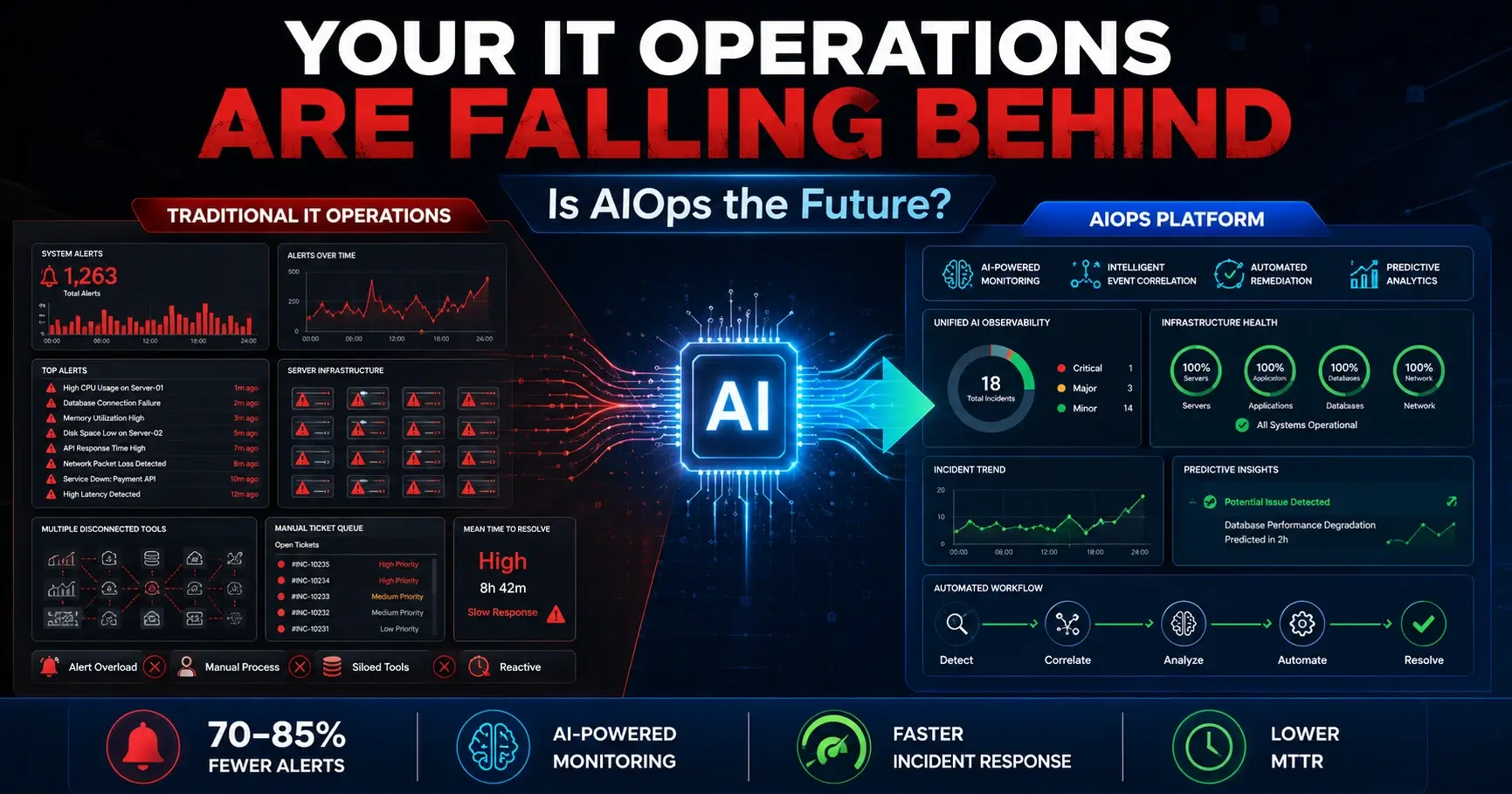
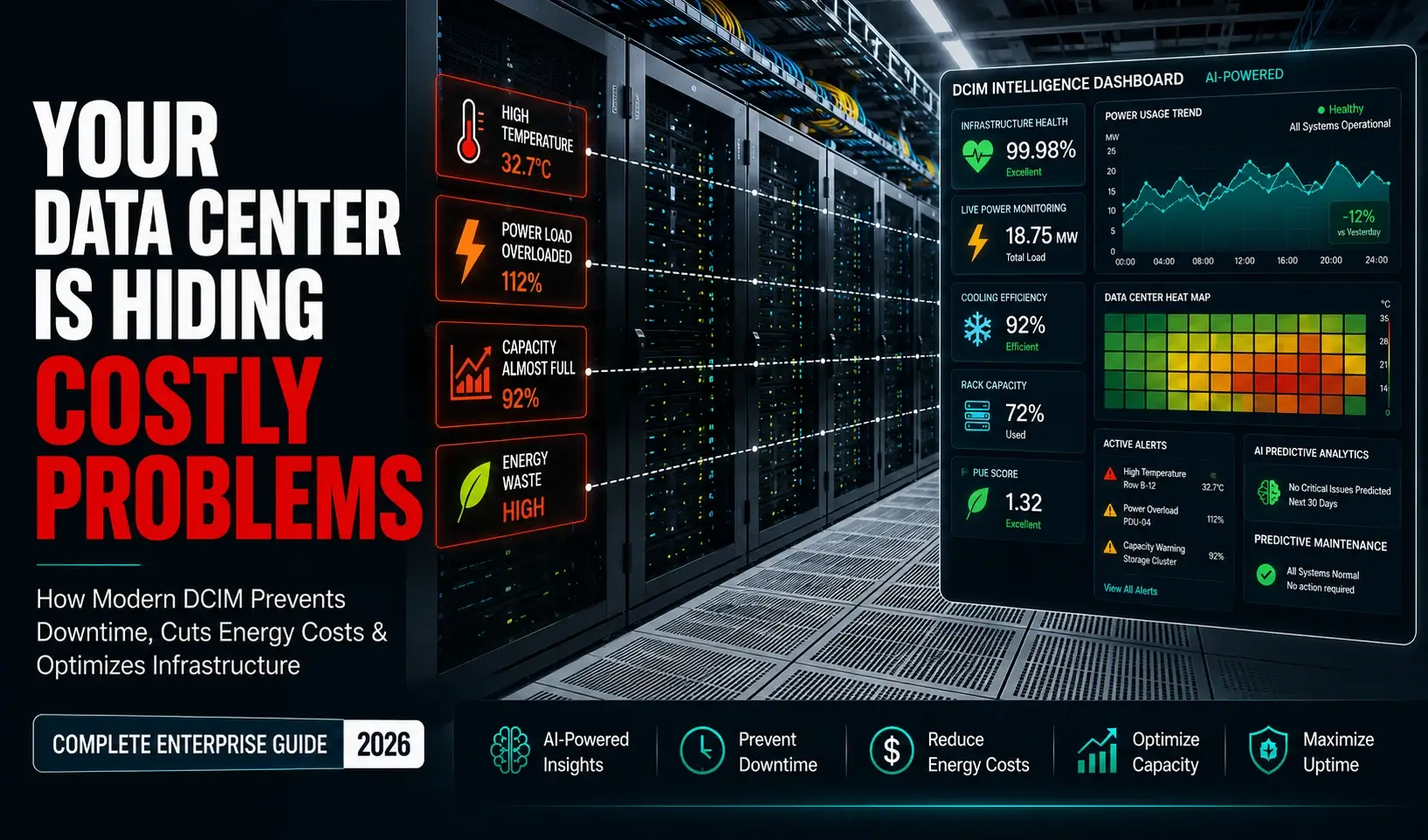
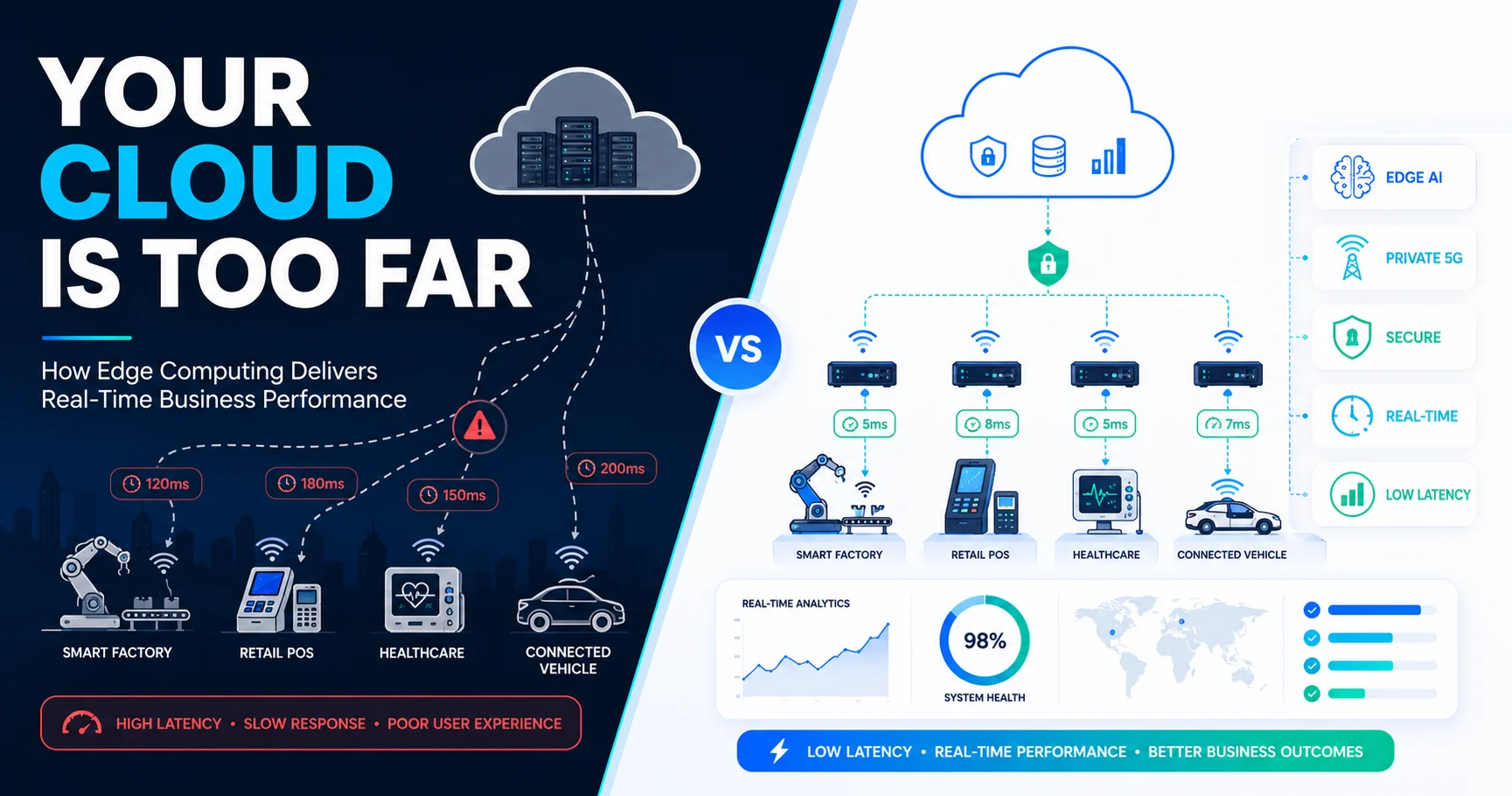
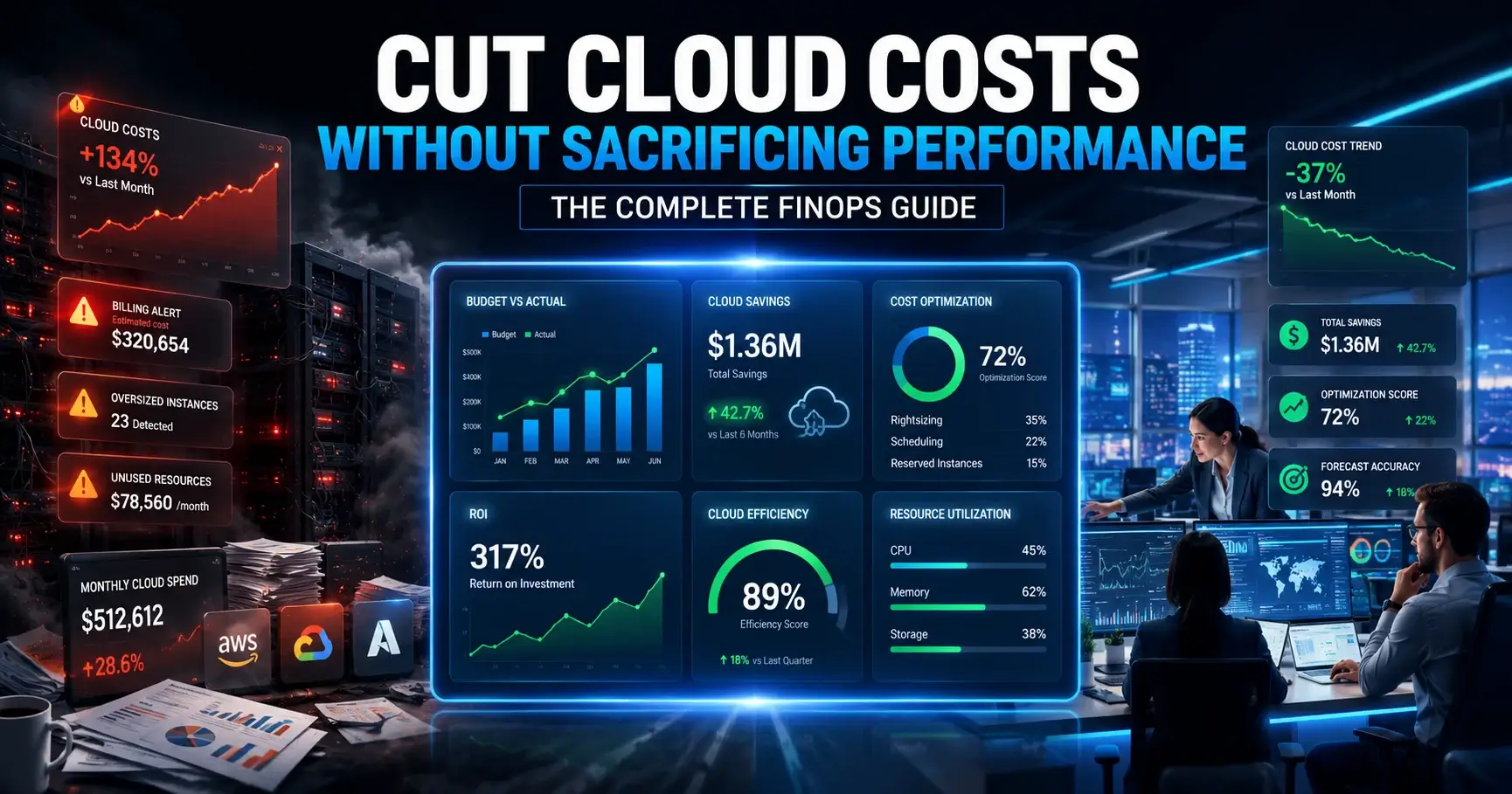
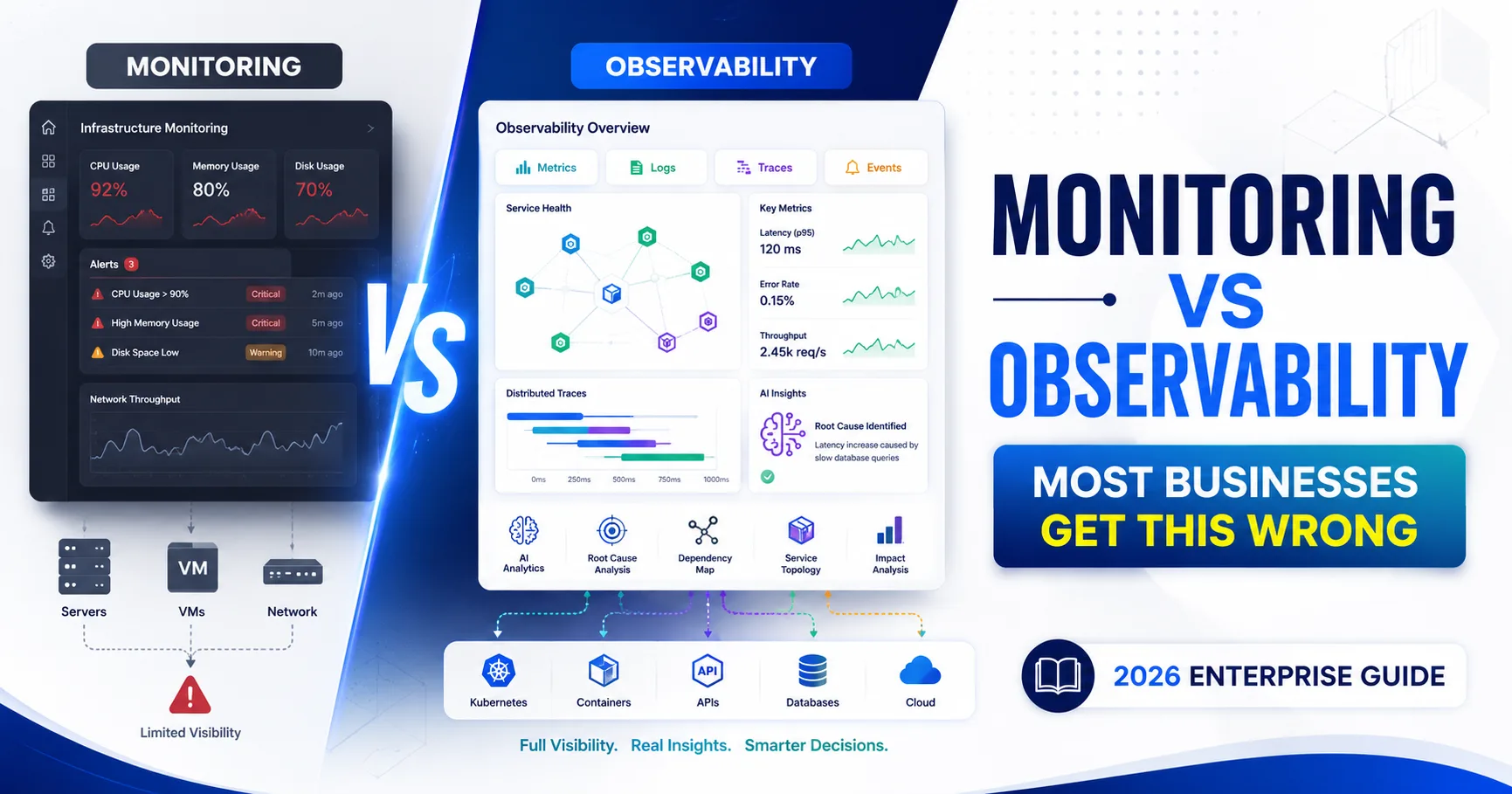
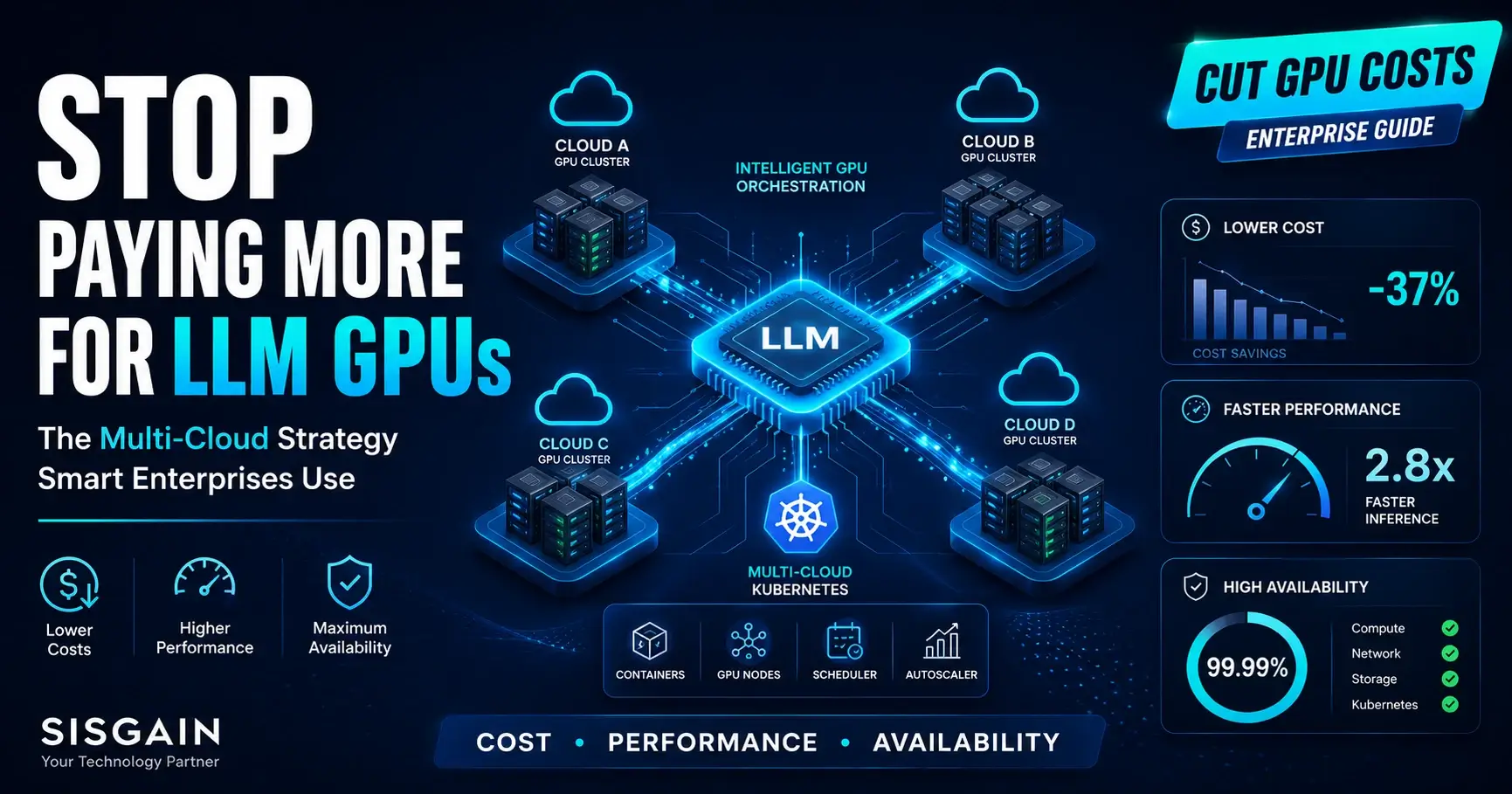







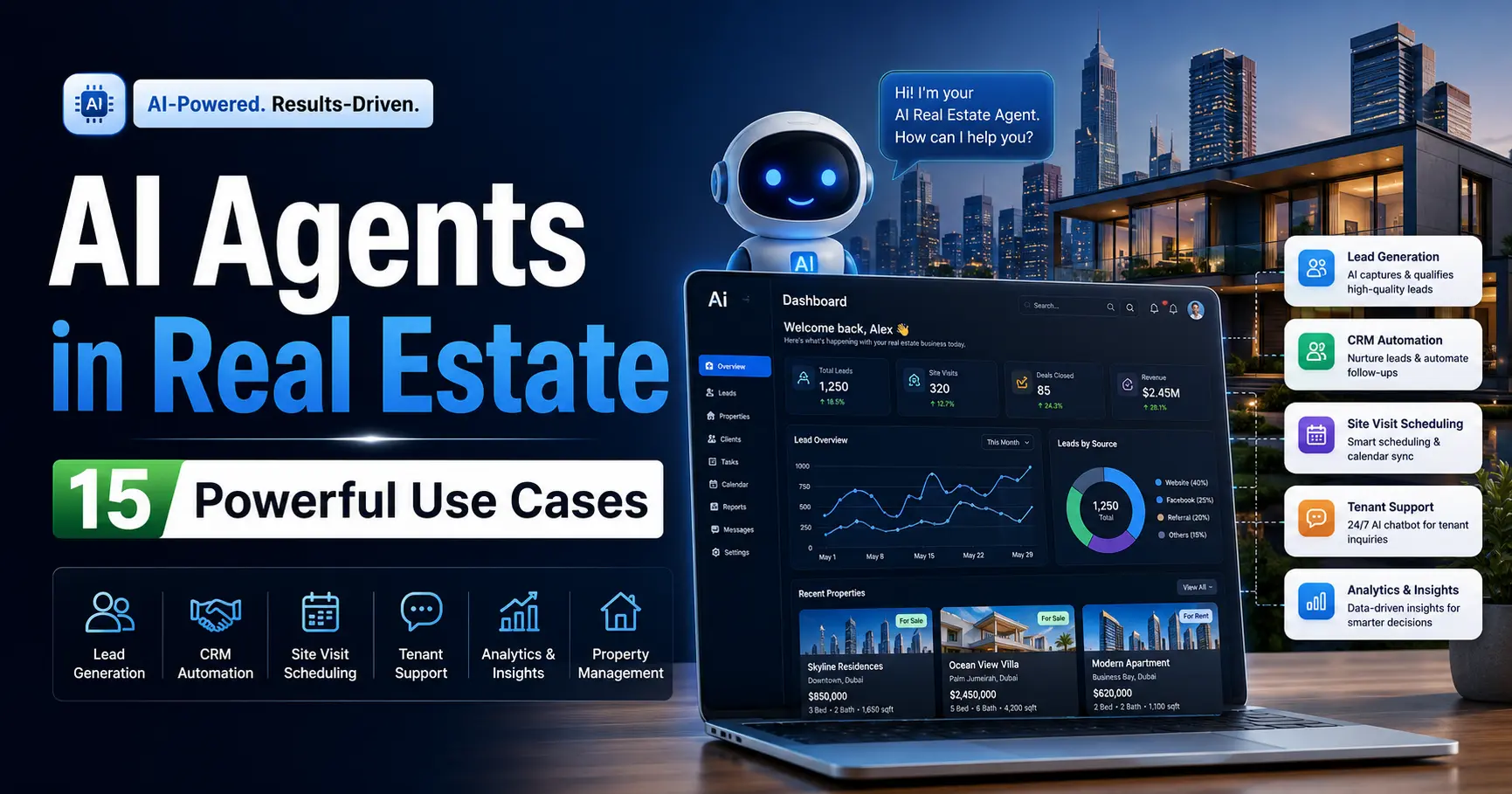










































Start Build Your
Next Digital Solution?
Let’s build scalable, future-ready digital solutions tailored to your business goals. Connect with our experienced technology consultants to discuss your vision, strategy, and growth opportunities — with zero obligation and complete transparency.
Get a free consultation and cost estimate for your digital solution
Our expert will contact you within 24 hours. Check your email for confirmation.
Partner with SISGAIN experts to build secure, scalable AI-powered IT Solutions that transform your business operations.









DUQE FREEZONE Quarter Deck, Queen Elizabeth 2, Mina Rashid, Dubai, UAE

100 Consilium Pl Suite 200, Scarborough, ON M1H 3E3, Canada

C-109, Sector 2, Noida, Uttar Pradesh 201301 India
Project quotes, partnerships, implementation
Open roles, referrals, campus hiring