












































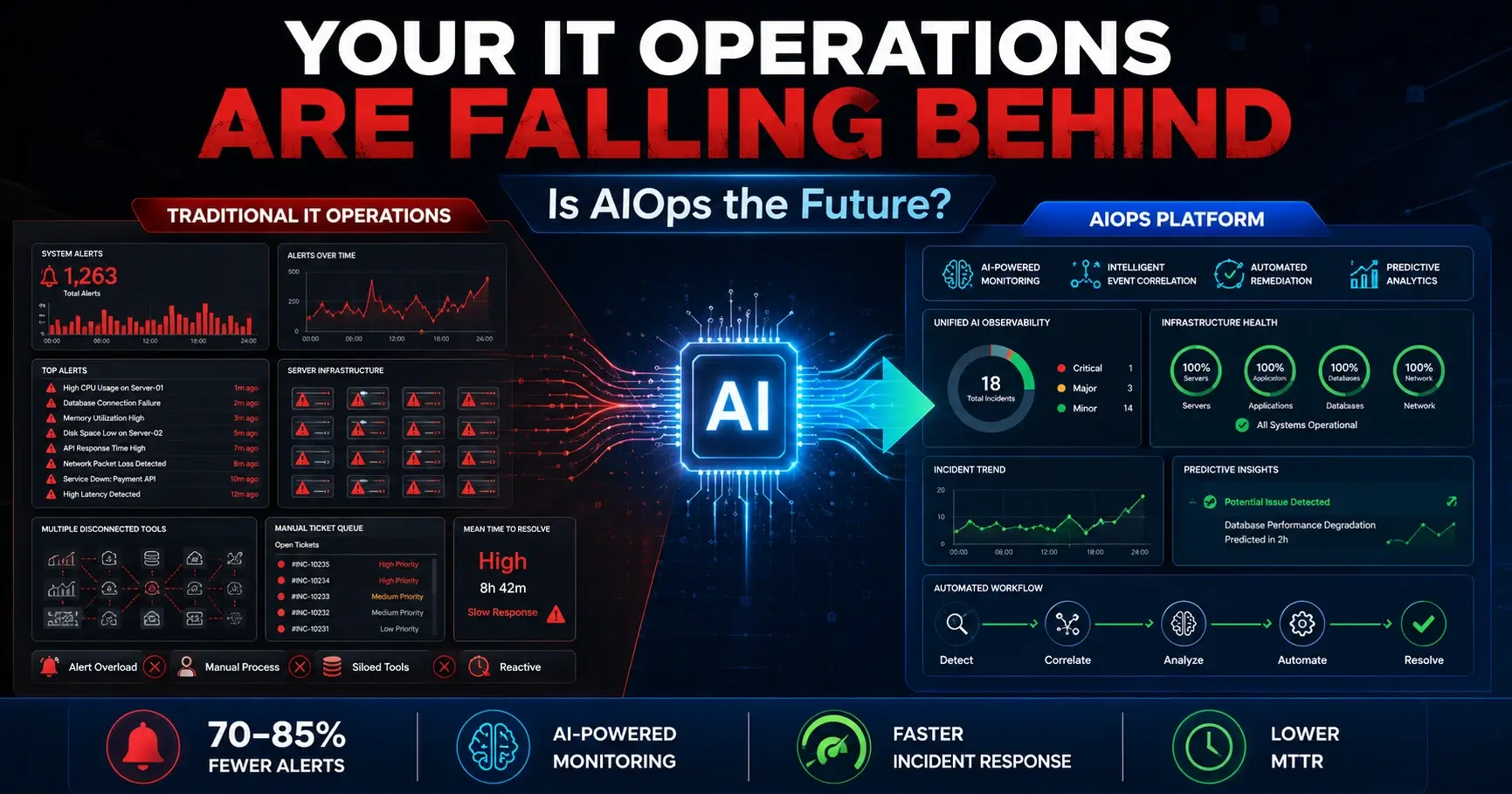
AIOps vs Traditional IT Operations: Key Differences
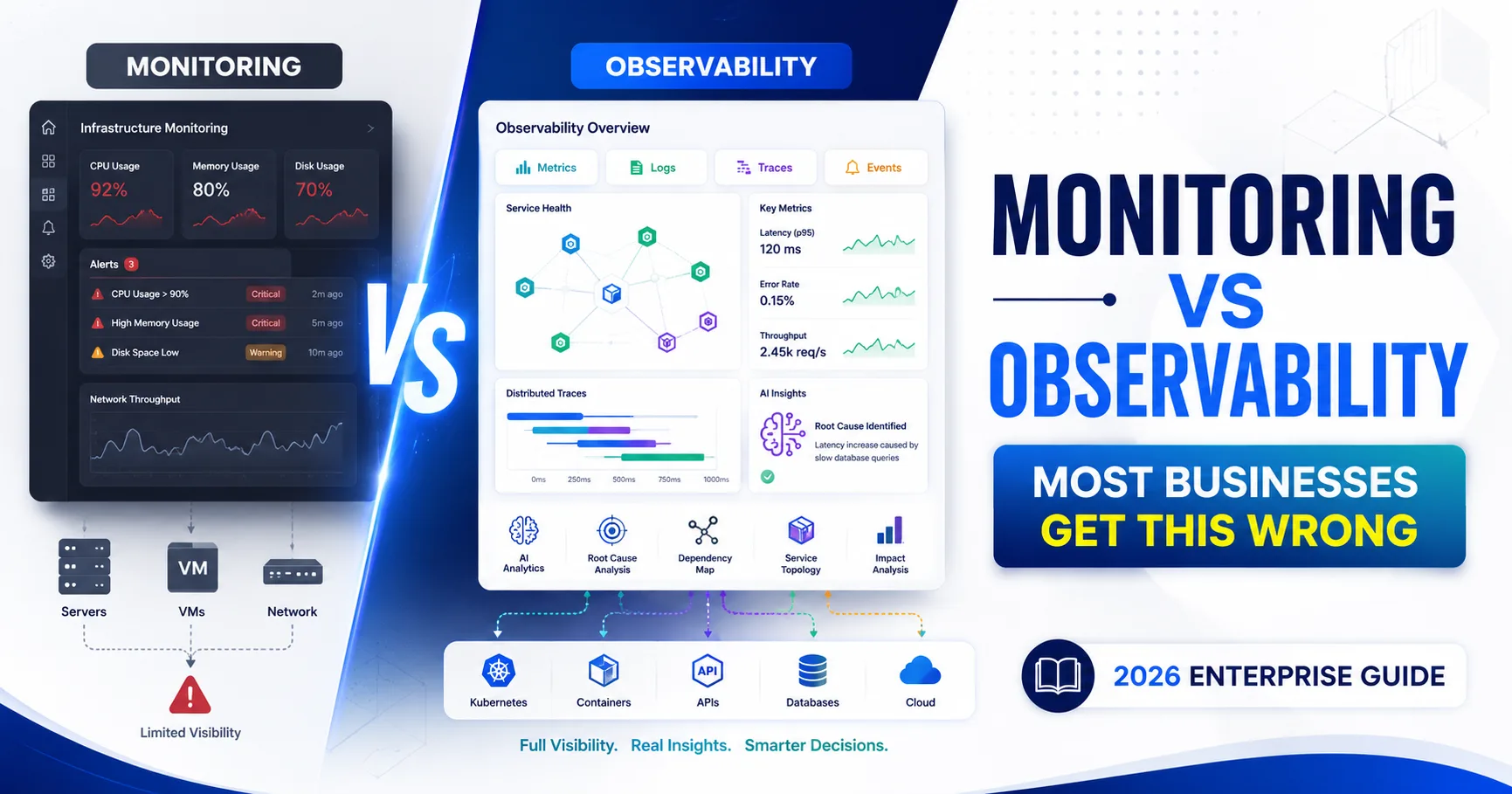
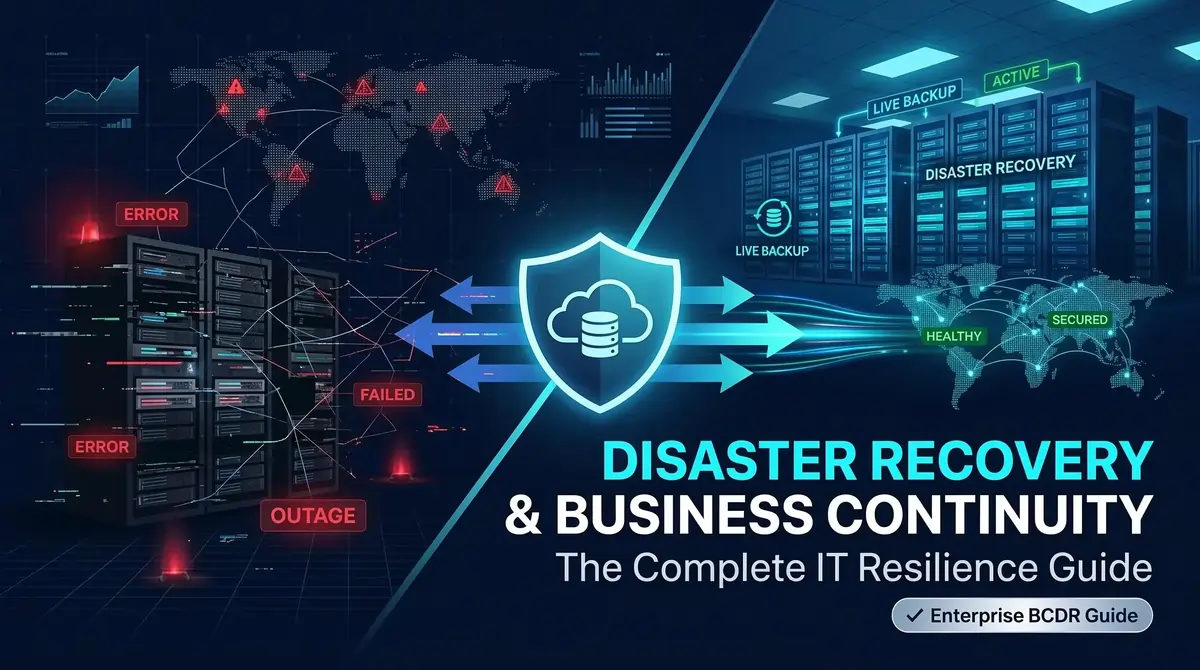
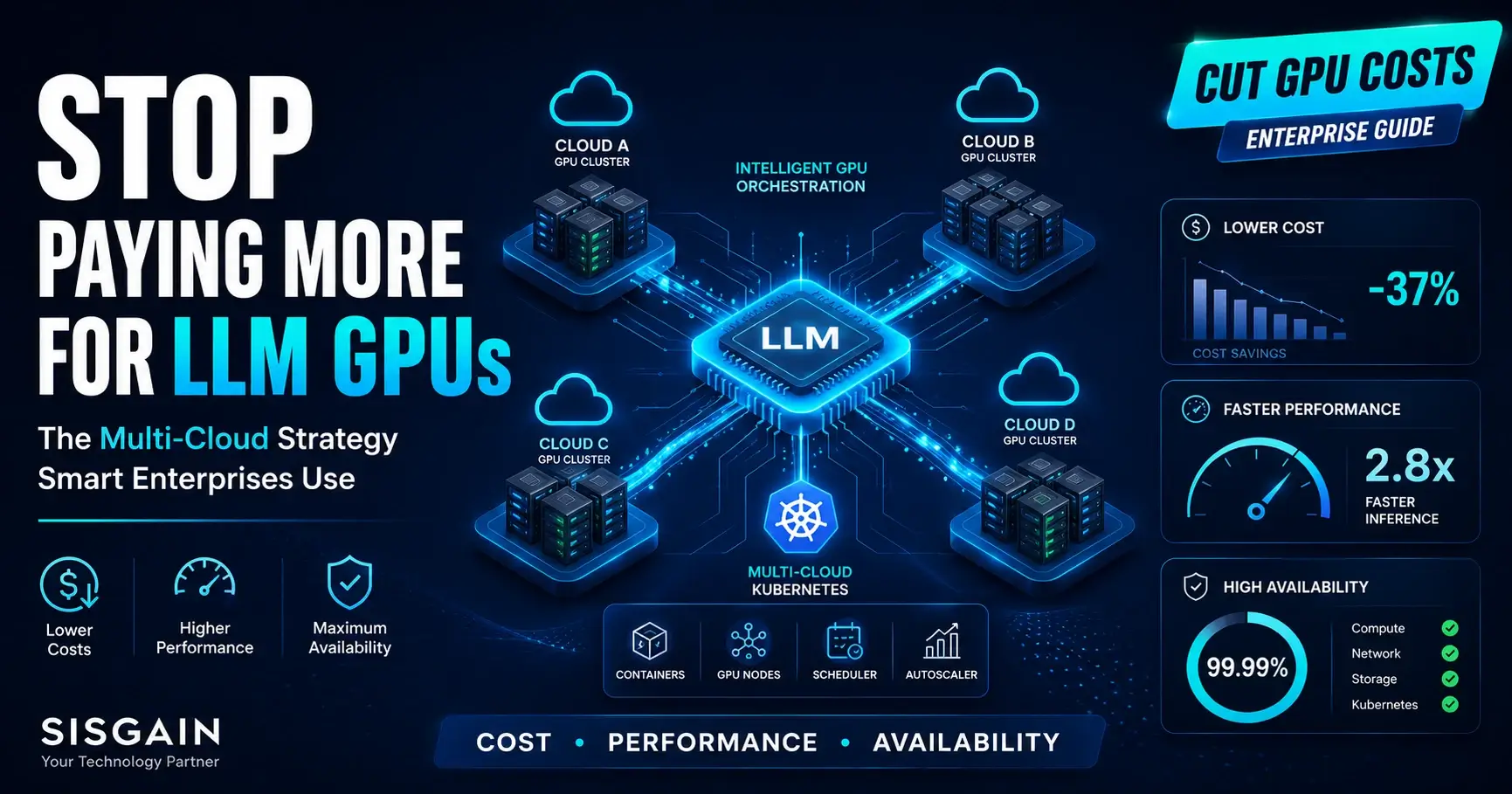
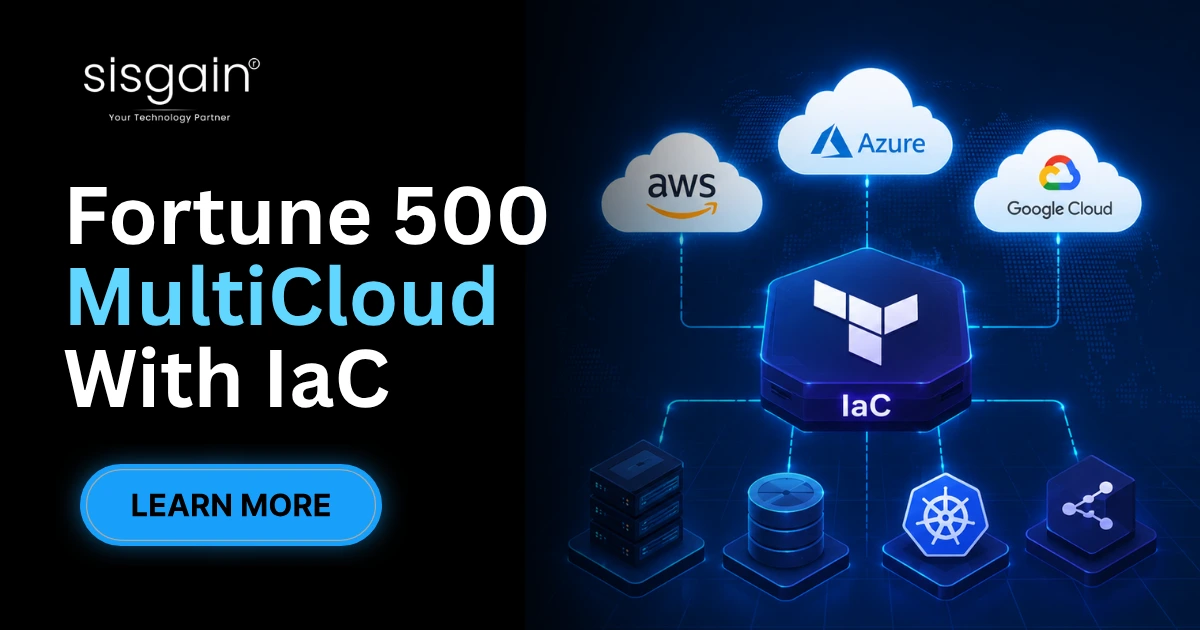
AIOps vs Traditional IT Operations: How AI Is Transforming Infrastructure Management Modern enterprise infrastructure has outgrown the tools designed to manage it. As distributed systems scale across hybrid clouds, edge nodes, and containerized workloads, traditional IT operations can no longer keep pace with the volume, velocity, and complexity of the data they generate. AIOps—Artificial Intelligence for IT Operations—addresses this gap by combining machine learning, big data analytics, and automation to deliver proactive, intelligent infrastructure management at scale. This article breaks down how AIOps differs from traditional IT operations, how it works under the hood, where it delivers the most value, and what enterprise teams should consider before adopting it. Key Takeaways AIOps platforms use machine learning and automation to shift IT operations from reactive troubleshooting to proactive detection and resolution. The global AIOps platform market was valued at USD 14.60 billion in 2024 and is projected to reach USD 36.07 billion by 2030 at a 15.2% CAGR (Grand View Research, 2024). Alert compression rates of 70–85% mean AIOps can reduce thousands of daily alerts to a manageable set of actionable incidents. AIOps augments human expertise—it does not replace IT teams. Engineers retain control over investigation, governance, and high-impact decisions. Successful AIOps adoption requires clean data pipelines, defined automation boundaries, and organizational buy-in before deployment. What Is Traditional IT Operations? Traditional IT operations (ITOps) refers to the collection of processes, tools, and human workflows that organizations use to manage, monitor, and maintain their technology infrastructure. These include server management, network monitoring, incident response, change management, and service desk operations. In traditional environments, IT teams rely on rule-based monitoring tools that trigger alerts based on static thresholds. A server crossing 90% CPU utilization fires an alert. A network packet loss rate exceeding a set limit pages an engineer. Each tool operates within its own silo—separate systems handle logs, metrics, events, and ticketing—leaving teams to manually correlate information across platforms to find root causes. This model served organizations well when IT environments were relatively simple and predictable. On-premises data centers with a fixed number of servers and applications were manageable. Teams knew the infrastructure intimately. Runbooks were effective because failure modes were finite. That world no longer exists for most enterprises. What Is AIOps? AIOps—short for AI for IT Operations—is a category of platforms and practices that apply machine learning (ML), natural language processing (NLP), and big data analytics to automate and enhance core IT operations tasks, including monitoring, event correlation, root cause analysis, and incident response. Gartner coined the term in 2016 as IT environments began shifting from siloed, on-premises tools to distributed, multi-cloud architectures that generate data at a scale no human team can manually process. An AIOps platform ingests observational data (metrics, logs, traces) and interaction data (tickets, alerts, incidents) from across the technology stack, then applies analytical models to detect anomalies, predict failures, correlate events, and initiate automated responses. The defining capability of an AIOps platform is event correlation. By grouping alerts based on timing, affected components, and shared symptoms, AIOps compresses thousands of noisy alerts into a manageable set of actionable incidents. Organizations commonly see daily alert volumes drop from 5,000 or more to approximately 100 actionable items—a compression rate of 70–85% (Splunk, 2026). AIOps connects three traditionally separate disciplines: Automation — executing remediation actions without manual intervention Service management — managing incidents, changes, and problems at scale Performance management — maintaining service health across complex environments To understand how AIOps fits within broader IT monitoring frameworks, the SISGAIN guide on observability vs monitoring covers the foundational differences that inform AIOps architecture. Why Traditional IT Operations Are No Longer Enough The infrastructure environment of 2025 looks nothing like 2010. Modern enterprises run microservices across multiple cloud providers, deploy containerized workloads that spin up and down in seconds, manage edge nodes spread across geographies, and integrate IoT data streams in real time. Each of these components generates logs, metrics, and events continuously. The result: alert fatigue. According to Splunk, more than 80% of alerts in mid-to-large enterprises are either irrelevant or duplicative. Engineers spend the majority of their time sorting through noise rather than resolving real problems. Critical incidents surface to end users before the operations team has even identified the root cause. Traditional ITOps also struggles with: Siloed tooling — separate systems for logs, APM, network monitoring, and ticketing prevent holistic visibility Reactive posture — static thresholds generate alerts after problems occur, not before Slow MTTR — manual root cause analysis across disconnected data sources extends Mean Time to Resolution Scaling limits — human-intensive processes cannot scale proportionally with infrastructure complexity Knowledge dependency — expertise lives in individual engineers rather than in documented, automated workflows These limitations are not a failure of IT teams. They are structural limitations of tools built for a less complex era. For a broader view of what modern infrastructure management entails, the SISGAIN overview of infrastructure management services provides useful context before exploring AIOps in depth. AIOps vs Traditional IT Operations: A Direct Comparison Dimension Traditional IT Operations AIOps Monitoring approach Rule-based, static thresholds ML-driven, dynamic anomaly detection Alert handling Manual triage across silos Automated correlation and deduplication Root cause analysis Manual investigation across tools Automated dependency mapping and trace analysis Incident response Human-driven, reactive Automated playbooks, proactive mitigation Data volume handling Limited by human capacity Scales to petabyte-level telemetry Visibility Siloed per tool or domain Unified across hybrid and multi-cloud environments Failure prediction Rare, based on known patterns Predictive using historical and behavioral data MTTR Hours to days Minutes to hours (50%+ improvement reported) Team dependency High — expertise in individuals Lower — knowledge embedded in automated workflows Scalability Proportional headcount required Scales independently of team How AIOps Works AIOps platforms operate through five interconnected architectural layers, each building on the last to move from raw data to intelligent action: 1. Data Ingestion and NormalizationThe platform collects metrics, logs, traces, events, and alerts from applications, network devices, cloud services, and container orchestration platforms. Data arrives in heterogeneous formats—JSON, XML, plain text, structured metrics—and is normalized into a consistent schema for downstream analysis. 2. Data StorageNormalized data flows into scalable, cloud-native or distributed storage systems capable of handling both real-time streams and historical batch data. Historical records enable trend analysis and long-term pattern recognition for root cause tracing. 3. Analytics EngineThe core of the platform applies machine learning algorithms to detect anomalies, correlate events across domains, predict capacity problems, and perform root cause analysis. Supervised algorithms recognize known failure signatures; unsupervised algorithms identify novel anomalies not previously seen. 4. Automation and OrchestrationWhen the analytics engine identifies a root cause or confirms a failure pattern, predefined automation scripts or runbooks execute remediation actions automatically. Examples include service restarts, disk cleanups, connection resets, and auto-scaling triggers—without requiring human intervention. 5. VisualizationOperations teams interact with dashboards, topology maps, and alert consoles that translate complex analytical outputs into actionable information. Engineers can drill into incident timelines, review correlated events, and assess system health across their entire infrastructure in one view. Raw Data (Logs, Metrics, Traces, Events) ↓ Ingestion & Normalization ↓ Distributed Storage ↓ Analytics Engine (ML, NLP, Event Correlation) ↓ Anomaly Detection → Root Cause Analysis → Prediction ↓ Automation & Orchestration (Runbooks, Auto-remediation) ↓ Visualization & Human Review For organizations seeking to build a foundation before deploying AIOps, SISGAIN's guide on infrastructure monitoring explains the baseline monitoring disciplines that AIOps platforms extend and enhance. Core Technologies Behind AIOps Several machine learning and data engineering disciplines power AIOps capabilities: Supervised Learning — Trained on labeled historical data to recognize known failure patterns (e.g., memory leak signatures, network congestion indicators) Unsupervised Learning — Identifies anomalies in behavior that have no prior label, surfacing unknown failure modes before they escalate Long Short-Term Memory (LSTM) Networks — A class of recurrent neural network used for time-series forecasting, enabling AIOps platforms to predict capacity exhaustion, performance degradation, or hardware failure hours in advance Natural Language Processing (NLP) — Parses unstructured log data and incident tickets to extract meaning, classify events, and automate ticket routing Knowledge Graphs — Map dependencies across systems, services, and infrastructure components to trace how failures cascade through the stack Big Data Analytics — Processes petabyte-scale telemetry across distributed storage systems to surface patterns that no human analyst could detect manually These technologies work in combination, not in isolation. A robust AIOps platform does not rely on a single algorithm—it applies the appropriate method to each type of analytical task. Key Benefits of AIOps Organizations that move from traditional ITOps to an AIOps model report measurable improvements across operational and financial dimensions: Reduced alert fatigue — Compression rates of 70–85% leave engineers focused on real incidents rather than false positives Faster incident resolution — AIOps reduces Mean Time to Resolution (MTTR) by 50% or more by automating root cause analysis and triggering remediation before human teams begin manual investigation Proactive failure prevention — Predictive analytics surface issues before they reach end users. Vitria Technology's AIOps platform detected 92% of incidents before they impacted customers (September 2024) Operational efficiency — Engineers spend less time on repetitive, low-impact tasks and more time on strategic initiatives Consistent observability across hybrid environments — Unified visibility across on-premises, cloud, and edge infrastructure replaces fragmented, tool-specific dashboards Better ROI on engineering capacity — Teams of the same size manage significantly larger, more complex environments without proportional headcount increases Reduced service downtime — Vitria Technology customers reported a 60% improvement in overall service availability following AIOps deployment (September 2024) AIOps Use Cases Across Industries AIOps platforms deliver value across verticals, with implementation priorities varying by industry: Industry Primary AIOps Use Case Key Outcome Banking & Financial Services (BFSI) Real-time anomaly detection, transaction monitoring, compliance alerting Reduced downtime for critical financial systems; improved regulatory posture Healthcare Application performance monitoring, EHR system reliability, HIPAA-aligned incident management Continuity of patient-facing digital services Retail & E-Commerce Demand-driven capacity scaling, checkout system monitoring, CDN performance management Maintained uptime during peak traffic events IT & Telecom Network performance management, SLA monitoring, automated fault isolation Faster resolution of service-affecting network events Government Secure infrastructure monitoring, multi-agency event correlation, automated compliance reporting Improved operational efficiency across distributed public sector IT Energy & Utilities SCADA system monitoring, predictive maintenance, edge sensor data analysis Reduced unplanned downtime in critical infrastructure The BFSI sector accounts for the largest share of AIOps platform revenue globally, driven by regulatory pressures, the volume of transactional data, and the cost of downtime in financial services environments (Grand View Research, 2024). AIOps for Modern Cloud Infrastructure Cloud environments present specific challenges that AIOps is purpose-built to address. Multi-cloud and hybrid deployments distribute workloads across providers—AWS, Azure, Google Cloud, and private infrastructure—each with its own monitoring APIs, log formats, and alert taxonomies. Without a unified layer, teams lose visibility the moment a workload crosses a provider boundary. An AIOps platform normalizes telemetry from multiple cloud providers into a single analytical layer. It applies ML to identify performance anomalies that cross cloud boundaries, predicts cost-affecting capacity events, and automates remediation actions across cloud APIs without requiring manual intervention in each provider's console. For organizations managing the complexity of hybrid cloud environments, SISGAIN's cloud infrastructure management guide and the companion resource on hybrid cloud infrastructure management outline the architectural considerations that inform AIOps deployment at cloud scale. AIOps and Infrastructure Automation Infrastructure automation and AIOps are complementary disciplines. Automation handles execution—provisioning, configuration, deployment. AIOps handles intelligence—deciding what to execute, when, and why. Without AIOps, automation operates on fixed rules. A script restarts a service when CPU hits 95%. It does not consider whether that CPU spike is part of a broader cascade, whether the restart will resolve the issue, or whether a scheduled maintenance window makes intervention inappropriate. With AIOps, automation becomes context-aware. The analytics engine identifies root cause first, then triggers the appropriate remediation action from a library of predefined runbooks. Automation handles low-risk, repeatable tasks automatically. High-severity or ambiguous situations escalate to human review with full incident context attached. SISGAIN's overview of infrastructure automation tools covers the tooling landscape that AIOps platforms integrate with and orchestrate across. AIOps and Infrastructure as Code Infrastructure as Code (IaC) disciplines—Terraform, Pulumi, Ansible, and similar frameworks—define infrastructure state declaratively. AIOps extends IaC by providing the feedback loop that these tools lack natively. An AIOps platform can detect configuration drift between the declared state and the actual running environment, flag misconfigurations before they cause incidents, and trigger IaC-based remediation workflows automatically. When a multi-cloud deployment exhibits anomalous behavior tied to a recent infrastructure change, AIOps correlates the deployment event with the performance degradation, enabling faster rollback decisions. For teams operating at enterprise scale, SISGAIN's research on how Fortune 500 organizations manage multi-cloud infrastructure with IaC provides real-world context for integrating AIOps with IaC workflows. AIOps for AI Infrastructure and GPU Clusters Organizations running large-scale AI workloads—training foundation models, serving inference at scale, or operating enterprise LLMs—face a distinct infrastructure management challenge. GPU clusters are expensive, thermally sensitive, and operationally complex. Utilization rates matter enormously because underutilized GPUs represent direct financial waste, and overloaded clusters cause training job failures that waste days of compute time. AIOps platforms designed for AI infrastructure monitor GPU utilization, memory bandwidth, interconnect saturation, and thermal metrics in real time. They predict when a training job will exhaust available memory before it fails, identify idle GPU capacity that can be reallocated, and detect hardware anomalies—such as NVLink errors or thermal throttling—before they impact workload completion. SISGAIN's analysis of multi-cloud GPU strategy for enterprise LLMs explores the infrastructure architecture decisions that AIOps for AI workloads must be built around. AIOps Improves Disaster Recovery Traditional disaster recovery relies on documented runbooks, scheduled drills, and manual failover procedures. The time between an incident occurring and a DR playbook being executed is often measured in hours—hours during which services are degraded or unavailable. AIOps compresses this window significantly. By continuously monitoring infrastructure health and maintaining real-time dependency maps, an AIOps platform can detect conditions that indicate imminent failure—storage degradation, network partition probability, application performance decay—and initiate DR workflows automatically before a full outage occurs. This shifts disaster recovery from a reactive discipline to a proactive one. Automated failover, pre-validated recovery paths, and continuous DR readiness monitoring replace periodic manual testing and hope. SISGAIN's disaster recovery and business continuity guide covers the strategic framework within which AIOps-driven DR capabilities operate. AIOps Supports Better Cloud Cost Optimization Cloud costs scale with usage, and usage is difficult to predict at enterprise scale. Idle resources, oversized instance types, and unattended storage volumes accumulate into significant waste. Traditional approaches to cloud cost management rely on periodic reviews—finance teams analyzing invoices, engineers running one-off rightsizing exercises. AIOps enables continuous cost intelligence. By monitoring utilization patterns alongside cost metrics, AIOps platforms identify rightsizing opportunities in real time, predict when reserved capacity will be underutilized, detect orphaned resources before they generate months of unnecessary spend, and trigger automated de-provisioning for resources that fall below utilization thresholds. This is FinOps operationalized. SISGAIN's complete guide to cloud cost optimization provides the financial framework that AIOps cost intelligence feeds into. AIOps at the Edge Edge computing distributes compute and storage to locations close to data sources—manufacturing floors, retail locations, autonomous vehicles, remote energy sites. Managing hundreds or thousands of edge nodes with traditional centralized ITOps is operationally impractical. Each node has limited connectivity, varied hardware configurations, and operating conditions that differ from cloud or data center environments. AIOps addresses edge management through lightweight agents that run locally on edge nodes, aggregating telemetry and performing initial analysis before transmitting summarized insights to a central platform. This reduces bandwidth requirements while maintaining visibility. Predictive models identify edge hardware approaching failure before the node goes offline, enabling proactive replacement during planned maintenance rather than emergency repair. SISGAIN's analysis of edge computing infrastructure covers the architectural context within which AIOps edge management capabilities operate. AIOps Inside Modern Data Centers Data center infrastructure management has traditionally relied on DCIM (Data Center Infrastructure Management) tools that monitor physical assets—power, cooling, rack density, and capacity utilization. Modern data centers run a combination of physical hardware, virtualized workloads, and containerized services, requiring a management layer that spans both physical and logical infrastructure. AIOps platforms integrate with DCIM data alongside application and network telemetry, correlating physical infrastructure events (cooling anomalies, power fluctuations) with logical workload performance to identify cascading failures before they propagate. Predictive capacity planning, automated workload placement optimization, and energy efficiency modeling become operational realities rather than planning exercises. For a detailed treatment of data center infrastructure management disciplines, SISGAIN's DCIM guide provides the foundational context that AIOps builds upon. AIOps and Security Operations Security is where AIOps and SecOps increasingly intersect. SIEM platforms, threat intelligence feeds, and endpoint detection tools each generate signals that security analysts must manually correlate. Alert volumes in security operations centers mirror the challenge in IT operations—too many signals, too few analysts, and insufficient time to investigate each one. AIOps enhances security operations by: Correlating security events with infrastructure events — A network anomaly detected by the AIOps platform may correspond with a security alert in the SIEM, revealing an attack vector that neither system would identify in isolation Detecting behavioral anomalies — ML models identify unusual access patterns, data exfiltration indicators, and lateral movement signatures that rule-based SIEM tools miss Automating threat response — When AIOps confirms a security incident with sufficient confidence, automated playbooks can isolate affected workloads, revoke credentials, or trigger network segmentation without waiting for human approval Reducing analyst fatigue — The same event correlation and deduplication capabilities that reduce IT alert noise apply equally to security event streams SISGAIN's IT infrastructure security best practices guide covers the security architecture considerations that AIOps security capabilities integrate with. Challenges of Implementing AIOps AIOps delivers significant value, but implementation is not without friction. Gartner research indicates that only 54% of AI projects advance beyond proof-of-concept—a statistic that reflects both technical and organizational challenges. Data fragmentation across siloed toolsMost enterprises maintain separate systems for logs, metrics, and alerts. Consolidating telemetry into a unified observability layer requires schema enforcement, normalization, and deduplication work before ML models can generate reliable outputs. Defining automation boundariesAutomating everything simultaneously introduces risk. Starting with low-impact, well-understood remediation tasks and implementing human-in-the-loop review for high-severity actions allows teams to build confidence in automated workflows before expanding their scope. Model explainabilityEngineers who cannot understand why an AIOps platform made a decision will not trust it. Platforms that provide traceability to source logs, approval gates, and configurable governance policies earn operational trust faster than opaque black-box systems. Cultural resistanceTeams may interpret AIOps adoption as a prelude to headcount reduction. Positioning AIOps as an augmentation tool—handling the repetitive analysis that prevents engineers from doing strategic work—and demonstrating value through internal case studies accelerates adoption. Data volume at enterprise scaleOperational telemetry from large enterprises can reach petabyte scale. Platforms must analyze data at fine-grained granularity rather than relying on aggregations, which requires scalable storage and compute infrastructure that many organizations have not yet provisioned. Best Practices for Successful AIOps Adoption Organizations that implement AIOps successfully tend to follow a consistent set of practices: Start with a defined use case — Choose one high-value problem (alert noise reduction, MTTR improvement, or capacity prediction) and demonstrate results before expanding scope Invest in data quality first — AIOps is only as effective as the data it analyzes. Establish data pipelines, normalization standards, and telemetry coverage before deploying ML models Define automation boundaries explicitly — Document which remediation actions can execute automatically, which require human approval, and which remain fully manual Involve engineering teams early — Engineers who participate in defining automation logic and reviewing model outputs develop trust faster than those who have AIOps imposed on them Measure operational baselines — Capture current MTTR, alert volumes, and false positive rates before deployment to quantify improvement after go-live Choose platforms with explainability built in — Prioritize platforms that surface the evidence behind each AI-generated recommendation Plan for iterative expansion — AIOps value compounds over time as ML models accumulate more operational data. Budget for ongoing tuning, not just initial deployment When Should Your Business Adopt AIOps? AIOps delivers the most value when organizations meet one or more of the following conditions: Alert fatigue is measurable and worsening — Engineers spend more than 30% of their time triaging alerts that resolve without action MTTR has plateaued despite process improvements — Root cause analysis bottlenecks remain even after investing in tooling and staffing Infrastructure complexity has outpaced team capacity — The number of monitored components has grown faster than headcount, creating coverage gaps Multi-cloud or hybrid deployments have reduced visibility — Teams lack end-to-end visibility across cloud and on-premises environments Incident costs are significant — Downtime carries measurable financial or reputational consequences that justify investment in proactive management Digital transformation initiatives are accelerating — Cloud migration, containerization, or edge expansion is introducing infrastructure complexity faster than existing operations processes can absorb Organizations that are still in early stages of cloud adoption or that run relatively simple, on-premises environments may find traditional monitoring improvements more cost-effective in the near term. AIOps scales best when the problem it is solving is genuinely complex. How SISGAIN Helps Businesses Implement AIOps Implementing AIOps effectively requires expertise that spans platform architecture, data engineering, ML model governance, and operational process design. For enterprises navigating this complexity, SISGAIN provides end-to-end support across the AIOps adoption journey. SISGAIN's infrastructure management services establish the operational foundation that AIOps platforms build on—ensuring telemetry coverage, monitoring architecture, and incident management processes are aligned before AI capabilities are layered on top. This prevents one of the most common AIOps failure modes: deploying ML models against incomplete or inconsistent data. For organizations operating cloud-native or hybrid infrastructure, SISGAIN's cloud managed services integrate AI-driven observability and intelligent automation into day-to-day cloud operations. This includes continuous monitoring across multi-cloud environments, proactive anomaly detection, and automated remediation workflows that reduce operational toil for engineering teams. SISGAIN's platform engineering services address the internal developer platform layer where AIOps capabilities surface for application teams—standardizing observability tooling, integrating AIOps insights into CI/CD pipelines, and creating self-service operational capabilities that reduce the burden on central platform teams. The SISGAIN approach emphasizes operational excellence over tooling alone. AIOps is most effective when it is embedded in organizational workflows, not deployed as a standalone system that engineers work around. SISGAIN helps enterprises design the process, governance, and team structure that AIOps platforms require to deliver sustained value. The Shift Has Already Started AIOps is not a future capability for forward-thinking organizations to evaluate—it is an operational necessity for any enterprise managing infrastructure at scale today. The data volumes, environment complexity, and service reliability expectations of 2025 have definitively exceeded what traditional IT operations tools and processes can handle. The organizations gaining competitive advantage are those that have moved from reactive alert management to proactive, ML-driven operations. They detect failures before users report them, resolve incidents in minutes rather than hours, and continuously optimize infrastructure costs and capacity without manual intervention. The practical next step is a structured assessment of your current monitoring coverage, alert management effectiveness, and automation maturity. From that baseline, a phased AIOps adoption roadmap becomes achievable—starting with the use cases that deliver measurable ROI fastest and building toward the fully integrated, AI-driven operations model that enterprise infrastructure now demands. table { width: 100%; max-width: 100%; border-collapse: collapse; margin: 24px 0; font-size: 15px; line-height: 1.6; background: #ffffff; border: 1px solid #d9e2ec; display: block; overflow-x: auto; overflow-y: hidden; white-space: nowrap; -webkit-overflow-scrolling: touch; border-radius: 10px; } table tbody { display: table; width: 100%; } table th { background: #0b2a4a; color: #ffffff; font-weight: 700; text-align: left; padding: 14px 16px; border: 1px solid #0b2a4a; } table td { padding: 13px 16px; border: 1px solid #d9e2ec; color: #1f2937; vertical-align: top; } table tr:nth-child(even) td { background: #f8fbff; } table tr:hover td { background: #eef6ff; } table p { margin: 0; } /* Mobile Optimization */ @media (max-width: 768px) { table { font-size: 14px; } table th, table td { padding: 12px; } }















 +1 844-445-5767
 +971 56-848-5757
 +91 921-208-0630