
 +1 844-445-5767
 +971 56-848-5757
 +91 921-208-0630
For Business & Service Inquiries
Sales Team
Project quotes, partnerships, implementation
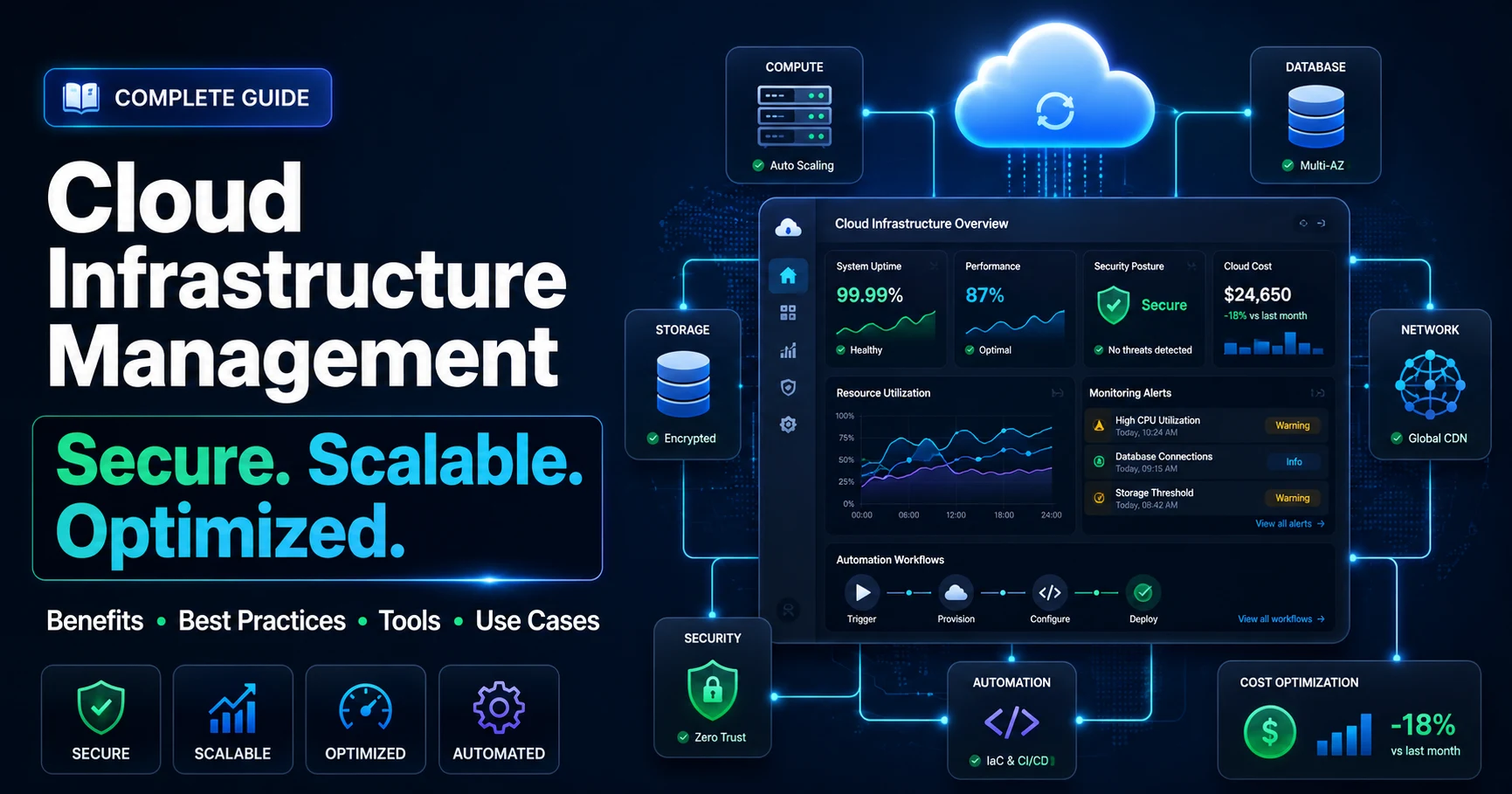
Quick answer: Cloud infrastructure management is the process of configuring, monitoring, securing, automating, and optimizing cloud resources such as servers, storage, networks, databases, security systems, and applications. It helps businesses improve uptime, reduce cloud waste, strengthen security, control costs, and scale digital products more efficiently.
Cloud investment is growing quickly, but many businesses still struggle to turn that spending into measurable value. Industry reports show that cloud budgets continue to rise, while a significant share of cloud spend is wasted on idle, oversized, or poorly managed resources. That gap between cloud investment and real business value is exactly where cloud infrastructure management becomes important.
This guide breaks down what cloud infrastructure management is, how it connects with infrastructure management services, why it matters, its core components, best practices, tools, real-world use cases, and how to choose the right partner. Whether you run a SaaS startup or a regulated enterprise, you'll walk away with a clear framework for managing cloud infrastructure that controls costs and supports growth.
Cloud infrastructure management is the process of planning, provisioning, monitoring, securing, automating, and optimizing cloud-based resources such as servers, storage, networks, databases, applications, and security controls. The main goal is to keep cloud environments reliable, scalable, secure, high-performing, and cost-efficient.
In practical terms, it covers everything CloudOps teams and cloud engineers do to keep a cloud environment running well. That includes provisioning compute, configuring networks, applying security controls, tracking performance, and managing spend. The work spans every delivery model—Infrastructure as a Service (IaaS), Platform as a Service (PaaS), and Software as a Service (SaaS)—and every environment, from a single public cloud to complex hybrid and multicloud setups.
Businesses planning new cloud environments often start with cloud architecture and infrastructure services to design the right foundation for performance, security, scalability, and long-term cost control.
Strong cloud and infra management blends people, processes, and tooling. The goal is simple: maximize the value of cloud resources while minimizing risk, downtime, and waste.
Cloud spending is increasing across SaaS companies, e-commerce platforms, healthcare systems, fintech applications, logistics businesses, and enterprise software environments. As cloud usage grows, even small inefficiencies in compute, storage, networking, security, or scaling can create unnecessary cost, downtime, and performance issues.
Poorly managed cloud environments can lead to outages, weak access control, security misconfigurations, slow applications, and runaway cloud bills. Without active management of cloud infrastructure and services, companies often pay for unused capacity while still struggling to handle sudden traffic spikes.
For teams without dedicated cloud experts, cloud managed services can help maintain monitoring, security, backups, optimization, and ongoing cloud operations without overloading internal teams.
Effective cloud infrastructure management solves both problems. It keeps applications fast and available, protects sensitive data, and ensures every dollar of cloud spend drives real business value.
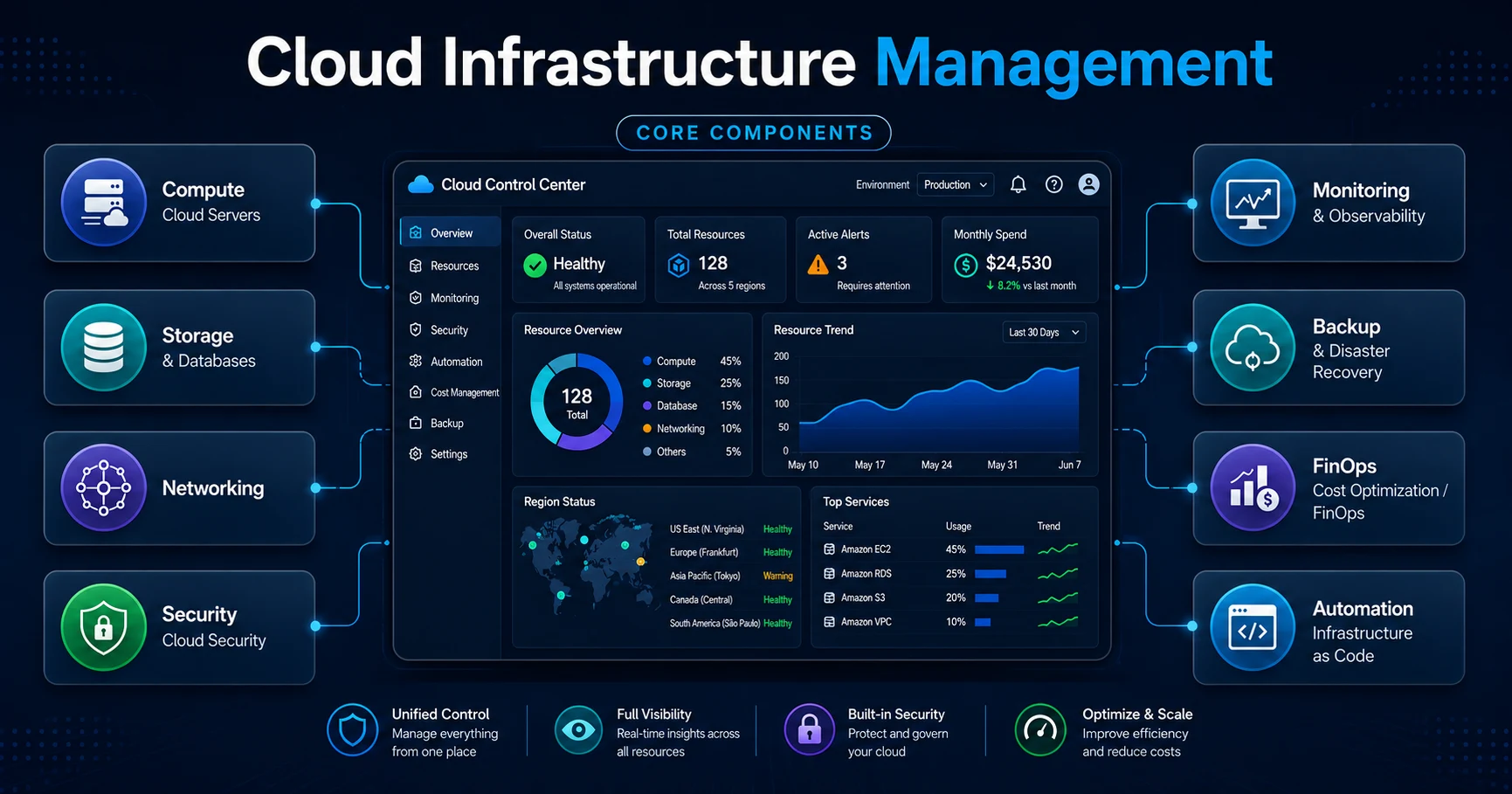
A complete approach to managing cloud infrastructure covers eight core areas.
Compute provides the processing power and memory that run your workloads. This includes virtual machines, containers, serverless functions like AWS Lambda or Azure Functions, and high-performance computing clusters. Right-sizing these resources is the foundation of both performance and cost control.
Cloud storage spans file, block, and object storage, alongside managed databases, data lakes, and data warehouses. Good management means matching each workload to the right storage tier and planning for data growth without overspending.
Networking ties everything together. Virtual private clouds (VPCs), load balancers, firewalls, VPNs, content delivery networks (CDNs), and gateways all need careful configuration to deliver secure, low-latency connectivity.
Cloud security protects data, applications, users, and workloads across the cloud environment. It includes identity and access management, encryption, firewall rules, vulnerability scanning, threat detection, backup security, and regular configuration reviews. Security should be built into the cloud architecture from the beginning instead of being added after deployment.
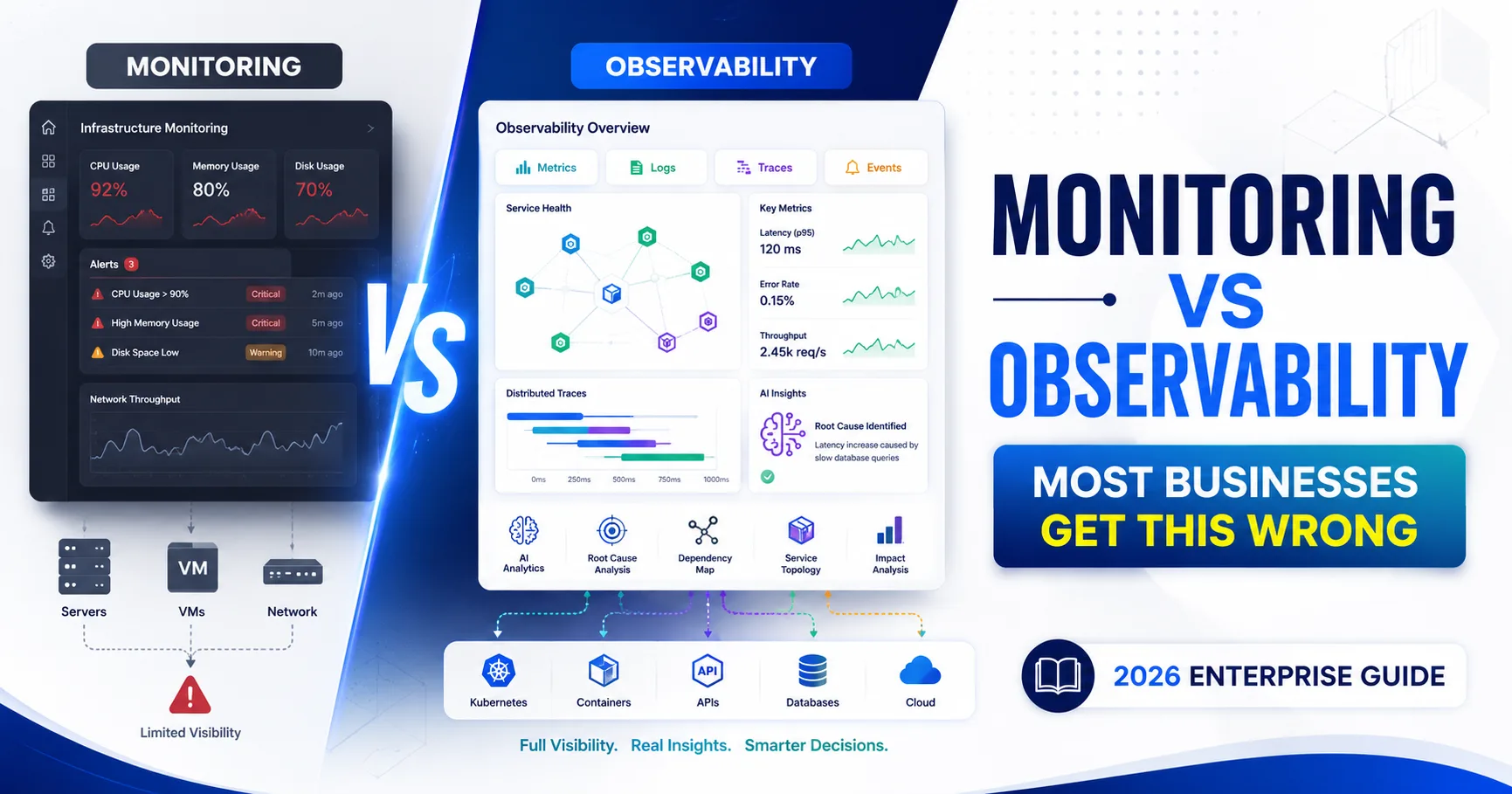
Continuous cloud monitoring reveals how resources and applications behave in real time. Observability tools track metrics, logs, and traces so teams can catch issues before users do.
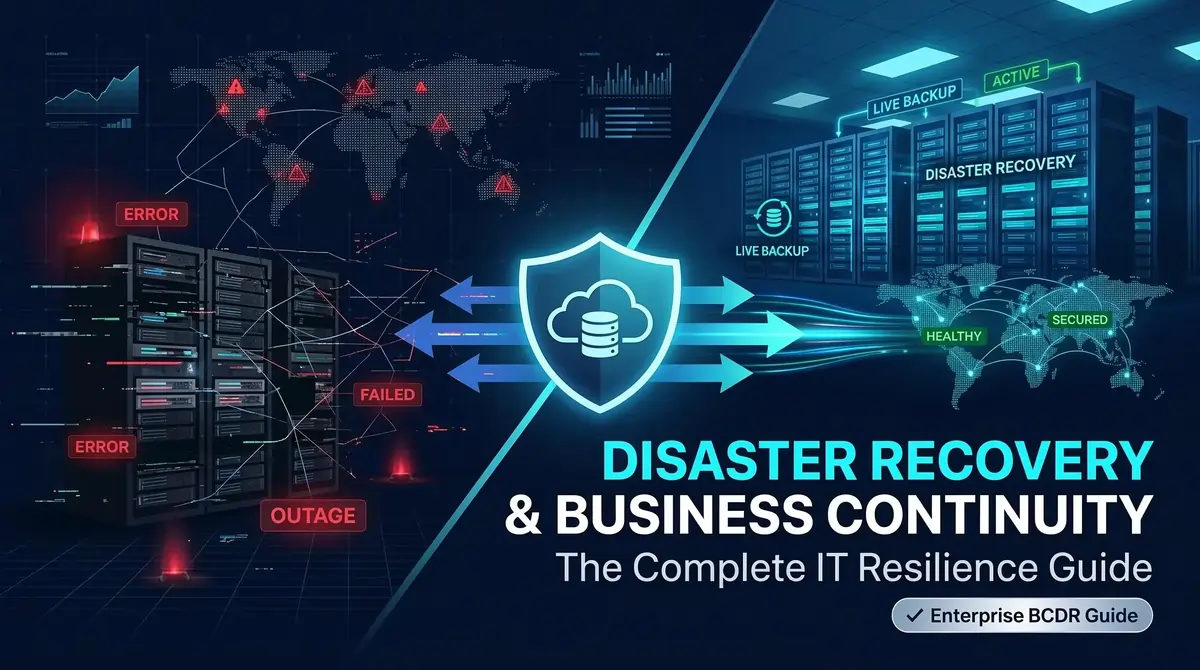
A solid disaster recovery plan defines what data gets backed up, how often, and how fast you can restore service. Clear Recovery Time Objectives (RTOs) and Recovery Point Objectives (RPOs) keep business continuity on track.
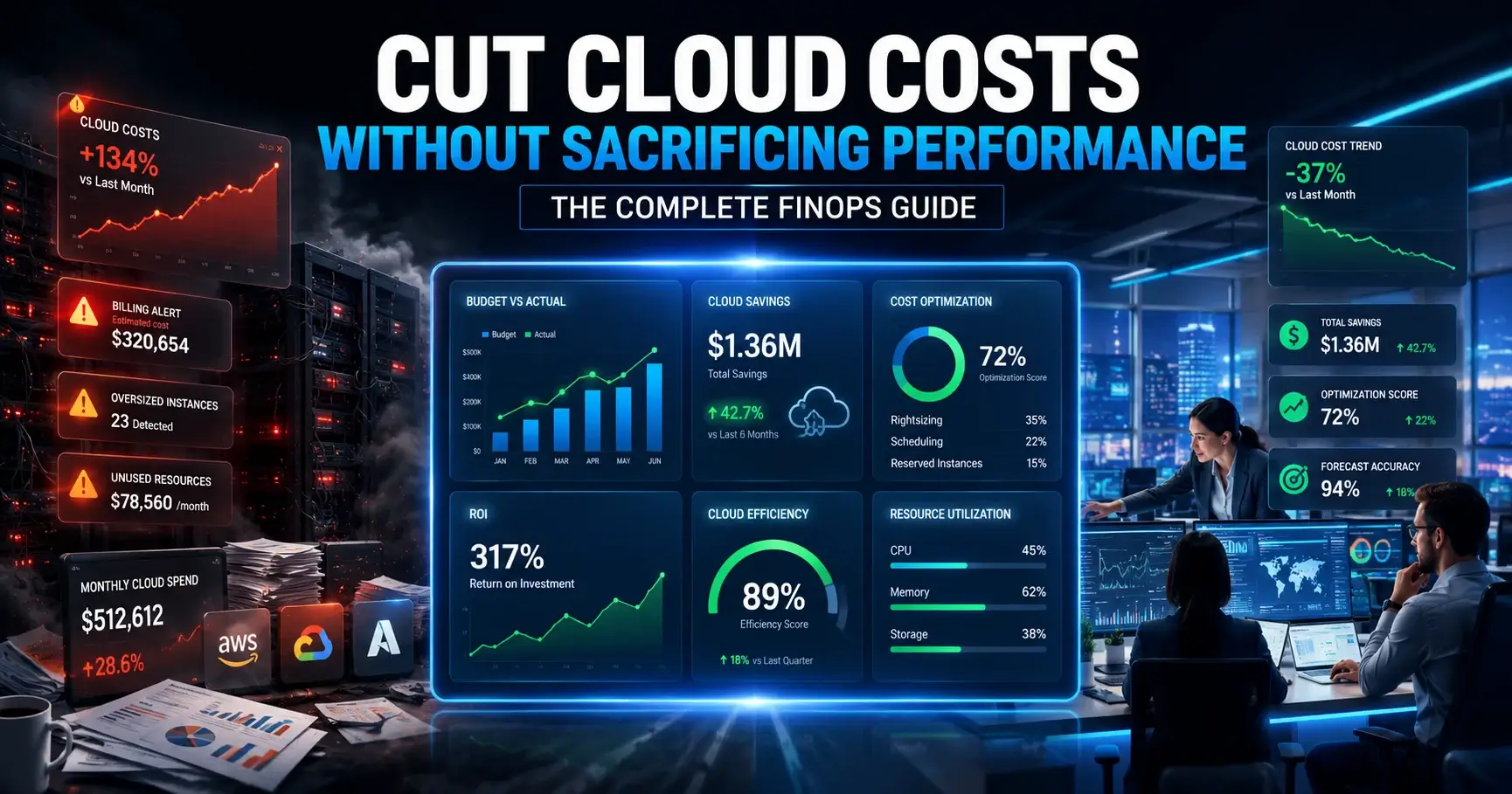
Cloud cost management balances performance against spend. Right-sizing, reserved instances, spot instances, and tiered storage all help. FinOps services bring finance, engineering, and operations together to improve cloud cost visibility, reduce waste, and enforce accountability.
Automation removes manual errors and speeds delivery. Infrastructure as code (IaC) lets teams provision and configure resources through version-controlled templates, making deployments consistent and repeatable.
Well-run cloud operations deliver measurable returns across the business.
Proactive monitoring, automated alerts, load balancing, and auto-scaling help applications stay available during traffic spikes, seasonal demand, or unexpected system pressure. This improves uptime, protects user trust, and reduces the risk of revenue loss caused by downtime.
Centralized security policies, encryption, and continuous scanning reduce the risk of breaches and unauthorized access.
Right-sizing, resource tagging, usage monitoring, and FinOps discipline help reduce unnecessary cloud waste. When businesses regularly review compute, storage, bandwidth, and database usage, they can remove idle resources and improve cost efficiency without hurting performance.
Cloud resources can scale up or down based on real-time demand, allowing businesses to handle peak traffic, product launches, exam periods, sales campaigns, or sudden user growth without purchasing permanent hardware capacity.
CDNs, caching, load balancing, performance monitoring, and edge computing help reduce latency and deliver faster experiences to users across different regions. Better performance improves customer satisfaction and supports stronger digital product growth.
Tested backup and disaster recovery plans keep operations running through outages, infrastructure failures, cyber incidents, or unexpected disruptions. With clear recovery planning, businesses can restore systems faster and reduce operational impact.
Consistent governance, access control, encryption, monitoring, and audit trails make it easier to meet standards like GDPR, HIPAA, and PCI-DSS. Cloud infrastructure management helps regulated businesses maintain visibility and control across sensitive workloads.
Automation reduces repetitive manual work such as provisioning, patching, backups, scaling, and configuration updates. This helps engineers spend more time on product improvement, performance optimization, security hardening, and long-term cloud strategy instead of daily firefighting.
SISGAIN can help you assess, secure, monitor, and optimize your cloud environment so your business can reduce cloud waste, improve uptime, and scale with confidence.
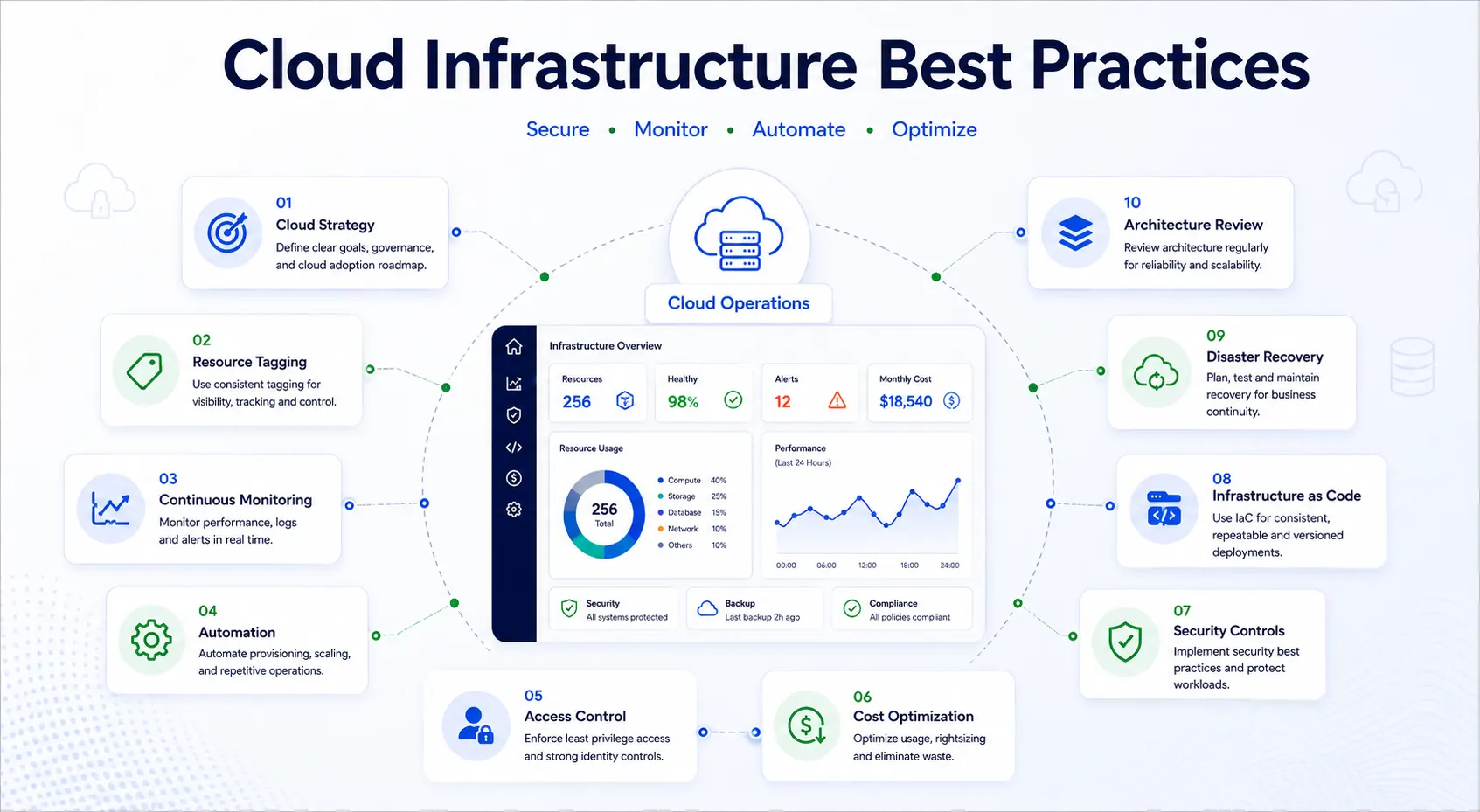
These ten practices form the backbone of a healthy cloud environment.
Define your business goals first. Know what you want—lower costs, faster scaling, stronger security—before you provision a single resource.
Standardized naming and tagging policies improve visibility, simplify cost allocation, and make resources easier to manage.
Track application health, resource performance, and network traffic around the clock to catch problems early.
Automate provisioning, scaling, backups, and patching to reduce errors and free up your team.
Apply role-based access control (RBAC), multi-factor authentication (MFA), and least-privilege access to limit risk.
Right-size instances, use reserved and spot capacity, and review spend monthly to prevent budget overruns.
Encrypt data, enforce firewall policies, and automate vulnerability scans as a standard part of every deployment.
Manage your environment through IaC tools to enforce consistent configurations and governance across deployments.
Document RTOs and RPOs, automate backups, and test failover regularly so you're ready when something breaks.
Run monthly or quarterly audits of security, configuration, compliance, and cost to keep your environment optimized.
Even mature teams hit obstacles. The most common include:
Recognizing these challenges early helps you plan around them—often by partnering with experts who manage them daily.
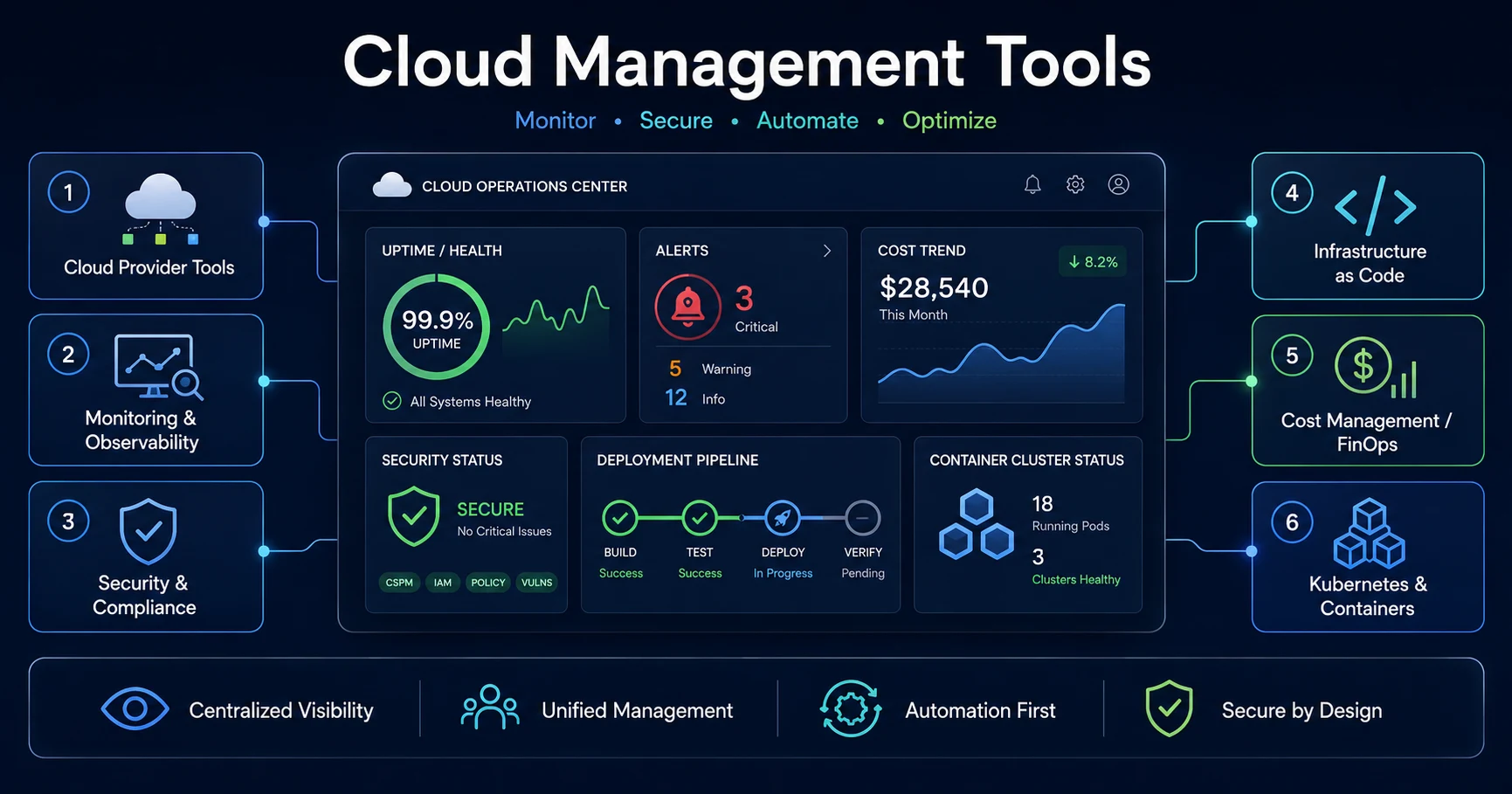
The best cloud infrastructure management tools depend on your cloud provider, workload type, security requirements, team size, and budget. Most businesses use a mix of native cloud tools, infrastructure as code platforms, monitoring tools, security tools, cost management systems, and container management platforms.
AWS CloudWatch, Azure Monitor, and Google Cloud Operations Suite help teams monitor cloud performance, logs, alerts, uptime, and resource usage inside their native cloud environments. AWS CloudFormation and Azure Bicep support infrastructure provisioning, making it easier to create repeatable and consistent cloud deployments.
Terraform is widely used for cross-cloud provisioning, while Pulumi is useful for teams that want to define infrastructure using programming languages. Ansible helps with configuration management, and AWS CloudFormation is useful for AWS-focused environments. If multicloud flexibility is important, Terraform is often a strong option. If your infrastructure is fully AWS-based, CloudFormation may be easier to manage.
Datadog, New Relic, Prometheus, and Grafana provide deep application performance monitoring (APM), infrastructure monitoring, and observability across metrics, logs, and traces. These tools help teams detect performance issues, understand root causes, and improve application reliability.
AWS Security Hub, Azure Security Center, and Google Security Command Center centralize security findings, monitor risks, and help teams review suspicious activity across cloud environments. These tools support stronger security visibility and make compliance management easier.
AWS Cost Explorer, Azure Cost Management, and Google Cloud Billing help teams track usage, forecast monthly spend, identify unusual cost spikes, and find optimization opportunities. These tools are important for FinOps because they give finance, engineering, and leadership teams better visibility into cloud spending.
Kubernetes orchestrates containerized workloads at scale, supported by tools like Docker and managed services from each major provider. These tools help teams deploy, scale, and manage container-based applications across cloud environments more efficiently.
The principles apply across every industry—here's how they play out in practice.
SaaS companies rely on auto-scaling and high availability to serve thousands of users with consistent performance and minimal downtime.
Online retailers use CDNs, caching, and elastic scaling to handle traffic spikes during sales events without crashing.
Healthcare platforms depend on HIPAA-compliant infrastructure, strong encryption, secure access control, and reliable disaster recovery to protect patient data and keep digital healthcare systems available.
Financial services platforms need strict access control, encryption, PCI-DSS readiness, secure transaction processing, audit trails, high uptime, and reliable disaster recovery. Cloud infrastructure management helps fintech and BFSI companies run sensitive workloads with stronger governance and better performance.
Logistics companies use cloud infrastructure to process real-time shipment data, driver locations, warehouse updates, route changes, and delivery status events. With proper cloud infrastructure management, these platforms can stay fast, reliable, and scalable during high-volume delivery periods.
Online learning platforms scale to support exam periods, live classes, course launches, and sudden increases in student activity. Cloud infrastructure management helps eLearning businesses maintain smooth performance while controlling costs during quieter periods.
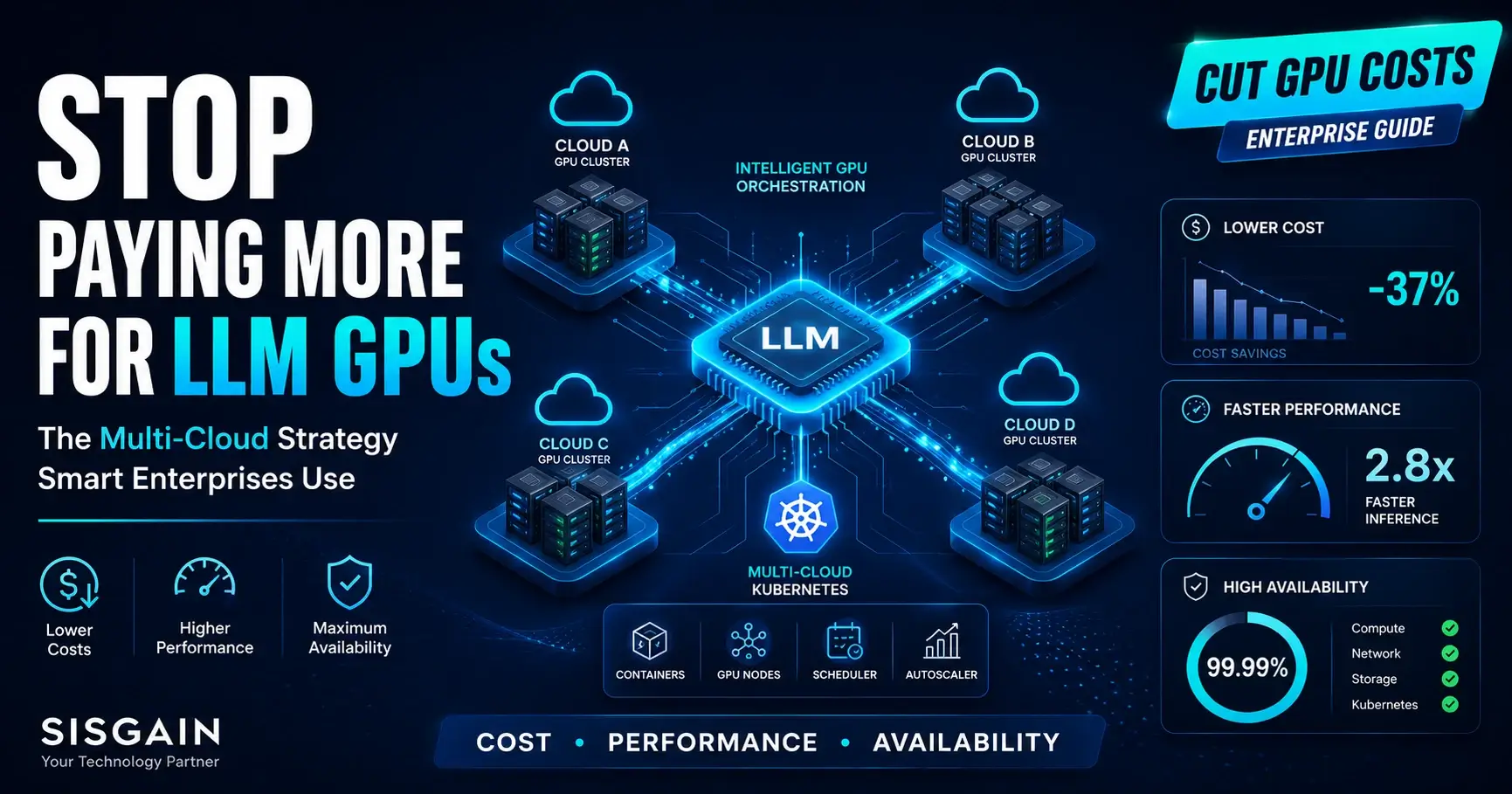
AI and machine learning workloads need heavy compute, scalable storage, high-speed networking, and strong cost controls. Cloud infrastructure management helps AI teams run training, analytics, and data processing workloads more efficiently.
Large enterprises often run workloads across public cloud, private cloud, on-premises systems, and multiple cloud providers. Cloud infrastructure management helps centralize governance, access control, monitoring, compliance, backup, and cost visibility across these complex environments.
The shift from on-premises systems to the cloud changes nearly every aspect of how infrastructure is run.
| Aspect | Cloud Infrastructure Management | Traditional IT Infrastructure Management |
|---|---|---|
| Infrastructure ownership | Provider-owned, consumed as a service | Organization owns physical hardware |
| Scaling | On-demand, elastic, automatic | Manual hardware purchases, slow to scale |
| Cost model | Pay-as-you-go (OpEx) | Large upfront capital expense (CapEx) |
| Maintenance | Largely handled by provider | Fully managed in-house |
| Security | Shared responsibility model | Entirely the organization's responsibility |
| Monitoring | Real-time, cloud-native observability | Often manual or limited tooling |
| Disaster recovery | Built-in, automated failover options | Requires dedicated secondary hardware |
| Automation | Infrastructure as code and CI/CD | Mostly manual provisioning |
| Flexibility | High—multi-region, multicloud ready | Low—constrained by physical capacity |
A repeatable process keeps cloud operations predictable and efficient.
Evaluate your current infrastructure, workloads, application dependencies, security requirements, compliance needs, performance issues, and business goals. This helps decide which systems should move to the cloud, which should stay on-premises, and which should be modernized first.
Design the right environment—public, private, hybrid, or multicloud—based on performance, security, compliance, scalability, and cost needs. A clear architecture plan helps avoid future complexity and supports smoother cloud operations.
Migrate existing workloads or build new ones by choosing the right compute, storage, networking, database, and security resources. Businesses with legacy systems can use cloud migration and modernization to move applications securely, improve performance, and prepare infrastructure for long-term scalability.
Set up monitoring, observability, access controls, encryption, logging, alerts, and backup rules before workloads go live. Strong configuration from the beginning reduces operational risk and gives teams better visibility into cloud performance.
Introduce infrastructure as code, auto-scaling, automated backups, patching workflows, and FinOps practices to streamline operations and cut waste. Automation makes cloud infrastructure easier to manage as the environment grows.
Continuously monitor performance, review security settings, apply patches, audit configurations, optimize costs, test backups, and improve automation. Ongoing management keeps the cloud environment stable, secure, and aligned with changing business needs.
When evaluating a provider, look for:
The right partner closes skills gaps and lets your team focus on building, not babysitting infrastructure.
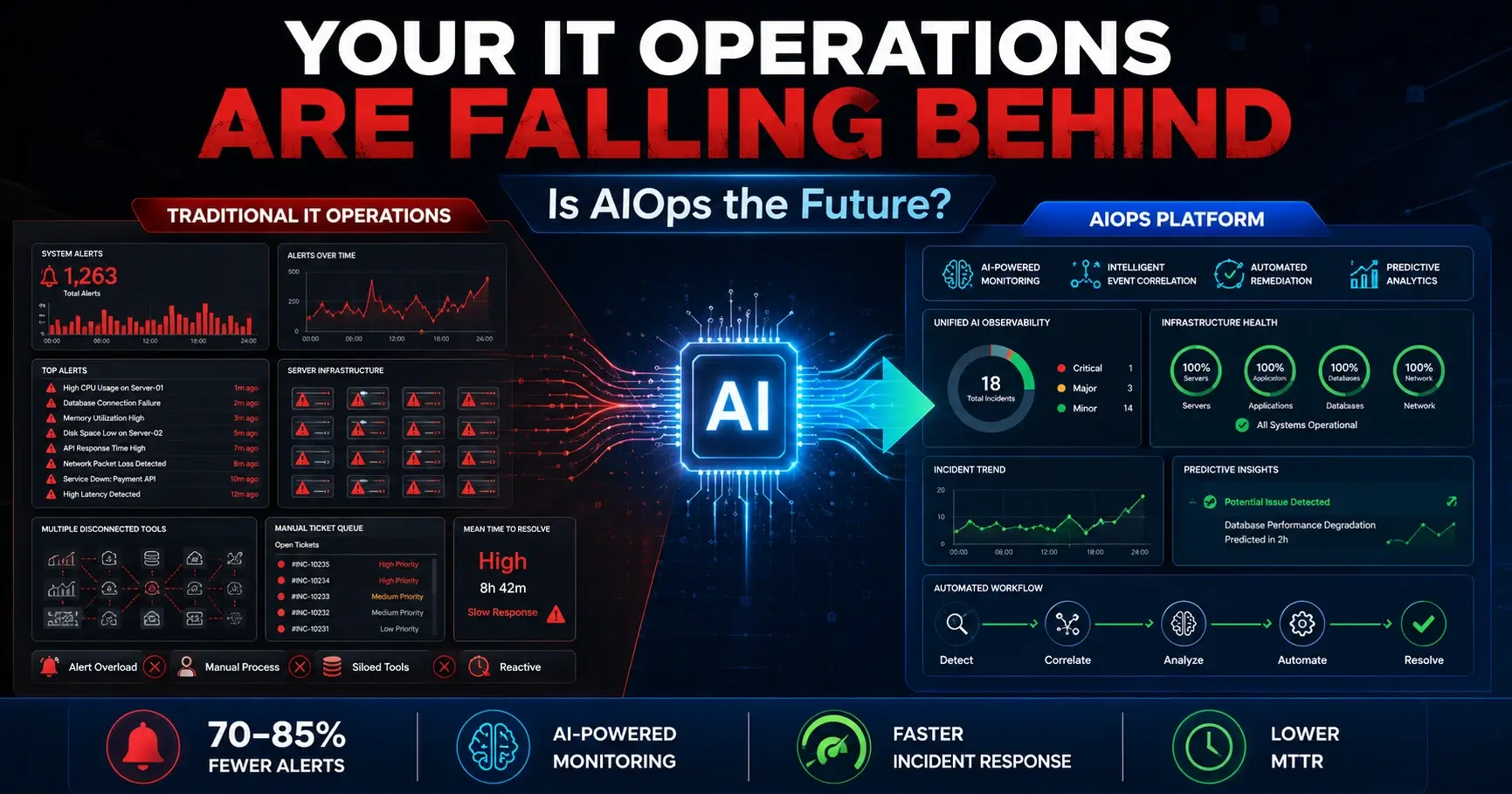
Several trends are reshaping how cloud infrastructure is managed. Hybrid and multicloud strategies are becoming the default, giving organizations flexibility while avoiding lock-in. AI and machine learning are driving demand for cloud compute—and increasingly automating management tasks themselves through AIOps.
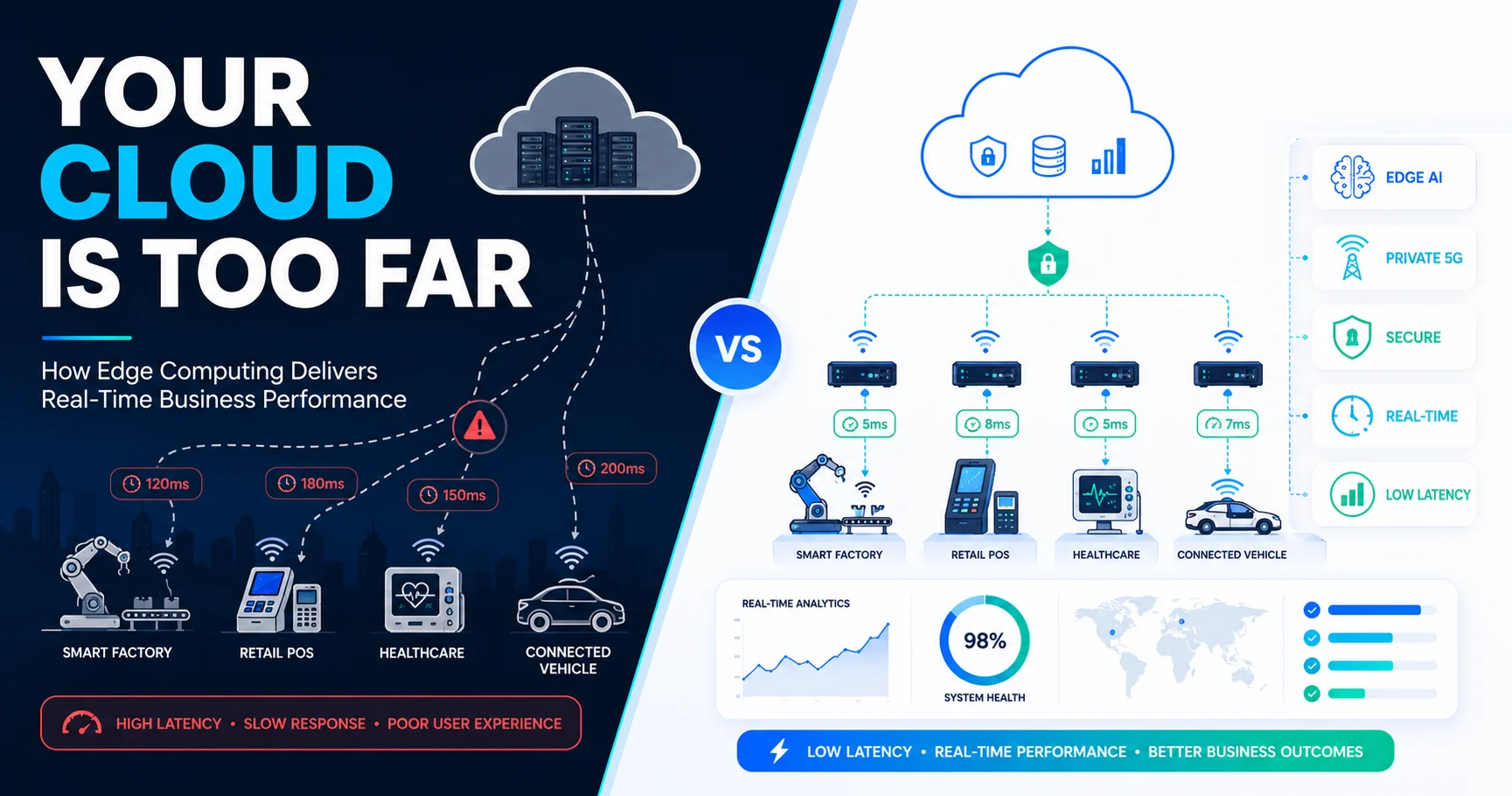
Edge computing is becoming more important as IoT devices, logistics platforms, healthcare systems, retail applications, and manufacturing environments need faster processing close to the data source. Serverless architecture, containerized workloads, Zero Trust security, AIOps, and AI-ready cloud infrastructure will continue to shape how businesses manage modern cloud environments.
The takeaway is clear: cloud environments are getting more complex, and disciplined management is becoming a competitive necessity rather than a nice-to-have.
SISGAIN helps startups, SaaS companies, enterprises, healthcare platforms, fintech businesses, logistics companies, and e-commerce brands design, migrate, secure, monitor, automate, and optimize cloud infrastructure. Our team supports cloud architecture planning, cloud migration, DevOps automation, infrastructure as code, cloud monitoring, disaster recovery, security hardening, and cloud cost optimization.
With hands-on experience across modern cloud environments, SISGAIN focuses on the outcomes that matter most: stronger security, better uptime, faster scalability, improved application performance, and lower cloud costs. Whether you need help managing cloud infrastructure, modernizing legacy infrastructure, or improving cloud and infra management, SISGAIN can build a practical strategy for your business.
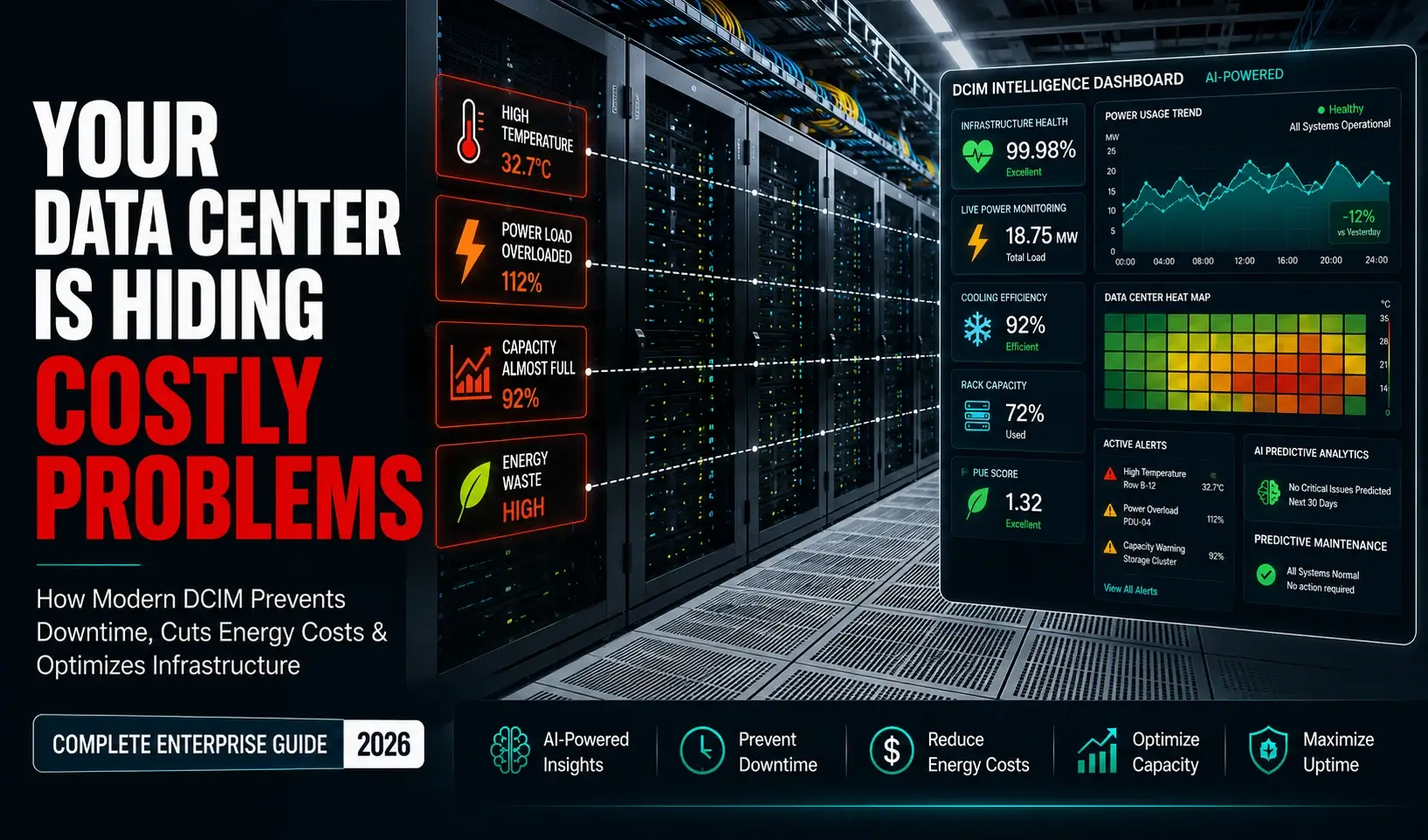
Cloud infrastructure management connects with several important infrastructure topics, including infrastructure monitoring, infrastructure security management, hybrid cloud infrastructure management, infrastructure automation, infrastructure as code, multicloud management, FinOps, disaster recovery and business continuity, observability, edge computing infrastructure, AIOps, and data center infrastructure management. These topics can be internally linked as your infrastructure management cluster grows.
Cloud infrastructure management is no longer optional. As cloud environments grow, unmanaged resources, weak governance, security gaps, and poor cost visibility can quickly create unnecessary risk and spending. Disciplined cloud and infra management helps businesses stay efficient, secure, scalable, and ready for growth. The framework is consistent: assess, plan, secure, automate, and optimize—then repeat.
Get the fundamentals right, choose the right tools, and lean on experienced partners where you need them. Your reward is a cloud environment that scales with demand, protects your data, and keeps costs in check.
Need help managing cloud infrastructure for your business? SISGAIN can help you design, migrate, secure, monitor, automate, optimize, and scale your cloud environment with a reliable cloud infrastructure management strategy.

Start Build Your
Next Digital Solution?
Let’s build scalable, future-ready digital solutions tailored to your business goals. Connect with our experienced technology consultants to discuss your vision, strategy, and growth opportunities — with zero obligation and complete transparency.
Get a free consultation and cost estimate for your digital solution
Our expert will contact you within 24 hours. Check your email for confirmation.
Partner with SISGAIN experts to build secure, scalable AI-powered IT Solutions that transform your business operations.









DUQE FREEZONE Quarter Deck, Queen Elizabeth 2, Mina Rashid, Dubai, UAE

100 Consilium Pl Suite 200, Scarborough, ON M1H 3E3, Canada

C-109, Sector 2, Noida, Uttar Pradesh 201301 India
Project quotes, partnerships, implementation
Open roles, referrals, campus hiring