
 +1 844-445-5767
 +971 56-848-5757
 +91 921-208-0630
For Business & Service Inquiries
Sales Team
Project quotes, partnerships, implementation
Machine learning in ecommerce is no longer optional for retailers who want to compete on speed, personalization, and margin. If you run an online store or lead technology at a retail brand, you are already competing against companies that use machine learning to predict demand, set prices, and recommend products in real time. This guide explains what machine learning for ecommerce is, why it matters, and the 15 applications driving measurable revenue growth. You will see real examples from Amazon, Walmart, Target, and the Shopify ecosystem, plus a clear build-versus-buy framework. By the end, you will know which ecommerce machine learning solutions fit your business and how to start. The global machine learning market reached $93.95 billion in 2025 and is projected to climb to $126.91 billion in 2026 (Precedence Research). Retail is one of the biggest drivers of that growth. The takeaway is simple: machine learning is now table stakes for serious online retailers.
Machine learning in ecommerce is software that learns from your store's data to make predictions and decisions without being manually programmed for every case. It studies past behavior—clicks, purchases, returns—and uses those patterns to improve future outcomes like recommendations, pricing, and stock levels.
There are four main types you will encounter:
Supervised learning trains on labeled data where the answer is already known. You feed it past examples, and it learns to predict new ones. In ecommerce, this powers sales forecasting and customer churn prediction. Example: predicting which shoppers will buy again based on past orders.
Unsupervised learning finds patterns in data without labels. It groups similar items or customers on its own. This is the engine behind customer segmentation and product clustering. Example: grouping shoppers into segments like "deal hunters" or "premium buyers."
Reinforcement learning improves through trial and error, rewarding good outcomes. It adjusts decisions as it sees results. This suits dynamic pricing and real-time ad bidding. Example: testing price points and keeping the ones that lift profit.
Deep learning uses layered neural networks to handle complex data like images and text. It needs more data but delivers stronger accuracy. This drives visual search and advanced chatbots. Example: identifying a product from a photo a customer uploads.
If you want to grow revenue without growing headcount, machine learning is the most direct path. It automates decisions that used to require large teams and guesswork.
Here is why retailers are investing now:
The bottom line: machine learning turns your existing data into a competitive advantage.
Machine learning delivers value across sales, operations, and customer experience. The benefits are measurable, not theoretical.
The main benefits include:
If you adopt even two or three of these, the return usually covers your investment quickly.
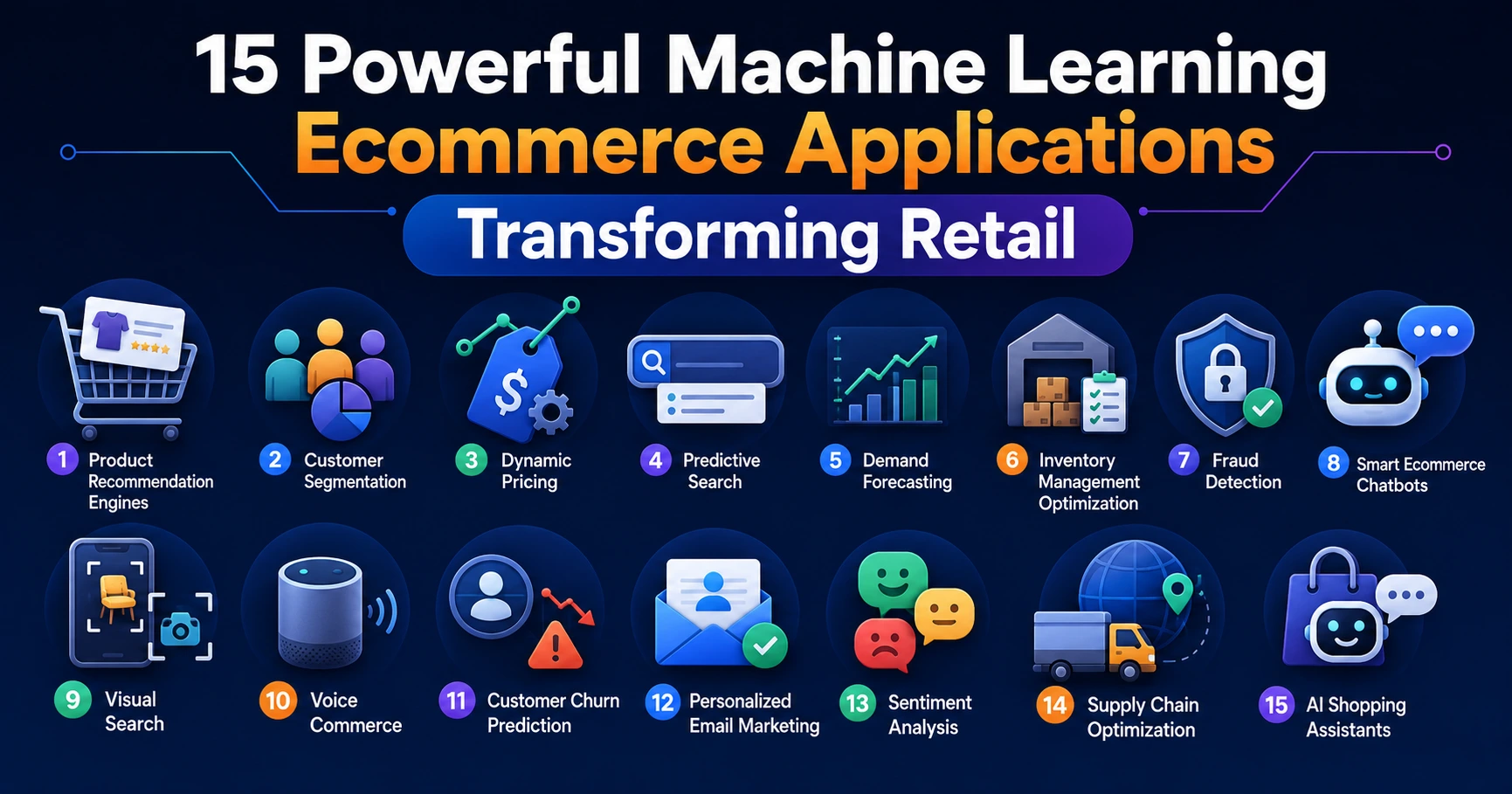
These are the machine learning ecommerce applications delivering the clearest results today.
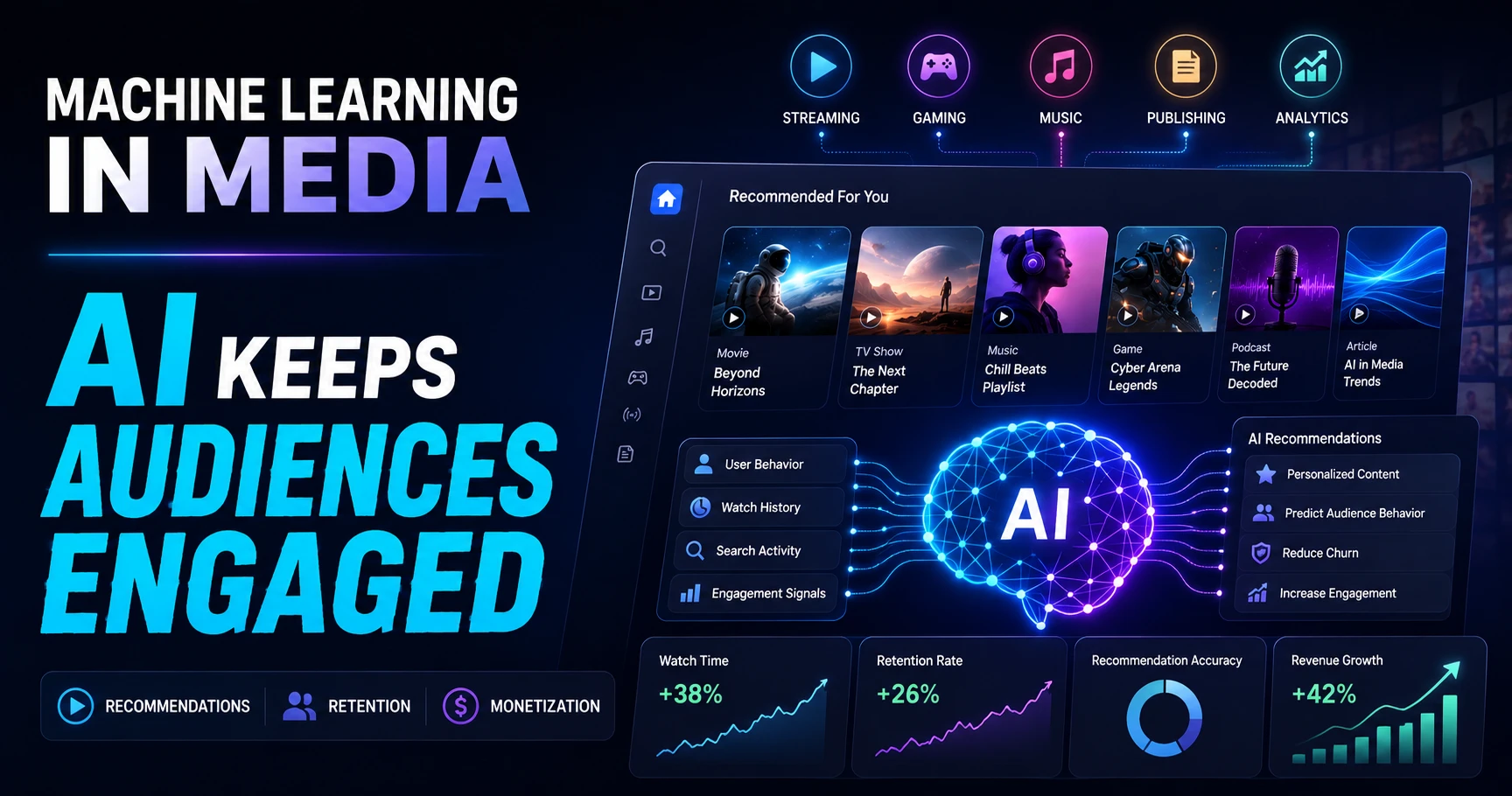
A recommendation engine suggests products each shopper is most likely to buy. It works by analyzing browsing history, past purchases, and similar customers, then ranking items by predicted interest. The benefit is higher conversion and larger orders. Amazon reports that a large share of its sales come from recommendations. If you run a store with many products, this is the highest-impact place to start. Recommendation engines also reduce decision fatigue, helping shoppers find what they want faster. Similar recommendation algorithms are widely used in machine learning in entertainment and media to deliver personalized movies, music, and digital content. Most platforms now offer this feature, but custom models trained on your own data tend to perform better for niche catalogs.
Customer segmentation groups shoppers by behavior, value, or preference. It uses unsupervised learning to find natural clusters in your data without manual rules. The benefit is sharper marketing and better targeting. For example, you can separate one-time buyers from loyal customers and message each group differently. This raises campaign response rates and lowers wasted ad spend. Segmentation also reveals hidden segments you may not have known existed, such as high-value weekend shoppers. If your marketing feels generic, segmentation is the fastest fix. It powers everything from email targeting to personalized homepage layouts across your store.
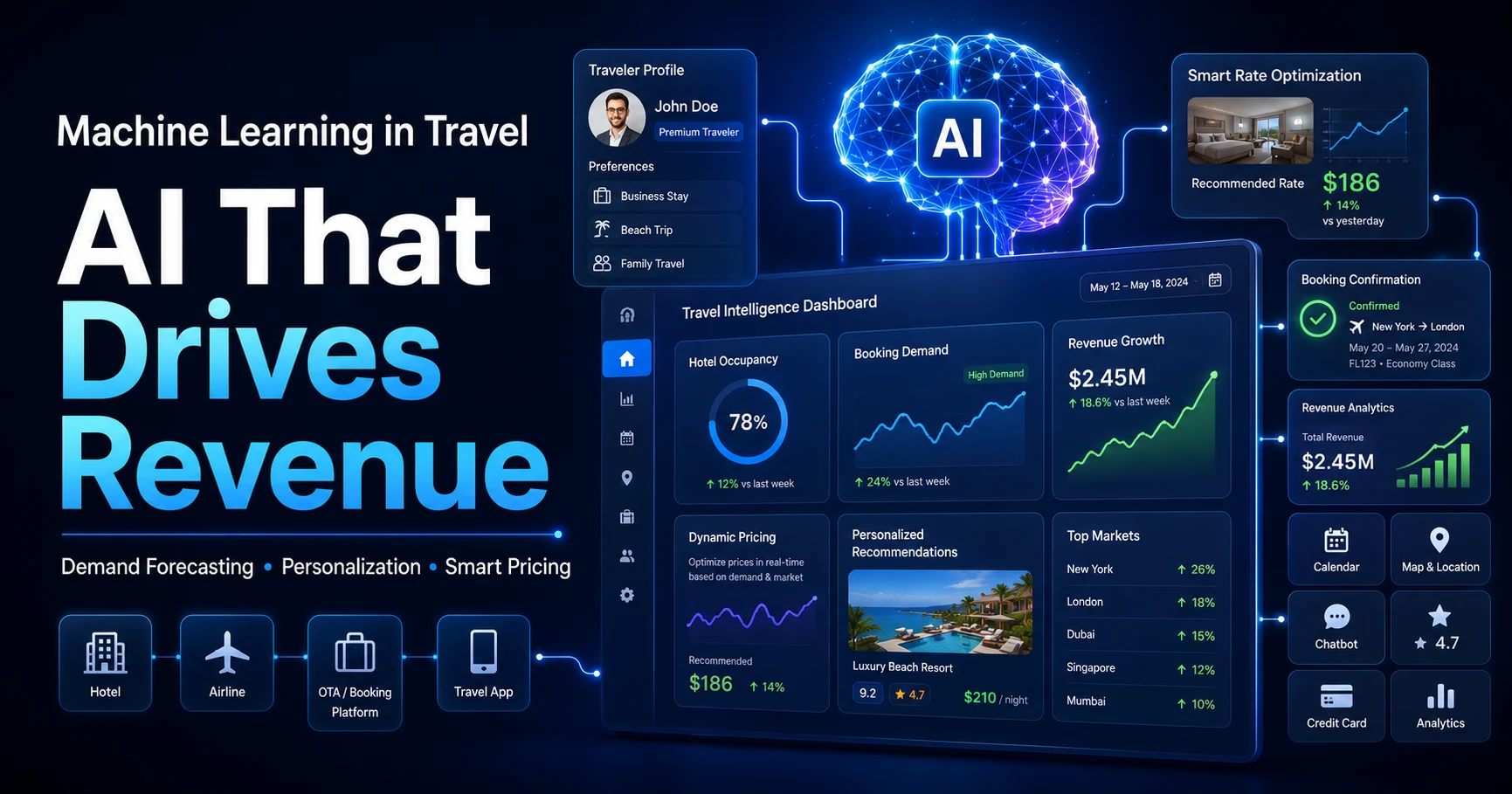
Dynamic pricing adjusts prices automatically based on demand, competition, and inventory. It uses machine learning to test price points and find the level that maximizes profit. The benefit is protected margins and more sales during peak and slow periods. Airlines and Amazon have used this for years, changing prices millions of times a day. Dynamic pricing is also a major application of machine learning in travel and hospitality, enabling hotels and travel companies to optimize prices based on demand and market conditions. For ecommerce, it means you never leave money on the table or sit on overpriced stock. Dynamic pricing works best with strong data on competitor prices and customer demand. If you sell in a competitive category, this application alone can lift profit noticeably.
Predictive search guesses what a shopper wants as they type. It uses machine learning to rank results by relevance and intent, not just keyword match. The benefit is faster product discovery and fewer abandoned searches. When someone types "run," it can surface running shoes before running shorts based on what most shoppers buy. This reduces friction and lifts conversion. Predictive search also handles typos and synonyms, so customers still find what they need. If shoppers leave because they cannot find products, better search is your priority. It directly improves both experience and revenue.
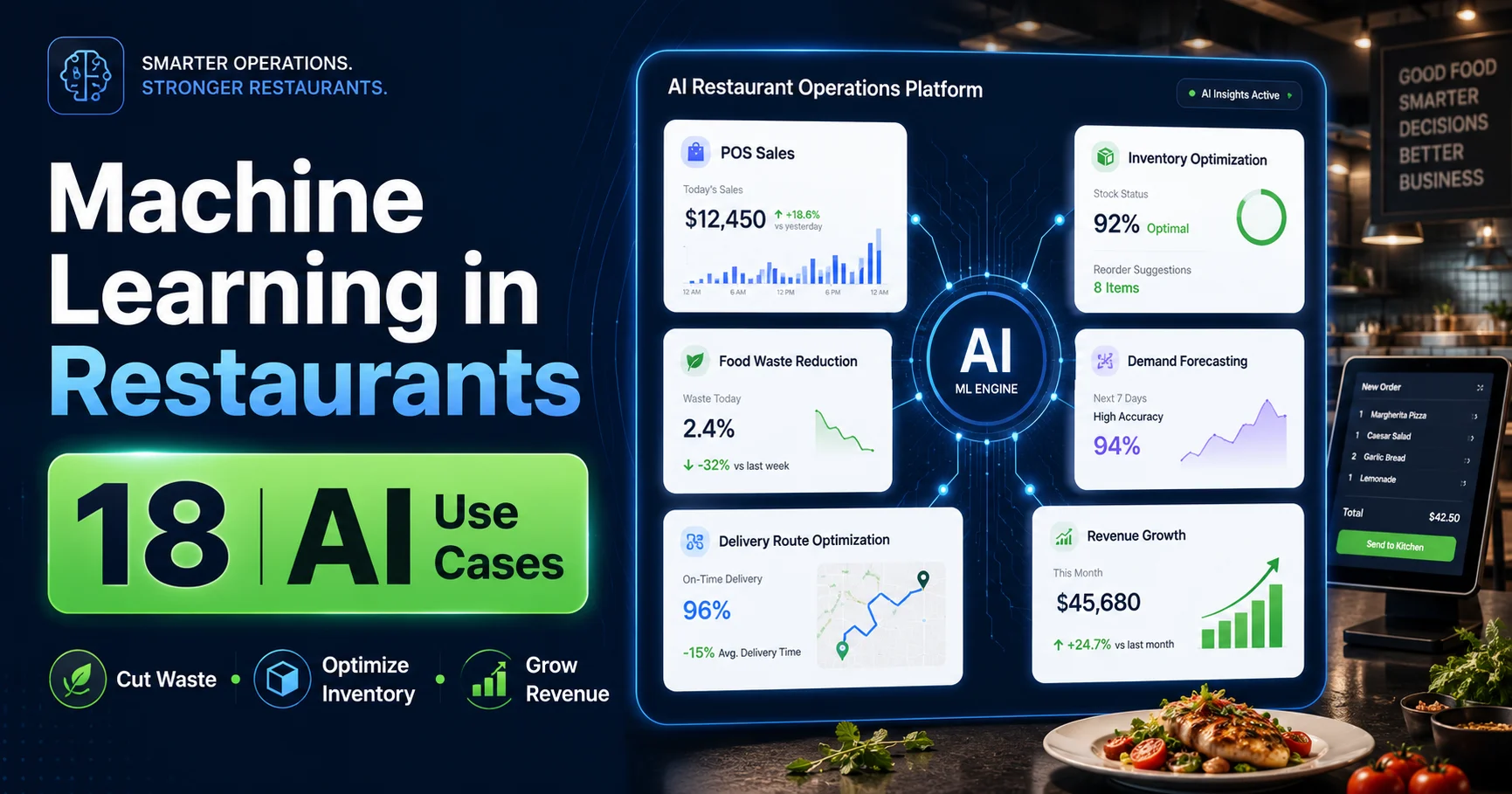
Demand forecasting predicts how much of each product you will sell. The same predictive models are also transforming machine learning in food and restaurants, helping businesses forecast demand, reduce food waste, and optimize inventory. It uses past sales, seasonality, and trends to estimate future demand with high accuracy. The benefit is fewer stockouts and less overstock. Walmart uses demand forecasting across its supply chain to keep shelves stocked. For online retailers, accurate forecasts mean you buy the right amount at the right time. This frees up cash and reduces waste. Demand forecasting is one of the most reliable machine learning models for ecommerce because results are easy to measure. If inventory costs hurt your margins, start here.
Inventory optimization decides what to stock, where, and how much. It combines demand forecasts with supplier and warehouse data to set ideal stock levels. The benefit is lower carrying costs and faster fulfillment. For example, it can recommend moving stock closer to regions where demand is rising. This cuts shipping time and cost. Inventory optimization also flags slow-moving products before they tie up cash. If you manage multiple warehouses or SKUs, manual planning will not keep up. Machine learning handles the complexity and adjusts as conditions change, keeping your operation lean and responsive.
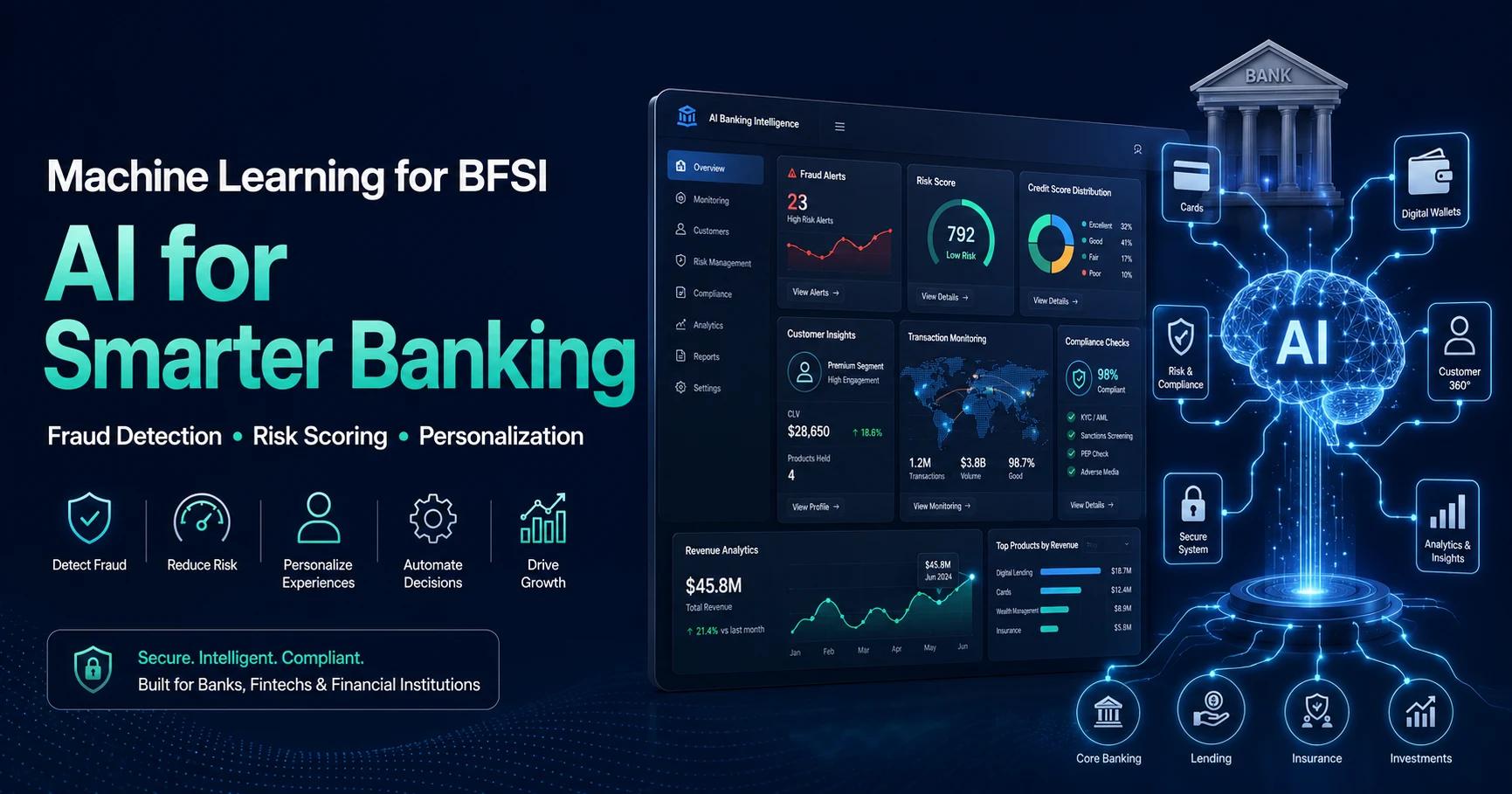
Fraud detection spots suspicious transactions before they cost you money. It uses machine learning to learn normal buying patterns and flag anything unusual in real time. The benefit is fewer chargebacks and stronger customer trust. For example, it can catch a purchase made from an unusual location with a mismatched card. Rules-based systems miss new fraud tactics, but machine learning adapts as fraudsters change methods. These intelligent fraud detection capabilities are also a core part of machine learning for BFSI, where AI helps banks identify suspicious transactions and minimize financial risk. This protects both revenue and reputation. If you process high transaction volumes, fraud detection pays for itself quickly. It also reduces false declines that frustrate legitimate customers.
Smart chatbots answer customer questions instantly, any time of day. They use natural language processing to understand questions and give relevant answers or actions. The benefit is faster support and lower service costs. For example, a chatbot can track an order, suggest a product, or process a return without human help. This frees your team for complex cases. Modern chatbots learn from past conversations and improve over time. If your support team is overwhelmed, a chatbot handles routine questions at scale. It also keeps customers engaged during off-hours when staff are unavailable.
Visual search lets customers find products using a photo instead of words. It uses deep learning to match images to items in your catalog. The benefit is easier discovery, especially for fashion, home, and decor. For example, a shopper photographs a chair they like and finds similar ones in your store. This removes the struggle of describing products in words. Visual search increases engagement and conversion for visual categories. If you sell products people choose by look, this feature stands out. It also keeps shoppers on your site instead of searching elsewhere.
Voice commerce lets customers shop using spoken commands. It uses machine learning to understand speech and complete tasks like reordering or searching. The benefit is convenience and a hands-free experience. For example, a customer can reorder a regular item through a smart speaker in seconds. Voice commerce is growing as smart devices spread across homes. It opens a new channel for repeat purchases. If your customers buy the same products often, voice makes reordering frictionless. While still maturing, voice commerce is worth testing for high-frequency, low-consideration purchases where speed matters most.
Churn prediction identifies customers likely to stop buying. It uses supervised learning to spot warning signs like fewer visits or longer gaps between orders. The benefit is the chance to win customers back before they leave. For example, it can flag a loyal buyer who has gone quiet, triggering a targeted offer. Keeping an existing customer costs far less than finding a new one. Churn prediction makes retention proactive instead of reactive. If your repeat purchase rate is slipping, this application protects your revenue base. It turns raw data into timely, profitable action.
Personalized email uses machine learning to send the right message to the right person at the right time. It analyzes behavior to choose products, timing, and content for each subscriber. The benefit is higher open rates, clicks, and sales. For example, it can email a shopper about an item they viewed but did not buy. This beats generic blasts every time. Personalized email also picks the best send time per customer. If email is a core channel for you, personalization sharply increases its return. It scales one-to-one marketing without extra staff.
Sentiment analysis reads customer reviews, messages, and social posts to gauge how people feel. It uses natural language processing to classify text as positive, negative, or neutral. The benefit is fast insight into what customers love or hate. For example, it can flag a sudden spike in complaints about a product defect. This lets you act before the problem spreads. Sentiment analysis also reveals which features drive loyalty. If you collect lots of feedback but cannot read it all, this tool surfaces what matters. It turns scattered opinions into clear direction.
Supply chain optimization improves how products move from supplier to customer. It uses machine learning to predict delays, choose routes, and balance costs across the network. The benefit is faster delivery and lower logistics spend. For example, it can reroute shipments around a disruption automatically. This keeps orders on time even when conditions change. Supply chain optimization connects directly to demand forecasting and inventory planning. If shipping costs or delays hurt your business, this is a high-value area. Companies that master it gain a real edge in speed and reliability across markets.
AI shopping assistants guide customers through buying decisions like a personal sales associate. They use machine learning to ask questions, narrow choices, and recommend products that fit each need. The benefit is higher conversion and a more confident shopper. For example, an assistant can help a customer pick the right laptop by asking about budget and use. This replicates in-store help online. AI assistants also remember preferences for future visits. If your products require some explanation, an assistant reduces hesitation and returns. This is one of the fastest-growing areas in intelligent ecommerce solutions today.
The biggest retailers prove what machine learning can do at scale. Here is how leading brands use it.
The lesson is clear: machine learning works for both giants and growing brands. The difference is scale, not access. To see where these tools are headed, review the latest AI trends shaping retail technology.
If you want to choose the right tool, it helps to know the models behind it. Each model fits a specific job.
The most common machine learning models for ecommerce are:
You rarely need to pick a model yourself—a good vendor or a team of skilled AI developers will match the model to your goal. Focus on the outcome you want, and let the model follow.
Machine learning delivers strong results, but the path has obstacles. Knowing them upfront helps you plan.
The most common challenges are:
Most of these are solvable. Clean your data first, start small, and bring in expert help where you lack skills.
If you want to stay ahead, watch where the technology is going. Several trends are shaping the next phase of AI in ecommerce.
Key trends to watch:
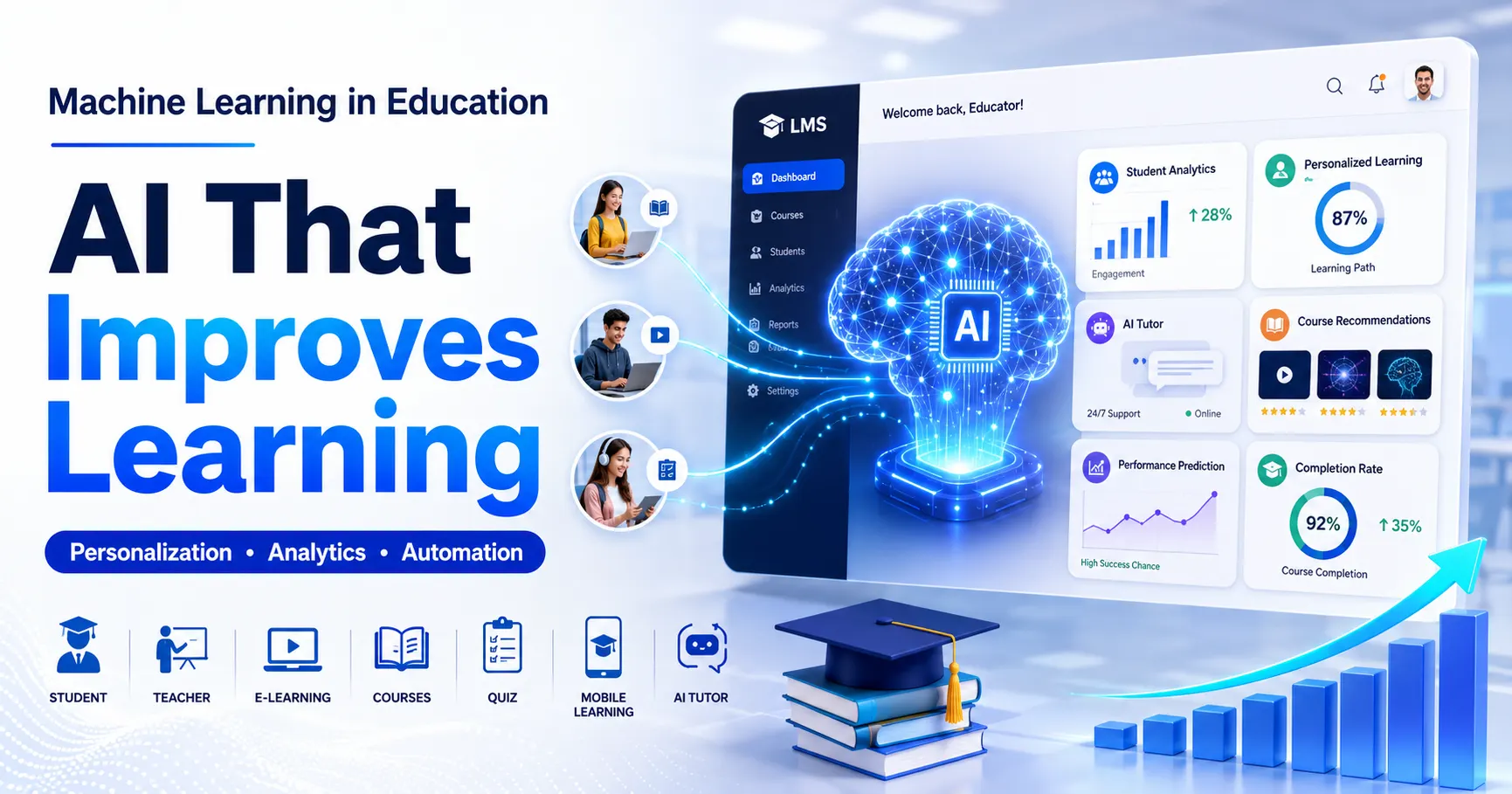
The direction is clear: machine learning is moving from a feature to the foundation of how online stores run. This transformation is happening across industries, including machine learning in education and eLearning, where AI is powering adaptive learning, personalized content, and intelligent student support.
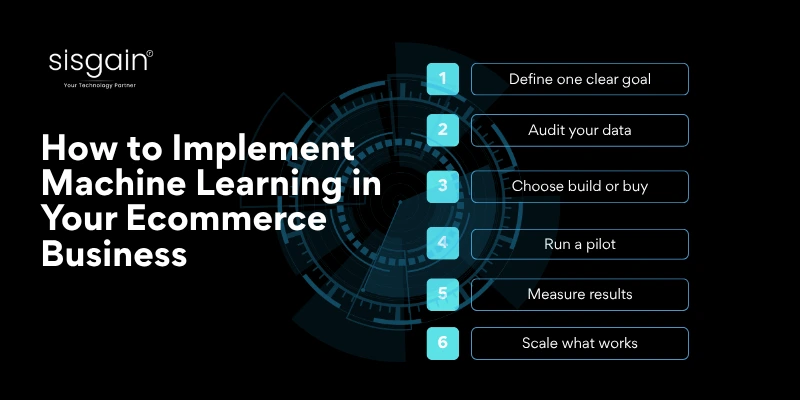
If you are ready to start, follow a clear sequence. Jumping in without a plan wastes time and money.
Here are the steps to implement machine learning ecommerce solutions:
Start small, prove the return, then grow. This approach lowers risk and builds internal support.
If you are deciding how to get started, the choice usually comes down to build versus buy. Each path fits a different situation.
|
Factor |
Buy (Ready-Made) |
Build (Custom) |
|---|---|---|
|
Upfront cost |
Lower |
Higher |
|
Time to launch |
Fast (days to weeks) |
Slower (weeks to months) |
|
Customization |
Limited |
Full control |
|
Best for |
Standard needs, smaller stores |
Unique needs, larger brands |
|
Maintenance |
Handled by vendor |
Your team or partner |
|
Competitive edge |
Shared with other users |
Unique to your business |
Choose buy if you need results fast and your needs are standard. Choose build if your needs are unique and you want an advantage competitors cannot copy. Many brands start by buying, then build custom High-Performance ML Solutions as they scale.
If your business has unique data or workflows, custom solutions usually pay off. Off-the-shelf tools serve common needs, but they cannot match models trained on your exact business.
Reasons businesses choose custom machine learning ecommerce solutions:
Custom work takes more time and budget, so it suits brands with clear goals and enough scale to justify it. The right Ecommerce Application Development Services partner can build, integrate, and maintain these systems for you. Many leading AI servcies companies in USA specialize in this exact work.
Machine learning in ecommerce has moved from a competitive edge to a basic requirement for growth. The retailers winning today use it to personalize shopping, set smarter prices, forecast demand, and stop fraud before it costs them. You do not need to adopt all 15 applications at once. Pick the one that solves your biggest problem—whether that is low conversion, high inventory costs, or weak retention—and start there. Audit your data, run a small pilot, and measure the return before you scale. If your needs are standard, ready-made tools will get you moving fast. If your needs are unique, custom machine learning ecommerce solutions give you accuracy, ownership, and an edge competitors cannot copy. The opportunity ahead is real, and the brands that act now will lead their categories in 2026. If you are ready to build, partner with an expert team that can turn your data into measurable growth. Reach out today to explore custom machine learning ecommerce solutions built for your business—and take the first step toward a smarter, more profitable store.




Start Build Your
Next Digital Solution?
Let’s build scalable, future-ready digital solutions tailored to your business goals. Connect with our experienced technology consultants to discuss your vision, strategy, and growth opportunities — with zero obligation and complete transparency.
Get a free consultation and cost estimate for your digital solution
Our expert will contact you within 24 hours. Check your email for confirmation.
Partner with SISGAIN experts to build secure, scalable AI-powered IT Solutions that transform your business operations.









DUQE FREEZONE Quarter Deck, Queen Elizabeth 2, Mina Rashid, Dubai, UAE

100 Consilium Pl Suite 200, Scarborough, ON M1H 3E3, Canada

C-109, Sector 2, Noida, Uttar Pradesh 201301 India
Project quotes, partnerships, implementation
Open roles, referrals, campus hiring