
 +1 844-445-5767
 +971 56-848-5757
 +91 921-208-0630
For Business & Service Inquiries
Sales Team
Project quotes, partnerships, implementation
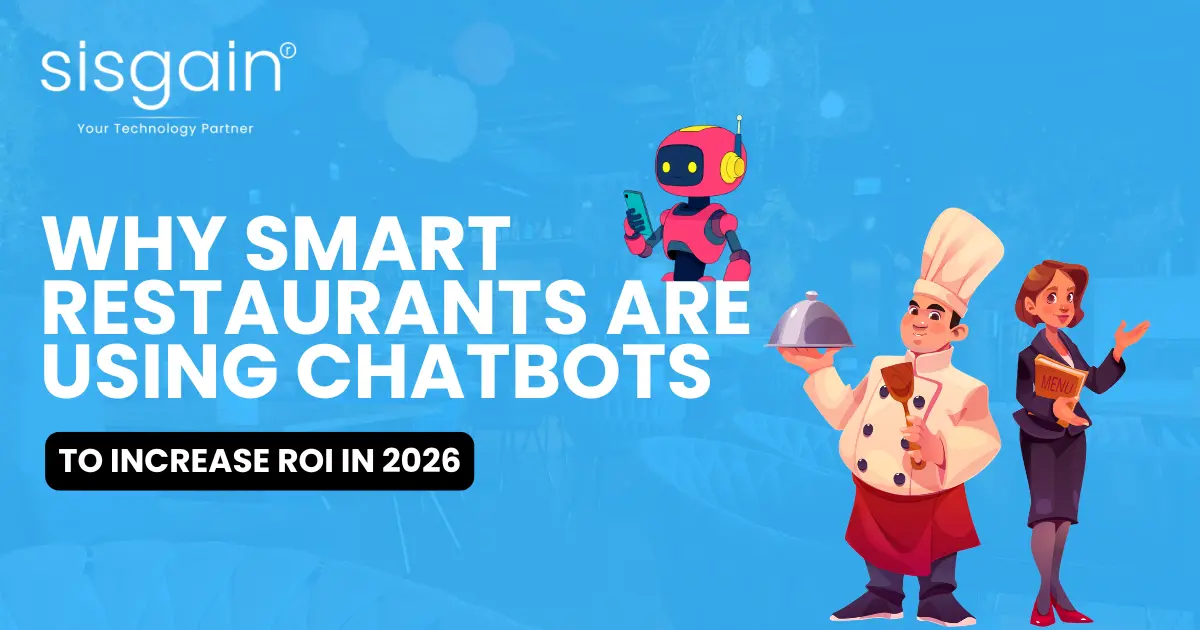
If your restaurant still relies only on phone bookings, you’re already behind.
That might sound blunt, but it reflects what’s happening across the global food service industry. Customer expectations have changed faster than most restaurants have adapted. Today’s diners want instant answers, real-time reservations, and frictionless ordering—without waiting on hold or navigating busy staff.
Modern customers are conditioned by platforms like food delivery apps and instant messaging. They expect:
When a customer has to wait even a few minutes for a response, the likelihood of them switching to a competitor increases significantly. A restaurant chatbot eliminates this gap by responding instantly, 24/7.
Restaurants are facing a persistent operational challenge—staff shortages. From front-desk managers to customer support roles, maintaining a full team is becoming both difficult and expensive.
This creates bottlenecks:
A chatbot restaurant reservation system directly addresses this issue by automating repetitive tasks like bookings, FAQs, and order handling, allowing your team to focus on in-person service and experience.
The restaurant industry is no longer just about food—it’s about operational efficiency and customer experience. Businesses are increasingly adopting automation tools powered by AI to streamline workflows.
A restaurant management AI chatbot acts as a digital front desk that:
From our experience at SISGAIN, restaurants that implement AI-driven automation see measurable improvements in:
More importantly, they gain a competitive edge by delivering a faster, smarter, and more consistent customer experience.
The shift is no longer experimental. It’s becoming the standard.
A restaurant chatbot is an AI-powered virtual assistant that interacts with customers to handle reservations, take orders, answer queries, and provide support in real time through conversational interfaces.
Unlike traditional bots that follow fixed scripts, modern chatbots use advanced technologies like Natural Language Processing and Machine Learning to understand user intent, context, and preferences.
The difference is significant and directly impacts user experience.
Traditional Bots:
AI-Powered Restaurant Chatbots:
This evolution allows chatbots to move beyond simple automation and become intelligent assistants that improve with every interaction.
A well-implemented chatbot goes far beyond answering basic questions. It becomes a central communication layer between your restaurant and your customers.
It can:
In practical terms, it replaces multiple manual touchpoints with a single, efficient, always-available system.
This is why the best conversational AI tool for restaurants is no longer a luxury—it’s a foundational part of modern restaurant operations.

At a surface level, booking a table through a chatbot feels simple. But behind that simplicity is a structured, intelligent workflow designed to reduce friction and eliminate manual errors.
Let’s break down how a chatbot restaurant reservation system actually works in real-world environments.
The process starts when a customer initiates a conversation. This can happen through:
The query can be direct:
“Book a table for 4 tonight at 8 PM”
Or conversational:
“Do you have availability this evening?”
The system is designed to handle both.
The chatbot uses Natural Language Processing to interpret:
Then, with the help of Machine Learning, it improves its accuracy over time based on previous interactions.
This is where traditional systems fail—but AI-powered chatbots adapt dynamically.
Once the request is understood, the chatbot connects with backend systems like:
It checks:
If the slot is available, the chatbot:
If not, it suggests alternatives:
“We’re fully booked at 8 PM. Would 7:30 or 9 PM work for you?”
This entire flow happens in seconds, without human intervention.

Here’s how it actually looks in practice:
Customer:
“Hi, I need a table for 2 tomorrow night.”
Chatbot:
“Sure, what time would you prefer?”
Customer:
“Around 8 PM.”
Chatbot:
“Let me check availability… Yes, we have a table at 8 PM. Can I confirm this booking under your name?”
Customer:
“Yes, His or Her Name.”
Chatbot:
“Your table for 2 is booked for tomorrow at 8 PM. You’ll receive a confirmation shortly.”
From a business perspective, this is not just convenience—it’s structured Business Process Automation that reduces workload, improves accuracy, and ensures no booking opportunity is missed.
A restaurant management AI chatbot is far more than a booking tool. When implemented correctly, it becomes a central system that connects customer interaction with backend operations.
However, most restaurants barely scratch the surface.
In our experience, most businesses use only about 30% of a chatbot’s actual capabilities—leaving significant efficiency and revenue opportunities untapped.
Here are the features that define a high-performing system.
A chatbot doesn’t just take bookings—it optimizes them.
It can:
This ensures better table utilization and smoother operations.
Beyond reservations, chatbots can take orders directly from customers.
They can:
This reduces dependency on manual staff while improving speed and accuracy.
Using past interactions and preferences, chatbots can recommend dishes intelligently.
For example:
“Based on your last order, would you like to try our new grilled salmon?”
This increases:
Restaurants often serve diverse audiences. A chatbot can interact in multiple languages, ensuring:
Modern chatbots are not limited to websites.
They integrate seamlessly with:
This allows restaurants to meet customers where they already are.
Every interaction becomes valuable data.
Chatbots can track:
This data can be used to:

The real value of a restaurant chatbot lies not just in automation, but in enhancing customer experience, increasing revenue, and reducing operational chaos. Below are ten powerful, real-world use cases that show how chatbots transform modern restaurants.
Instead of relying on phone calls or manual bookings, customers can reserve tables instantly through chat platforms like WhatsApp or websites.
Expanded Insight:
Chatbots eliminate wait times, human errors, and missed calls—especially during peak hours. They can also sync with reservation systems in real time.
Scenario:
A busy urban restaurant receives 50+ booking requests during dinner hours. With a chatbot, all reservations are handled simultaneously, confirmations are sent instantly, and double-bookings are avoided.
The chatbot intelligently manages seating capacity and availability in real time.
Expanded Insight:
It can optimize table allocation based on group size, time slots, and turnover rates—maximizing revenue per table.
Scenario:
During peak hours, when tables are full, the chatbot suggests alternative slots like “8:45 PM or 9:30 PM available,” ensuring the customer still converts instead of leaving.
Customers can browse menus, customize dishes, and place orders directly through chat.
Expanded Insight:
This removes the need for third-party apps, reducing commission costs and giving restaurants full control over customer data.
Scenario:
A customer opens WhatsApp, browses the menu, selects items, and places a lunch order—all within seconds, without downloading an app—resulting in higher conversion rates.
Chatbots can automatically suggest add-ons, combos, and premium upgrades.
Expanded Insight:
AI-driven suggestions are based on order patterns, time of day, and customer preferences—making upselling feel natural rather than pushy.
Scenario:
“Would you like to add a dessert for 20% off?”
“Customers who ordered this also liked garlic bread.”
These prompts can increase average order value by 15–25%.
Chatbots handle repetitive queries instantly, 24/7.
Expanded Insight:
This reduces staff workload and ensures customers never leave due to unanswered questions.
Scenario:
Customers ask about:
The chatbot responds instantly, even during non-working hours.
Automated feedback collection helps restaurants improve continuously.
Expanded Insight:
Chatbots can analyze sentiment and identify recurring issues like slow service or food quality—turning feedback into actionable insights.
Scenario:
After dining, customers receive:
“How was your experience today?”
Ratings and comments are captured instantly, helping management act quickly.
Chatbots act as a direct marketing channel for personalized promotions.
Expanded Insight:
Unlike email or SMS, chatbots have higher open rates and engagement, making them ideal for loyalty programs.
Scenario:
A returning customer receives:
“Welcome back! Enjoy 10% off your next meal.”
This creates a personalized experience and increases repeat visits.
Restaurants hosting parties, corporate dinners, or celebrations can streamline bookings.
Expanded Insight:
Chatbots can capture event details like guest count, seating preferences, menu choices, and special requests—reducing manual coordination.
Scenario:
A customer books a birthday dinner for 10 people. The chatbot collects all preferences in advance, ensuring a smooth and personalized experience.
Providing accurate dietary information builds trust and ensures safety.
Expanded Insight:
Chatbots can instantly access structured menu data and respond with precise allergen details—something staff may not always handle consistently.
Scenario:
A customer asks:
“Does this dish contain nuts?”
The chatbot provides an immediate, accurate response, reducing risk and improving confidence.
AI-powered chatbots analyze customer behavior to deliver tailored suggestions.
Expanded Insight:
By using past orders, preferences, and browsing history, chatbots create a highly personalized dining journey.
Scenario:
A frequent vegetarian customer receives curated menu recommendations like:
“Here are your favorite vegan dishes and new additions you might love.”
This enhances user experience and increases order frequency.
Understanding chatbot potential becomes much clearer when you look at how global restaurant brands have successfully implemented them. These examples highlight not just features—but strategic execution, customer psychology, and revenue impact.

Domino's Pizza was one of the earliest adopters of conversational ordering, setting a benchmark for the industry with its AI-powered chatbot ecosystem.
What Their Chatbot Enables:
Expanded Insight:
Domino’s focused heavily on reducing decision fatigue. Instead of forcing users to browse menus repeatedly, it made reordering effortless—targeting habitual buying behavior.
What They Did Right:
Business Impact Thinking:
By shortening the ordering process to just a few taps or messages, Domino’s increased conversion rates and improved customer lifetime value.
What Restaurants Can Learn:

Starbucks introduced a conversational AI assistant designed to elevate convenience and personalization in ordering.
What Their Assistant Enables:
Expanded Insight:
Starbucks didn’t just automate ordering—it focused on replicating the in-store personalized experience digitally.
What They Did Right:
Business Impact Thinking:
Personalization increased engagement and average order value, while voice ordering reduced friction for on-the-go customers.
What Restaurants Can Learn:

Pizza Hut implemented a chatbot to unify multiple customer interactions into a single conversational interface.
What Their Chatbot Enables:
Expanded Insight:
Pizza Hut’s strategy was centered around operational consolidation—bringing reservations, ordering, and support into one unified system.
What They Did Right:
Business Impact Thinking:
By centralizing operations, Pizza Hut improved efficiency, reduced errors, and delivered a smoother customer experience.
What Restaurants Can Learn:
These brands are not using chatbots as an add-on—they are using them as core operational infrastructure.
From our experience at SISGAIN, smaller and mid-sized restaurants can replicate similar success by focusing on:
The gap between enterprise and local restaurants is no longer technology—it’s implementation.
The real question is not whether chatbots are useful, but what measurable impact they bring to restaurant operations.
A well-implemented restaurant management AI chatbot delivers both operational efficiency and revenue growth. Let’s break this down with practical outcomes.
Customers no longer wait.
A chatbot responds instantly to:
Impact:
In high-demand scenarios, speed directly translates to revenue.
Manual processes are expensive and error-prone.
By automating repetitive tasks, chatbots reduce:
Estimated impact:
This is especially valuable for restaurants struggling with staffing shortages.
A chatbot restaurant reservation system ensures no opportunity is missed.
Unlike human staff, it:
Estimated impact:
This is largely due to instant availability and zero wait time.
Engagement is where chatbots truly differentiate.
They enable:
Impact:
A chatbot is not just a tool—it becomes part of the customer journey.
Restaurants don’t operate 24/7—but customer intent does.
Late-night browsing, early bookings, and off-hour inquiries are common.
A chatbot ensures:
Impact:
The best conversational AI tool for restaurants is not defined by features alone—it’s defined by how well it integrates into operations and delivers measurable ROI.
From what we’ve observed at SISGAIN, restaurants that treat chatbots as a business system rather than a support tool consistently outperform competitors in:
The advantage is no longer theoretical. It’s measurable, scalable, and increasingly necessary.
When restaurants evaluate automation, the real question isn’t whether to use a chatbot—it’s how it compares with existing systems like human staff and mobile apps. Each has its place, but their efficiency, scalability, and cost impact are very different.
Here’s a clear comparison to help you understand where a restaurant chatbot stands in real operations:
|
Feature |
Chatbot |
Human Staff |
Mobile App |
|
Availability |
24/7, no downtime |
Limited to working hours |
24/7, but requires user action |
|
Response Time |
Instant (seconds) |
Delayed during peak hours |
Fast, but depends on navigation |
|
Scalability |
Handles unlimited users simultaneously |
Limited by staff capacity |
Scales well but needs infrastructure |
|
Reservation Handling |
Automated, real-time |
Manual, error-prone |
Available but less conversational |
|
Customer Interaction |
Conversational and personalized |
Human touch but inconsistent |
Static and non-conversational |
|
Cost |
One-time + maintenance |
High recurring salaries |
High development + maintenance |
|
Error Rate |
Low (system-driven) |
Higher during busy hours |
Low but dependent on UI design |
|
Upselling Capability |
AI-driven recommendations |
Depends on staff training |
Limited unless programmed |
|
Integration |
Connects with backend systems like Restaurant Management Systems |
Manual coordination required |
Integrated but rigid |
|
User Convenience |
No download required |
Requires calling/visiting |
Requires app installation |
|
Data Tracking |
Advanced analytics & insights |
Minimal manual tracking |
Good but limited to app users |
From an operational perspective, the most effective approach is not choosing one over the other—but combining them strategically:
This is where structured Business Process Automation comes into play—aligning each system to its strength while minimizing inefficiencies.
Restaurants that rely only on human staff struggle with scale.
Restaurants that rely only on apps struggle with adoption.
Restaurants that implement chatbots correctly gain both efficiency and accessibility.
That’s why a chatbot restaurant reservation system is increasingly becoming the central layer that connects customer interaction with operational execution.
Cost is often the first concern for restaurant owners considering automation. But the more important question is not just “how much it costs,” but “what it replaces and what it generates in return.”
A restaurant chatbot is not a fixed-cost product—it varies based on complexity, integrations, and business goals.
Let’s break it down realistically.
A basic chatbot typically includes:
Estimated Cost (2026):
Best for:
Limitation:
This is where most modern restaurants are investing.
An advanced restaurant management AI chatbot includes:
Estimated Cost (2026):
Best for:
For restaurants that want a competitive edge, custom development is the real differentiator.
This involves:
Estimated Cost (2026):
This is typically delivered by specialized providers offering AI developement services or working with Expert Artificial Intelligence Services Companies.
This is where most businesses underestimate the value.
Let’s consider a simple scenario:
Now compare that with a chatbot:
At first glance, the chatbot seems slightly more expensive.
But here’s what changes:
Savings & Gains:
Revenue Impact:
Even a 20–30% increase in reservations can easily offset the cost difference within months.
A chatbot is not just a cost—it’s an operational investment.
From what we’ve seen at SISGAIN, restaurants that adopt AI early typically:
The decision should not be based on upfront cost—but on long-term efficiency and scalability.

While the benefits are clear, not every chatbot implementation succeeds. Many restaurants adopt the technology but fail to see results—not because chatbots don’t work, but because they are implemented incorrectly.
Understanding these challenges is critical if you want to avoid costly mistakes.
This is the most common issue.
Many restaurants:
Result:
Solution:
A chatbot should be designed around your workflow, not the other way around.
This requires:
From a practical standpoint, this is why businesses rely on experienced partners like SISGAIN instead of generic tools.
A chatbot that gives the same response to every user quickly becomes irrelevant.
Customers expect:
Problem:
Most basic chatbots cannot deliver this.
Solution:
Leverage AI-driven systems that use:
This transforms a chatbot from a support tool into a customer engagement engine.
A chatbot that works in isolation has limited value.
Common problems include:
Result:
Solution:
Integration is the backbone of a successful chatbot.
It must connect with:
This is where structured Business Process Automation becomes essential—ensuring every system works together seamlessly.
The difference between a failed chatbot and a high-performing one is not the technology—it’s the implementation strategy.
Restaurants that:
are the ones that see real, measurable impact.
This is exactly where experience, planning, and the right development approach make all the difference.

Most chatbot projects don’t fail because of technology—they fail because of poor planning, weak integration, and a lack of real-world understanding of restaurant operations.
This is where execution matters.
At SISGAIN, we approach chatbot development as a business system, not just a feature. The goal is not to “add a chatbot,” but to build a solution that directly improves reservations, customer engagement, and operational efficiency.
In our experience working with restaurant automation, the difference between an average chatbot and a high-performing one comes down to a structured, end-to-end development process.
Before writing a single line of code, we focus on how the restaurant actually operates.
This includes:
Most businesses skip this step and jump straight into tools. That’s where problems begin.
We define:
This is the foundation of effective Industry-Specific Chatbot Development, ensuring the chatbot is aligned with real operational needs.
A high-performing restaurant management AI chatbot cannot rely on generic scripts.
We design custom AI models that:
Using technologies like Natural Language Processing and Machine Learning, we ensure the chatbot:
This is what separates a basic bot from the best conversational AI tool for restaurants.
A chatbot is only as powerful as the systems it connects to.
We integrate the chatbot with:
This ensures:
For restaurants already investing in Food application Development, this integration creates a unified digital experience across all channels.
Most chatbot failures happen after deployment—not during development.
That’s why we conduct rigorous testing across:
We simulate real customer behavior to ensure:
This phase is critical to delivering a chatbot that performs reliably in live environments.
Deployment is not the end—it’s the starting point.
We continuously optimize based on:
This allows the chatbot to evolve into a high-performing asset that improves over time.
Many businesses rely on generic tools or inexperienced Chatbot Development firms that focus only on setup, not outcomes.
The result:
Our approach is different:
A chatbot should not just answer questions—it should drive bookings, increase revenue, and streamline operations.
That requires more than software. It requires experience.
And that’s exactly what defines how SISGAIN builds high-performance restaurant chatbots that deliver measurable results.
The restaurant industry is moving beyond basic automation. What we’re seeing now is a shift toward intelligent, predictive, and deeply integrated AI systems that redefine how restaurants operate and engage with customers.
Here are the AI trends that will shape the next phase of restaurant technology.
Typing is already becoming optional.
With advancements in AI and speech recognition, customers can now:
Powered by technologies like Natural Language Processing, voice-based systems understand context, tone, and intent.
What this means for restaurants:
In high-volume environments, voice ordering can significantly speed up operations.
Restaurants are moving from reactive service to predictive engagement.
Instead of waiting for customers to decide, AI systems can:
This is driven by Machine Learning models that analyze behavior over time.
Real impact:
Generic experiences no longer work.
Modern customers expect:
A restaurant management AI chatbot can:
Example:
A returning customer doesn’t need to browse the full menu—they get curated options instantly.
This level of personalization is quickly becoming a competitive advantage.
The future is not standalone tools—it’s connected ecosystems.
AI systems are increasingly integrating with:
This creates a seamless flow where:
From our experience at SISGAIN, this integration is where restaurants unlock the highest efficiency gains.
The next wave of restaurant innovation is not about adding more tools—it’s about making systems smarter, faster, and more connected.
Restaurants that adopt these trends early will:
Not all chatbots deliver results. Choosing the right solution requires more than comparing features—it requires aligning the technology with your business goals.
Here’s a practical checklist to guide your decision.
Start with functionality, but focus on outcomes.
Look for:
Avoid tools that offer generic features without real operational value.
A chatbot that works in isolation will limit your growth.
Ensure it integrates with:
Strong integration ensures:
Your needs today are not your needs tomorrow.
Choose a chatbot that can:
Scalability is especially important for restaurants planning expansion.
Cost should always be evaluated against value.
Instead of asking:
“How cheap is it?”
Ask:
Solutions offered by experienced providers like Expert Artificial Intelligence Services Companies or companies delivering AI developement services typically provide better long-term ROI than low-cost generic tools.
The best restaurant chatbot is not the one with the most features—it’s the one that fits seamlessly into your operations and delivers measurable business impact.
From what we’ve seen at SISGAIN, businesses that take a strategic approach to selection consistently achieve:
Choosing the right chatbot is not a technical decision. It’s a business decision that directly affects growth.
The question isn’t whether you need a restaurant chatbot anymore—it’s how much business you’re losing without one.
Customer behavior has already changed. People expect instant responses, seamless reservations, and personalized experiences across every touchpoint. If your restaurant cannot deliver that consistently, they won’t wait—they’ll move to one that can.
A restaurant chatbot is no longer just a support tool. It has become the front line of customer interaction, handling everything from chatbot restaurant reservation requests to order processing and engagement. More importantly, it operates without delays, without errors, and without limitations.
From what we’ve seen at SISGAIN, restaurants that adopt AI-driven systems early don’t just improve operations—they fundamentally change how they scale:
Meanwhile, those who delay adoption often struggle with:
This is not a future trend—it’s already the standard.
If you’re serious about growth, the next step is not experimenting with generic tools. It’s building a system tailored to your business—one that integrates with your operations, understands your customers, and continuously improves performance.
That’s exactly where working with an experienced partner makes the difference.
At SISGAIN, we don’t just develop chatbots—we design complete AI-driven restaurant systems that deliver measurable results. Whether you’re starting with a simple reservation bot or building a fully integrated restaurant management AI chatbot, the focus remains the same: efficiency, scalability, and ROI.
The opportunity is clear. The technology is ready.
The only question left is—are you ready to implement it before your competitors do?

Start Build Your
Next Digital Solution?
Let’s build scalable, future-ready digital solutions tailored to your business goals. Connect with our experienced technology consultants to discuss your vision, strategy, and growth opportunities — with zero obligation and complete transparency.
Get a free consultation and cost estimate for your digital solution
Our expert will contact you within 24 hours. Check your email for confirmation.
Partner with SISGAIN experts to build secure, scalable AI-powered IT Solutions that transform your business operations.









DUQE FREEZONE Quarter Deck, Queen Elizabeth 2, Mina Rashid, Dubai, UAE

100 Consilium Pl Suite 200, Scarborough, ON M1H 3E3, Canada

C-109, Sector 2, Noida, Uttar Pradesh 201301 India
Project quotes, partnerships, implementation
Open roles, referrals, campus hiring