
 +1 844-445-5767
 +971 56-848-5757
 +91 921-208-0630
For Business & Service Inquiries
Sales Team
Project quotes, partnerships, implementation
By 2026, best custom AI development services for medium-sized companies are becoming a core driver of enterprise transformation, as organizations move from experimentation to full-scale AI deployment., proofs of concept, or experimental chatbots. Enterprises looking to accelerate this shift often partner with an AI development company or adopt enterprise AI solutions to move from experimentation to production-grade systems. This includes everything from automation to predictive intelligence and workflow orchestration.
Several forces are converging to make this moment different. Cloud-native infrastructure has matured enough to support large-scale model deployment. Data platforms have become more unified. Regulators are moving from abstract guidance to enforceable AI frameworks. And boards are now asking the same question of AI initiatives that they ask of any strategic program: What is the measurable return?
This shift is especially important for organizations searching for best custom AI development services for medium-sized companies, where scalability, compliance, and ROI are key decision factors.—from autonomous agents and multimodal systems to governance platforms and vertical-specific models. The latest developments in artificial intelligence show a clear pattern: enterprises are moving away from generic tools and toward production-grade systems designed for reliability, compliance, and sustained economic value. These ai industry trends are reshaping how organizations plan investments, structure teams, and compete globally.
It is becoming foundational infrastructure—comparable to ERP systems or cloud computing in earlier decades. Organizations that treat these trends strategically in 2026 will shape their industries for the next decade. Those that hesitate risk being structurally outpaced.
At a glance, the most important enterprise AI movements heading into 2026 can be summarized as follows:
|
Trend |
Business Impact |
Investment Priority |
Risk Level |
|
Agentic AI systems |
Automates complex workflows and decision loops |
High |
Medium–High |
|
Retrieval-augmented generation |
Improves accuracy and compliance |
High |
Medium |
|
Multimodal AI |
Enables richer analysis across text, vision, and audio |
Medium–High |
Medium |
|
Governance platforms |
Ensures regulatory alignment and auditability |
High |
Low |
|
Sovereign AI stacks |
Supports regional compliance and data control |
Medium |
Medium |
|
Physical & robotic AI |
Increases operational productivity |
Medium–High |
High |
|
Industry-specific models |
Delivers faster ROI in regulated sectors |
High |
Low–Medium |
The message for enterprise leaders is clear: AI is no longer an optional innovation layer. It is becoming foundational infrastructure—comparable to ERP systems or cloud computing in earlier decades. Organizations that treat these trends strategically in 2026 will shape their industries for the next decade. Those that hesitate risk being structurally outpaced.
Only a few years ago, most enterprises approached AI cautiously. Innovation teams ran isolated experiments, business units tested generative tools for content creation, and data science groups focused on narrow optimization projects. Today, that fragmented model is giving way to something far more consequential: enterprise-wide AI programs tied directly to revenue growth, operational resilience, and regulatory readiness.
Three forces are driving this shift from experimentation to mission-critical deployment.
First, infrastructure has finally caught up with ambition. Modern cloud platforms, custom silicon, edge computing, and MLOps pipelines now allow organizations to train, deploy, monitor, and govern models at scale. At the same time, data gravity—the concentration of enterprise data inside unified platforms—has made it possible to connect AI systems to core workflows rather than peripheral use cases.
Second, regulation is becoming clearer. Governments across major economies are introducing AI frameworks that define acceptable risk levels, transparency requirements, and accountability structures. Instead of slowing adoption, this regulatory certainty is pushing boards to invest with confidence, accelerating the recent developments in artificial intelligence that prioritize auditability, explainability, and governance by design.
Third, the narrative around generative AI is maturing. The early hype cycle delivered experimentation and rapid awareness. The next phase is about economics. CFOs and procurement leaders now demand cost models, productivity benchmarks, and time-to-value calculations before green-lighting new systems. As a result, the latest trends in AI are increasingly centered on automation of high-value processes, reduction of operational friction, and measurable performance gains rather than novelty.
Taken together, these dynamics explain why 2026 stands out as an inflection point. AI is shifting from a technology initiative to a board-level strategic asset—one that influences capital allocation, workforce design, cybersecurity posture, and long-term competitiveness. Enterprises that align their architecture, governance, and talent strategy around this reality will be best positioned to extract durable advantage from the next wave of artificial intelligence innovation.
Why Medium-Sized Companies Need Custom AI Development Services in 2026
Medium-sized companies face a unique challenge: they are too large for off-the-shelf tools and too constrained for large-scale enterprise AI experimentation. This is why demand for best custom AI development services for medium-sized companies is rising rapidly in 2026. These organizations require tailored AI systems that integrate with existing workflows, reduce operational costs, and deliver measurable ROI without excessive infrastructure overhead.

Agentic AI represents the evolution from passive assistants to autonomous systems capable of planning, executing, and adapting workflows across multiple enterprise functions. Instead of waiting for prompts, these systems orchestrate tasks—triggering processes in ERP platforms, coordinating supply chains, or resolving IT incidents with minimal human intervention.
This ai trend matters now because enterprises are drowning in process complexity. Fragmented systems, manual approvals, and slow handoffs create structural inefficiencies that generative chat interfaces alone cannot fix. Agentic frameworks promise to compress decision cycles and automate entire operational loops.
In practice, enterprises are deploying agent networks for customer-service triage, financial reconciliations, cybersecurity remediation, and logistics routing. Adoption is accelerating inside large technology firms experimenting with coordinated agent swarms—a pattern increasingly discussed in studies on AI Agent Adoption in Tech Companies.
Budget signals suggest agentic systems are moving beyond innovation labs into funded transformation programs, often bundled with MLOps, orchestration layers, and governance tooling.
Risks remain material. Unchecked autonomy can amplify errors, introduce regulatory exposure, or propagate biased decisions at scale. As part of broader ai advancements, leading organizations are embedding human-in-the-loop controls, approval checkpoints, and audit trails before granting systems end-to-end authority.

Retrieval-augmented generation (RAG) is rapidly emerging as the enterprise standard for deploying generative systems responsibly. Instead of relying solely on pre-trained knowledge, RAG connects models to vetted internal documents, databases, and policies at query time—dramatically improving accuracy and traceability.
The approach is winning favor because fine-tuning large models at scale is expensive, slow, and difficult to govern. RAG offers a more flexible alternative: enterprises update knowledge stores rather than retraining models, allowing faster iteration and better regulatory alignment.
Use cases span legal research, insurance claims processing, financial reporting, and technical support portals where factual precision is mandatory. Budgets are shifting toward vector databases, secure connectors, and retrieval pipelines rather than repeated model retraining.
From a governance perspective, RAG introduces new responsibilities around data curation, document versioning, and access control. Compliance teams increasingly demand lineage records that show exactly which sources informed each response—turning knowledge governance into a first-class design requirement rather than an afterthought.

Multimodal systems—capable of interpreting text, images, audio, video, sensor data, and structured records simultaneously—are transitioning from research prototypes to production workloads. These systems reflect some of the latest ai advancements, enabling richer contextual understanding across complex environments.
Enterprises are deploying multimodal platforms in industrial inspection, medical diagnostics, retail analytics, and fraud detection. A manufacturing plant, for example, can fuse camera feeds, equipment telemetry, maintenance logs, and technician notes into a single decision engine that predicts failures before they occur.
Retailers are using similar architectures to analyze in-store behavior, online browsing, voice queries, and inventory data to optimize pricing and merchandising in real time.
Investment patterns show increased spending on data-fusion platforms, high-bandwidth networks, and specialized accelerators needed to process diverse inputs at scale. Adoption is strongest in asset-heavy industries where visual and sensor data dominate.
The governance challenge lies in privacy and consent—especially when video or biometric signals are involved. Organizations must define strict data-handling policies and ensure models comply with regional surveillance and consumer-protection regulations.
Physical or embodied AI brings intelligence into the real world through robots, drones, autonomous vehicles, and smart machinery. In 2026, these systems are no longer experimental pilots—they are becoming part of core operational strategies in logistics, manufacturing, energy, and healthcare.
Enterprises are deploying autonomous forklifts in warehouses, robotic picking systems in fulfillment centers, and inspection drones across infrastructure networks. These deployments target labor shortages, safety improvements, and round-the-clock productivity.
Budgets are flowing toward robotics platforms integrated with perception models, navigation software, and fleet-management systems. Adoption tends to be capital-intensive but delivers long-term operating leverage.
Risks are higher than in purely digital systems. Physical AI failures can cause safety incidents, regulatory violations, or operational shutdowns. As a result, enterprises are pairing deployments with rigorous testing protocols, redundancy planning, and certification processes—treating embodied systems with the same scrutiny as industrial equipment rather than consumer software.
AI governance is evolving from written guidelines into embedded technical systems that monitor models continuously. Enterprises are investing in platforms that track data lineage, detect drift, flag bias, and log decisions—reflecting the latest advancements in artificial intelligence around accountability and transparency.
This shift is driven by regulation and reputational risk. Boards increasingly demand dashboards that show how models behave in production, which datasets they rely on, and whether outputs meet fairness thresholds.
Use cases include automated audit preparation, regulatory reporting, and real-time risk scoring for high-impact models used in lending, hiring, or clinical settings. Investment is rising in model-risk-management tools, explainability engines, and compliance automation.
The challenge is organizational as much as technical. Governance platforms require cross-functional coordination between legal, security, data science, and business leaders—turning AI oversight into a continuous operational discipline rather than a one-time compliance exercise.
Sovereign AI refers to national or regional control over models, data, and infrastructure. By 2026, geopolitical tensions and regulatory frameworks are pushing enterprises to deploy localized AI stacks rather than relying exclusively on global cloud providers.
Multinationals are building region-specific environments to satisfy data-residency laws, export controls, and sector-specific regulations. Governments are funding domestic compute clusters and encouraging local model ecosystems to reduce dependency on foreign platforms.
Investment is flowing into hybrid architectures that combine global orchestration with regional execution. The trade-off is complexity: fragmented cloud environments increase operational overhead and complicate talent recruitment.
Risk management centers on compliance consistency and model parity across regions. Enterprises must ensure that localized systems deliver comparable performance and security while adapting to jurisdiction-specific legal requirements.
Traditional dashboards show what happened. Predictive and prescriptive systems forecast what will happen—and recommend actions automatically. This shift reflects a new generation of ai new technology focused on decision automation rather than passive reporting.
Enterprises are deploying these systems in demand forecasting, dynamic pricing, energy optimization, fraud prevention, and workforce scheduling. Scenario engines simulate thousands of outcomes in real time, guiding executives toward optimal strategies under uncertainty.
Budgets are moving away from static BI tools toward real-time data pipelines, simulation engines, and integrated decision platforms. Adoption is strongest in supply-chain-heavy industries where marginal efficiency gains translate into significant financial impact.
Governance challenges include explainability and accountability. When algorithms recommend or execute actions, leaders must understand the logic behind decisions—particularly in regulated sectors where automated outcomes can trigger legal consequences.
Low-code and no-code platforms are making AI accessible to non-technical staff, enabling operations managers, analysts, and marketers to build models without writing extensive code. This democratization accelerates innovation but also expands risk surfaces.
Enterprises are using these platforms to automate document processing, customer segmentation, forecasting, and workflow orchestration. Internal tool marketplaces are emerging, allowing departments to share reusable AI components.
Budgets typically focus on platform licenses, governance layers, and training programs rather than bespoke development. Adoption is fastest in large organizations seeking to reduce dependency on overloaded data-science teams.
Risk containment is essential. Without guardrails, citizen-built models can introduce bias, leak sensitive data, or violate regulatory rules. Leading firms are embedding approval workflows, centralized monitoring, and security controls before allowing business units to deploy models into production.

Sentiment analysis and emotional-detection systems are becoming central to customer-experience strategies. These tools interpret tone, facial cues, language patterns, and behavioral signals to personalize interactions across digital and physical channels.
Contact centers are using sentiment scoring to escalate frustrated customers, marketing teams tailor campaigns based on emotional response patterns, and HR departments monitor employee engagement at scale.
Investment is rising in voice analytics, natural-language understanding, and multimodal perception tools that connect speech and facial expressions with transactional data. Adoption is particularly strong in service-intensive industries.
Governance concerns revolve around privacy, consent, and ethical use. Enterprises must define clear boundaries around biometric data, ensure transparency with customers and employees, and prevent misuse of emotionally sensitive insights.
Generic models are giving way to domain-tuned systems trained on sector-specific data in healthcare, finance, construction, and energy. These models deliver higher accuracy, better regulatory alignment, and faster ROI.
Healthcare organizations—often discussed in enterprise case studies on AI in Healthcare—are deploying clinical-language models for diagnostics, imaging analysis, and treatment planning. Financial institutions use similar approaches for risk modeling and compliance automation.
Budgets increasingly prioritize proprietary datasets and fine-tuned architectures rather than one-size-fits-all platforms. Adoption is strongest in regulated sectors where precision matters more than versatility.
Risks include data quality and governance. Domain models amplify whatever biases exist in training data, making rigorous validation and oversight essential before deploying them into critical workflows.
Edge computing brings inference closer to where data is generated—factories, telecom towers, vehicles, and smart buildings—reducing latency and bandwidth costs. When combined with AI, it enables real-time decision-making in environments where milliseconds matter.
Manufacturers use edge systems for quality inspection, telecom providers optimize network traffic dynamically, and cities deploy smart-infrastructure platforms for traffic and energy management.
Investment flows into ruggedized hardware, on-device models, and orchestration software that coordinates fleets of edge nodes. Adoption is accelerating in industrial IoT environments.
Risks include fragmented security postures and complex maintenance across distributed devices. Enterprises must implement zero-trust architectures and remote-management capabilities to maintain resilience.
Quantum-inspired algorithms run on classical hardware but borrow techniques from quantum computing to solve complex optimization challenges. While true quantum machines remain nascent, these approaches are already delivering commercial value.
Enterprises are testing them for supply-chain routing, portfolio optimization, materials discovery, and production scheduling—areas where traditional heuristics struggle with combinatorial explosion.
Budgets remain modest compared to mainstream AI but are growing through pilot programs and research partnerships. Adoption is concentrated in logistics-heavy and capital-intensive industries.
Governance focuses on validation and reliability. Because results can appear counterintuitive, decision-makers demand extensive testing before trusting quantum-inspired recommendations in mission-critical contexts.
Generative systems are reshaping merchandising, product design, and personalization across retail. Brands now create virtual prototypes, simulate shelf layouts, and generate localized marketing assets at scale.
One emerging niche is the action figure AI trend, where retailers use generative tools to design customized figurines, mascots, and branded collectibles tailored to customer preferences. These systems combine 3D modeling, style transfer, and rapid manufacturing pipelines.
Investment is flowing into creative platforms, generative-design engines, and digital-twin tools that connect design directly to production. Adoption is strongest among consumer brands seeking faster product cycles and deeper personalization.
Risks include intellectual-property disputes and brand-consistency issues. Enterprises must implement rights-management systems and human review processes to prevent unauthorized designs or reputational damage.
Responsible-AI principles are moving from policy statements into procurement checklists. Enterprises now evaluate vendors based on fairness metrics, explainability tooling, data-handling practices, and audit readiness before signing contracts.
RFPs increasingly require documentation on training data sources, bias-mitigation strategies, and security controls. Vendor scorecards quantify ethical posture alongside price and performance.
Budgets include allocations for third-party audits, ethics tooling, and governance frameworks embedded into contracts. Adoption is strongest in public-sector projects and regulated industries.
The main risk is superficial compliance—vendors that meet documentation requirements without delivering genuine safeguards. Enterprises counter this by demanding ongoing monitoring, periodic audits, and contractual enforcement mechanisms.
Enterprises are shifting toward vertical platforms that bundle data ingestion, modeling, workflows, and compliance into industry-specific systems. These end-to-end solutions outperform generic tools by aligning directly with sector processes.
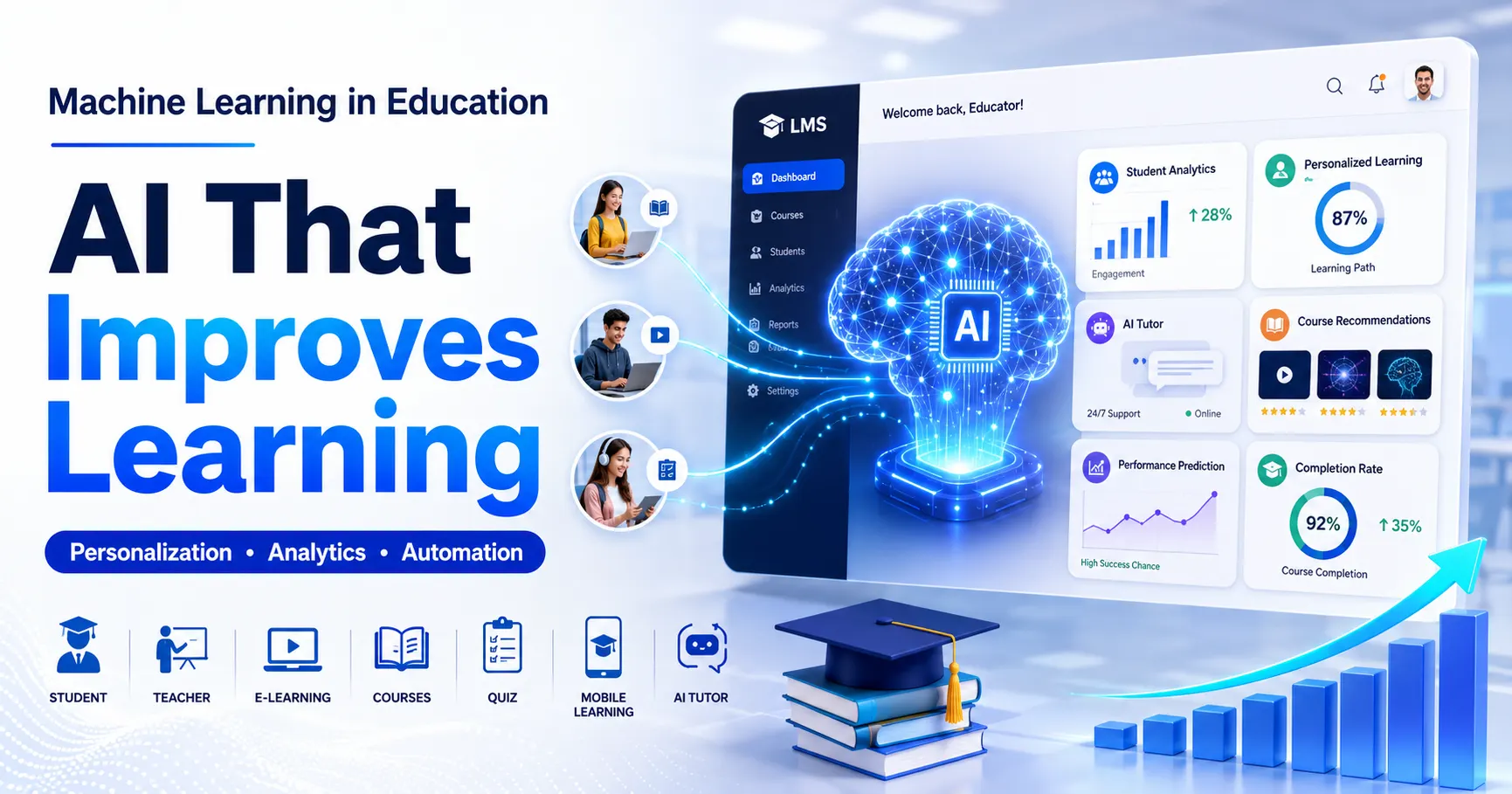
Real-estate firms are adopting property-analytics suites discussed in studies on AI in Real Estate, while universities and learning providers deploy integrated platforms similar to those highlighted in AI in Education.
Budgets favor subscription platforms that replace fragmented toolchains. Adoption accelerates when systems integrate seamlessly with ERP and CRM environments.
Risks center on vendor lock-in and limited customization. Enterprises mitigate these concerns by insisting on open APIs, portability guarantees, and hybrid architectures that preserve strategic flexibility.
As artificial intelligence becomes embedded in core enterprise systems, success in 2026 will depend less on experimentation and more on disciplined execution. Leading organizations are approaching AI as a portfolio of strategic capabilities—governed, funded, and measured like any other mission-critical platform. This shift reflects broader AI industry trends that emphasize scalability, compliance, and economic impact over novelty. At the same time, the latest advancements in AI—from autonomous agents to multimodal systems—are raising the bar for operational readiness.
Before scaling, enterprises must evaluate three foundational dimensions.
Data maturity is the first gate. Organizations with unified data platforms, strong metadata management, and real-time ingestion pipelines are far better positioned to deploy advanced AI systems than those relying on fragmented warehouses or spreadsheet-driven workflows.
Security posture has become equally decisive. Identity management, encryption, model access controls, and red-team testing are now standard expectations—particularly as regulations demand explainability and audit trails.
Workforce skills complete the triangle. Beyond data scientists, enterprises require product managers fluent in AI economics, legal teams versed in regulatory frameworks, and operations leaders capable of redesigning processes around automation.
Few organizations can—or should—build everything internally.
When to partner: Enterprises accelerating transformation often work with an AI Software Development Company to deploy governance platforms, vertical models, or agentic systems faster than internal teams could deliver alone. This approach is particularly attractive when regulatory timelines are tight or specialized domain expertise is required.
When to build: Organizations with proprietary data advantages, strong MLOps maturity, and long-term platform ambitions may invest in in-house foundation models or optimization engines.
When to buy: Off-the-shelf platforms make sense for commodity capabilities such as document processing, fraud detection, or customer analytics—provided integration and data-sovereignty requirements are satisfied.
High-performing enterprises are also reshaping how AI is governed and delivered.
AI Centers of Excellence are evolving from advisory groups into product incubators that define standards, toolchains, and architectural blueprints.
Product-led governance replaces static policies with embedded controls—automated risk scoring, real-time monitoring, and approval workflows built directly into deployment pipelines. This operationalization of governance is quickly becoming one of the defining ai industry trends heading into 2026.
In 2026, AI investment discussions look far more like capital-planning sessions than innovation showcases. Boards now expect detailed cost models and credible payback horizons before approving large-scale deployments.
Infrastructure spend remains the largest line item. GPU clusters, specialized accelerators, edge devices, and high-bandwidth networking can consume millions annually, particularly for global operations.
Model lifecycle costs extend well beyond training. Continuous fine-tuning, monitoring for drift, security testing, and compliance reporting represent persistent operating expenses—often rivaling initial build costs.
Regulatory overhead is also rising. Documentation, audits, third-party assessments, and transparency tooling are becoming standard budget categories in heavily regulated industries.
Despite these pressures, enterprises are increasingly willing to invest because payback periods are shortening. High-impact use cases—such as supply-chain optimization, automated claims processing, or predictive maintenance—are delivering returns in 12 to 24 months. The latest advancements in ai are accelerating this timeline by enabling reusable agent frameworks, shared data layers, and industry-specific models that reduce development effort.
Even as adoption accelerates, several recurring mistakes continue to undermine enterprise programs.
Data debt is the most common. Organizations rush to deploy advanced systems on top of inconsistent, poorly governed datasets, leading to unreliable outputs and compliance risk.
Shadow AI is another growing threat. Employees adopt unsanctioned tools to boost productivity, unintentionally exposing sensitive data or creating regulatory blind spots.
Talent scarcity persists despite rising automation. Architects who understand both cloud infrastructure and machine learning economics remain in short supply, creating bottlenecks in large programs.
Finally, over-automation is emerging as a subtle risk. Enterprises sometimes replace human judgment too aggressively, particularly in customer service, lending, or clinical workflows—only to reintroduce manual checks after reputational or regulatory setbacks.
The organizations that win in 2026 will be those that balance ambition with discipline: investing aggressively where AI creates durable advantage, while maintaining governance, transparency, and human oversight at scale.
If 2026 marks the point at which artificial intelligence becomes enterprise infrastructure, the years immediately following will define how far that infrastructure can extend. Research labs and hyperscale providers are already laying the groundwork for systems that adapt continuously, collaborate across organizational boundaries, and run on radically more efficient hardware. These latest advancements in artificial intelligence suggest that the coming decade will be shaped less by isolated applications and more by self-evolving ecosystems of machine intelligence.
One of the most consequential frontiers is the rise of self-improving agents. Unlike today’s systems, which rely on periodic retraining cycles, next-generation agents are being designed to learn from live environments while operating under strict safety and governance constraints. They will refine workflows, renegotiate supplier contracts, rebalance logistics networks, and optimize pricing strategies in near real time—without waiting for quarterly model updates. Many of these capabilities are already visible in the recent developments in artificial intelligence emerging from reinforcement learning research, automated evaluation pipelines, and closed-loop optimization platforms.
Another powerful shift will be the creation of cross-enterprise AI networks. Instead of each organization operating in isolation, federated learning architectures and privacy-preserving data exchanges will allow companies to collaborate on shared models without exposing sensitive information. In sectors such as transportation, healthcare, and energy, these networks could unlock system-level intelligence—forecasting demand across regions, coordinating emergency responses, or stabilizing supply chains on a global scale.
Finally, hardware acceleration will act as the silent catalyst behind all of this progress. Specialized chips, optical computing, neuromorphic processors, and advanced packaging techniques are dramatically increasing performance per watt while reducing deployment costs. As computing becomes both faster and more accessible, enterprises will be able to run increasingly sophisticated models at the edge and inside sovereign data centers—extending AI’s reach into environments that were previously impractical or prohibitively expensive.
Together, these forces point to a post-2026 world in which artificial intelligence is not just embedded in enterprise operations—it is continuously evolving alongside them.
By 2026, artificial intelligence will have moved decisively from experimentation to enterprise backbone. Autonomous agents, governance platforms, sovereign architectures, vertical models, and real-time analytics are no longer emerging curiosities—they are becoming standard components of competitive operating models. The organizations that succeed will be those that treat AI as a long-term transformation program rather than a sequence of disconnected pilots.
Preparing for the next era requires a clear strategic roadmap. Enterprises must modernize data foundations, harden security and compliance frameworks, redesign operating models, and invest in talent that can bridge technology with business outcomes. Leaders should also adopt portfolio thinking—balancing quick-win automation initiatives with deeper platform investments that compound value over time.
Equally important is partner selection. As the pace of innovation accelerates, few companies can build every capability internally. Working with providers that offer end-to-end Artificial Intelligence Services—from readiness assessments and architecture design to deployment, governance, and optimization—can dramatically shorten time to value while reducing operational risk.
The next decade of enterprise AI will be defined not by who experiments the most, but by who executes with discipline. For medium-sized companies seeking competitive advantage, investing in best custom AI development services for medium-sized companies is becoming a strategic necessity rather than an optional upgrade, align investment with measurable ROI, and embed responsibility into every system will be best positioned to lead their industries in an increasingly intelligent economy.
Explore our best custom AI development services for medium-sized companies designed to accelerate enterprise AI adoption and deliver production-ready solutions.


Start Build Your
Next Digital Solution?
Let’s build scalable, future-ready digital solutions tailored to your business goals. Connect with our experienced technology consultants to discuss your vision, strategy, and growth opportunities — with zero obligation and complete transparency.
Get a free consultation and cost estimate for your digital solution
Our expert will contact you within 24 hours. Check your email for confirmation.
Partner with SISGAIN experts to build secure, scalable AI-powered IT Solutions that transform your business operations.









DUQE FREEZONE Quarter Deck, Queen Elizabeth 2, Mina Rashid, Dubai, UAE

100 Consilium Pl Suite 200, Scarborough, ON M1H 3E3, Canada

C-109, Sector 2, Noida, Uttar Pradesh 201301 India
Project quotes, partnerships, implementation
Open roles, referrals, campus hiring