 +1 844-445-5767
 +971 56-848-5757
 +91 921-208-0630
For Business & Service Inquiries
Sales Team
Project quotes, partnerships, implementation
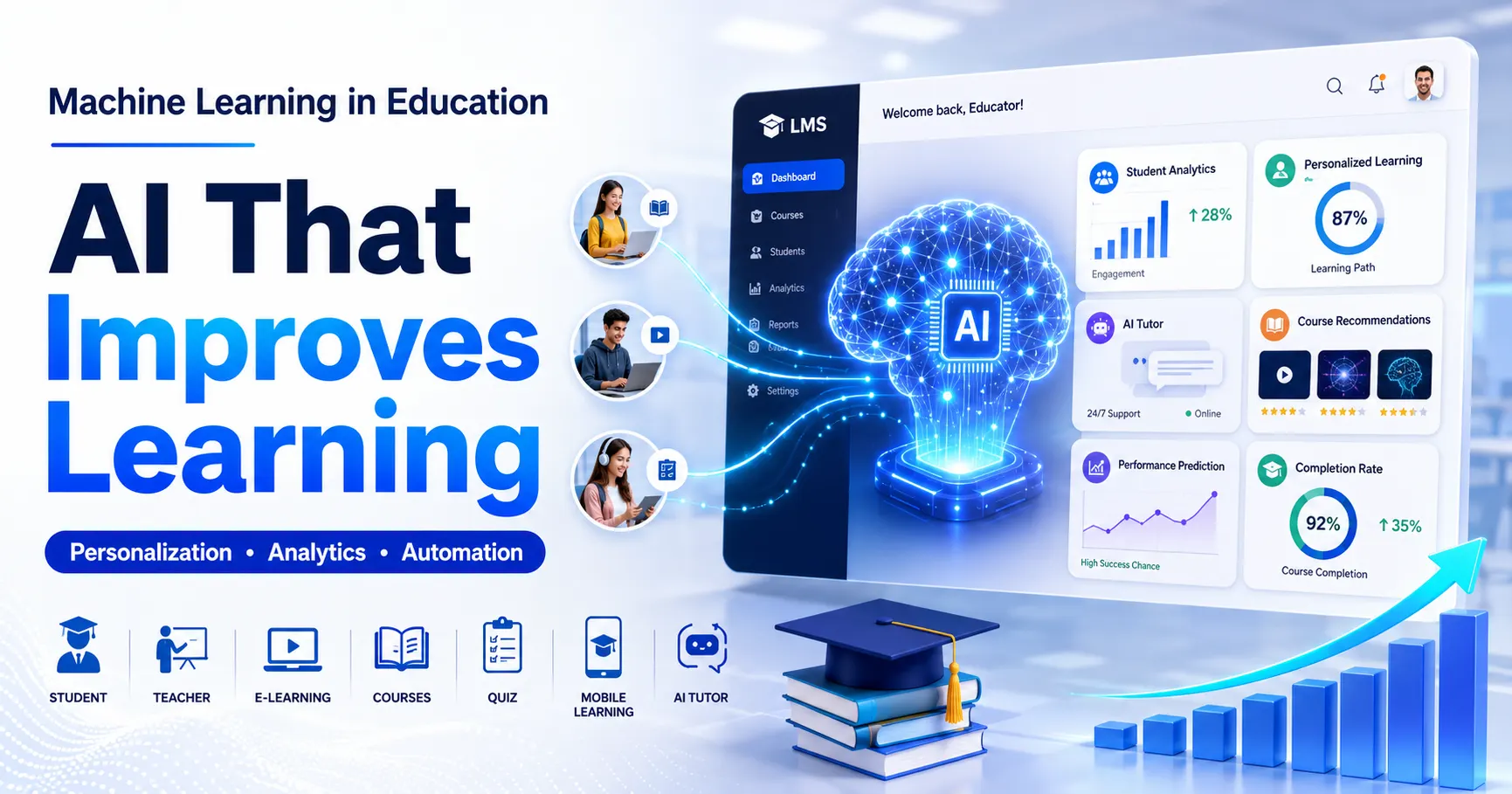
Quick answer: Machine learning in education uses algorithms to analyze learner data and personalize how students learn. It powers tailored learning paths, student performance prediction, automated grading, adaptive learning, and smart content recommendations — helping EdTech platforms, schools, universities, and LMS companies improve engagement, reduce manual work, and increase learning outcomes at scale.
The numbers tell the story. According to Grand View Research, the global AI in education market was valued at USD 8.3 billion in 2025 and is projected to grow from USD 11.4 billion in 2026 to USD 57.2 billion by 2033. That kind of growth doesn't happen by accident — it happens because machine learning solves problems traditional learning systems never could, from personalized learning and student analytics to automated assessments and AI tutoring.
For EdTech companies, schools, universities, and LMS businesses, the question is no longer whether to adopt machine learning. It's how fast you can do it before competitors do. This guide breaks down the top use cases, the real benefits, working examples, and a step-by-step path to implementation — so you can decide exactly where machine learning fits in your platform.
Machine learning in education is the use of data-driven algorithms to analyze how students learn and to automate or personalize parts of the learning experience. Instead of treating every learner the same, machine learning studies behavior — quiz scores, time on task, click patterns, completion rates — and adapts the content to fit each person.
Here's the core idea. Traditional software follows fixed rules. Machine learning models learn from data and improve over time. Feed an ML model thousands of student interactions, and it starts predicting who's about to fall behind, which course someone should take next, and where a learner needs more practice.
That shift — from static rules to adaptive intelligence — is what makes machine learning and education such a powerful combination. The data already exists inside every LMS. Machine learning turns it into action.
Every learning platform sits on a goldmine of data. Most platforms waste it.
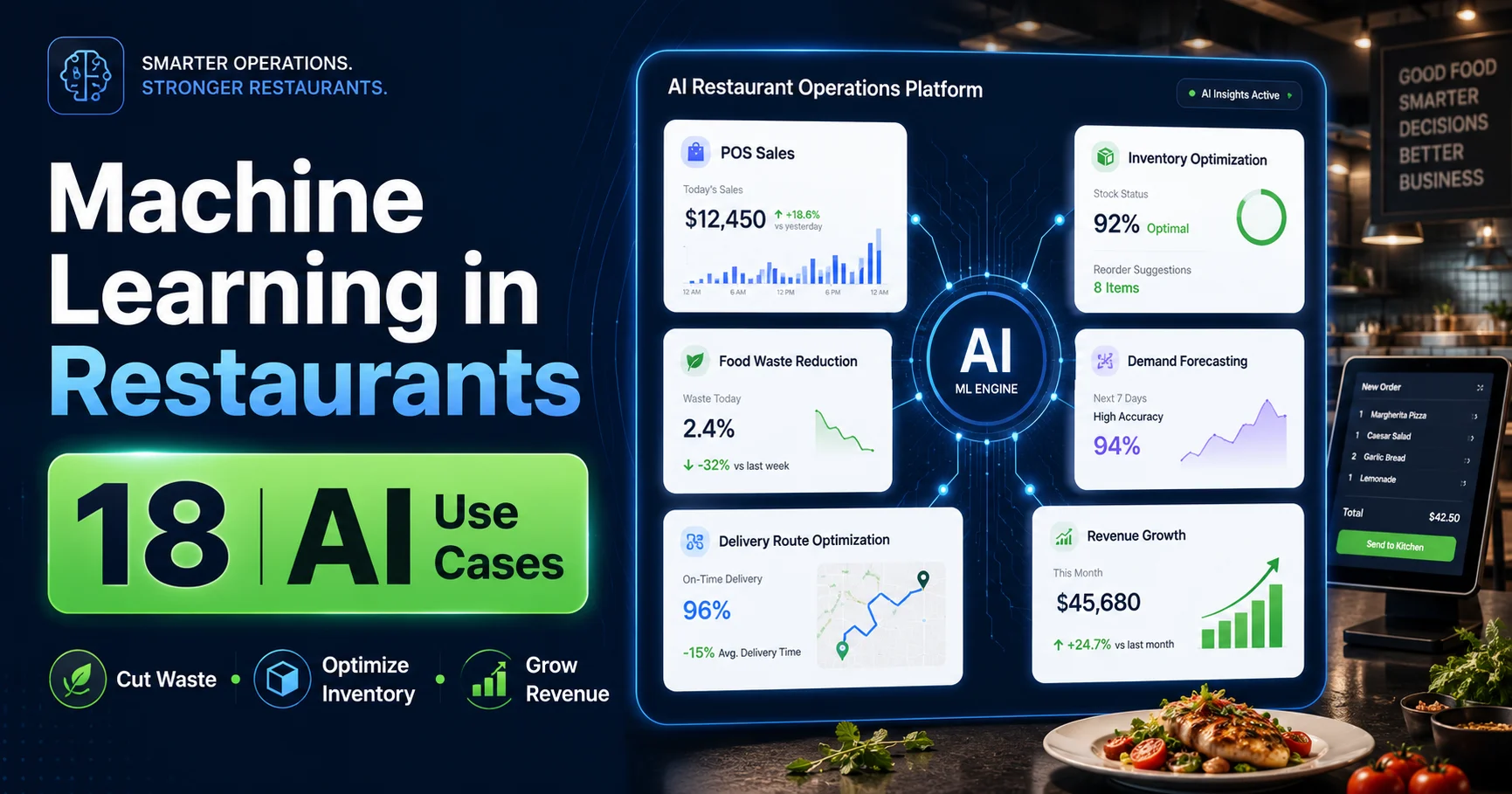
Machine learning changes that. It connects three things that modern learning depends on — data, automation, and personalization. Just as machine learning in food and restaurants helps businesses forecast demand and personalize customer experiences, the relationship between machine learning and education comes down to scale: a single teacher can't track 5,000 learners in real time, but a model can.
Consider what that unlocks:
The payoff is direct. Higher completion rates. Better outcomes. Lower operating costs. That's why machine learning and education are converging faster than almost any other sector in EdTech.
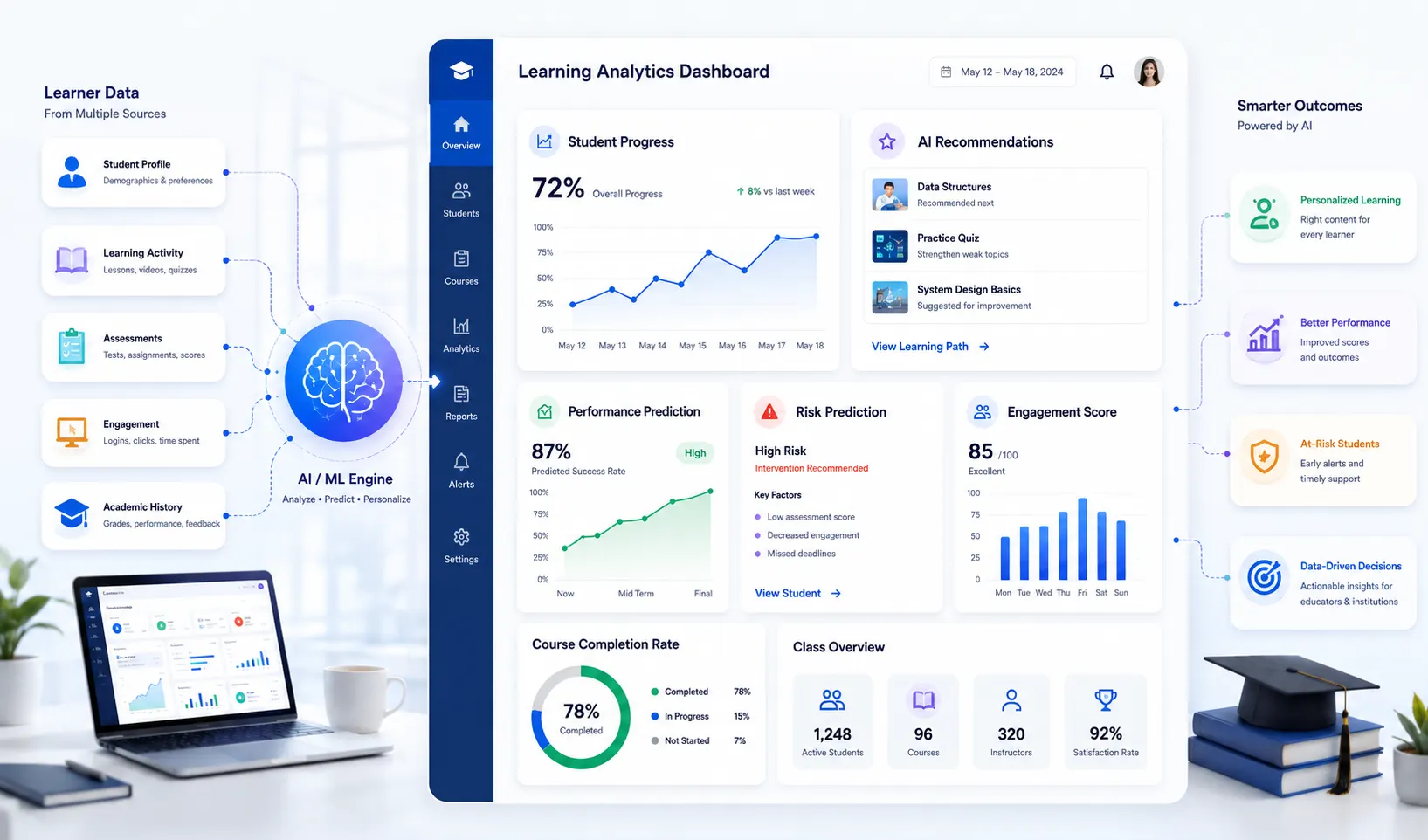
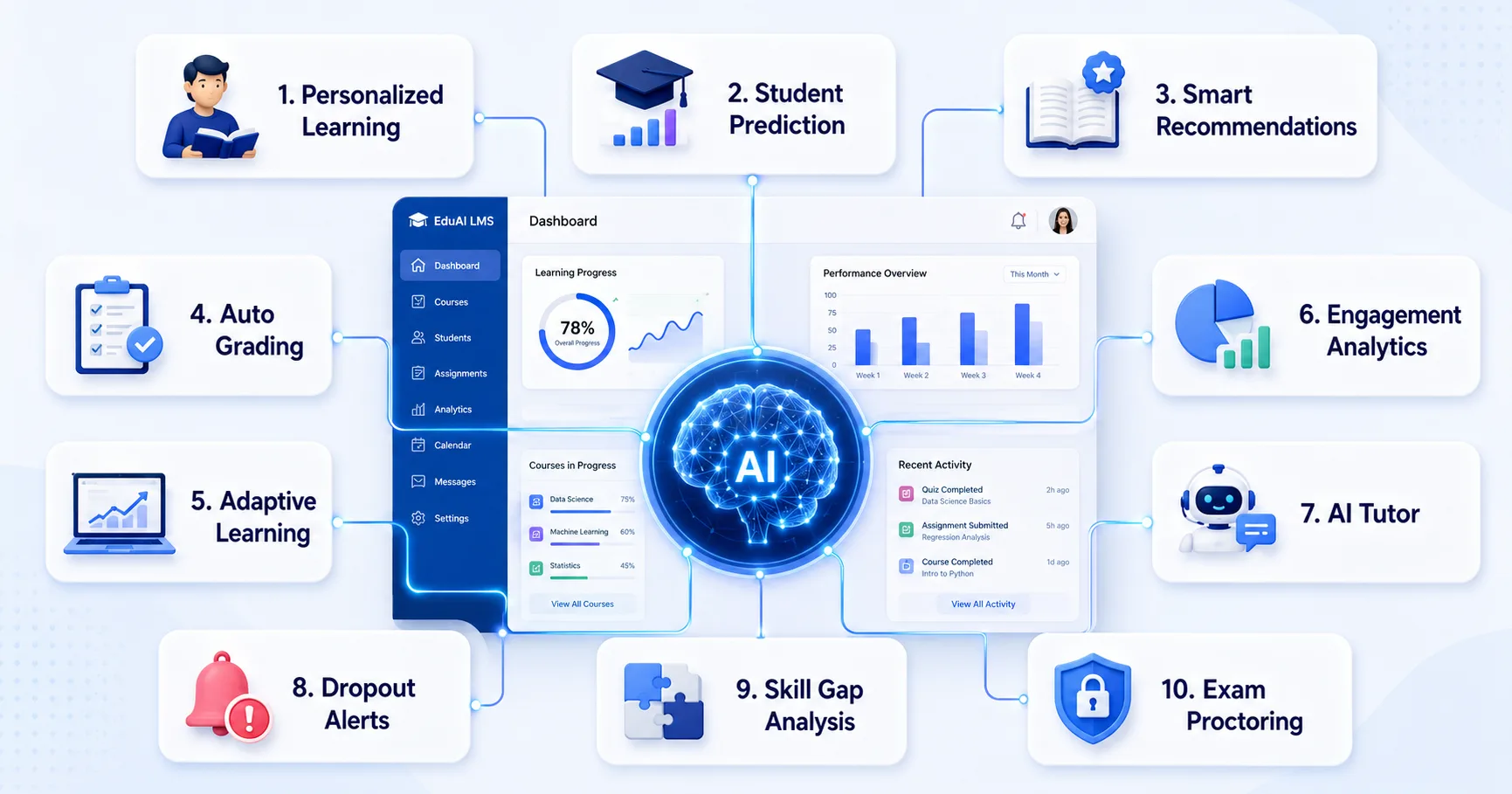
Machine learning isn't one feature — it's a toolkit. Here are the 12 use cases driving real results across education and eLearning platforms.
| Machine Learning Use Case | What It Does | Best For |
|---|---|---|
| Personalized Learning Paths | Adapts course flow based on learner progress, pace, and performance | EdTech platforms, LMS systems, online schools |
| Student Performance Prediction | Predicts scores, learning gaps, and at-risk students before final exams | Schools, universities, coaching platforms |
| Smart Content Recommendations | Suggests courses, lessons, videos, and exercises based on learner behavior | eLearning apps, training platforms, course marketplaces |
| Automated Grading | Grades quizzes, assignments, and assessments with faster feedback | Teachers, institutions, online assessment platforms |
| Skill Gap Analysis | Compares current learner skills with target roles, certifications, or career goals | Corporate training, workforce learning, upskilling platforms |
Machine learning builds a unique route through your course for every learner. The model analyzes performance, pace, and preferences, then sequences content to match. Research on personalized learning paths shows ML and reinforcement learning can optimize these routes based on real student behavior — not guesswork.
ML models predict how a student may perform before exam day. By analyzing past scores, attendance, engagement, study patterns, quiz attempts, and LMS activity, the system can forecast results and flag learners who may need support. Research published in PLOS ONE shows that machine learning can support student performance prediction in online learning environments when the model is trained on high-quality learning data.
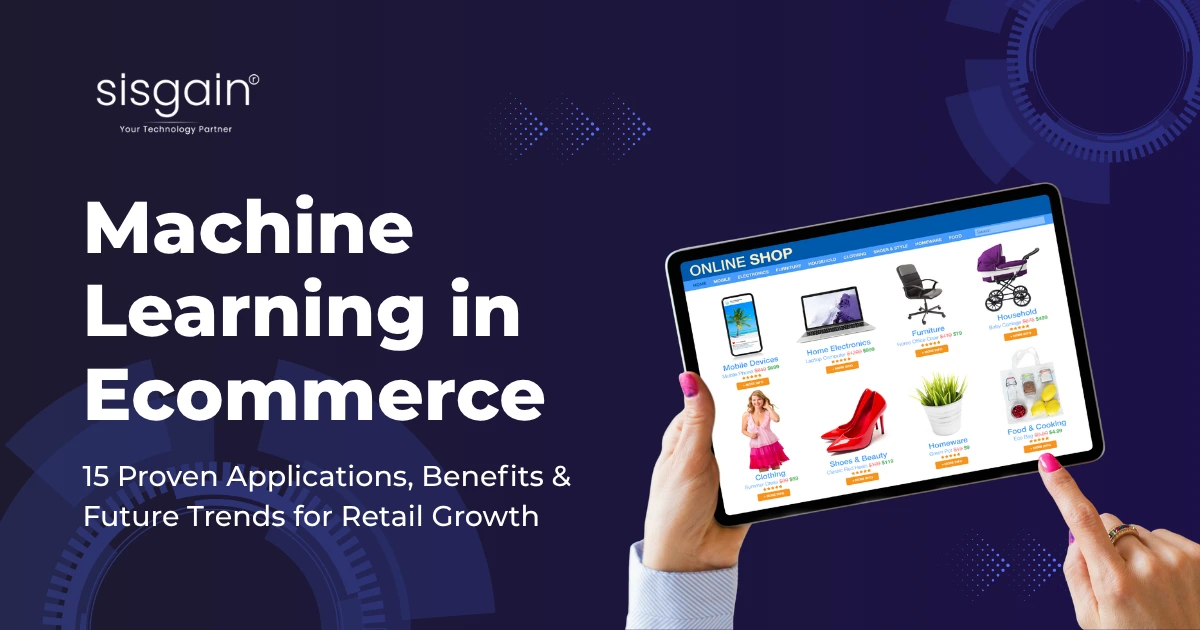
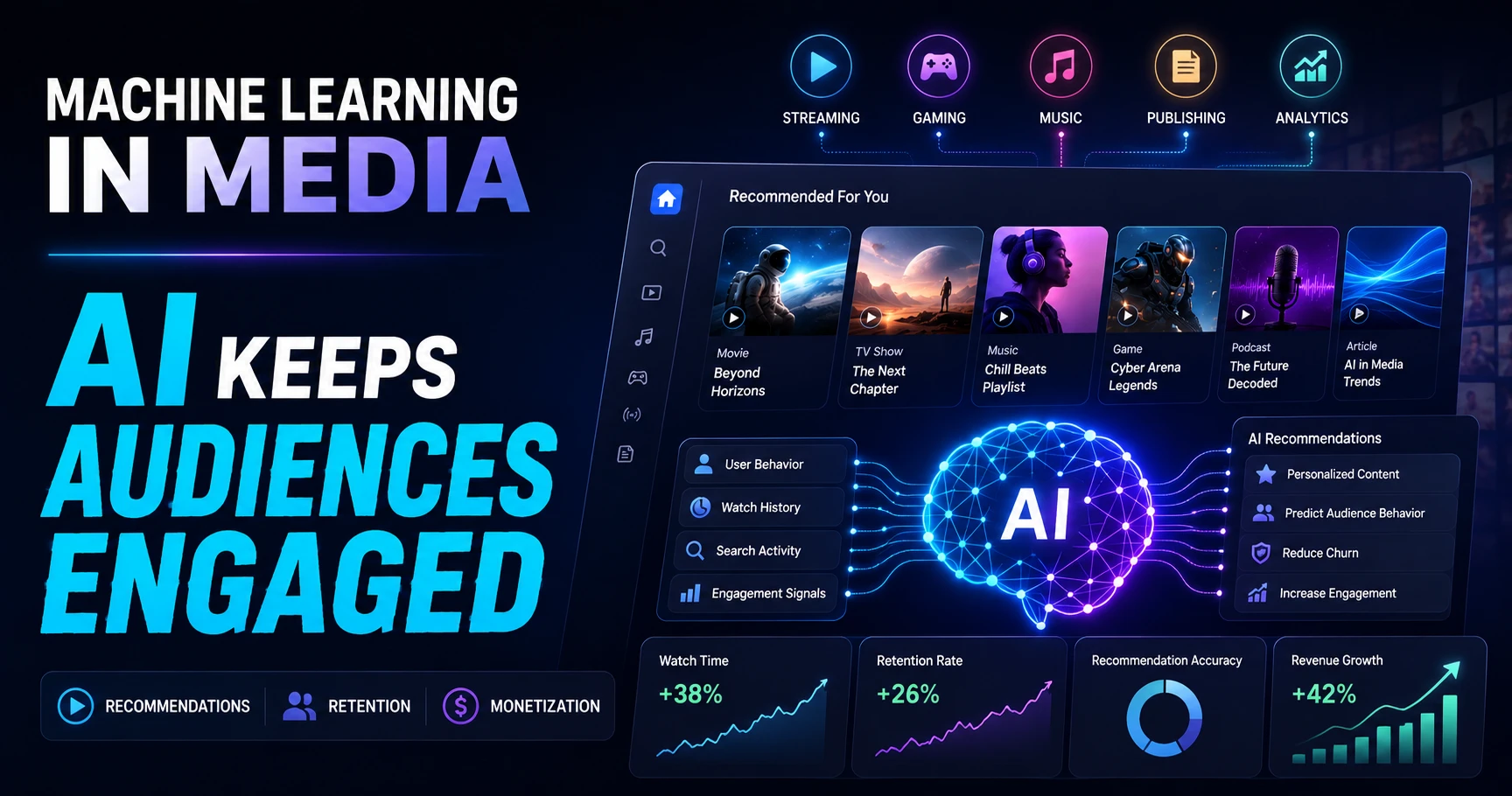
Like Netflix for learning — the model suggests the next course, video, or exercise based on what similar learners completed and what each student needs. This recommendation logic is similar to how machine learning in entertainment and media helps streaming platforms personalize content and keep audiences engaged. The same AI-powered recommendation engines are also widely used in machine learning in e-commerce and retail, where they personalize product recommendations, improve product discovery, and increase customer conversions. More relevant learning content means higher engagement and completion.
Machine learning grades quizzes, short answers, and even essays automatically. Teachers reclaim hours every week. Learners get feedback in seconds instead of days.
The course adjusts in real time. Answer correctly, and the difficulty rises. Struggle, and the system serves easier content and extra practice — keeping every learner in their optimal zone.
ML tracks how learners interact with your platform — where they pause, skip, replay, or quit. These signals reveal which content works and which content loses people.
AI tutors answer questions, explain concepts, and guide self-paced learners around the clock. They scale one-on-one support to thousands of students at once.
Machine learning spots the warning signs early — declining logins, missed deadlines, falling scores. Flag the risk, trigger an intervention, keep the learner enrolled.
No manual check-ins. The system tracks completion, milestones, and time-to-finish automatically, then surfaces progress to learners and instructors.
ML compares a learner's current skills against the target role or certification and pinpoints exactly what's missing. Essential for corporate training and upskilling programs.
Machine learning monitors online exams — detecting unusual behavior, multiple faces, or screen switching — to protect integrity without a human watching every screen.
ML analyzes platform usage to optimize the LMS itself — faster navigation, better content placement, and features that match how learners actually behave.
For EdTech founders, LMS companies, training providers, and education institutions, these benefits are not just academic. They directly affect course completion, learner retention, instructor productivity, platform engagement, and long-term revenue growth.
Every learner gets content built for them — not for the average. Personalized pacing means faster progress for advanced students and more support for those who need it.
Early intervention plus adaptive content equals higher scores and completion rates. When the system catches struggling learners early, fewer fall through the cracks.
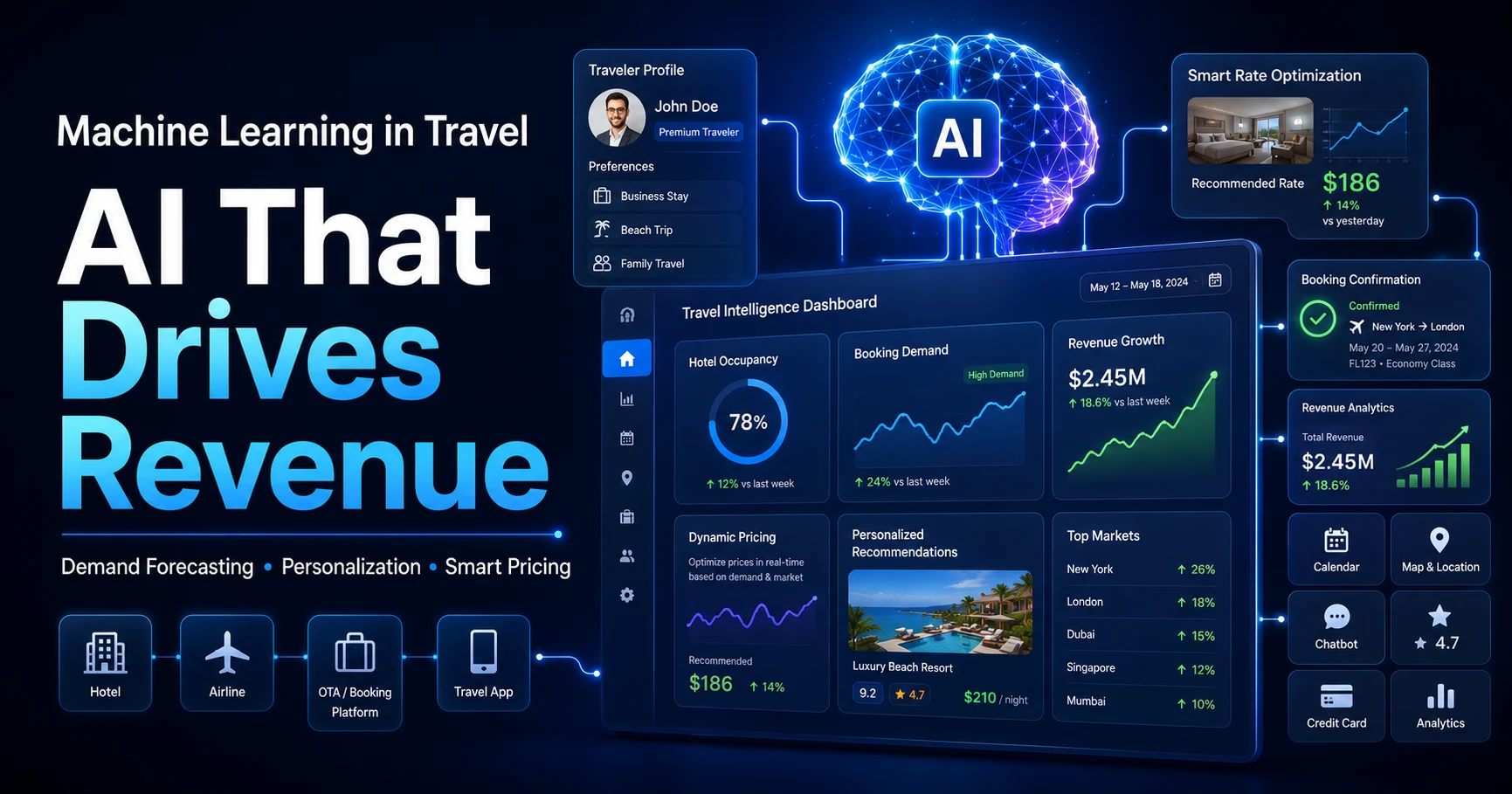
Relevant recommendations and adaptive difficulty keep people in flow. This is similar to how machine learning in travel and hospitality improves engagement through personalized offers, smart recommendations, and better customer experiences. Engaged learners finish courses — disengaged ones don't.
Automated grading, tracking, and recommendations free your team from repetitive tasks. Teachers teach. Admins strategize. Machines handle the rest.
Leaders get data-backed insights across thousands of learners — which programs work, where dropouts happen, and where to invest next.
This is where machine learning and education truly pay off. One model can personalize learning for 100 students or 100,000 — at the same cost structure.
Theory is one thing. Working systems are another. Here's how machine learning shows up in real platforms.
Platforms analyze a learner's completed courses and behavior to suggest what to take next — the same recommendation logic that powers consumer apps, applied to learning catalogs.
Universities use ML models to predict dropout risk from attendance, grades, and engagement data. PLOS ONE research confirms these models predict online learning outcomes with measurable accuracy — giving advisors time to act.
Duolingo is the classic case. Its early machine-learning work tackled when to resurface a vocabulary word or concept, then grew into models that adapt difficulty to each learner — as documented by IEEE Spectrum and Duolingo's own research team.
Duolingo has also explained how its Birdbrain AI model helps personalize lessons by selecting exercises based on a learner's strengths, weaknesses, and current difficulty level.
Intelligent tutoring systems guide learners through problems step by step, explaining mistakes and adjusting hints based on where each student gets stuck.
Training platforms run skill gap analysis across employees, map current abilities against role requirements, and assign the exact courses each person needs to close the gap.
A university LMS can use machine learning to analyze attendance, assignment submissions, quiz scores, and login frequency. When the system detects a learner at risk of dropping out, it can automatically alert faculty or advisors so they can intervene early.
An exam preparation app can use machine learning to identify weak topics, adjust question difficulty, and recommend revision plans. This helps students spend more time on areas where they need improvement instead of repeating topics they already understand.
An eLearning platform without machine learning is a content library. An eLearning platform with machine learning is a learning engine.
The difference plays out in four places:
Add machine learning to an existing LMS and you don't just add features — you change what the platform is capable of.
The contrast is sharp. Here's how the two approaches stack up side by side.
|
Capability |
Traditional Learning Systems |
Machine Learning in Education |
|---|---|---|
|
Content delivery |
Same content for everyone |
Personalized content per learner |
|
Progress tracking |
Manual tracking and check-ins |
Automated, real-time tracking |
|
Feedback |
Delayed feedback, days later |
Real-time feedback in seconds |
|
Assessments |
Fixed assessments for all |
Adaptive assessments that adjust |
|
Student insights |
Limited, reactive insights |
Predictive, proactive insights |
|
Course recommendations |
Manual selection by staff |
AI-based, automated recommendations |
Machine learning in education can create strong value, but it is not plug-and-play. Education platforms must manage student privacy, data quality, LMS integration, algorithm fairness, and user adoption before scaling ML features.
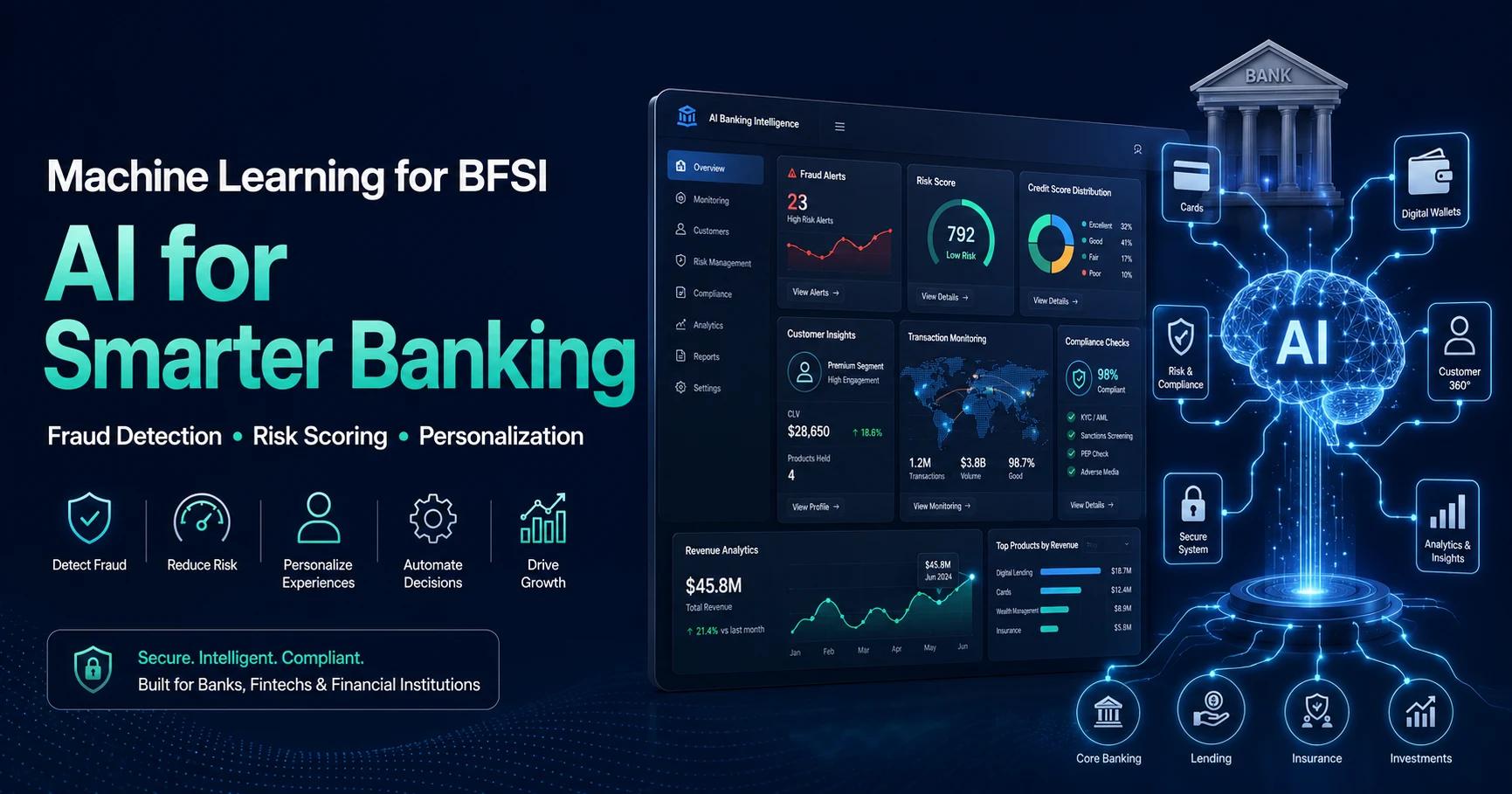
Student data is sensitive and heavily regulated. Any ML system must protect it with strong encryption, access controls, and compliance — especially in schools and universities. This makes education similar to regulated sectors like banking, where machine learning for BFSI must balance automation, risk control, data protection, and compliance.
Education platforms must also consider compliance requirements such as GDPR, FERPA, local data protection laws, and institutional privacy policies. Any machine learning system that handles student data should include consent management, secure data storage, role-based access, audit logs, and clear data retention rules.
Models are only as good as the data behind them. Incomplete or messy learning data produces weak predictions. Clean, structured data comes first.
Most institutions already run an LMS. The challenge is connecting ML models to that system without disrupting what already works.
If training data carries bias, the model carries it forward. Regular audits keep predictions fair across all learner groups.
Technology only works when people use it. Clear training and a focus on real benefits drive adoption from both teachers and learners.
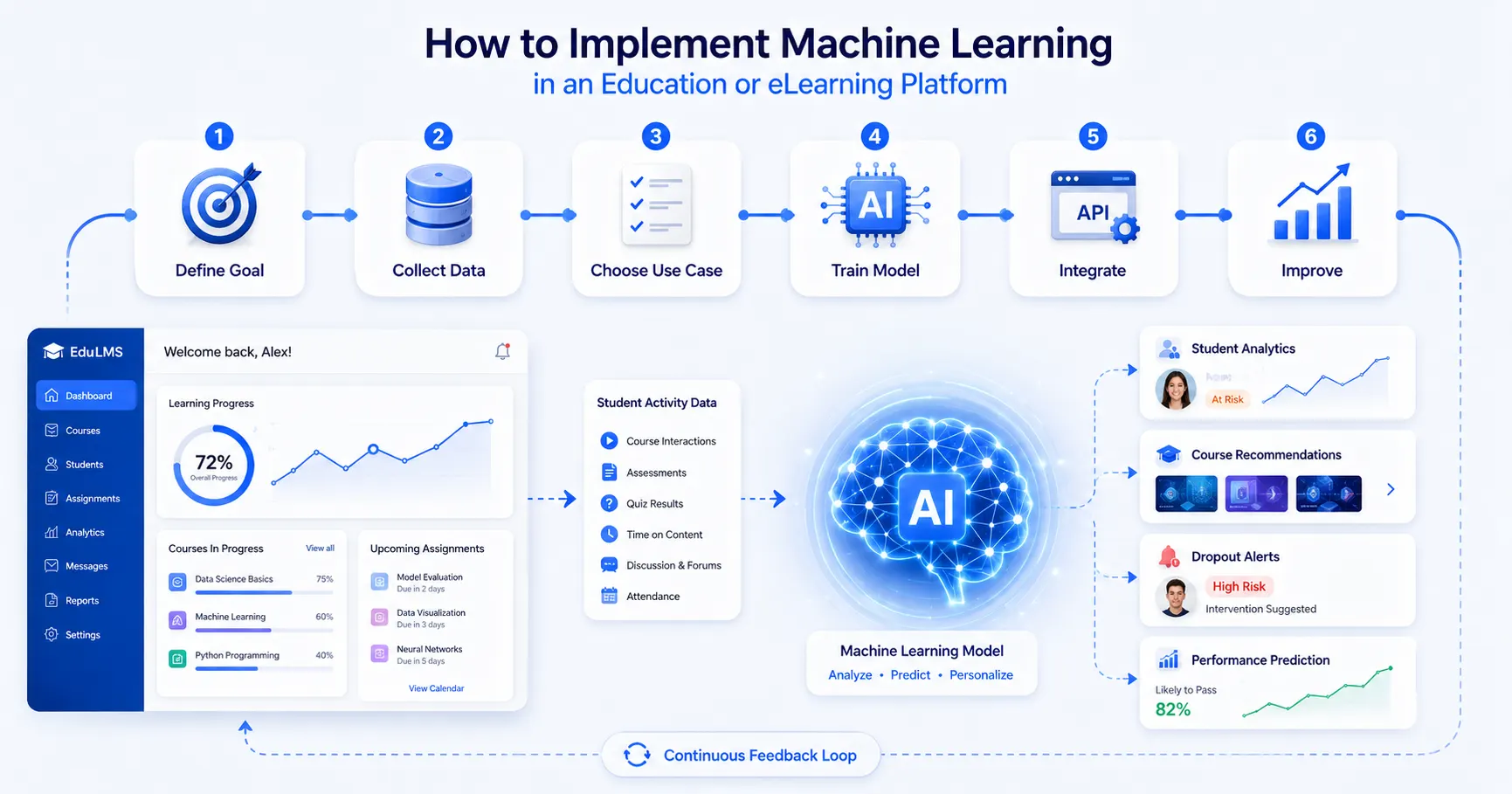
A working ML solution follows a clear path. Skip steps and you waste budget. Follow them and you ship something that works.
Start with the outcome — reduce dropouts, lift completion rates, or automate grading. The goal decides everything that follows. No goal, no project.
Gather the data your goal needs — scores, engagement, completion, demographics. Clean it, structure it, and make sure it's accurate before any model touches it.
Match the goal to a use case from the list above. Want fewer dropouts? Build dropout risk detection. Want higher engagement? Start with recommendations.
Develop and train the model on your data. Test it, measure accuracy, and refine until predictions hold up against real outcomes. This is where machine learning for education becomes real.
Connect the model to your LMS or app so it works inside the learner experience — not as a separate tool. Seamless integration drives adoption.
Models drift as behavior changes. Track performance, retrain on fresh data, and improve continuously. Machine learning for education is a cycle, not a one-time build.
The trajectory is steep. The AI in education market is on track to hit USD 57.2 billion by 2033, per Grand View Research — and machine learning sits at the center of that growth.
The next stage of machine learning and education will be more predictive, conversational, and outcome-driven. Instead of only showing content, platforms will guide learners, generate study material, predict career readiness, and support teachers with real-time intelligence.
What's coming next:
The platforms that build these capabilities now will lead the market. The ones that wait will spend years catching up.
Knowing what to build is one thing. Building it is another. SISGAIN develops Machine Learning Solutions for education and eLearning platforms — from strategy through launch.
What SISGAIN delivers:
SISGAIN helps education businesses move from idea to implementation with machine learning solutions built around real learning goals, platform needs, and user behavior.
If you want to add personalization, student analytics, automated grading, course recommendations, AI tutoring, or dropout prediction to your education platform, SISGAIN can help you build it from strategy to launch.
Talk to our team and start building a smarter eLearning platform powered by machine learning.
Machine learning and education are no longer experimental partners — they're the foundation of modern EdTech. Personalized paths. Predictive insights. Automated workflows. These aren't future features. They're what learners and institutions already expect.
The market backs it up. From USD 8.3 billion in 2025 to a projected USD 57.2 billion by 2033, the direction is clear. The platforms that adopt machine learning early will own the next decade of learning.
Start with one use case. Prove the value. Scale from there. That's how machine learning and education move from idea to impact.
Start Build Your
Next Digital Solution?
Let’s build scalable, future-ready digital solutions tailored to your business goals. Connect with our experienced technology consultants to discuss your vision, strategy, and growth opportunities — with zero obligation and complete transparency.
Get a free consultation and cost estimate for your digital solution
Our expert will contact you within 24 hours. Check your email for confirmation.
Partner with SISGAIN experts to build secure, scalable AI-powered IT Solutions that transform your business operations.









DUQE FREEZONE Quarter Deck, Queen Elizabeth 2, Mina Rashid, Dubai, UAE

100 Consilium Pl Suite 200, Scarborough, ON M1H 3E3, Canada

C-109, Sector 2, Noida, Uttar Pradesh 201301 India
Project quotes, partnerships, implementation
Open roles, referrals, campus hiring