
 +1 844-445-5767
 +971 56-848-5757
 +91 921-208-0630
For Business & Service Inquiries
Sales Team
Project quotes, partnerships, implementation
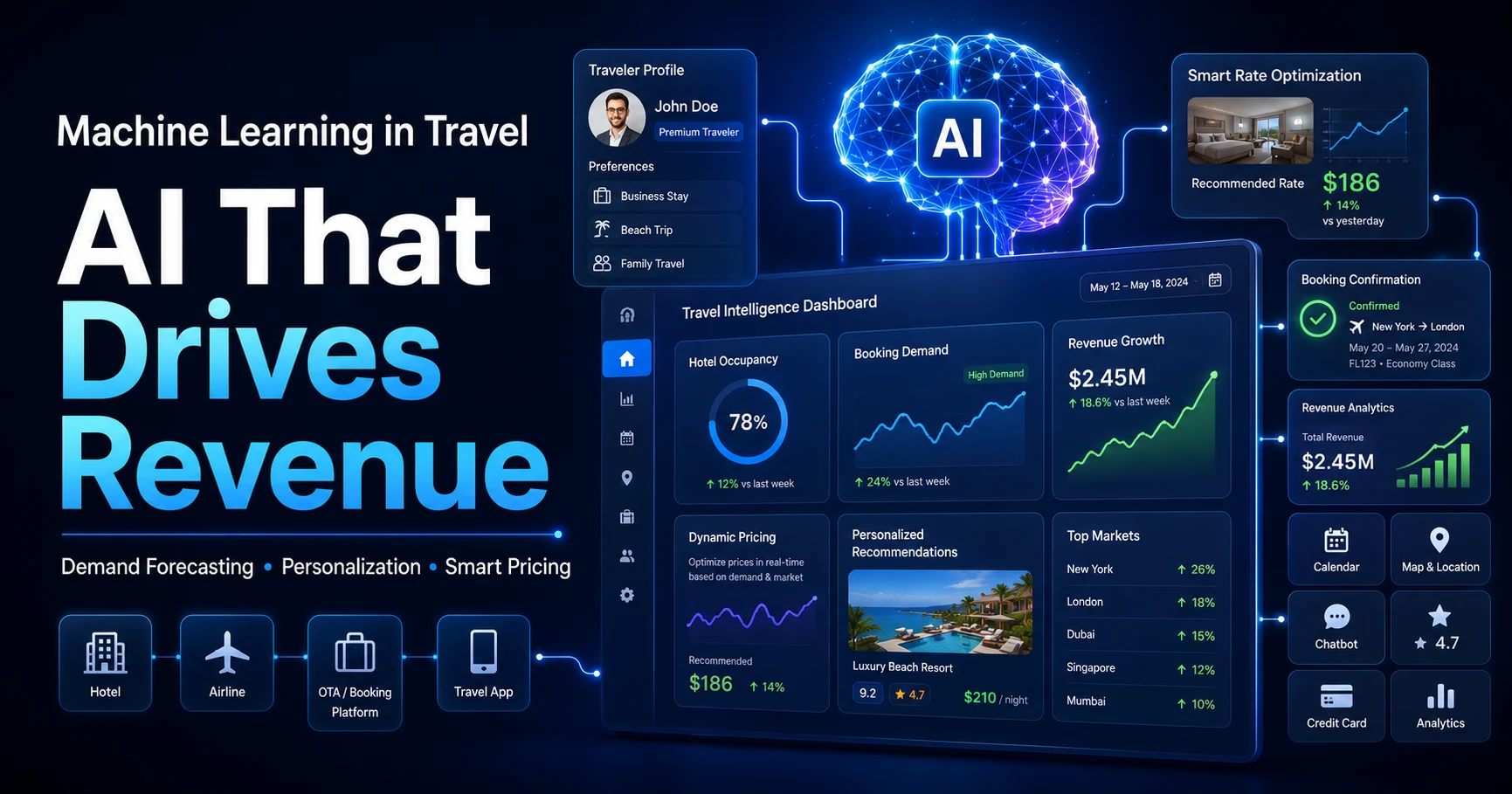
Quick answer: Machine learning in travel and hospitality uses booking data, browsing behavior, guest profiles, reviews, pricing trends, and operational signals to predict demand, personalize trips, optimize prices, and automate guest service. For hotels, airlines, OTAs, travel apps, and tourism brands, the result is higher revenue, lower costs, better decisions, and more personalized guest experiences.
Travel and hospitality businesses now compete on personalization, pricing accuracy, booking speed, guest service, and operational efficiency. A hotel must know when demand will rise. An airline must price seats without losing margin. A travel website must show the right destination, hotel, or package before the user leaves. This is where machine learning in hospitality becomes a practical business advantage.
The shift is already visible across the industry. According to Research and Markets, the AI in Hospitality and Tourism Market was valued at USD 26.53 billion in 2026 and is projected to reach USD 75.66 billion by 2030, growing at a 29.9% CAGR. Guest behavior is moving in the same direction. Booking.com reported that 89% of consumers want to use AI in future travel planning, showing how fast artificial intelligence in hospitality and travel is becoming part of customer expectations.
This guide explains what machine learning means for travel and hospitality, the strongest use cases, the business benefits, the challenges, and how brands can build AI-powered systems that improve revenue, operations, and guest loyalty.
Machine learning is a branch of artificial intelligence that learns patterns from data and uses those patterns to make predictions, recommendations, and automated decisions. In travel and hospitality, it analyzes booking history, search behavior, customer profiles, guest reviews, pricing data, cancellation patterns, payments, and operational activity to help businesses make smarter decisions.
AI is the broader technology that allows systems to perform intelligent tasks. ML is the part of AI that learns from data. When companies discuss AI and ML in hospitality, they usually mean practical tools such as demand forecasting systems, recommendation engines, revenue management platforms, guest chatbots, fraud detection systems, and review analysis tools.
Instead of relying only on spreadsheets, assumptions, or manual pricing rules, travel and hospitality brands can use machine learning to predict what is likely to happen next and act faster.
Machine learning models become stronger when they are trained on clean, relevant, and connected business data. Travel and hospitality brands usually use these data sources:
Travel and hospitality businesses operate in a fast-changing environment. Demand can change because of weather, events, holidays, competitor pricing, flight delays, local restrictions, or customer behavior. Manual decision-making often reacts too late. ML in hospitality helps businesses predict these shifts earlier and respond with better pricing, staffing, marketing, and service decisions.
Customers also expect more personalized travel experiences. They want hotels, trips, activities, offers, and support that match their interests, budget, location, and timing. Personalization at this scale is almost impossible manually, but it becomes practical with machine learning models that analyze customer behavior in real time.
For business owners, the value is clear:
In simple terms, machine learning helps travel and hospitality brands move from reactive decisions to predictive business growth.
The strongest hospitality machine learning applications are directly connected to revenue, customer experience, operations, and retention. Below are the most valuable use cases for hotels, airlines, OTAs, travel apps, resorts, tourism companies, and transport businesses.
Demand forecasting is one of the most valuable applications of machine learning in travel and hospitality. ML models analyze historical bookings, local events, holidays, seasonality, weather, search trends, competitor activity, and occupancy patterns to predict future demand.
For hotels, this helps revenue teams estimate how many rooms are likely to sell on a specific date. For airlines, it helps forecast route demand. For travel platforms, it helps predict which destinations, packages, or experiences will attract more bookings.
Dynamic pricing uses machine learning to adjust prices based on demand, availability, booking pace, competitor rates, customer behavior, seasonality, and market conditions. Hotels use it to set room rates. Airlines use it to price seats. Tour operators and travel platforms use it to price packages, experiences, and add-ons.
Instead of using fixed pricing rules, ML models identify the price point most likely to maximize revenue without reducing conversion. For example, if a major event is increasing hotel searches in a city, the model can recommend higher room rates. If demand is low, it can suggest controlled discounts or bundled offers.
Recommendation engines help travel websites, hotel platforms, OTAs, and mobile apps suggest the most relevant destinations, hotels, flights, rooms, activities, restaurants, and add-ons for each user. These recommendations are based on browsing behavior, past bookings, budget, trip purpose, location, preferred dates, and similar customer behavior.
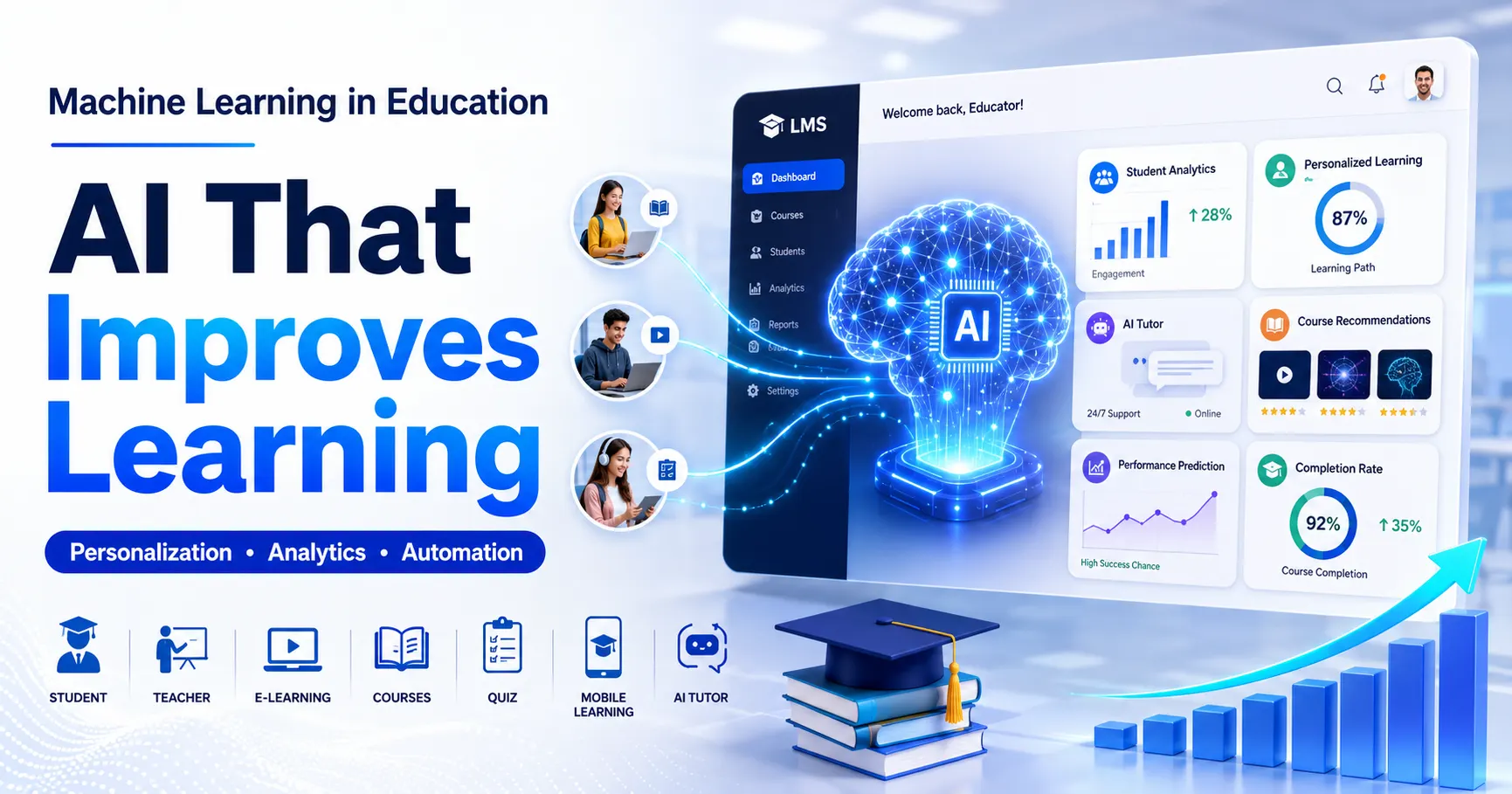
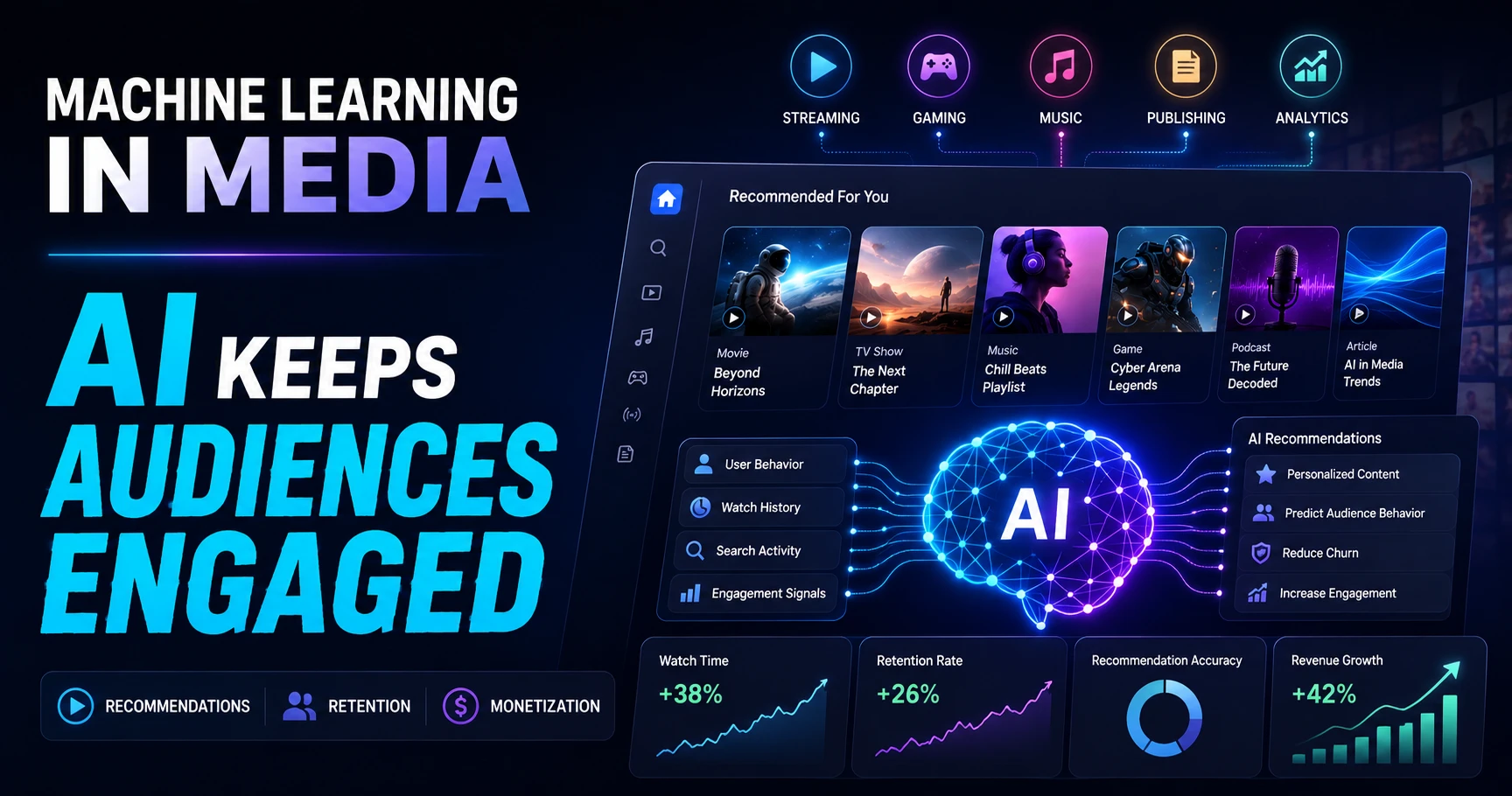
This is also the foundation of automated content recommendations for travel websites. Instead of showing the same content to every visitor, ML-powered systems can display relevant travel guides, hotel packages, destination suggestions, local experiences, and offers based on user intent. This approach is similar to machine learning in entertainment and media, where recommendation engines personalize content based on user behavior, preferences, and engagement history. The same AI-powered recommendation technology is also used in machine learning in education and eLearning to recommend personalized courses, learning paths, assessments, and educational content based on each learner's progress and interests.
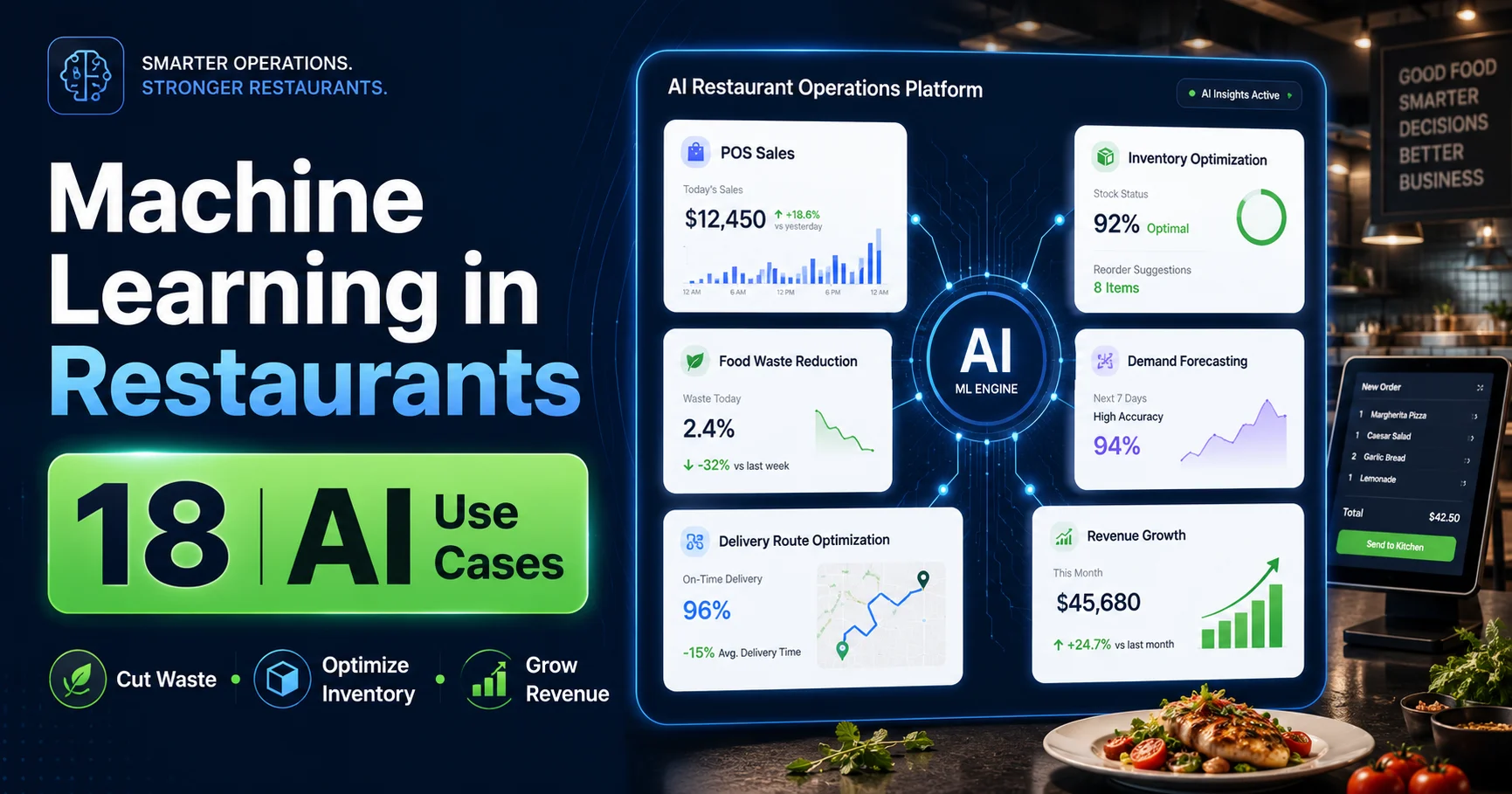
For example, a family traveler may see kid-friendly resorts, airport transfers, nearby dining options, and local experiences, while a business traveler may see hotels near a conference venue with early check-in options. This same recommendation logic is also used in machine learning in food and restaurants, where AI helps restaurants personalize menus, forecast demand, and improve customer experiences. For travel brands, these insights reduce decision fatigue, improve engagement, and increase booking conversion.
AI-powered trip planning uses machine learning and generative AI to create personalized itineraries based on dates, budget, interests, destination, travel history, and user preferences. It can recommend flights, hotels, restaurants, local attractions, transport options, and activities in one connected journey.
A smart booking experience uses ML to understand what a user is likely to book and reduce friction in the booking journey. Travel websites and apps can rank search results, pre-fill preferences, show relevant filters, recommend packages, and display personalized offers based on user behavior.
Machine learning can group travelers and guests based on behavior, spending level, booking frequency, travel purpose, location, preferences, loyalty status, and engagement history. This helps brands understand their audience more clearly and personalize marketing, pricing, and service.
AI chatbots and virtual assistants help travel and hospitality businesses provide instant support. They can answer booking questions, handle cancellation requests, explain hotel policies, recommend rooms, share itinerary updates, support multiple languages, and guide users through the booking process. For hotels, airlines, and travel platforms, AI chatbot and virtual assistant solutions can reduce support workload while improving response speed and guest satisfaction.
For hotels, chatbots can manage pre-arrival questions, room service requests, check-in instructions, late checkout queries, and upselling opportunities. For travel platforms, they can help users compare packages, understand visa requirements, check refund rules, and receive trip updates.
Travel and hospitality brands receive reviews across Google, OTAs, social media, surveys, and booking platforms. Manually reading every review is difficult, especially for hotel chains, airlines, and large travel platforms. Machine learning can analyze thousands of reviews and identify common themes, positive feedback, complaints, and sentiment trends.
For example, a model can detect repeated complaints about check-in delays, room cleanliness, breakfast quality, Wi-Fi speed, staff behavior, or payment issues. This helps managers fix service problems before they damage reputation.
Cancellation prediction models identify which bookings are more likely to cancel based on booking source, lead time, payment method, trip type, seasonality, customer behavior, price sensitivity, and past cancellation patterns.
This insight helps hotels, airlines, and travel platforms act before revenue is lost. They can send reminders, offer flexible alternatives, request confirmation, promote non-refundable offers, or apply smarter overbooking rules where appropriate.
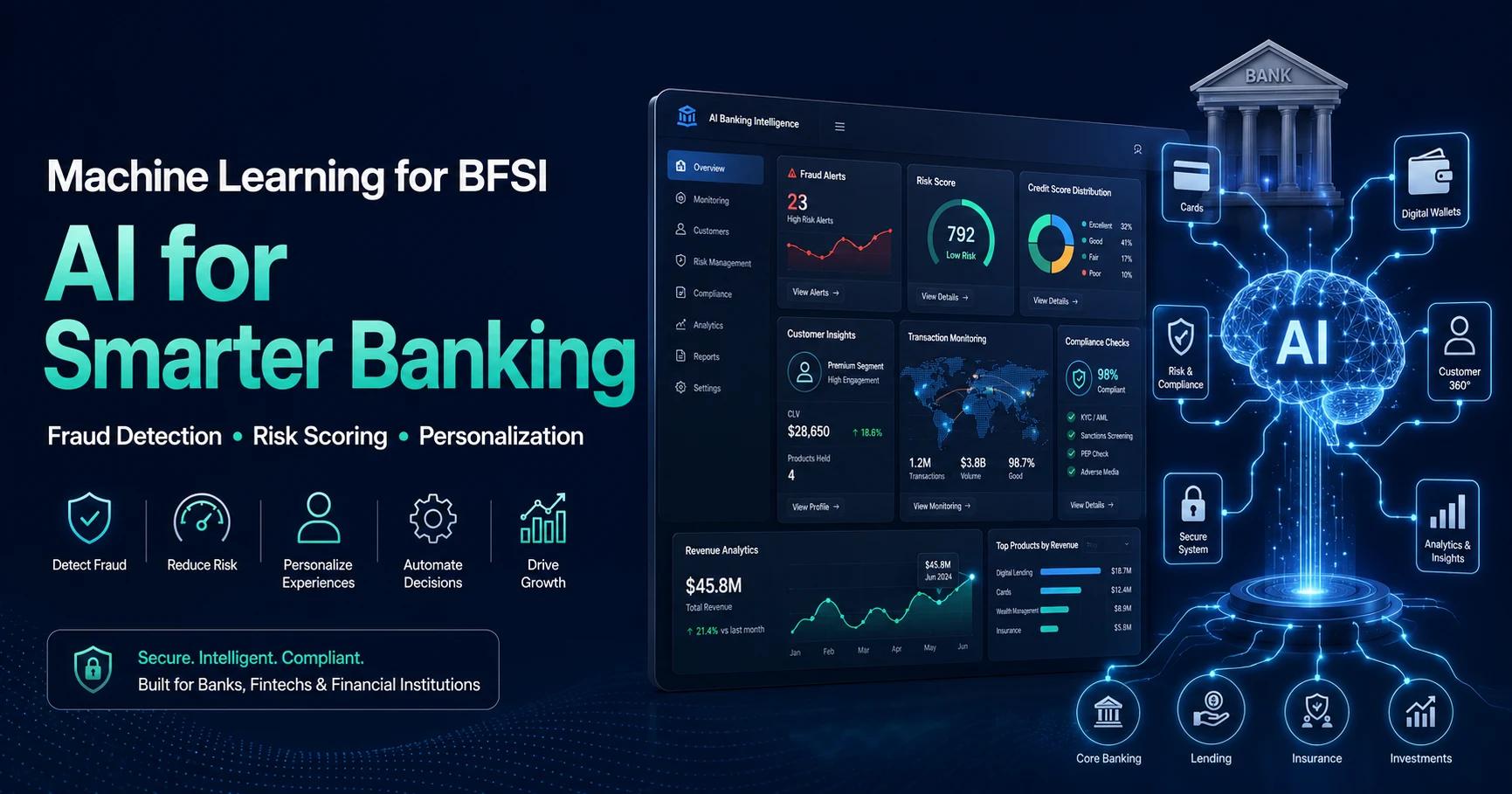
Fraud is a serious issue for OTAs, hotels, airlines, transport companies, and travel marketplaces. Machine learning can detect suspicious bookings, fake accounts, unusual payment behavior, refund abuse, loyalty fraud, and high-risk transactions in real time. Travel payment risk works much like machine learning for BFSI, where AI models detect fraud, score transaction risk, monitor unusual behavior, and protect financial data.
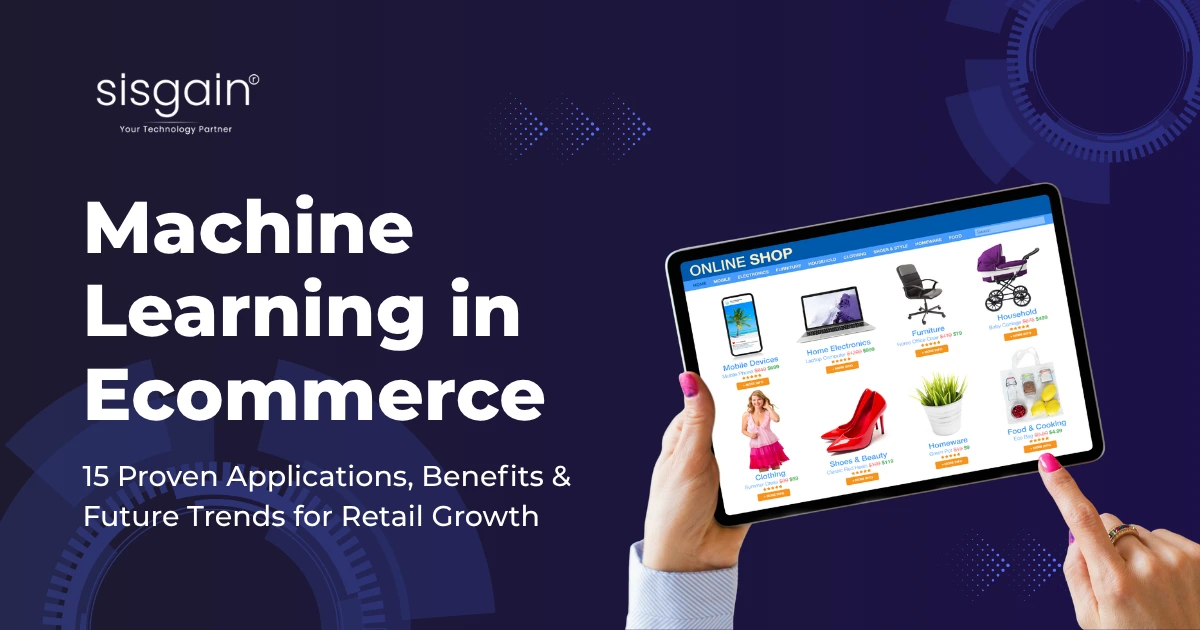
Machine learning helps businesses recommend the right upgrade or add-on to the right customer at the right time. Hotels can recommend room upgrades, late checkout, spa bookings, dining offers, airport transfers, and local experiences. Travel platforms can recommend insurance, activity packages, extra baggage, seat upgrades, car rentals, and destination tours. This recommendation strategy is similar to machine learning in e-commerce and retail, where AI analyzes customer behavior to deliver personalized product recommendations, optimize cross-selling, and increase conversions.
Hotels, resorts, restaurants, and travel support teams need the right number of staff at the right time. ML models can predict busy periods using occupancy, booking pace, check-in volume, local events, restaurant reservations, and guest service demand.
This helps businesses schedule housekeeping teams, front desk staff, support agents, restaurant teams, drivers, and maintenance workers more accurately. It reduces both overstaffing and understaffing.
Predictive maintenance uses sensors, equipment data, service history, and machine learning models to predict when systems may fail. Hotels can use it for HVAC systems, elevators, kitchen equipment, lighting, and smart room devices. Airlines and transport companies can use it for vehicles, aircraft parts, fleet systems, and operational equipment.
Machine learning can identify which guests are likely to return, which customers may stop booking, and which offers may increase loyalty. It analyzes booking frequency, spending behavior, review sentiment, engagement, loyalty activity, and service preferences.
Machine learning improves marketing by helping brands understand which customer is likely to respond to which offer, channel, message, and timing. It can optimize email campaigns, paid ads, retargeting, push notifications, landing pages, and customer journeys.
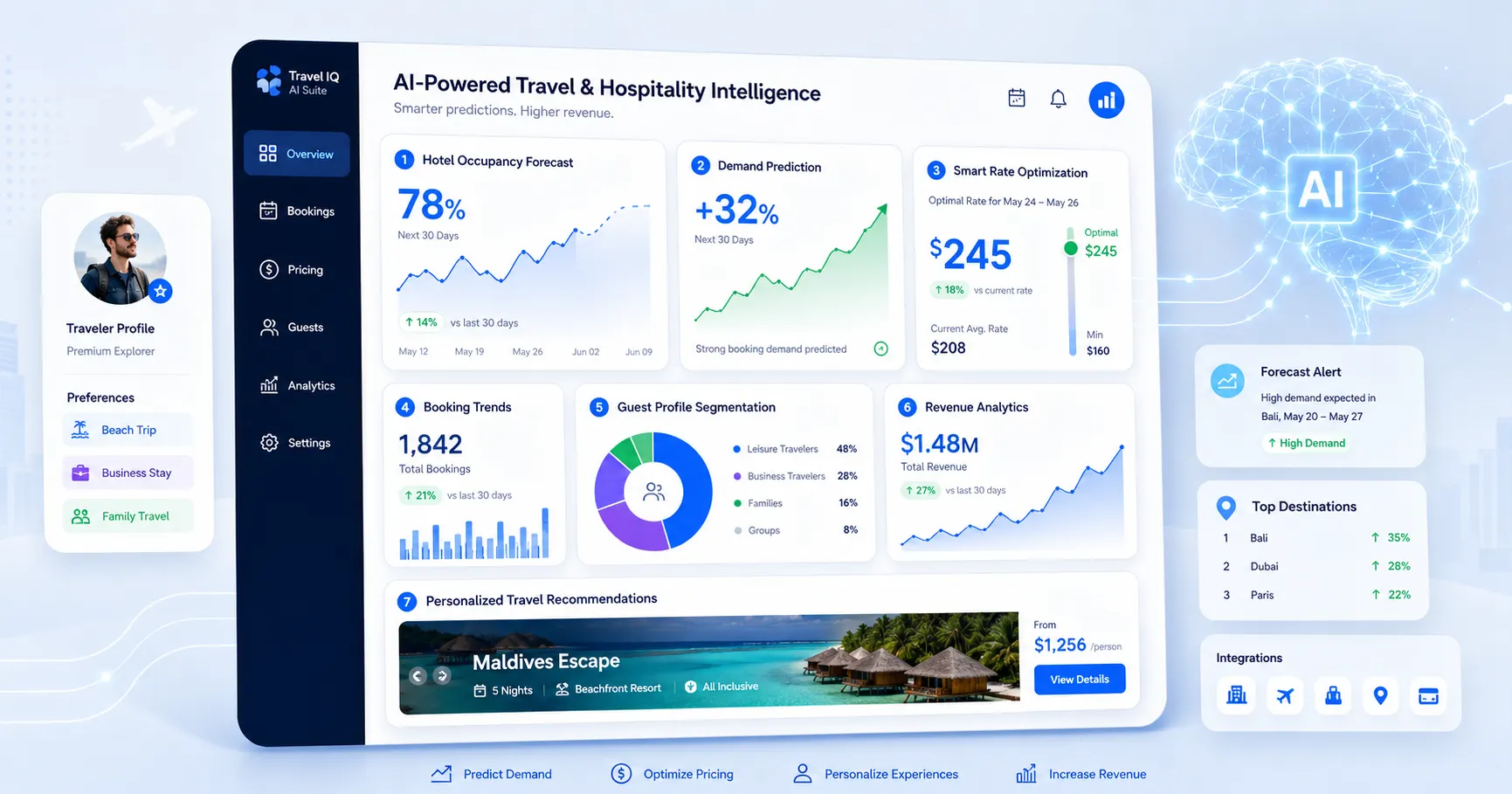
Travel and hospitality overlap, but their business priorities are different. Travel focuses on movement, trip planning, bookings, and transport. Hospitality focuses on the stay, guest service, property operations, and on-site experience. Machine learning in hospitality is often more focused on guest personalization, room pricing, service quality, and operational efficiency.
| Area | Travel Industry | Hospitality Industry |
|---|---|---|
| Main goal | Improve trip planning, booking conversion, route demand, and customer support | Improve guest experience, occupancy, room pricing, and property operations |
| Common users | Airlines, OTAs, travel apps, transport companies, tour operators | Hotels, resorts, restaurants, serviced apartments, event venues |
| Key ML use cases | Dynamic fares, itinerary planning, smart search, fraud detection, travel recommendations | Room pricing, guest segmentation, upselling, review analysis, predictive maintenance |
| Data sources | Bookings, routes, fares, searches, cancellations, customer behavior | Reservations, loyalty data, reviews, PMS data, room inventory, service requests |
| Business impact | Higher booking conversion, better seat or package sales, lower fraud, better trip experience | Higher RevPAR, better reviews, repeat stays, lower operating costs, stronger loyalty |
The value of AI and ML in hospitality appears across revenue, marketing, operations, guest service, and customer retention. When used correctly, machine learning helps businesses make faster and more profitable decisions from data they already collect.
ML predicts high-demand and low-demand periods so businesses can plan pricing, inventory, staffing, and campaigns more accurately. This is especially useful for hotels, airlines, and travel platforms where revenue depends heavily on timing.
Personalized search results, smart recommendations, relevant offers, and simplified booking journeys help convert more visitors into customers. When users see options that match their intent, they are more likely to complete the booking.
Artificial intelligence in hospitality helps brands personalize every stage of the journey, from discovery and booking to check-in, stay experience, support, and post-stay engagement. Guests receive faster service and more relevant offers.
Automation reduces manual work in pricing, reporting, customer support, staff planning, marketing, and maintenance. Predictive systems help teams prevent problems instead of reacting after they happen.
Machine learning helps brands target the right customer with the right offer at the right time. This improves email campaigns, ads, push notifications, loyalty offers, and remarketing performance.
Guest experience is one of the strongest areas where artificial intelligence in hospitality creates measurable value. Machine learning helps brands remember preferences, anticipate needs, and remove friction before, during, and after the trip.
A returning guest may see their preferred room type, favorite dining option, loyalty reward, and personalized upgrade offer automatically. A business traveler may receive early check-in suggestions and transport options. A family traveler may see kid-friendly rooms, nearby attractions, and bundled experiences.
Machine learning increases revenue by improving pricing, conversion, upselling, retention, and marketing efficiency. It helps travel and hospitality companies earn more from existing traffic, customers, rooms, seats, and packages. With AI automation and workflow solutions, brands can automate pricing alerts, booking follow-ups, customer segmentation, support routing, and revenue-focused marketing workflows.
Different travel and hospitality businesses use machine learning in different ways. The best solution depends on the business model, data quality, customer journey, and revenue goals.
Hotels and resorts use machine learning hospitality solutions to improve room pricing, guest segmentation, housekeeping scheduling, review analysis, loyalty offers, predictive maintenance, and smart upselling.
Travel apps and online travel agencies use machine learning for personalized search, recommendation engines, dynamic packages, booking prediction, fraud detection, abandoned booking recovery, and automated content recommendations.
Airlines and transport companies use ML for demand forecasting, route planning, dynamic pricing, customer support, disruption prediction, baggage tracking insights, and predictive maintenance.
Tourism companies and destination brands use machine learning for visitor trend analysis, campaign targeting, itinerary personalization, local experience recommendations, and tourist behavior analysis.
Image Placement: Add an image after the business-type section.
Image Concept: A connected AI travel ecosystem with hotels, airlines, travel apps, tourists, booking platforms, review systems, and analytics connected to a central machine learning engine.
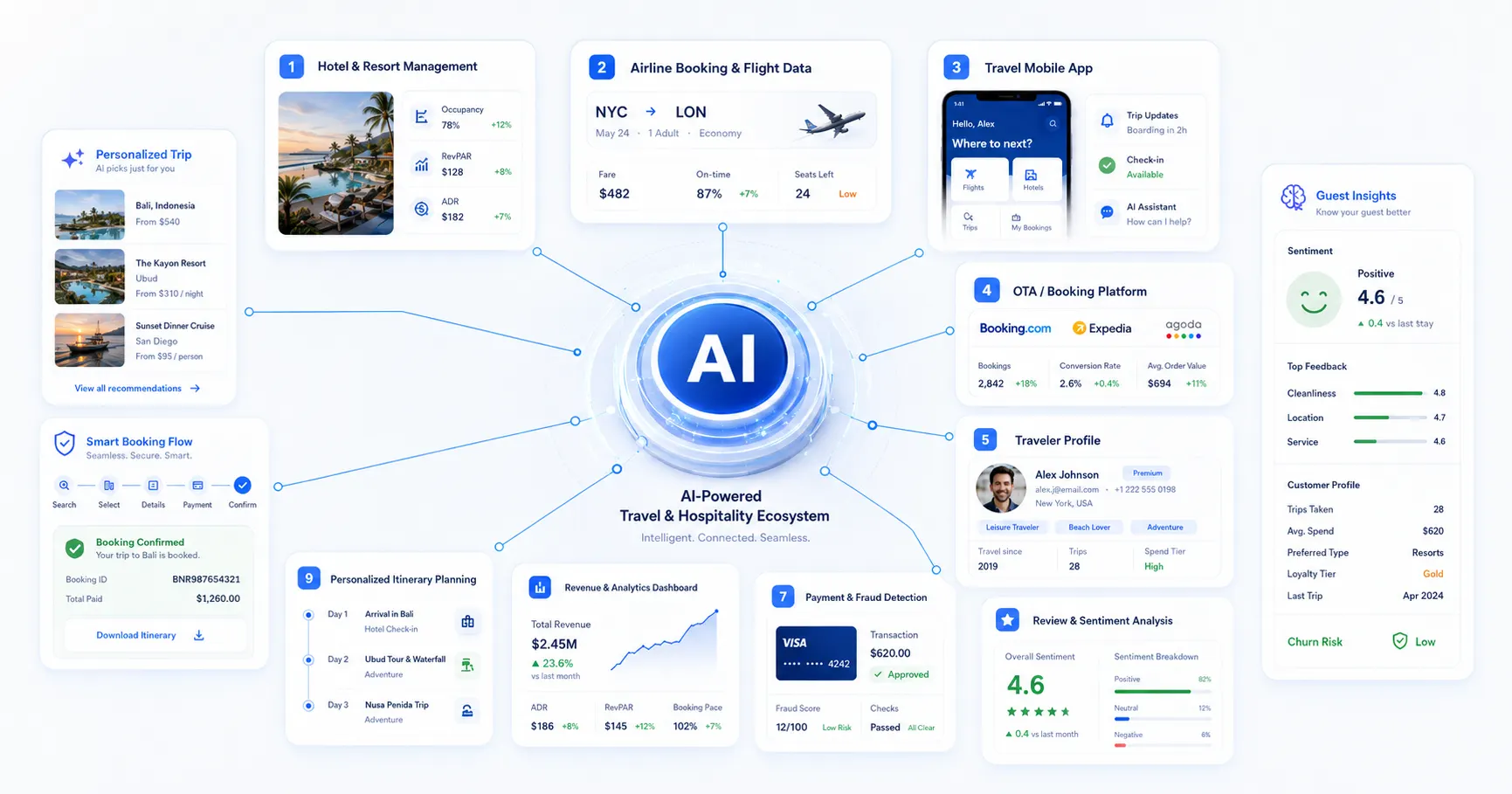
Imagine a mid-size travel booking platform that wants to increase bookings and reduce cancellations. Before using machine learning, the team manually reviews website traffic, booking trends, abandoned carts, customer feedback, and campaign results. Decisions are slow, and many opportunities are missed.
After adopting machine learning, the platform can analyze search behavior, destination preferences, booking history, seasonality, price sensitivity, abandoned carts, and cancellation patterns. Based on this data, the system can show personalized packages, adjust prices, send targeted offers, predict cancellation risk, and recommend relevant travel add-ons.
The business result is more bookings, better customer experience, higher revenue, fewer cancellations, better marketing ROI, and stronger customer retention.
Machine learning can deliver strong returns, but implementation is not automatic. Many travel and hospitality businesses face challenges with data, systems, compliance, and adoption.
The best approach is to start with one high-value use case instead of trying to automate everything at once. For example, a hotel can begin with demand forecasting or dynamic pricing. A travel website can start with recommendation engines or abandoned booking recovery.
Businesses should clean and centralize data, integrate PMS, CRM, OTA, booking, payment, and analytics systems, use scalable cloud architecture, monitor model performance, and improve models with fresh data. Working with an experienced AI/ML development team can reduce risk and speed up implementation.
A successful machine learning project needs a clear business goal, reliable data, the right model, strong integration, and continuous improvement. Businesses that want to turn booking, pricing, guest, and operational data into predictive insights can build custom machine learning solutions for travel and hospitality workflows.
Start by choosing one measurable goal. This could be increasing booking conversion, improving pricing, reducing cancellations, automating support, improving guest experience, or increasing repeat bookings.
Collect relevant data from bookings, guest profiles, pricing history, reviews, website behavior, app activity, payments, cancellations, support conversations, and operations. Clean data is the foundation of accurate machine learning.
Different goals need different models. Recommendation models are used for personalization. Forecasting models are used for demand prediction. Classification models can predict cancellations or customer segments. NLP models analyze reviews and support messages. Anomaly detection models identify fraud and unusual behavior.
The ML solution should connect with the systems your business already uses, including PMS, CRM, booking engine, mobile app, website, payment gateway, OTA platforms, review platforms, and analytics dashboards.
Machine learning models should be tested before full deployment and monitored after launch. As new booking, customer, and operational data becomes available, models should be retrained and improved.
The next generation of AI-powered hospitality solutions will be more conversational, predictive, and autonomous. Instead of only showing dashboards, AI systems will recommend actions and, in some cases, automate them.
Image Placement: Add an image before the conclusion.
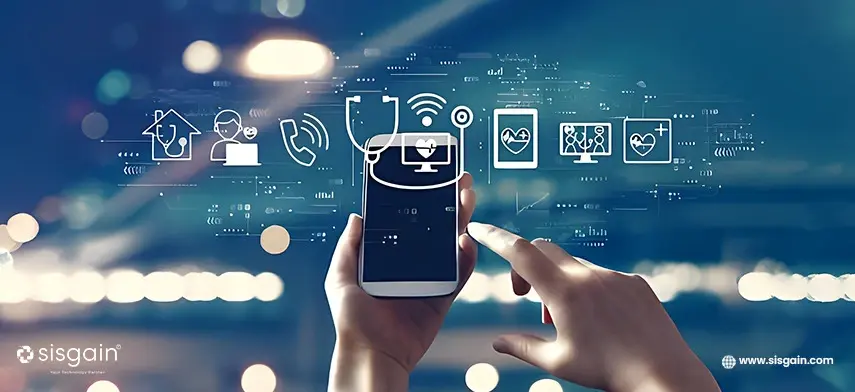
Image Concept: A futuristic hotel and travel app interface where an AI assistant helps a traveler plan a trip, book a hotel, choose experiences, receive personalized recommendations, and manage the full travel journey.
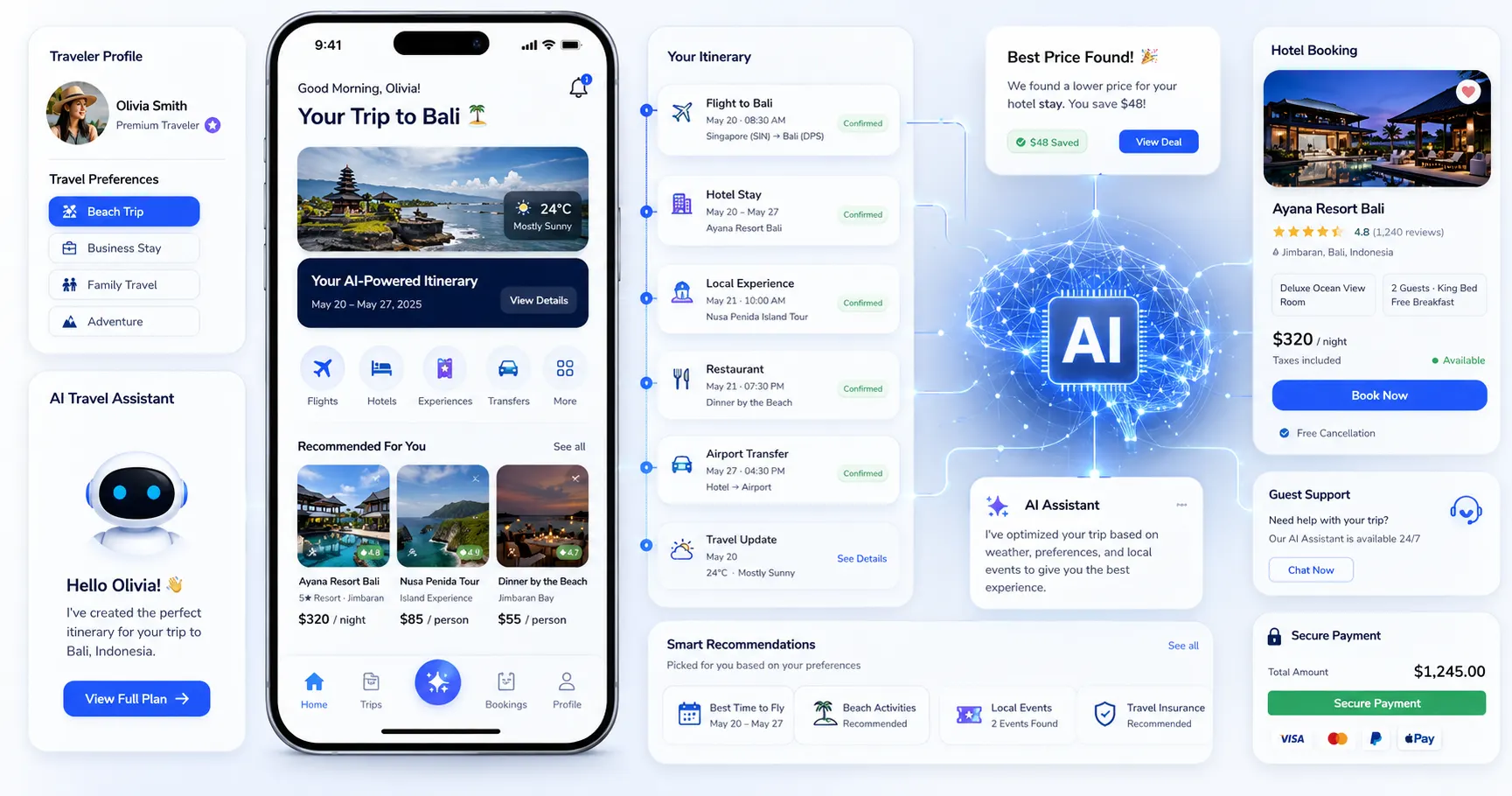
SISGAIN helps travel and hospitality businesses build custom AI and ML platforms that improve personalization, pricing, operations, customer support, and revenue. Whether you run a hotel group, airline, OTA, travel app, resort, tourism company, or transport platform, SISGAIN can develop machine learning hospitality solutions tailored to your business goals.
Our team builds AI-powered hospitality solutions that connect with your existing systems and turn business data into real-time decisions. From recommendation engines and demand forecasting to chatbots and revenue management tools, SISGAIN helps brands move from manual workflows to intelligent digital platforms.
Ready to build smarter travel and hospitality software?
Machine learning is becoming a growth engine for travel and hospitality businesses. It helps companies predict demand, personalize trips, automate guest service, optimize pricing, reduce cancellations, improve loyalty, and increase revenue.
The brands that win will be those that use their data wisely, start with clear business goals, and build scalable AI systems that support both customers and internal teams. Whether you manage a hotel, airline, OTA, travel app, or tourism business, machine learning can help turn your data into better decisions and stronger business outcomes.


Start Build Your
Next Digital Solution?
Let’s build scalable, future-ready digital solutions tailored to your business goals. Connect with our experienced technology consultants to discuss your vision, strategy, and growth opportunities — with zero obligation and complete transparency.
Get a free consultation and cost estimate for your digital solution
Our expert will contact you within 24 hours. Check your email for confirmation.
Partner with SISGAIN experts to build secure, scalable AI-powered IT Solutions that transform your business operations.









DUQE FREEZONE Quarter Deck, Queen Elizabeth 2, Mina Rashid, Dubai, UAE

100 Consilium Pl Suite 200, Scarborough, ON M1H 3E3, Canada

C-109, Sector 2, Noida, Uttar Pradesh 201301 India
Project quotes, partnerships, implementation
Open roles, referrals, campus hiring