
 +1 844-445-5767
 +971 56-848-5757
 +91 921-208-0630
For Business & Service Inquiries
Sales Team
Project quotes, partnerships, implementation
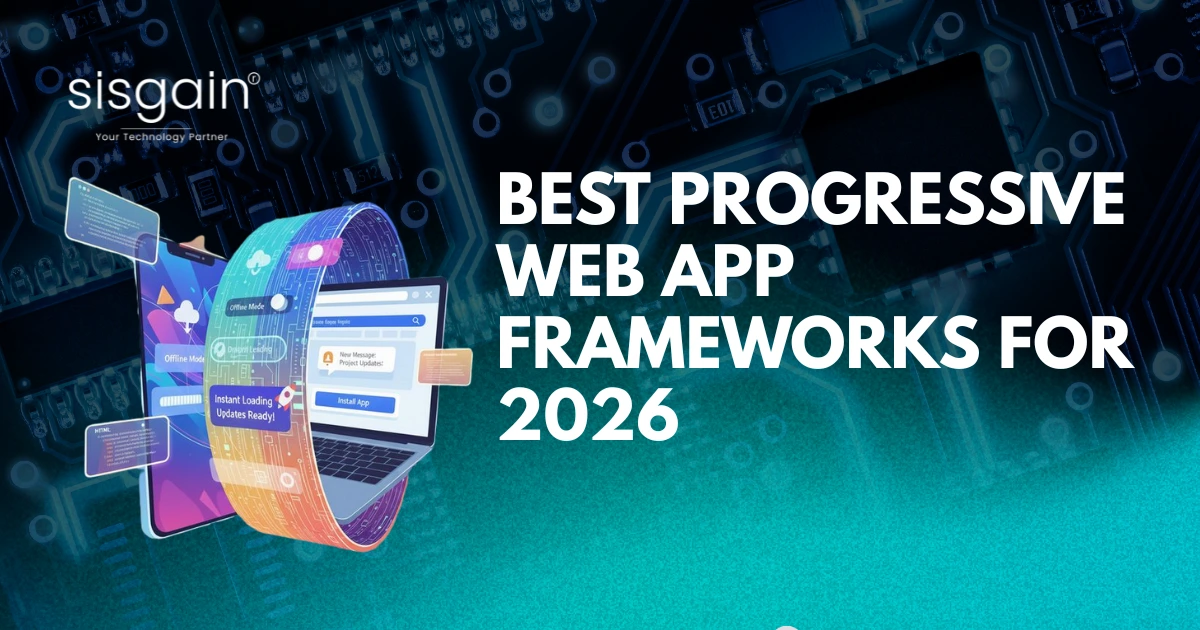
In 2026, digital leaders are no longer debating whether web experiences should feel like mobile apps—they’re demanding that they outperform them.
From retail brands chasing faster checkout flows to SaaS platforms reducing churn through offline access and push notifications, Progressive Web Apps have matured into a boardroom-level strategy. But success no longer depends on whether you build a PWA. It depends on which progressive web app framework you choose and how intelligently it’s implemented.
Choosing the right framework is only part of the equation. Businesses also need scalable mobile app development solutions that align with long-term growth, user engagement, and platform performance requirements.
After 25 years writing for CIOs, architects, and product teams across the IT sector, one pattern is clear: technology stacks win markets when they align with business models, hiring realities, performance metrics, and future automation.
This guide is designed to help you make that call.
You’ll learn:
• what actually defines modern progressive web app frameworks
• which pwa frameworks dominate in 2026
• where each excels—and fails
• how cost, AI, SEO, and scalability shape decisions
• when PWAs truly become a mobiles app better than website alternative
• and how to partner with the right Mobile app development company
Let’s start where serious evaluations always should: with the criteria that separate fashionable tools from enterprise-grade platforms.
Early PWAs focused on installability and offline caching. Today’s leaders expect far more.
A top-tier progressive web app framework now has to deliver excellent Core Web Vitals, seamless background sync, push notifications across iOS and Android, secure authentication, and server-side rendering for SEO. It must integrate cleanly with edge networks, analytics stacks, headless CMS platforms, and personalization engines driven by AI Agent Adoption strategies.
From an architectural standpoint, serious teams also examine:
• service-worker maturity
• hydration models
• bundle-splitting and streaming
• WebAssembly support
• compliance tooling
• DevOps automation
• monitoring and observability
• talent availability in the market
Without these, even the slickest demo app becomes a maintenance liability two years later.
Rather than repeating marketing copy, this guide uses criteria applied in real-world IT decision processes:
Production adoption across SaaS, ecommerce, and regulated industries. Performance benchmarks under real traffic. Total cost of ownership over five years. Developer onboarding speed. Hiring pool depth. Upgrade cadence. Community longevity. Ecosystem tooling. Security track record.
In other words, how these progressive web app frameworks behave after launch—when users, auditors, and CFOs start asking hard questions.
If there is a default choice among pwa frameworks in 2026, it’s Next.js.
Built atop React, Next.js has evolved into a full-stack web platform with edge rendering, streaming SSR, incremental static regeneration, and first-class PWA tooling via service-worker plugins.
Why enterprises gravitate here is simple: predictable performance, massive hiring pools, and integration with nearly every commerce, CMS, and analytics product on the market.
For SaaS companies, Next.js PWAs excel at delivering authenticated dashboards making them a preferred choice for businesses investing in custom mobile app development initiatives that load instantly from the edge while syncing background data when connectivity returns. Retail brands lean on it for lightning-fast storefronts, abandoned-cart recovery notifications, and SEO-first catalog rendering.
When it shines:
High-traffic ecommerce, B2B portals, marketplaces, subscription platforms, and migration projects from legacy React stacks.
When to think twice:
If your team is allergic to React complexity or you need ultra-minimal bundles for emerging markets, other progressive web app frameworks may outperform.
Cost impact:
Moderate to high initial investment, offset by talent availability and long-term maintainability—especially when implemented by a seasoned Mobile app development company.

Nuxt 3 is Vue’s flagship meta-framework and a formidable competitor in the progressive web app framework landscape.
Its composable architecture, hydration control, and server rendering make it particularly strong for content-heavy or transaction-driven PWAs. In Europe and Asia, Nuxt continues to dominate headless commerce stacks paired with Shopify, Magento, and custom ERP systems.
Vue’s approachable syntax reduces onboarding friction, which matters when teams scale quickly or distribute development across regions.
When it shines:
Omnichannel retail, editorial platforms, brand-driven experiences, mid-market SaaS.
When to think twice:
If your ecosystem is already heavily React-centric, switching costs may outweigh benefits.
Cost impact:
Slightly lower than React ecosystems in many markets, making Nuxt-based pwa frameworks attractive for growth-stage companies watching margins.
SvelteKit is the speed obsessive’s choice.
Instead of shipping heavy runtime libraries to the browser, Svelte compiles code at build time, producing extraordinarily small bundles. For PWAs in bandwidth-constrained environments—or markets where every millisecond impacts conversion—this matters enormously.
Install prompts appear faster. Offline modes activate more quickly. Interaction latency drops.
These characteristics have made SvelteKit popular among fintech startups, media outlets, and logistics platforms building mobile-first PWAs for field workers.
When it shines:
Performance-sensitive apps, emerging-market rollouts, highly interactive dashboards.
When to think twice:
Enterprise governance tooling and hiring pools still lag behind React and Vue ecosystems.
Cost impact:
Lower infrastructure costs thanks to efficiency, though specialist developers may command premiums.
Angular remains one of the most structured progressive web app frameworks in enterprise environments.
Its opinionated architecture, built-in service-worker support, strict typing, and dependency-injection patterns appeal to large organizations with governance mandates. Banks, insurers, healthcare networks, and government systems continue to adopt Angular PWAs because they integrate neatly into compliance programs.
Micro-frontend strategies and monorepo tooling have also matured, letting Angular-based PWAs scale across hundreds of teams.
When it shines:
Regulated industries, multi-team enterprise programs, internal platforms.
When to think twice:
Startups seeking rapid experimentation may find Angular’s ceremony heavy.
Cost impact:
Higher upfront build costs but predictable maintenance and audit readiness.
Astro is reshaping how content-driven PWAs are built.
Its “islands architecture” sends mostly static HTML first, hydrating only the interactive components that matter. For marketing-heavy experiences—newsrooms, documentation portals, brand microsites—this produces outstanding Core Web Vitals.
Astro integrates easily with React, Vue, and Svelte components, acting as a meta-layer atop existing pwa frameworks.
When it shines:
Content-heavy PWAs, SEO-driven platforms, campaign sites.
When to think twice:
Complex authenticated apps may still require heavier client frameworks.
Cost impact:
Lower hosting costs and excellent performance ROI.
Ionic remains relevant by embracing Capacitor, which allows PWAs to tap native device features when deployed through app stores.
For organizations pursuing “build once, deploy everywhere” strategies, Ionic bridges web and native worlds elegantly. Field-service tools, HR systems, logistics dashboards, and internal enterprise apps frequently use Ionic-based progressive web app frameworks to avoid maintaining three codebases.
When it shines:
Internal tools, MVPs, rapid cross-platform rollouts.
When to think twice:
Consumer apps requiring extreme polish may lean toward native stacks.
Cost impact:
Lower than maintaining separate iOS, Android, and web teams.
Retail is one of the biggest beneficiaries of modern pwa frameworks, and Magento’s ecosystem reflects that.
Magento PWA Studio enables storefronts that load instantly, sync carts offline, and personalize recommendations using AI-driven engines. Combined with CDNs and edge logic, these PWAs rival native apps in speed and reliability.
Large omnichannel brands favor this stack when modernizing legacy commerce platforms without abandoning existing back-office investments.
When it shines:
Large retailers, omnichannel brands, B2C marketplaces.
When to think twice:
Non-commerce platforms will find it overly specialized.
Cost impact:
High initial integration cost, but strong long-term ROI for revenue-driven sites.
The most successful PWA projects begin with a clear product strategy and experienced implementation support. Partnering with a Mobile app development services that understands performance optimization, offline architecture, and cross-platform experiences can significantly reduce development risk while accelerating time-to-market.
Startups usually prioritize time-to-market and hiring ease, pushing them toward Next.js or Nuxt-based progressive web app frameworks. Ecommerce brands obsess over SEO, checkout speed, and conversion—areas where Nuxt, Next.js, and Magento PWA Studio dominate.
Media companies lean toward Astro or SvelteKit for unmatched performance. Regulated enterprises often settle on Angular to satisfy auditors and compliance officers. Internal tools frequently gravitate to Ionic for speed and cross-platform reach.
Framework choice is not ideological. It is economic.
One of the first questions executives ask after hearing about PWAs is the cost to develop an app in 2026 using web technologies instead of native stacks.
The truth is nuanced.
Initial development costs vary based on:
• team size
• UI complexity
• backend integrations
• offline sophistication
• security requirements
However, pwa frameworks usually outperform native approaches long-term because:
There is one codebase instead of two or three. SEO traffic reduces paid acquisition. Updates ship instantly without app-store delays. Infrastructure is shared with existing web stacks.
React and Angular ecosystems may cost more upfront due to architectural rigor, while SvelteKit or Astro often reduce hosting expenses dramatically.
The smartest organizations model five-year total cost of ownership, not just build budgets. Organizations evaluating PWAs alongside native platforms often compare different mobile app development services to determine which approach delivers the best balance between development cost, user experience, and long-term scalability.
Another force reshaping progressive web app frameworks is artificial intelligence.
Modern PWAs increasingly embed:
Conversational search agents. Recommendation engines. Fraud detection modules. Customer-support copilots. Predictive inventory systems.
These capabilities align closely with broader AI Agent Adoption initiatives across enterprises, where autonomous software agents monitor behavior, trigger workflows, and personalize experiences.
Frameworks with strong server-side rendering, streaming APIs, and edge compute integration—like Next.js and Nuxt—are particularly well suited for these workloads.
The PWA is no longer just an interface. It is becoming the orchestration layer for intelligent digital operations.
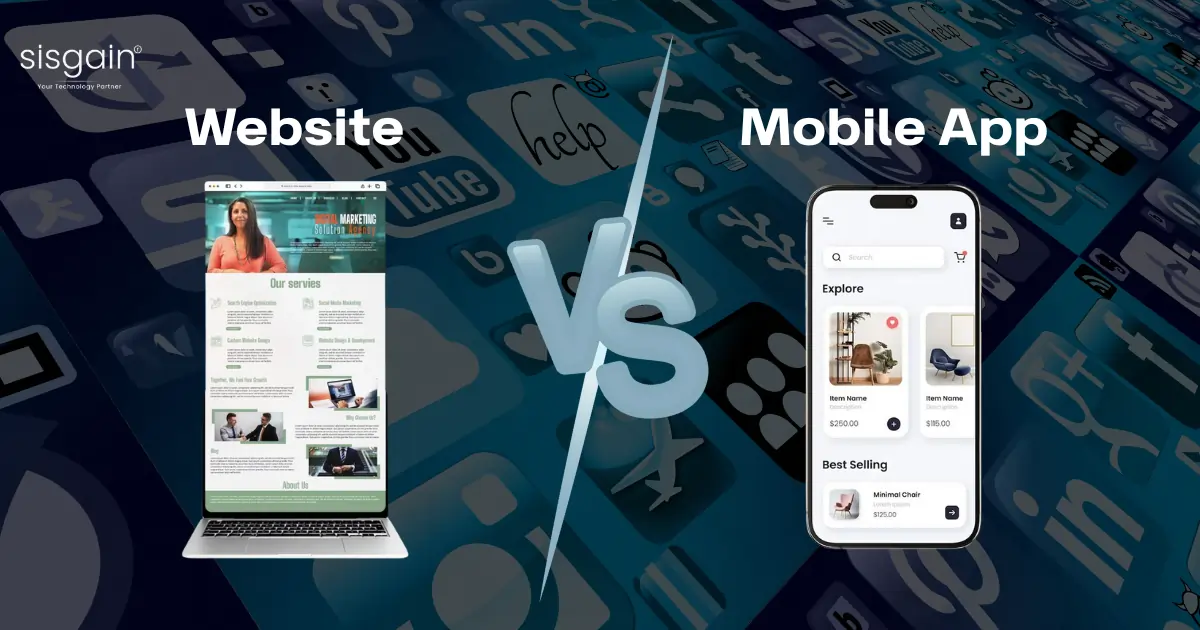
For years, the debate raged over whether a mobile app is better than a website.
In 2026, the question has evolved into something more precise: Can a PWA built on the right progressive web app framework outperform a native app for this use case?
Often, the answer is yes.
PWAs win on discoverability because they are indexed by search engines. They update instantly. They bypass app-store friction. They cost less to maintain. They integrate directly with analytics and experimentation tools.
Native apps still dominate for ultra-high-performance gaming, AR experiences, and OS-level integrations—but for commerce, SaaS, logistics, and media, modern pwa frameworks have closed the gap to the point where users cannot tell the difference.
That is why so many product leaders now openly frame PWAs as the strategy that finally makes a mobiles app better than website experience at scale.
Security concerns once slowed PWA adoption. Those days are largely gone.
Modern progressive web app frameworks integrate CSP headers, sandboxing, zero-trust authentication, OAuth providers, encrypted storage, and audit logging. Enterprises routinely deploy PWAs in SOC-2, HIPAA, and GDPR-regulated environments.
Angular and Next.js ecosystems offer particularly strong governance tooling, while cloud providers now supply turnkey edge security layers for service workers and APIs.
In 2026, security is not the limiting factor. Architecture discipline is.
Even the best progressive web app frameworks fail when implemented poorly.
Look for partners who:
Demonstrate production experience across multiple stacks. Provide performance benchmarks, not just mockups. Understand compliance. Can integrate AI systems. Offer transparent pricing models for the true cost to develop an app in 2026. And—most importantly—speak in business outcomes, not just code.
A capable best mobile app development company will start with architecture workshops, PWA readiness audits, and ROI modeling before writing a single line of JavaScript, PWA readiness audits, and ROI modeling before writing a single line of JavaScript.
That discipline is what turns promising pwa frameworks into platforms that drive revenue, loyalty, and operational efficiency.
Progressive Web Apps have crossed the threshold from experiment to enterprise standard.
In 2026, choosing among progressive web app frameworks is not a technical footnote—it is a strategic decision shaping cost structures, growth velocity, SEO dominance, and AI readiness for years to come.
Next.js and Nuxt anchor the mainstream. SvelteKit and Astro push performance boundaries. Angular governs enterprise complexity. Ionic accelerates cross-platform delivery. Magento powers retail at scale.
The organizations that win will be those that match the framework to the mission—and execute with discipline.
If your roadmap includes PWAs, now is the moment to architect boldly and evaluate the right custom mobile app development company for long-term digital growth.






Start Build Your
Next Digital Solution?
Let’s build scalable, future-ready digital solutions tailored to your business goals. Connect with our experienced technology consultants to discuss your vision, strategy, and growth opportunities — with zero obligation and complete transparency.
Get a free consultation and cost estimate for your digital solution
Our expert will contact you within 24 hours. Check your email for confirmation.
Partner with SISGAIN experts to build secure, scalable AI-powered IT Solutions that transform your business operations.









DUQE FREEZONE Quarter Deck, Queen Elizabeth 2, Mina Rashid, Dubai, UAE

100 Consilium Pl Suite 200, Scarborough, ON M1H 3E3, Canada

C-109, Sector 2, Noida, Uttar Pradesh 201301 India
Project quotes, partnerships, implementation
Open roles, referrals, campus hiring