
 +1 844-445-5767
 +971 56-848-5757
 +91 921-208-0630
For Business & Service Inquiries
Sales Team
Project quotes, partnerships, implementation
TL;DR: AIoT—the convergence of artificial intelligence and IoT—transforms connected devices from passive data collectors into intelligent, self-governing systems. By combining real-time data analytics, edge AI, and machine learning, enterprises across manufacturing, healthcare, logistics, and smart cities can detect problems, trigger automated responses, and continuously optimize operations without human intervention.
Connected devices have been monitoring business operations for over a decade. Sensors track machine temperature. Cameras log warehouse activity. GPS units report fleet locations. The data has always been there. What changed is what organizations can now do with it.
Traditional IoT gives you visibility. AI IoT gives you action.
The shift from monitoring to autonomous operations is not incremental. It is a fundamental rethinking of how enterprises manage physical processes, assets, and environments. When AI models are embedded into IoT pipelines—processing sensor data in real time, learning from operational patterns, and triggering responses in milliseconds—the result is an infrastructure that effectively runs itself.
This guide explains how AI IoT and real-time analytics work together, what the architecture looks like in practice, where it delivers the clearest business value, and how SISGAIN helps organizations build intelligent AIoT solutions that scale.
Quick answer: AIoT refers to the integration of artificial intelligence—particularly machine learning, computer vision, and predictive analytics—into IoT infrastructure. Traditional IoT collects and transmits data. AIoT analyzes that data in real time and uses the resulting intelligence to automate decisions, predict failures, and optimize operations continuously.
The distinction matters enormously at the enterprise level.
|
Capability |
Traditional IoT |
AIoT |
|---|---|---|
|
Intelligence |
Rules-based alerts |
Machine learning models |
|
Analytics |
Historical reporting |
Real-time predictive analytics |
|
Automation |
Basic triggers |
Intelligent, context-aware responses |
|
Maintenance |
Scheduled or reactive |
Predictive and autonomous |
|
Cost optimization |
Manual intervention required |
Continuous, automated optimization |
|
Decision-making |
Human-in-the-loop |
Edge AI with autonomous execution |
|
Scalability |
Grows linearly with devices |
Scales through model intelligence |
|
Response speed |
Minutes to hours |
Milliseconds to seconds |
The business value is direct. According to McKinsey Global Institute, smart operations powered by AI IoT analytics can reduce equipment downtime by 30–50% and cut maintenance costs by up to 25%. Those are not projections—they are outcomes organizations are measuring today.
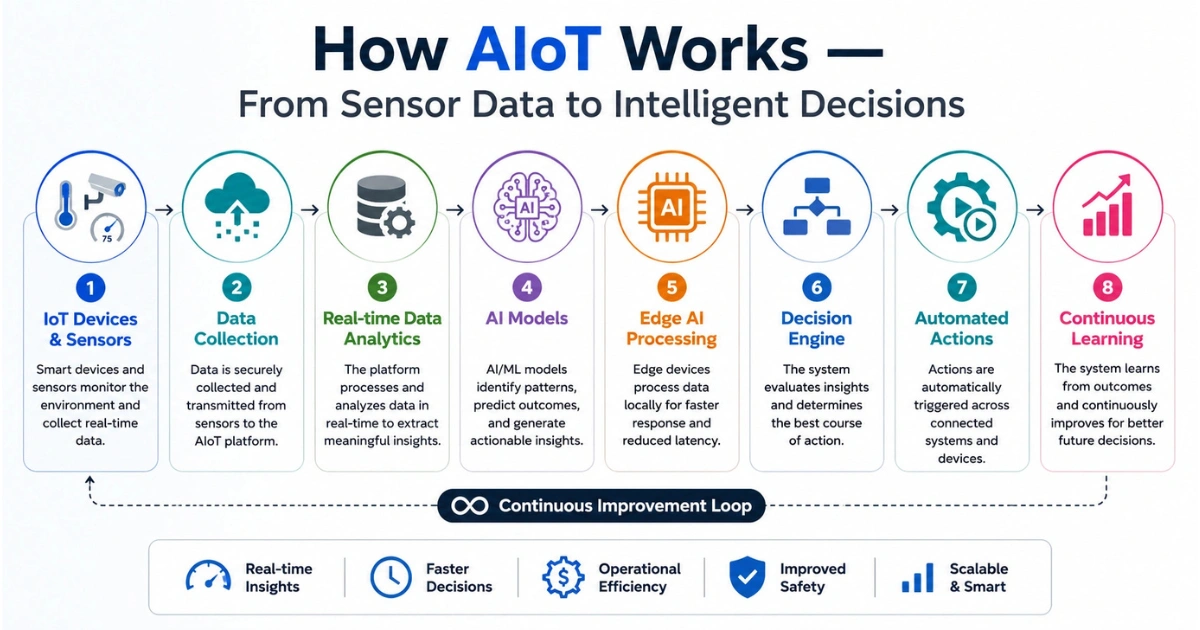
Quick answer: AIoT operates through a multi-layer architecture that moves from data collection at the device level through connectivity, edge processing, cloud analytics, and AI-driven decision engines—each layer building on the last to convert raw sensor readings into autonomous operational responses.
Here is how the workflow unfolds in a production environment:
What separates this from basic IoT automation is the intelligence at steps 5 and 6. Rule-based systems alert you when temperature exceeds a threshold. AIoT systems recognize that a specific pattern of vibration, temperature, and current draw—occurring together over a defined timeframe—predicts bearing failure 72 hours in advance. The difference between those two capabilities is measured in avoided downtime, extended asset life, and operational continuity.
Without real-time data analytics, AIoT is simply instrumentation. The speed at which data is processed determines the speed at which the system can respond—and in autonomous operations, response speed is directly tied to business outcome.
Consider the practical implications across key capability areas:
Instant decision-making. A manufacturing line running 60 parts per second cannot wait for batch analytics to flag a defect. Real-time IoT analytics detects quality deviations as they occur, stopping the line or adjusting process parameters before defective units accumulate.
Continuous monitoring. Unlike human operators who work in shifts, real-time analytics runs without interruption. Equipment anomalies detected at 3:00 a.m. trigger the same response as those caught at midday.
Predictive insights. Machine learning models trained on historical sensor data can identify early indicators of failure weeks before a breakdown occurs. This shifts maintenance from reactive to truly predictive—scheduling interventions based on actual equipment condition rather than elapsed time.
Automated actions. When analytics confirm a failure pattern, the decision engine can automatically create a maintenance ticket, adjust production routing, notify the appropriate technician, and order a replacement part—all within seconds and without human initiation.
Lower downtime. SISGAIN's IoT deployments have consistently achieved a 45% average reduction in unplanned downtime by combining real-time sensor analytics with AI-driven predictive maintenance models.
Better customer experience. In logistics, real-time analytics enables dynamic rerouting when delays are detected—automatically notifying customers before they notice a problem.
Cost reduction. By identifying and addressing inefficiencies continuously, AIoT eliminates the waste that accumulates between human review cycles. Energy consumption, material usage, and labor costs all respond to real-time optimization in ways that periodic reporting simply cannot achieve.
Quick answer: Edge AI processes data locally—on devices, gateways, or edge servers—rather than routing everything to a central cloud platform. This reduces latency to milliseconds, enables offline operation during connectivity disruptions, protects sensitive data by keeping it on-premises, and significantly reduces cloud processing and bandwidth costs.
The distinction between edge AI and cloud AI in IoT environments is significant:
|
Dimension |
Edge AI |
Cloud AI |
|---|---|---|
|
Latency |
1–10ms |
50–200ms+ |
|
Connectivity required |
No—operates offline |
Yes—dependent on network |
|
Data privacy |
Data stays local |
Data transmitted externally |
|
Processing cost |
Lower bandwidth costs |
Higher egress costs at scale |
|
Ideal for |
Time-critical decisions |
Long-term analytics, model training |
|
Use cases |
Quality control, safety systems |
Fleet analytics, demand forecasting |
|
Scalability |
Device-level, distributed |
Near-unlimited centralized capacity |
Turn connected devices into intelligent business assets with AI-powered automation, predictive insights, and real-time decision-making. Connect with SISGAIN to build scalable AIoT solutions tailored to your business.
For enterprise AIoT deployments, the answer is rarely one or the other. Time-critical decisions happen at the edge. Complex pattern recognition and model training happen in the cloud. SISGAIN's IoT architecture is built around an edge-first design philosophy for latency-critical applications—ensuring that the intelligence needed in the moment is always available, regardless of network conditions.
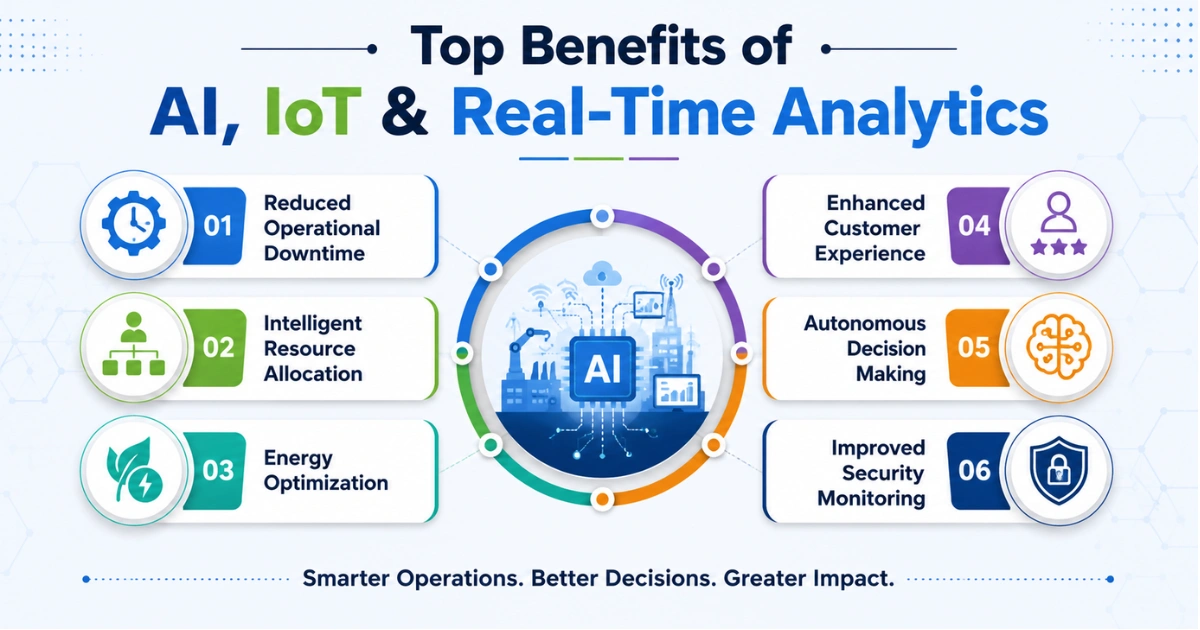
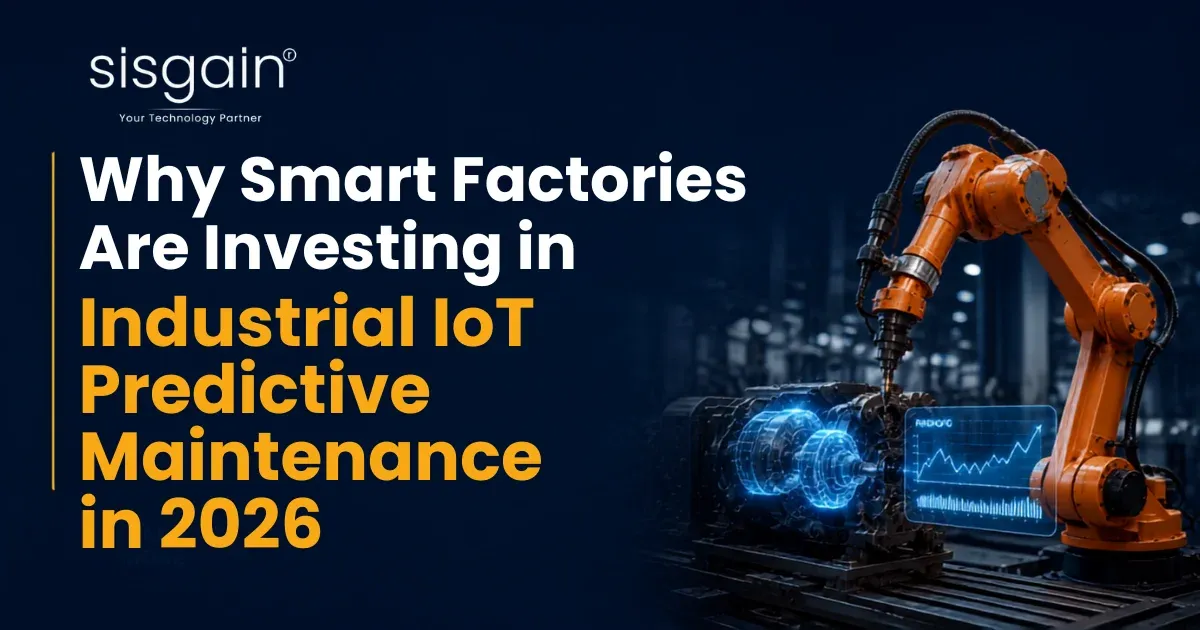
Industrial IoT predictive maintenance uses AI models trained on historical failure data to identify equipment degradation before it causes an outage. Vibration sensors detect bearing wear. Thermal cameras spot electrical faults. Acoustic sensors identify pressure anomalies. Each data stream feeds into a predictive model that calculates remaining useful life and flags maintenance needs in advance.
The operational impact is measurable. Manufacturers using SISGAIN's IIoT predictive maintenance solutions have reduced unplanned downtime by an average of 45%—shifting from emergency repairs to planned interventions that cost a fraction of the alternative.
AIoT systems continuously monitor energy consumption across facilities and equipment, identifying patterns that indicate waste or inefficiency. In smart buildings, AI IoT analytics adjusts HVAC, lighting, and equipment operation dynamically based on occupancy, weather, and energy pricing data. In manufacturing, it optimizes process parameters to minimize energy consumption without compromising output quality.
When AI models are embedded into IoT workflows, routine decisions stop requiring human review. A production line detects a quality deviation, adjusts process parameters, and logs the event—automatically. A logistics hub detects a conveyor slowdown, reroutes packages, and dispatches a technician—without a supervisor making a single phone call.
Real-time analytics enables organizations to detect service degradation before customers encounter it. In retail, inventory management systems trigger restocking before shelves empty. In healthcare, patient monitoring systems surface deterioration indicators before a clinical intervention becomes urgent.
AI IoT analytics continuously compares actual resource utilization against optimal baselines—flagging over-provisioned assets, identifying underutilized capacity, and recommending reallocation. On the security side, behavioral analytics applied to IoT device data can detect anomalous access patterns, unusual data flows, and potential intrusions in real time.
The most significant operational shift AIoT enables is moving decisions from human review cycles to automated real-time responses. Decisions that previously required data collection, analysis, escalation, and approval—a process measured in hours or days—execute in milliseconds.
Manufacturing. AI IoT systems monitor CNC machines, assembly lines, and robotic systems continuously—detecting anomalies, predicting failures, and adjusting process parameters without operator intervention. Real-time analytics on production data enables dynamic quality control and throughput optimization.
Healthcare. Connected patient monitoring devices feed real-time vitals data into AI models that detect deterioration patterns hours before clinical symptoms become apparent. AI IoT also manages medical equipment maintenance, ensuring devices are operational when needed and flagging calibration issues before they affect patient care.
Retail. Smart shelf sensors combined with AI analytics enable real-time inventory management, reducing stockouts and shrinkage. Computer vision systems at checkout analyze queue lengths and trigger staffing adjustments automatically.
Logistics. Fleet management systems using AI IoT analytics optimize routes in real time based on traffic, weather, and delivery priority data. Predictive maintenance on fleet vehicles reduces breakdown rates and ensures delivery commitments are met.
Energy. Utility companies use AI IoT to monitor grid infrastructure, predict equipment failures, and balance load distribution dynamically. Solar and wind installations use real-time analytics to maximize energy capture based on weather conditions and grid demand.
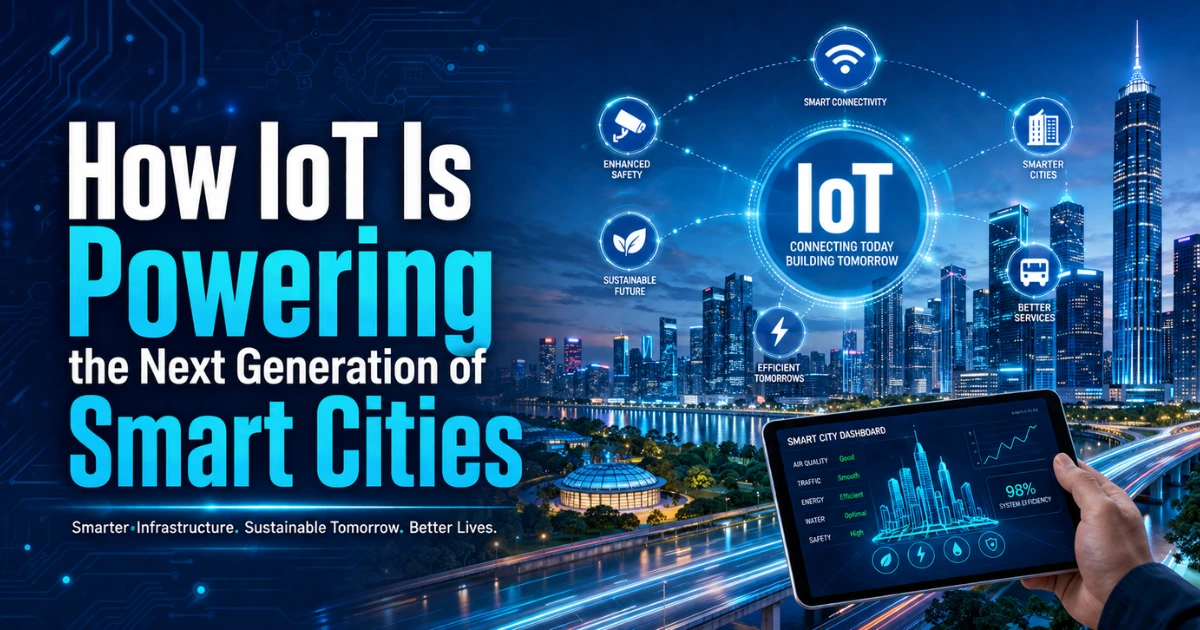
Smart Cities. IoT for smart cities combines sensor networks, real-time analytics, and AI-driven automation to manage traffic flow, monitor air quality, optimize water distribution, and coordinate emergency response—creating urban environments that respond to conditions as they occur rather than reacting after the fact.
A deployable AIoT system integrates the following components:
Each layer is independently scalable and secured with device-level authentication, encrypted communications, and Zero Trust network segmentation.
Data quality. AI models are only as accurate as the data they consume. Inconsistent sensor data, calibration drift, and missing readings degrade model performance. Solution: implement data validation at the edge, establish sensor health monitoring, and build data governance policies from day one.
Security. IoT devices expand the enterprise attack surface. Each endpoint is a potential vulnerability. Solution: apply device authentication (X.509 certificates), encrypt all communications with TLS 1.3, segment IoT networks from IT infrastructure, and conduct regular vulnerability assessments.
Device management at scale. Managing thousands of edge devices across multiple locations requires automated provisioning, over-the-air update capabilities, and centralized monitoring. Solution: deploy a purpose-built IoT device management platform with remote management capabilities.
Legacy system integration. Most enterprises run a mix of new and legacy equipment. Older assets were not designed for connectivity. Solution: retrofit sensors and IoT gateways to bridge legacy equipment to modern platforms without requiring hardware replacement.
Scalability. What works for 100 devices must work for 10,000. Architecture decisions made early become constraints later. Solution: design for horizontal scalability from the outset—containerized workloads, cloud-native platforms, and infrastructure as code.
Compliance. Industries including healthcare, financial services, and government face strict data residency and regulatory requirements. Solution: architect data flows to keep regulated data within required jurisdictions and implement automated compliance monitoring.
Integration. AIoT systems deliver the most value when they connect to ERP, CMMS, SCADA, and CRM platforms—not when they operate as isolated silos. Solution: build API-first architectures with defined integration points from the start of the engagement.
Cost. Enterprise AIoT deployments require upfront investment in sensors, connectivity, platforms, and AI development. Solution: start with a focused pilot targeting the highest-value use case, validate ROI, then scale.
Agentic AI. AI systems that can plan and execute multi-step operational sequences without human approval are moving from research into production. The next generation of AIoT will feature agents that autonomously manage maintenance schedules, production optimization, and resource allocation.
Autonomous factories. The vision of fully self-optimizing manufacturing facilities—adjusting throughput, quality, and energy consumption in real time without human direction—is becoming operationally achievable.
Digital twins. Virtual replicas of physical assets and systems, fed by real-time IoT sensor data, enable simulation-driven optimization. Organizations can test configuration changes, model failure scenarios, and evaluate capacity decisions before implementing them physically.
TinyML. Machine learning models small enough to run on microcontrollers are expanding edge AI capabilities to even the most resource-constrained devices—enabling intelligence at the sensor itself, not just the gateway.
Federated learning. AI models trained across distributed IoT deployments without centralizing sensitive data preserve privacy while improving model accuracy at scale.
Hyperautomation. The convergence of AIoT, RPA, and intelligent automation platforms is extending autonomous decision-making beyond physical operations into the business processes they support.
Physical AI and advanced IoT analytics. The next generation of AI models will reason about the physical world—understanding spatial relationships, material properties, and physical constraints—enabling a new class of autonomous operational capabilities.
Building an AIoT platform requires expertise that spans hardware connectivity, embedded systems, cloud architecture, AI model development, data engineering, security, and enterprise integration. Most organizations do not have all of these capabilities in-house simultaneously—and the cost of building them from scratch delays the operational outcomes that justify the investment.
SISGAIN's IoT application development services are designed for end-to-end AIoT delivery—from sensor selection and firmware development through cloud platform architecture, AI model development, operational dashboards, and long-term managed operations.
The numbers reflect the outcomes: 50+ IoT projects delivered globally, 12 million+ devices actively managed, a 45% average reduction in unplanned downtime across managed deployments, and a six-week average pilot-to-production timeline.
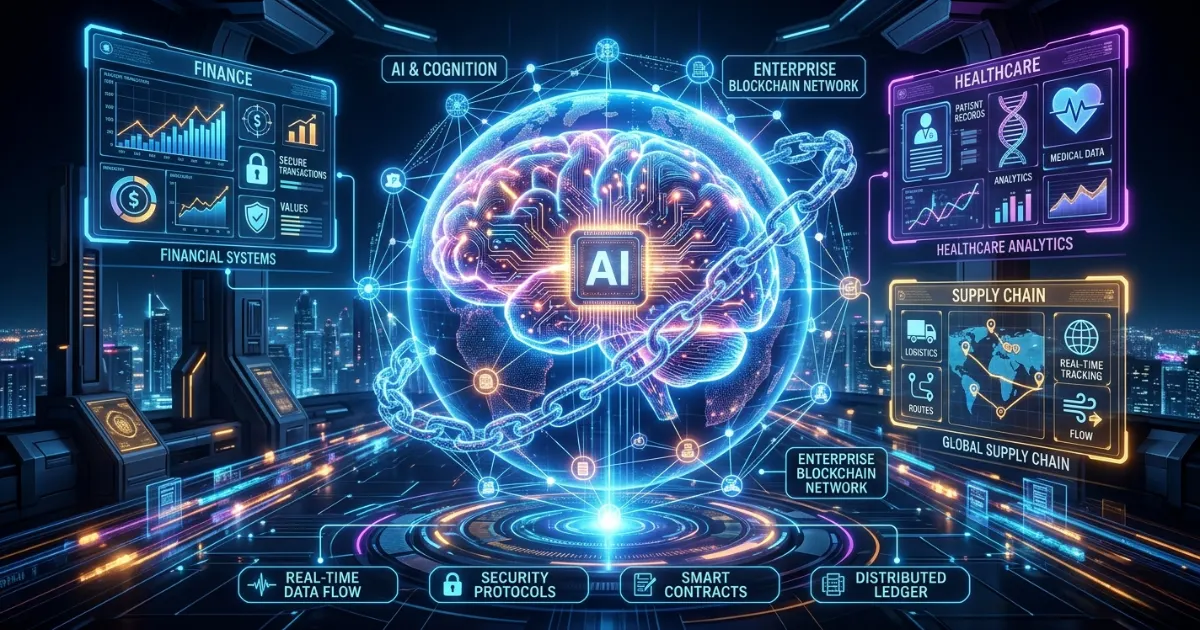
SISGAIN also brings complementary capabilities that matter in complex AIoT programs. AR/VR development services enable operators to interact with AI IoT data through immersive interfaces—visualizing plant floor sensor networks, training maintenance technicians in simulated environments, and reviewing digital twin outputs with spatial context. Blockchain development capabilities extend to AIoT applications requiring tamper-evident audit trails, supply chain provenance verification, and decentralized governance of shared IoT data.
Engagements start with a no-cost discovery session. SISGAIN delivers detailed project scoping and cost estimates within 48 hours, with an NDA signed before any business discussion begins.
The shift from connected monitoring to autonomous operations is not a technology trend to evaluate in the abstract. It is a competitive reality that organizations across manufacturing, healthcare, logistics, and smart city infrastructure are implementing today.
The enterprises that come out ahead will be those that treat AIoT not as a series of isolated sensor deployments, but as an integrated operational intelligence layer—one that spans assets, processes, and facilities, and continuously improves as it accumulates data and experience.
Getting there requires a clear problem definition, a scalable architecture, high-quality data from day one, and a technology partner with the depth to execute across every layer of the stack.
The operational results—reduced downtime, lower costs, improved quality, faster decisions—compound over time. Organizations that start building that foundation now will be operating AI-driven autonomous systems at a level of maturity their competitors are only beginning to plan for.



Start Build Your
Next Digital Solution?
Let’s build scalable, future-ready digital solutions tailored to your business goals. Connect with our experienced technology consultants to discuss your vision, strategy, and growth opportunities — with zero obligation and complete transparency.
Get a free consultation and cost estimate for your digital solution
Our expert will contact you within 24 hours. Check your email for confirmation.
Partner with SISGAIN experts to build secure, scalable AI-powered IT Solutions that transform your business operations.









DUQE FREEZONE Quarter Deck, Queen Elizabeth 2, Mina Rashid, Dubai, UAE

100 Consilium Pl Suite 200, Scarborough, ON M1H 3E3, Canada

C-109, Sector 2, Noida, Uttar Pradesh 201301 India
Project quotes, partnerships, implementation
Open roles, referrals, campus hiring