
 +1 844-445-5767
 +971 56-848-5757
 +91 921-208-0630
For Business & Service Inquiries
Sales Team
Project quotes, partnerships, implementation
AI agents represent a new class of intelligent software systems that go beyond simple automation. They are autonomous programs capable of perceiving their environment, making decisions, and executing tasks to achieve specific goals, often without constant human oversight. In essence, they act as digital workers that can handle complex workflows in real-time.
Once confined to research labs and early prototypes, AI agents are now integrating into core business operations. Tech companies, in particular, are leading this shift, with recent surveys revealing that 75% of technology firms report extreme familiarity with agentic AI. This level of awareness signals a rapid evolution from curiosity to practical implementation.
For modern businesses, this trend underscores a broader move toward intelligent automation. As competition intensifies, companies that leverage AI agents can streamline processes, reduce costs, and innovate faster. This is especially relevant in tech, where custom solutions from AI software development companies can tailor these agents to unique needs, driving efficiency and growth.
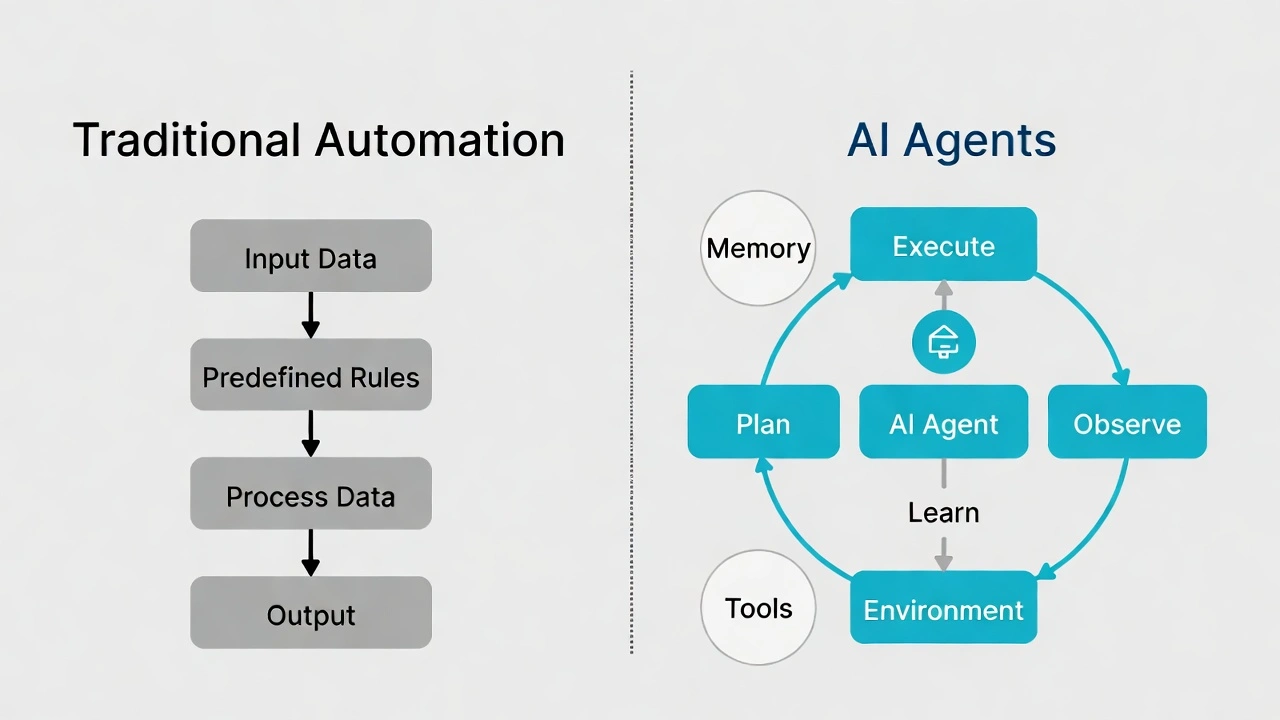
AI agents are software entities designed to operate independently within defined parameters. Unlike traditional scripts or bots that follow rigid rules, AI agents use machine learning, natural language processing, and reasoning capabilities to adapt to changing conditions and complete multi-step tasks.
The key distinction from traditional automation lies in autonomy. Traditional tools require predefined paths and human intervention for exceptions, while AI agents can plan, execute, and learn from outcomes. For instance, an AI agent might analyze data, generate reports, and even adjust strategies based on real-time feedback.
Core capabilities include:
Decision-making: Evaluating options and choosing the best course based on data and goals.
Task execution: Performing actions across systems, such as updating databases or sending communications.
Learning and adaptation: Improving performance over time through experience and feedback loops.
Tech companies adopt AI agents to stay competitive in fast-paced environments. With pressures to innovate and scale, these agents enable faster product development and operational efficiency. Many turn to custom AI software development to build agents that integrate seamlessly with existing tech stacks, addressing specific challenges like code generation or system monitoring.
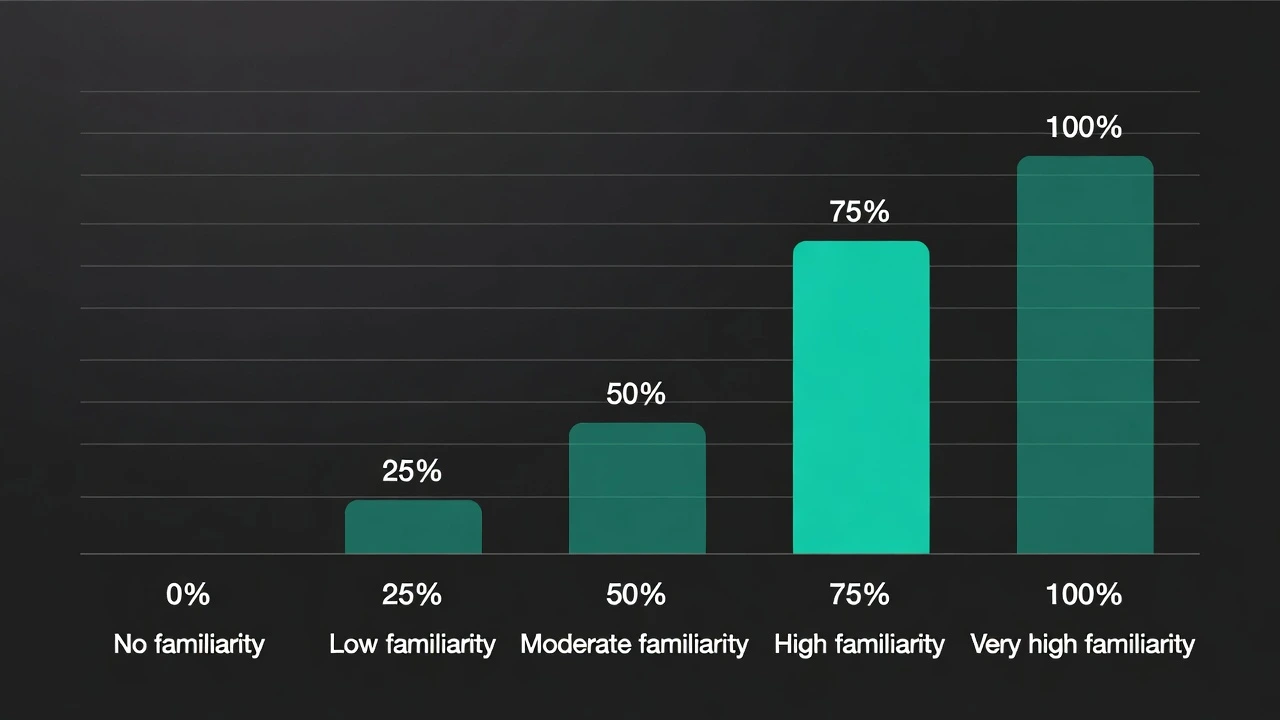
The growth of AI agents in tech ecosystems has accelerated dramatically. According to McKinsey's 2025 State of AI survey, 62% of organizations are at least experimenting with AI agents, with 23% scaling them across business functions. In tech companies, adoption is even higher due to inherent AI expertise.
Familiarity is rising quickly because tech firms have access to advanced tools and talent. Surveys show that 93% of IT leaders plan to introduce autonomous agents within two years, with nearly half already implementing them. This reflects growing enterprise AI maturity, where companies move from basic generative AI to agentic systems.
Market signals, such as Gartner’s prediction that 40% of enterprise applications will include task-specific AI agents by 2026, are driving adoption. Competitive pressures push tech companies to integrate agents for advantages in speed and innovation.
An AI software development company can help navigate these trends, providing tailored solutions that align with enterprise needs and accelerate deployment.
High familiarity with AI agents in tech companies—75% of firms reporting extreme knowledge—marks a transition from awareness to action. This isn't just theoretical; it indicates hands-on experience beyond basic tools.
The shift from pilots to production is evident. Tech firms are deploying agents in core operations, with 42% actively exploring integration. This moves AI from experimental to essential, embedding it in workflows for measurable impact.
Competitive pressure fuels this. In tech, where innovation cycles are short, agents provide edges in efficiency and decision-making. Laggards risk falling behind as peers scale agentic systems.
On product development, agents automate testing and iteration, speeding time-to-market. In operations, they optimize resources, reducing downtime. This familiarity enables end-to-end AI solution development, supporting sustained growth without over-reliance on human resources.
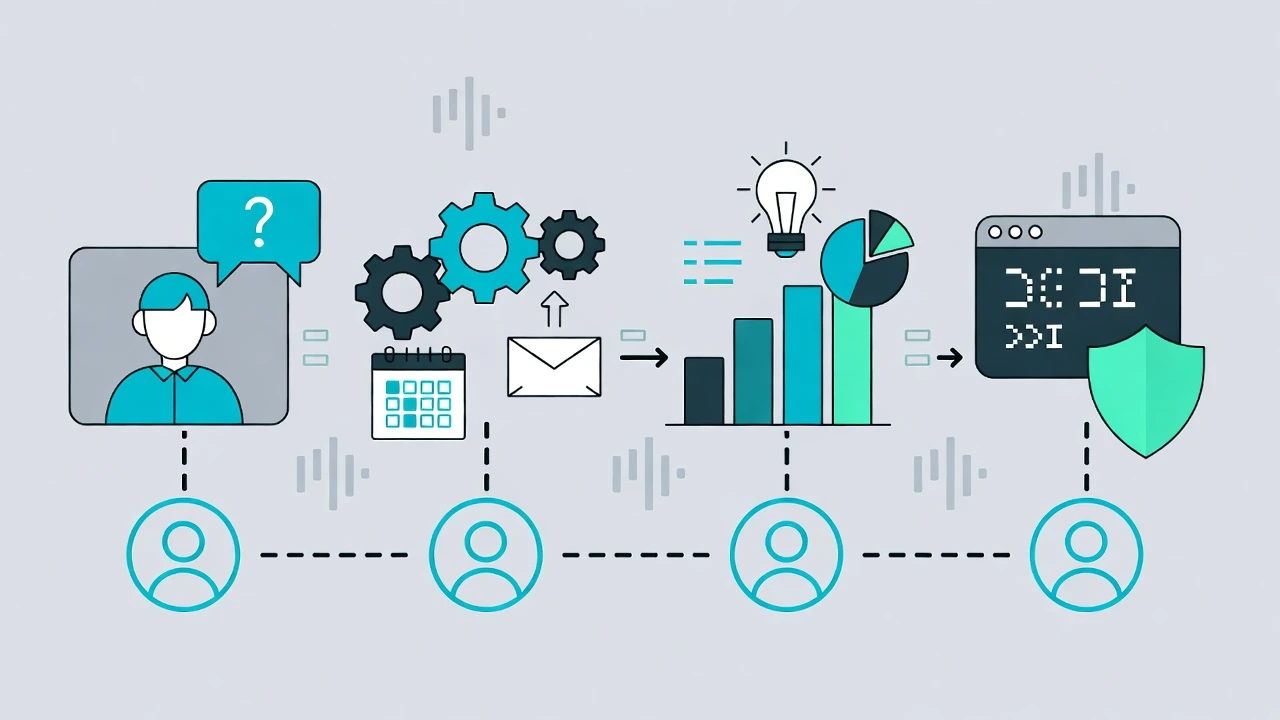
AI agents are already delivering measurable value across core functions in technology companies. They handle multi-step processes autonomously, adapt to new information, and interact with existing tools and systems. Below are four of the most widely implemented and impactful use cases in 2025–2026.
Modern AI agents go far beyond simple chatbots. They can independently:
Understand and classify incoming support tickets
Retrieve relevant knowledge base articles and past tickets
Perform actions such as issuing refunds, resetting passwords, or updating order status
Update CRM records automatically
Escalate only genuinely complex cases to human agents
Because they operate 24/7 and respond in seconds rather than minutes or hours, companies see dramatic reductions in average resolution time and support-team workload. Customer satisfaction scores often improve as users receive fast, consistent answers even outside business hours.
Many mid-to-large tech companies now route the majority of level-1 inquiries through AI agents, reserving human agents primarily for high-emotion, high-complexity, or strategic accounts.
Repetitive, multi-tool processes are among the earliest and most successful applications of AI agents.
Typical examples in tech companies include:
Automatically logging customer interactions across email, Slack, Zoom transcripts, and CRM
Qualifying inbound leads by scoring them against ideal customer profiles and enriching records with external data
Managing inboxes, triaging emails, scheduling meetings, and keeping calendars organized tools like Clawdbot AI demonstrate how agents can quietly run daily personal and team workflows without constant supervision
Managing sales pipeline hygiene (updating stages, adding notes, scheduling follow-ups)
Onboarding new employees by coordinating tasks across HR, IT, facilities, and security systems
Monitoring supply-chain or cloud-cost anomalies and triggering corrective workflows
The biggest benefit is not just time saved — it’s the elimination of “swivel chair” work where employees manually move data between disconnected tools. This allows product, sales, marketing, and operations teams to focus on higher-value strategic activities rather than administrative busywork.
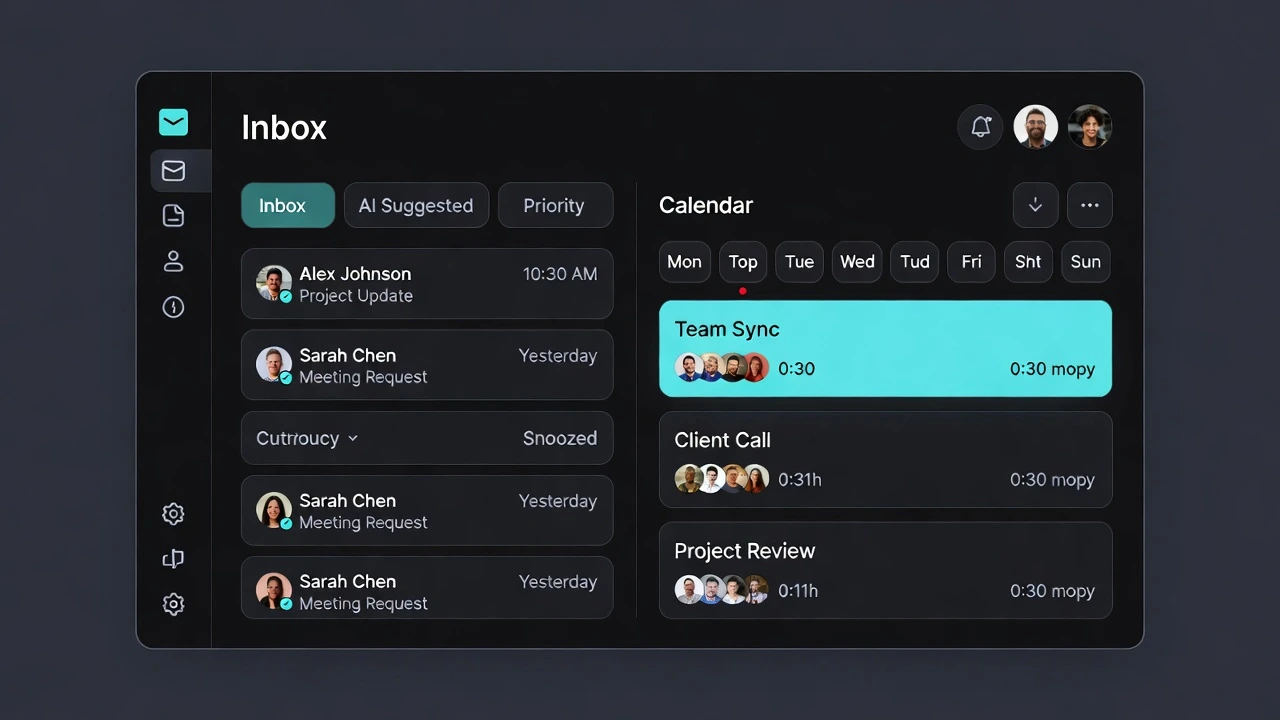
AI agents are becoming powerful assistants for data-heavy roles inside tech organizations.
They can:
Continuously monitor internal and external data sources (usage metrics, competitor pricing, market signals, support tickets, churn indicators)
Identify statistically meaningful patterns and emerging trends
Produce concise executive summaries, visualizations, and recommended actions
Answer follow-up questions in natural language
Run scenario analyses (“What happens to ARR if we reduce pricing by 15% in segment X?”)
Product managers, growth teams, finance, and executive leadership increasingly rely on these agents for faster, more accurate market and product intelligence. Instead of waiting for weekly or monthly reports, decision-makers can get fresh, context-aware insights on demand.
In DevOps and platform engineering teams, AI agents are changing how reliability and quality are maintained at scale.
Common responsibilities include:
Proactively monitoring logs, metrics, traces, and alerts across microservices
Detecting anomalies before they become customer-facing incidents
Automatically executing diagnostic steps (restarting pods, rolling back deployments, clearing caches)
Running regression test suites after every commit or pull request
Suggesting or even auto-applying low-risk fixes for known error patterns
Generating post-incident summaries and updating runbooks
These capabilities significantly reduce mean time to detect (MTTD) and mean time to resolve (MTTR), which are critical metrics for SaaS and infrastructure companies. For teams that ship multiple times per day, agent-driven testing and observability have become essential to maintaining velocity without sacrificing stability.
While off-the-shelf agent platforms provide quick wins for standard use cases, most mature tech companies eventually move toward custom-built AI agents. Tailored agents can:
Understand proprietary data models and internal terminology
Respect company-specific security boundaries and compliance rules
Integrate deeply with home-grown tools and niche SaaS products
Follow unique business logic and escalation policies
This level of adaptation usually delivers higher accuracy, fewer hallucinations, better containment of sensitive data, and significantly stronger ROI compared to generic solutions.
These four areas — customer support, workflow automation, data-informed decision making, and software reliability — currently represent the strongest, most proven applications of AI agents inside technology companies. They also tend to deliver the fastest and most visible returns, making them natural starting points for most organizations beginning their agent journey.
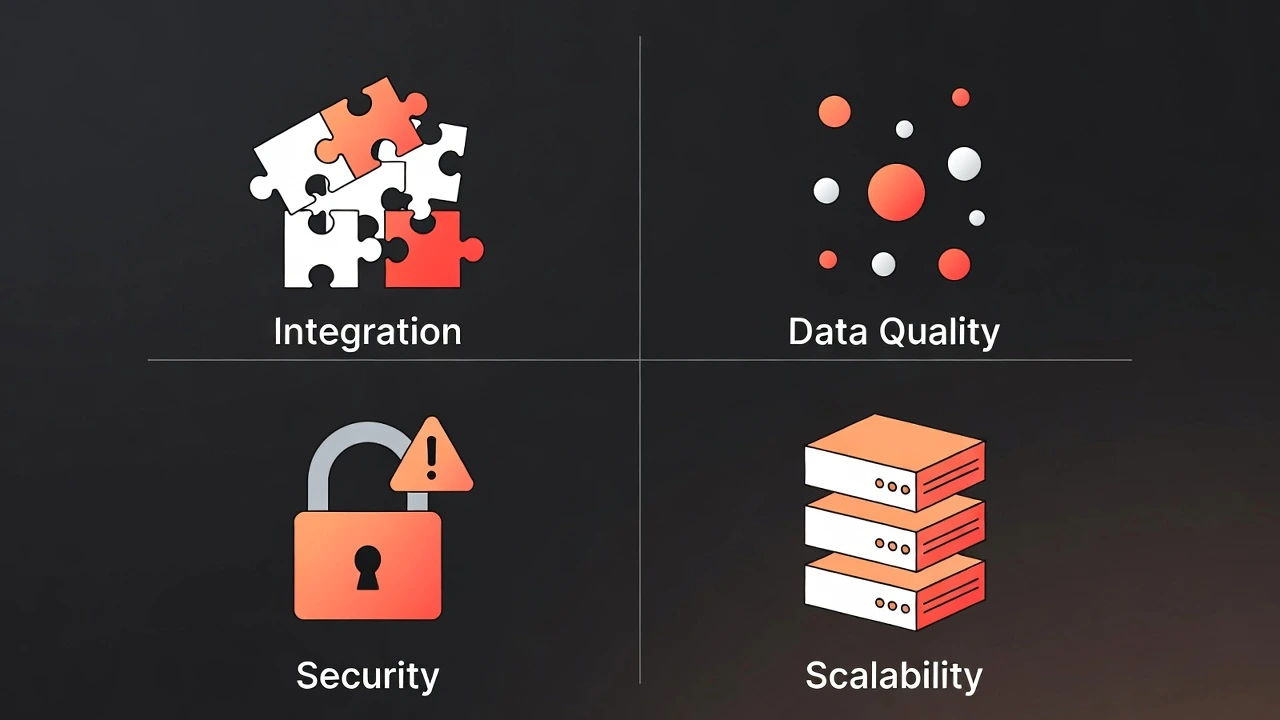
While the business case for AI agents is strong, scaling them across an organization brings several practical and sometimes expensive challenges. Most technology leaders encounter at least some of these hurdles when moving from pilot projects to production-grade deployments.
Most enterprises still run a mix of modern cloud applications and older on-premise or legacy systems. AI agents need to read from, write to, and coordinate actions across these disparate systems.
Common pain points include:
APIs that are incomplete, poorly documented, or rate-limited
Data locked in mainframes, older ERPs, or custom databases without modern interfaces
Authentication and permission models that were never designed for autonomous software actors
“Swivel chair” processes that humans perform but are hard to automate without major refactoring
Many companies discover that 40–60% of the initial implementation effort goes into building clean, reliable connectors rather than developing the agent logic itself.
AI agents are only as good as the data they can access.
Recurring problems include:
Inconsistent, outdated, or incomplete data across systems
Duplicate records with conflicting information
Missing context (e.g., an agent sees “customer cancelled” but not why or when)
Lack of real-time data pipelines, forcing agents to work with delayed or stale information
Poor data quality directly leads to wrong decisions, incorrect actions, frustrated users, and loss of trust in the system.
On top of accuracy, governance becomes critical once agents start touching production data:
Ensuring compliance with GDPR, CCPA, HIPAA, SOC 2, ISO 27001, etc.
Maintaining audit trails of every decision and action an agent takes
Enforcing data residency, retention, and deletion policies
Autonomous agents introduce new attack surfaces.
Key security concerns include:
Agents with overly broad permissions (the “god mode” problem)
Prompt injection or jailbreaking attacks that trick the agent into harmful behavior
Exposure of sensitive data in logs, memory, or model training pipelines
Lack of granular role-based access control tailored to autonomous software (RBAC designed for humans often isn’t sufficient)
A single misconfigured agent can potentially access far more systems and data than any individual employee ever could — making least-privilege design and continuous monitoring non-negotiable.
As usage grows, several scaling realities become apparent:
Inference costs can rise sharply when thousands of agent instances run concurrently
Latency spikes during peak hours if not properly load-balanced
Memory and context window limitations cause agents to “forget” earlier steps in long-running workflows
Rate limits on external APIs (CRMs, payment processors, cloud services) become bottlenecks
Debugging and observability become dramatically harder when dozens or hundreds of agents are interacting
Without careful architectural choices — such as caching, asynchronous processing, hierarchical agent designs, or purpose-built orchestration layers — companies can face runaway cloud bills, degraded performance, and brittle systems.
Note - These four areas integration, data, security, and scalability are the most common reasons why agent projects slow down, exceed budget, or fail to deliver expected value at enterprise scale.
Organizations that treat these challenges as engineering and architecture problems (rather than just “AI problems”) tend to succeed faster. Many of the most successful deployments involve close collaboration with teams or partners who already have deep experience building production-grade agent systems that are secure, cost-efficient, and deeply integrated with complex enterprise environments.
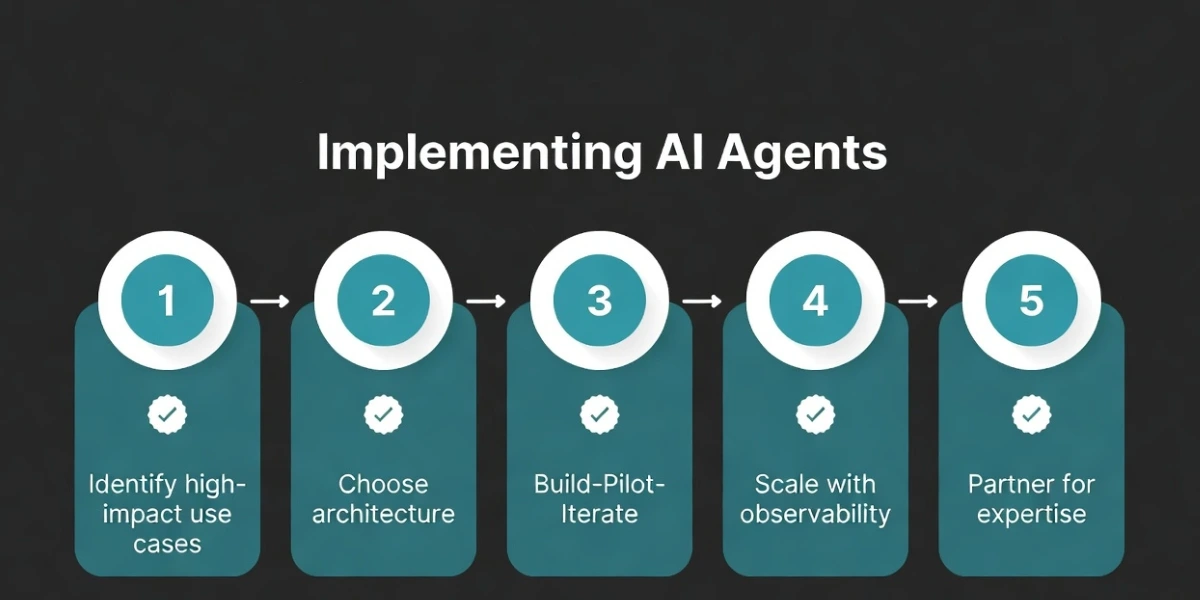
Implementing AI agents at enterprise scale is not primarily a technology problem — it’s an organizational and engineering discipline problem. Companies that treat it as a structured program (rather than a series of experiments) achieve faster time-to-value and much higher success rates.
Here is a practical, step-by-step playbook that leading technology organizations are following in 2025–2026.
The fastest path to success is to select use cases that deliver clear, measurable ROI quickly while carrying acceptable risk.
Good first candidates usually include:
Customer support ticket triage and resolution (high volume, clear success metrics)
Sales CRM hygiene and lead enrichment
Basic DevOps monitoring and incident triage
Routine data reconciliation and reporting
Employee onboarding coordination
Quick evaluation checklist:
Can we measure success in dollars, hours saved, or customer satisfaction?
Is the process currently manual and repetitive?
Are the required systems already API-accessible?
Can we start with read-only or low-risk actions?
Can we limit scope to one team or one product line initially?
Aim for “quick wins” that build internal credibility and funding momentum.
Not every problem needs the same level of agent sophistication. Matching architecture to use case avoids over-engineering and unnecessary cost.
Common patterns seen in tech companies today:
Start simple. You can always evolve a single agent into a multi-agent system later once you understand real-world failure modes and performance requirements.
Treat implementation like modern product development:
Phase 1 – Prototype (2–6 weeks) Build a narrow, vertical slice. Focus on end-to-end functionality even if it’s rough.
Phase 2 – Controlled Pilot (6–12 weeks) Deploy to a small, enthusiastic team or low-risk process segment. Measure: accuracy, time saved, user satisfaction, cost per task, escalation rate.
Phase 3 – Iterate aggressively Fix the top 3–5 failure patterns every sprint. Add guardrails, better error handling, human-in-the-loop fallbacks.
Phase 4 – Gradual expansion Only widen scope after ≥85–90% reliability and strong user feedback.
This “crawl → walk → run” approach dramatically reduces risk and cost compared to big-bang deployments.
Many early agent projects fail not at launch, but at 10× or 100× scale.
Essential engineering practices:
Comprehensive observability (every decision, tool call, and outcome logged)
Cost monitoring and guardrails (daily/weekly spend caps per agent type)
Versioned agent behavior and prompt templates
Automated regression testing for agent outputs
Clear ownership and escalation paths when agents behave unexpectedly
Regular model/provider evaluation (don’t get locked into one LLM forever)
Design the system so that adding 10× more usage does not require 10× more people to maintain it.
Very few companies have deep, production-grade experience building reliable agent systems at scale. Common points where external expertise accelerates progress:
Designing secure, least-privilege integration architecture
Building robust data pipelines and real-time context retrieval
Implementing production-grade observability and cost controls
Creating safe multi-agent orchestration patterns
Navigating compliance and audit requirements
Partnering early with an experienced AI software development company can compress timelines, avoid expensive architectural mistakes, and help internal teams level up faster — especially during the first 1–2 major deployments.
Pick high-ROI, low-risk use cases first
Match architecture to actual complexity
Build small, pilot fast, iterate relentlessly
Engineer for observability, cost control, and maintainability from the beginning
Bring in specialized expertise when internal experience is thin
Companies that follow this disciplined approach are seeing meaningful business impact from AI agents within 3–9 months — and are building lasting internal capability for the agent-driven future.
Would you like me to generate a clean, professional visual diagram that summarizes this implementation playbook (for example: a 5-step flowchart or a maturity ladder)? Let me know and I can create one for you.
Industry experience is key. A partner familiar with tech challenges can deliver relevant solutions.
Custom vs. generic: Tailored agents outperform off-the-shelf ones, addressing unique needs.
Security and compliance: Experts embed these from the start, reducing risks.
Long-term support: Ongoing maintenance ensures agents evolve with business changes.
For AI software development company services, focus on proven track records. Similarly, AI agent development services and enterprise AI development offer specialized support for scaling.
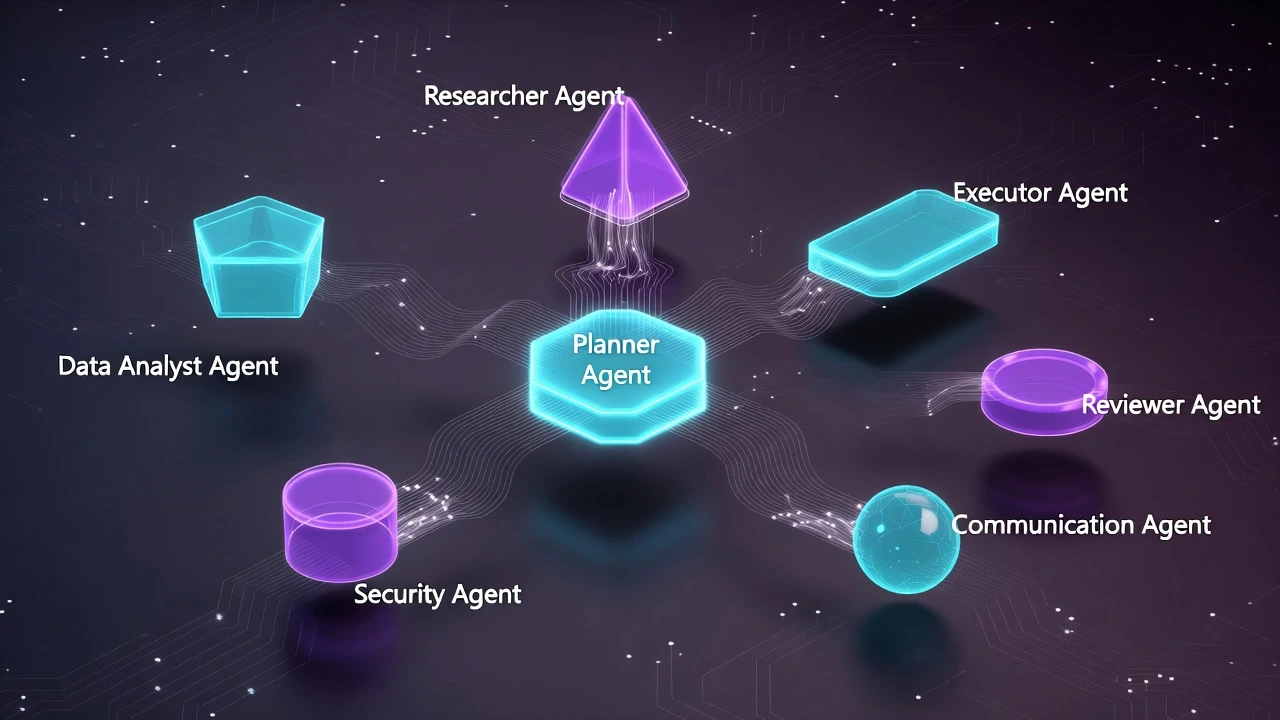
Looking ahead, autonomous agents will handle more independent tasks, evolving into proactive digital workers.
Multi-agent systems will collaborate like teams, tackling intricate problems across functions.
Deeper integration with enterprise systems will make agents indispensable, blurring lines between human and AI roles.
AI agents as a digital workforce will redefine operations, boosting productivity. Enterprise AI development services can prepare companies for this, ensuring seamless adoption.
The 75% high familiarity with AI agents in tech companies highlights a pivotal moment in enterprise technology. This signals widespread readiness to integrate intelligent systems for competitive advantage.
AI agents are becoming a necessity, enabling efficiency and innovation in a digital-first world.
Expert implementation maximizes value, turning potential into results. For those seeking to advance, consulting an AI software development company can provide the strategic edge needed.




Start Build Your
Next Digital Solution?
Let’s build scalable, future-ready digital solutions tailored to your business goals. Connect with our experienced technology consultants to discuss your vision, strategy, and growth opportunities — with zero obligation and complete transparency.
Get a free consultation and cost estimate for your digital solution
Our expert will contact you within 24 hours. Check your email for confirmation.
Partner with SISGAIN experts to build secure, scalable AI-powered IT Solutions that transform your business operations.









DUQE FREEZONE Quarter Deck, Queen Elizabeth 2, Mina Rashid, Dubai, UAE

100 Consilium Pl Suite 200, Scarborough, ON M1H 3E3, Canada

C-109, Sector 2, Noida, Uttar Pradesh 201301 India
Project quotes, partnerships, implementation
Open roles, referrals, campus hiring