
 +1 844-445-5767
 +971 56-848-5757
 +91 921-208-0630
For Business & Service Inquiries
Sales Team
Project quotes, partnerships, implementation
In the past few years, we've seen AI explode from buzzword to boardroom staple. But here's the hard truth: most enterprises are still stuck in the experimentation phase. They're building flashy proofs-of-concept that dazzle in demos but crumble under real-world pressure. Why? Because shifting from experimental AI to enterprise-grade automation isn't about adding more features it's about designing systems that handle scale, security, and unpredictability without constant babysitting.
PoCs often fail because they ignore the messy realities of business environments. Think about it: a pilot that works flawlessly on clean test data falls apart when hit with inconsistent inputs, compliance hurdles, or integration issues across legacy systems. I've seen this firsthand in consulting gigs where teams poured months into prototypes, only to scrap them when deployment revealed governance gaps or performance bottlenecks. The result? Wasted resources and eroded trust in AI initiatives.
Meanwhile, the demand for best custom AI development services for medium-sized companies and large enterprises is skyrocketing. Organizations are realizing that generic tools won't cut it for mission-critical workflows. They're seeking tailored solutions that embed deeply into operations, driving measurable gains in efficiency and revenue. This surge aligns with broader AI trends shaping global industries, where agentic systems are redefining automation. From predictive analytics to multimodal processing, these trends underscore the need for production-ready agents that don't just assist but autonomously orchestrate complex processes. Choosing the best custom AI development services for medium-sized companies is becoming critical as businesses move toward production-ready AI agents that go beyond experimentation.
Let's cut through the hype: a production-ready AI agent isn't some sci-fi robot. It's an autonomous, goal-driven AI system designed to operate reliably in enterprise settings. These agents go beyond simple chatbots by reasoning through tasks, adapting to changes, and executing actions with minimal human input. At their core, they integrate seamlessly with enterprise tools like CRM platforms (Salesforce, HubSpot), ERP systems (SAP, Oracle), HRMS solutions, and even custom databases.
What sets them apart is their ability to handle real-time workflows while maintaining ironclad security and compliance. For instance, they might process sensitive financial data under GDPR guidelines or orchestrate supply chain adjustments in response to market shifts. Unlike experimental models, production agents include built-in monitoring and governance to ensure traceability—every decision logged, every action auditable.
Key capabilities make this possible. Multi-step reasoning allows agents to break down complex goals, like analyzing sales data to recommend inventory tweaks. Tool usage is critical: agents call APIs, query databases, or interact with SaaS tools autonomously. Context retention ensures they remember past interactions, avoiding redundant queries in ongoing workflows.
Then there's human-in-the-loop fallback for high-stakes scenarios, where agents escalate to experts rather than risking errors. Finally, autonomous decision optimization lets them learn from outcomes, refining strategies over time. For a deeper dive into practical applications, check this Agentic AI in CRM reference, which explores how these capabilities drive autonomous sales processes.
Enterprise AI agents, often built using the best custom AI development services for medium-sized companies and large enterprises, have moved far beyond theory. In 2026, they're actively reshaping how large organizations run day-to-day operations, delivering measurable gains in efficiency, accuracy, and speed.
Here’s a clearer breakdown by key sectors, with straightforward explanations and grounded real-world examples drawn from leading enterprises.
Sales teams often spend too much time on repetitive tasks—qualifying leads, tracking pipelines, and chasing follow-ups. Production-ready AI agents take over these routines, letting reps focus on building relationships and closing deals.
A strong example comes from Cognizant. Through their expanded work with Salesforce Agentforce and internal Neuro® AI Multi-Agent Accelerator, they've helped enterprises deploy agentic systems that automate outreach, personalize customer journeys, and orchestrate multi-step sales workflows. In practice, this has cut administrative overhead significantly while accelerating pipeline velocity—turning what used to be manual coordination into autonomous, adaptive processes that drive real revenue growth.
IT teams face constant alert overload—thousands of notifications daily from monitoring tools, logs, and infrastructure. AI agents filter the noise and handle much of the heavy lifting.
Microsoft provides a compelling real-world case. Their internal Triangle System uses AI agents to triage incidents, with each agent representing a specific engineering team. By early 2025–2026 rollouts, several teams achieved 90% triage accuracy, and one reported a 38% reduction in time-to-mitigation (TTM). This has scaled to handle thousands of incidents weekly across Azure and internal operations, dramatically cutting downtime and freeing engineers for higher-value work.
Healthcare requires extreme precision, strict compliance (like HIPAA), and 24/7 vigilance—especially for chronic or post-discharge patients. AI agents excel at continuous, non-intrusive monitoring and coordination.
Real deployments show clear impact. Hospitals and providers using HIPAA-compliant AI agents for remote patient monitoring have reduced readmission rates by catching deterioration early. For instance, systems integrated with wearables and EHRs enable proactive interventions that lower emergency visits and hospital stays. Programs like those from platforms supporting remote cardiac or chronic disease monitoring have demonstrated reductions in ED visits by up to 68% and hospitalizations by 35% in targeted pilots—delivering safer, more efficient care at scale without compromising regulatory standards.
Finance operates in a high-stakes environment where speed, accuracy, and compliance are non-negotiable. AI agents process massive volumes of data to strengthen defenses and streamline oversight.
HSBC stands out as a proven leader here. Their AI-powered Dynamic Risk Assessment system (developed with Google Cloud) screens billions of transactions monthly. It detects 2–4 times more suspicious activity than legacy methods while slashing false positives by around 60%. This means fewer unnecessary customer checks, faster legitimate processing, lower operational costs, and stronger overall risk management—directly translating to better protection and efficiency in a heavily regulated space.
These examples illustrate a common thread: when built with enterprise-grade architecture—secure integrations, governance, observability, and human-in-the-loop safeguards—AI agents don't just assist; they transform workflows, reduce costs, and unlock outcomes that were previously out of reach. The key difference in 2026 is that these aren't pilots anymore—they're in production, delivering sustained business value across industries.
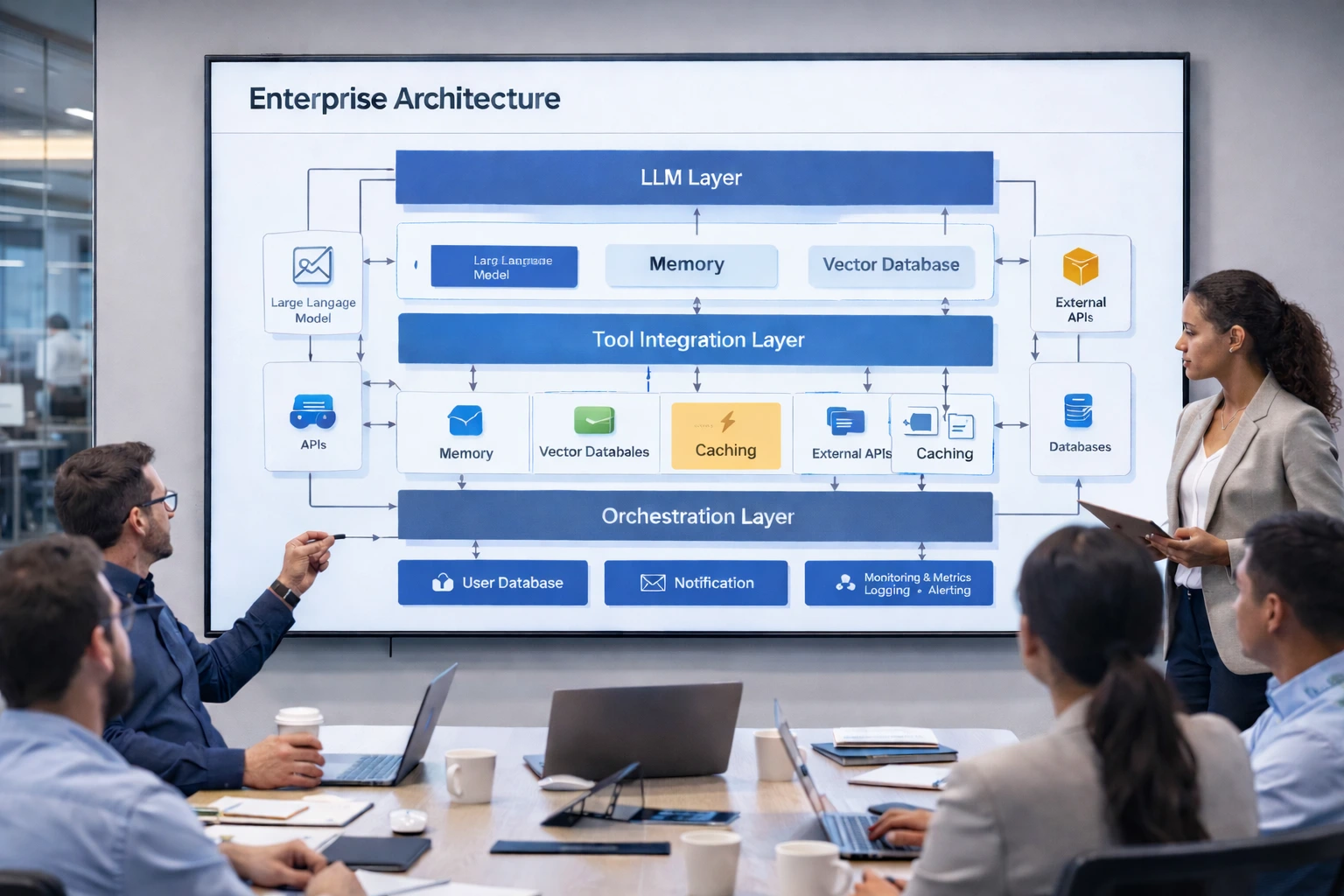
Modern systems built through custom AI development services for medium-sized companies require layered architecture to ensure scalability, governance, and reliability.
Creating AI agents that can reliably run in a large enterprise isn't just about connecting a powerful language model to your data. It requires thoughtful, layered engineering that prioritizes resilience, security, traceability, and the ability to handle real-world complexity without constant manual intervention.
Think of it like building a trustworthy automation platform rather than a clever prototype. The architecture must support long-running processes, recover from failures gracefully, enforce compliance rules at every step, and provide full visibility into what the agent is doing and why.
Most production-grade enterprise AI agents follow a modular, layered design. Each layer has a clear responsibility, and they work together to turn high-level goals into safe, auditable actions. Here are the five essential layers most enterprises use in 2026:
These layers aren't strictly sequential — they interact constantly in a feedback loop.
Here’s how a typical production request moves through the system in a clear, reliable cycle:
This closed-loop design is what makes agents adaptive and learnable without full model retraining — they improve over time through better memory, refined tools, and monitored outcomes.
In short: a production-ready enterprise AI agent isn't one big black box. It's a carefully engineered system of specialized layers working together to deliver autonomous, auditable, and safe automation at enterprise scale. Get the layering and feedback loops right, and you move from fragile demos to systems that hundreds or thousands of employees trust every day.
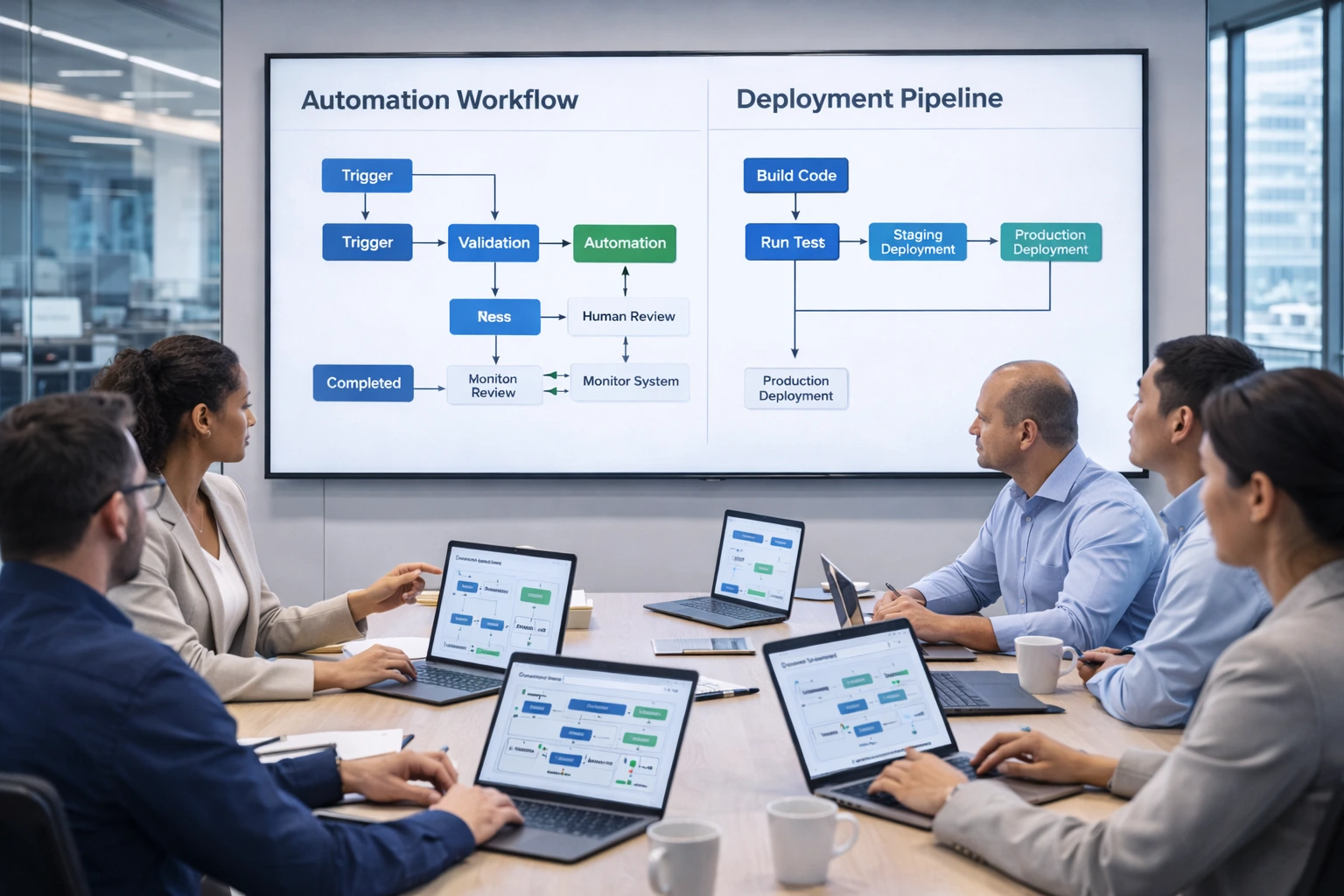
Building production-ready AI agents is a deliberate, multi-phase journey — not a quick hack or weekend experiment. Enterprises that succeed treat it like any major systems initiative: start with clear business value, design for scale and safety from day one, and iterate with real feedback.
The process typically takes 3–12 months depending on scope, team size, and complexity — but following a structured path dramatically increases the odds of deployment success and meaningful ROI.
Here’s the practical, battle-tested sequence most forward-leaning enterprises follow in 2026.
Don’t start with technology — start with outcomes.
From experience: CTOs who treat this as a 2–4 week facilitated workshop (not a one-hour meeting) see far higher adoption and fewer mid-project pivots.
Unless you already have a mature internal AI platform team (most large enterprises don’t yet in 2026), don’t try to build this entirely in-house from scratch.
Enterprises typically partner with a custom AI development company that brings:
Look for partners offering custom AI software development solutions or custom gen AI development services tailored to enterprise autonomy — generic “AI consultancy” shops or offshore body shops often fall short on governance depth and long-term maintainability.
Ask pointed questions:
The right partner accelerates time-to-value and prevents expensive rework.
Treat the agent system like enterprise software, not a science project.
Core principles that matter in production:
Build in phases: MVP with 1–2 core tools → add memory/RAG → expand orchestration → harden governance.
This is where most agents move from “clever” to “reliable.”
Recent AI trends show RAG evolving into the default for enterprise agents because it delivers better factual accuracy, traceability, and compliance without constant model retraining. For deeper reading on these memory and context advancements, see this AI trends blog.
Agents become truly valuable when they act inside your existing stack.
Typical integrations:
Best practice: Build tool abstractions — standardized, permission-checked functions (e.g., “get_customer_by_id”, “update_ticket_status”) so the agent calls high-level actions, not raw APIs. Test with chaos engineering — simulate API failures, slow responses, schema changes — to prove resilience.
This isn’t optional — it’s table stakes for production.
Must-haves:
Enterprises that bolt this on later face massive remediation costs and delays.
Launch small, learn fast.
The system gets smarter over time through usage, not just bigger models.
Follow this sequence methodically, and you’ll move from interesting prototypes to trusted, revenue-protecting (or generating) enterprise automation that actually lasts.
Even experienced teams with strong technical talent and healthy budgets run into the same avoidable traps when moving from AI agent pilots to live production systems. These aren't exotic edge cases—they're recurring patterns I've seen (and helped fix) across dozens of enterprise implementations in finance, healthcare, manufacturing, and tech services.
Here are the most frequent and costly mistakes in 2026, explained clearly with why they hurt and how to sidestep them.
Many teams build what they call an “AI agent” but deliver something closer to an upgraded ChatGPT interface: it answers questions, generates text, maybe pulls a document—but stops short of true autonomy.
Why this fails: Agents are built to act—to plan multi-step workflows, call tools, make decisions, adapt to feedback, and execute changes in systems like CRM, ERP, or ticketing platforms. If you limit them to conversation only, you get minimal business impact while still paying full agent-level complexity and cost.
Real symptom: Teams report “the agent is smart but nobody uses it for real work” because it never actually does anything beyond suggesting.
Fix: Start by defining clear action boundaries—what the agent is allowed to execute versus recommend. Build autonomy incrementally: begin with read-only tools, add write access only after proving reliability with human oversight.
It's tempting to focus on “getting the agent working first” and layer in security later. This almost always backfires.
Why this fails: Production agents touch sensitive data, update records, trigger workflows, and make decisions that affect customers, finances, or patient care. Without built-in controls (principle of least privilege, audit trails, prompt guards, output filters, escalation rules), a single hallucination, prompt injection, or over-privileged action can cause data leaks, compliance violations, financial errors, or regulatory fines.
Real symptom: Post-deployment fire drills, emergency access revocations, or entire agents taken offline after an incident.
Fix: Embed governance from day one—design with least-privilege access, full traceability (every prompt/tool call logged), automated checks for PII leakage/toxicity/bias, and mandatory human-in-the-loop for high-risk actions. Use frameworks that enforce these natively rather than bolting them on.
Agents are excellent at routine, well-defined, repeatable tasks—but terrible at nuance, judgment calls, ethical edge cases, or high-stakes decisions without guardrails.
Why this fails: When teams give agents too much freedom too soon (e.g., “handle all customer refunds up to $10k”), small errors compound quickly. Trust erodes fast when agents make inappropriate decisions, and rollback becomes painful.
Real symptom: Escalation rates skyrocket, users lose confidence, and the agent gets restricted or decommissioned.
Fix: Explicitly map “what the agent owns end-to-end,” “what requires human approval,” and “what is fully off-limits.” Start narrow (e.g., only auto-close low-severity IT tickets), expand only after proving accuracy and adding safeguards. Document boundaries in a living “agent constitution” reviewed by compliance/legal.
Many teams assume “if it works in testing, it’ll work in production.” They skip building dashboards, alerts, and feedback loops.
Why this fails: Agents are non-deterministic—behavior drifts with model updates, data changes, prompt variations, or new edge cases. Without visibility into success rates, hallucination frequency, tool failures, latency spikes, escalation patterns, or cost-per-task, problems go unnoticed until users complain loudly or costs explode.
Real symptom: “Suddenly the agent is making weird decisions” or “token costs jumped 5x overnight” with no early warning.
Fix: Implement AI-specific observability from the MVP stage: track every trace (prompts, decisions, tool calls), score outputs for confidence/hallucination, monitor key metrics (success %, escalation rate, average steps), and set alerts. Tools like LangSmith, Langfuse, or custom Prometheus/Grafana stacks make this straightforward. Review traces weekly in early months.
Enterprises often default to big-name platforms or generalist consultancies promising “AI agents in weeks,” only to discover deep mismatches with complex enterprise needs.
Why this fails: Generic solutions lack domain depth (e.g., HIPAA nuances in healthcare, SEC/AML rules in finance), struggle with legacy integrations, skimp on enterprise-grade governance, and force awkward workarounds that increase fragility and cost.
Real symptom: Extended timelines, massive customization debt, or agents that “work” but never reach meaningful scale/ROI.
Fix: Partner with a custom ai software development company experienced in your industry vertical, with proven production agent deployments at similar scale. Demand references showing secure, governed, integrated agents—not just demos. Look for teams strong in MLOps, DevSecOps, compliance engineering, and long-term maintainability.
These five mistakes account for the majority of stalled or failed agent initiatives I've encountered. The good news? They're all preventable with upfront discipline, realistic scoping, and a focus on production realities from day one.
Avoid them, and your project has a real shot at moving from pilot curiosity to trusted enterprise automation that delivers sustained value.

Budgeting for production-ready AI agents in 2026 is more art than science—costs swing widely based on scope, but real-world enterprise projects follow clear patterns. These figures draw from 2025–2026 industry benchmarks across custom development firms, consultancies, and large-scale deployments (finance, healthcare, sales ops, AIOps, etc.).
Key reality check first:
Here’s a practical view of what enterprises actually pay when partnering with a custom ai development company for production agents:
| Stage | Typical Cost Range (USD) | What Drives the Price Here | % of Total Budget (Rough) |
|---|---|---|---|
| Discovery & Planning | $10,000 – $30,000 | Workshops, stakeholder alignment, workflow mapping, KPI definition, risk/compliance assessment, high-level architecture sketching | 5–15% |
| Architecture Design | $20,000 – $60,000 | Detailed blueprints: layers (LLM, memory, tools, orchestration), security model, scalability plan, integration strategy | 10–20% |
| AI Model Integration & Core Logic | $40,000 – $150,000+ | LLM selection/fine-tuning, prompt engineering, reasoning loops (ReAct, plan-and-execute), RAG setup, vector DB population | 25–40% |
| Tool & System Integration | $30,000 – $100,000 | Secure API connections (CRM, ERP, HRMS, internal tools), custom tool wrappers, testing for resilience/failure modes | 15–30% |
| Security, Governance & Compliance | $20,000 – $80,000 | Encryption, RBAC, audit logging, prompt guards, bias/toxicity checks, HIPAA/GDPR/SOC 2 alignment, penetration testing | 10–25% |
| Testing, Deployment & Initial Optimization | $15,000 – $50,000 | Chaos testing, A/B pilots, observability setup, first-wave monitoring dashboards, user training/handover | 10–20% |
| Total Upfront Build Cost | $100,000 – $400,000+ | Full end-to-end for a meaningful enterprise agent (single or small multi-agent system) | — |
| Ongoing Annual Maintenance & Operations | 15–30% of build cost (~$20k–$120k+/year) | LLM API usage (tokens), vector DB/cloud hosting, monitoring tools, periodic fine-tuning, support, scaling | — |
Quick enterprise sizing guide (2026 benchmarks):
What pushes costs higher (common in large orgs):
What keeps costs lower (smart scoping):
These ranges reflect custom gen ai development projects—not low-code platforms or off-the-shelf “agent builders” that cap out much lower but rarely meet full enterprise governance/integration needs.
Bottom line for CTOs/CIOs: plan $150,000–$350,000 as a realistic entry point for a first meaningful production agent in 2026, with strong ongoing budgeting (20%+ of build cost annually). The real ROI question isn’t “how cheap can we build it?”—it’s “how much manual work/revenue leakage/risk exposure does this eliminate every year?” When scoped right, even mid-six-figure investments pay back in 9–18 months. Organizations evaluating the best custom AI development services for medium-sized companies must prioritize ROI-driven AI agent deployment to justify enterprise investment.
Evaluating the return on investment (ROI) for production-ready AI agents isn't about vague promises or vanity metrics—it's about proving tangible business value that finance teams, boards, and executives can trust. In 2026, successful enterprises treat ROI measurement as a core part of deployment strategy, not an afterthought.
The good news: when agents are scoped to high-impact workflows with clear baselines, ROI often materializes quickly—frequently within 6–18 months—and can reach 1.7x to 10x multiples depending on the use case. The key is tracking both hard financials (direct dollars saved or earned) and soft multipliers (productivity, speed, risk reduction) while comparing pre- and post-deployment performance.
Use this straightforward formula as your baseline:
ROI (%) = (Net Benefits – Total Investment) / Total Investment × 100
Simple example (mid-range enterprise agent):
More aggressive real-world pattern (from 2025–2026 deployments):
Bottom line for executives: ROI isn't guesswork when you pick high-value workflows, set clear KPIs upfront, and measure rigorously. Enterprises seeing the strongest returns (often 2x–10x) focus on boring-but-profitable back-office automation first, prove value quickly, then scale to revenue-driving use cases. When done right, AI agents shift from "promising tech" to "board-level business asset" with numbers everyone can agree on.
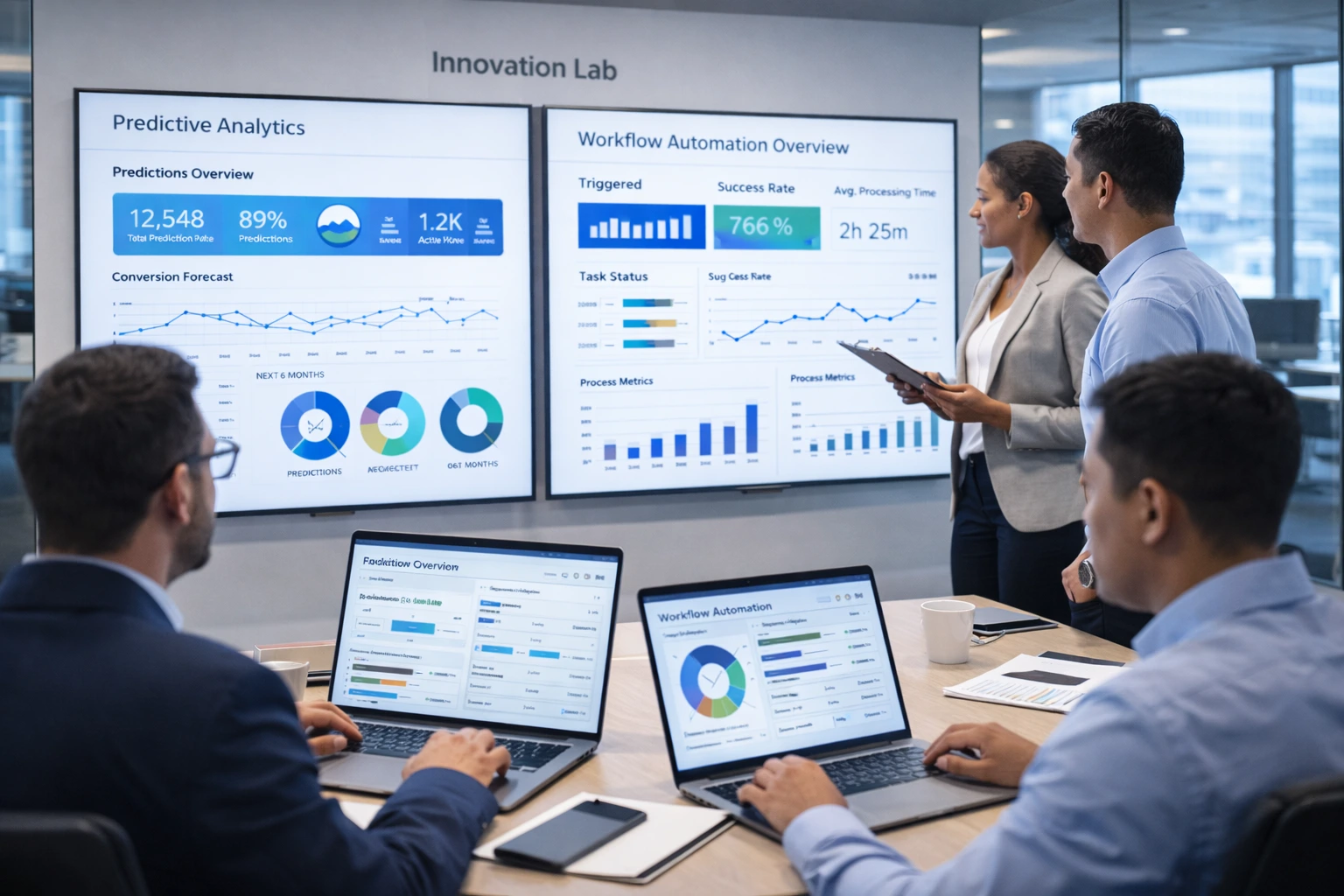
Looking ahead from mid-2026 to 2030, enterprise AI agents are poised to evolve from powerful but mostly task-focused tools into the backbone of how large organizations operate. The shift won't happen overnight, but the trajectory is clear: greater autonomy, deeper collaboration between agents, proactive intelligence, and tighter integration with both digital and physical worlds.
Here's a realistic, phased view of what's coming, grounded in current momentum and analyst forecasts from Gartner, IDC, Forrester, Deloitte, and others.
By the end of 2026, expect a sharp acceleration in adoption. Gartner forecasts that around 40% of enterprise applications will embed task-specific AI agents—up dramatically from under 5% in 2025. These won't just assist; they'll handle defined workflows like qualifying leads, triaging incidents, or processing invoices with minimal oversight.
The real game-changer arrives in multi-agent orchestration. Single agents hit limits quickly in complex enterprise settings. Instead, specialized agents will team up under central coordination:
This "agent team" approach enables end-to-end automation of multi-step processes that span departments or systems. Early examples are already emerging in sales, IT ops, and customer service, with frameworks like LangGraph, AutoGen, and emerging standards (e.g., Model Context Protocol servers) making secure, cross-platform collaboration feasible.
Governance becomes make-or-break: Many projects (Gartner warns over 40% by 2027) will stall or get canceled due to runaway costs, unclear ROI, legacy system mismatches, or inadequate risk controls. Organizations that invest early in observability, audit trails, escalation paths, and explainability will pull ahead.
By 2028–2029, fully autonomous workflows start to feel normal in forward-leaning enterprises. Agents won't need constant prompting—they'll interpret high-level goals ("Optimize Q3 supply chain for 15% cost reduction while maintaining 99% on-time delivery"), plan steps, execute across tools, adapt to disruptions, and report outcomes.
Key developments:
Market impact accelerates: Agentic AI could drive 10–15% of IT budgets by 2026–2029 (IDC), with some best-case projections seeing it contribute 30% of enterprise software revenue by 2035.
By 2030, the landscape looks transformed:
The catch: Not every organization will get there smoothly. Legacy tech debt, data silos, governance gaps, and workforce readiness will create winners and laggards. Those that treat agents as strategic infrastructure—investing in secure orchestration, continuous learning loops, and ethical controls—will capture outsized efficiency, speed, and competitive advantage.
In short, the 2026–2030 window turns AI agents from experimental add-ons into core operational engines. Enterprises that plan now for multi-agent scale, predictive intelligence, vertical specialization, and physical integration will lead the next era of automation. Those waiting risk being outpaced by digitally native competitors—and by agents that never sleep.
In 2026, the gap between hype and real enterprise impact has widened dramatically. Off-the-shelf AI tools—whether from big vendors or agent platforms—delivered quick demos and early wins, but they’re hitting hard limits when organizations try to scale them across complex, mission-critical workflows.
The core issue: generic solutions are built for the average case. They work reasonably well for standardized tasks like basic chat support, simple content generation, or out-of-the-box CRM enhancements. But enterprises don’t operate in averages. They run on unique processes, proprietary data, legacy systems, strict compliance rules, and competitive differentiators that no one-size-fits-all platform can fully capture.
When off-the-shelf AI agents encounter real enterprise reality, common breakdowns include:
Forward-leaning enterprises have realized that meaningful, durable value comes from ownership and precision—not renting generic intelligence. That’s why the shift to custom AI solutions is accelerating.
Custom AI—whether through full model fine-tuning, tailored agentic architectures, or deeply integrated RAG + orchestration—addresses exactly where off-the-shelf falls short:
Real-world signals confirm the trend. Many large enterprises now adopt hybrid strategies—using off-the-shelf for low-stakes, standardized tasks while building custom for high-value, differentiating workflows. Reports from McKinsey, Forrester, and industry deployments show that organizations investing in tailored AI see stronger EBIT impact, better long-term ROI (often 2–5x higher over 3 years), and greater ability to scale without “pilot purgatory.”
The message for CTOs, CIOs, and enterprise architects in 2026 is clear: treat AI like any other mission-critical system. For commodity needs, buy off-the-shelf. For anything that touches competitive advantage, compliance, proprietary data, or core operations—build custom.
Partnering with an experienced custom ai development service company makes this practical and fast. The right partner brings:
custom ai software development solutions and custom gen ai development aren’t just buzzwords—they’re the difference between incremental efficiency and transformative capability.
Enterprises that move decisively toward custom now will own the next wave of automation. Those that stay locked into generic platforms risk being outmaneuvered by faster, more precise, and fully controlled competitors. The choice isn’t about technology—it’s about who truly runs the business in the agentic era.

In 2026, enterprises are rapidly shifting from experimental AI pilots to production-ready AI agents that autonomously handle complex, mission-critical workflows while delivering measurable ROI. The guide explains why most proofs-of-concept fail in real business environments—due to poor scalability, weak security, inadequate governance, and lack of deep integration—and why custom-built solutions are now essential for large organizations aiming to automate sales, IT operations, finance, healthcare, and more. Production-ready agents are defined as autonomous, goal-driven systems with multi-step reasoning, secure tool usage (APIs, CRM, ERP), long-term memory via RAG and vector databases, human-in-the-loop safeguards, and full observability, moving far beyond simple chatbots.
The article outlines high-impact use cases with real-world examples: autonomous lead scoring and dynamic follow-ups in sales (e.g., Cognizant’s Agentforce deployments), rapid incident triaging and remediation in AIOps (Microsoft’s Triangle system achieving 90% triage accuracy), intelligent patient monitoring and workflow orchestration in healthcare (reducing readmissions through proactive alerts), and real-time fraud detection plus automated compliance in finance (HSBC’s dynamic risk assessment cutting false positives by ~60%). It breaks down the essential layered architecture—LLM reasoning engine, memory (vector DB + RAG), secure tool integrations, orchestration frameworks (LangChain, Semantic Kernel), and monitoring/governance—and describes the reliable request-to-outcome flow that ensures traceability and adaptability.
A clear seven-step roadmap guides enterprises through the process: define measurable business objectives and KPIs first, select a specialized custom AI development partner with proven enterprise experience, design modular and scalable architecture on major clouds, implement robust memory and context management, integrate deeply with existing systems (Salesforce, SAP, ServiceNow, etc.), embed governance and compliance (SOC 2, HIPAA, GDPR) from the start, and finally deploy with strong observability, feedback loops, and continuous optimization. Common pitfalls to avoid include treating agents like chatbots, delaying security, ignoring automation boundaries, skipping monitoring, and choosing generic vendors over domain-expert custom AI software development companies.
Cost estimates for meaningful enterprise agents range from $100,000–$400,000+ upfront (depending on complexity and compliance needs), with ongoing operations typically 15–30% of build cost annually. ROI is evaluated through labor savings (20–50% workload reduction), faster cycles, operational cost cuts, revenue uplift (15–28% in sales examples), and productivity gains, often reaching 2–5x returns within 12–24 months when scoped correctly.
Looking to 2030, AI agents will evolve into fully autonomous workflows, collaborative multi-agent teams, predictive enterprise ecosystems, and industry-specific frameworks, with increasing physical-world integration via robotics and IoT. The guide emphasizes that off-the-shelf solutions fail at enterprise scale due to shallow integrations, compliance gaps, and lack of domain precision, making custom AI development the strategic choice for control, performance, and competitive advantage.
Ultimately, success hinges on starting with clear business strategy, building resilient architecture, enforcing non-negotiable governance, and partnering with a capable custom AI development company that understands enterprise realities. Organizations that follow this disciplined approach will transform AI agents from experimental tools into trusted, revenue-protecting, and efficiency-driving core infrastructure in the agentic era.



Start Build Your
Next Digital Solution?
Let’s build scalable, future-ready digital solutions tailored to your business goals. Connect with our experienced technology consultants to discuss your vision, strategy, and growth opportunities — with zero obligation and complete transparency.
Get a free consultation and cost estimate for your digital solution
Our expert will contact you within 24 hours. Check your email for confirmation.
Partner with SISGAIN experts to build secure, scalable AI-powered IT Solutions that transform your business operations.









DUQE FREEZONE Quarter Deck, Queen Elizabeth 2, Mina Rashid, Dubai, UAE

100 Consilium Pl Suite 200, Scarborough, ON M1H 3E3, Canada

C-109, Sector 2, Noida, Uttar Pradesh 201301 India
Project quotes, partnerships, implementation
Open roles, referrals, campus hiring