
 +1 844-445-5767
 +971 56-848-5757
 +91 921-208-0630
For Business & Service Inquiries
Sales Team
Project quotes, partnerships, implementation
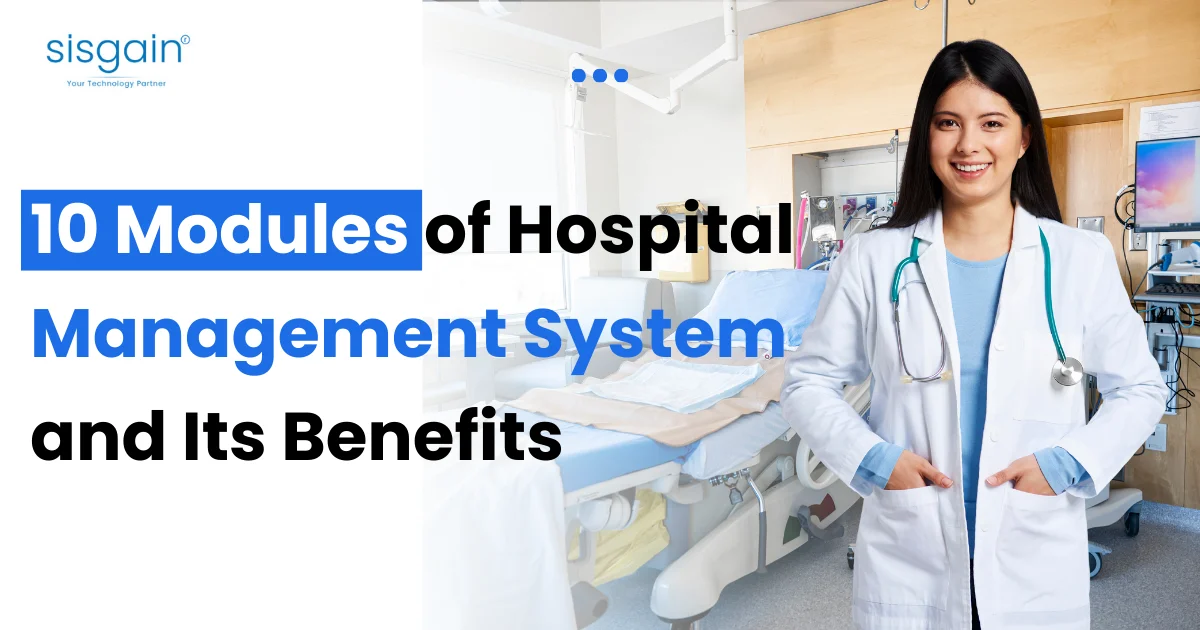
How do modern hospitals manage thousands of patients, staff, records, and resources efficiently without chaos? In today’s digitally driven healthcare industry, hospitals can no longer depend on manual registers, spreadsheets, or disconnected software. Rising patient expectations, strict regulatory requirements, and the need for accurate data have made automation essential. This is where a Hospital Management System (HMS) plays a crucial role.
A hospital management system is a comprehensive healthcare management system software designed to streamline hospital operations, improve patient care, and enhance administrative efficiency. From patient registration to discharge, billing to inventory, and clinical records to analytics, a robust HMS ensures smooth hospital system management across all departments.
In this blog, we will explore the 10 most important hospital management system modules and their benefits, helping healthcare organizations understand how modern hospital management solutions transform healthcare delivery.
A hospital management system is an integrated digital platform that automates clinical, administrative, and financial processes in hospitals and healthcare institutions. Also referred to as hospital administration software, it acts as a centralized system where all hospital data is stored, accessed, and managed securely.
Modern hospital management systems are designed to improve operational efficiency, reduce paperwork, minimize errors, and support better decision-making. Whether implemented as a cloud-based platform, web solution, or mobile hospital management app, HMS is the backbone of effective healthcare system management.
Understanding the types of hospital management systems is crucial for healthcare organizations planning digital transformation. Every hospital has unique operational requirements based on its size, patient volume, infrastructure, and budget. Choosing the right hospital management system ensures smoother workflows, better patient care, and efficient hospital system management. Modern hospital management systems are available in different deployment models, each designed to address specific healthcare challenges while supporting essential hospital management system modules.
An On-Premise Hospital Management System is installed and operated on the hospital’s local servers and infrastructure. This type of hospital management system offers complete control over data, security, and system customization. Large hospitals, multi-specialty healthcare centers, and government institutions often prefer on-premise solutions due to strict data governance and compliance requirements.
With on-premise deployment, all patient records, billing data, and clinical information remain within the hospital’s internal network. Although the initial investment in hardware, servers, and IT maintenance is higher, this model ensures uninterrupted access even without internet connectivity. It supports complex hospital management system modules such as EMR, billing, inventory, and reporting with high customization flexibility.
Best suited for:
A Cloud-Based Hospital Management System is hosted on secure cloud servers and accessed via the internet. This model has gained significant popularity due to its affordability, scalability, and ease of implementation. Hospitals can access the system anytime and from anywhere, making it ideal for modern healthcare system management.
Cloud-based hospital management systems eliminate the need for heavy hardware investments and reduce maintenance costs. Automatic updates, data backups, and high-level security measures ensure reliability and compliance. This type of system allows hospitals to scale operations easily by adding new hospital management system modules as patient volumes grow, making it a preferred choice for startups, clinics, and expanding healthcare networks.
Best suited for:
A Web-Based Hospital Management System operates through a web browser and supports centralized data access across multiple hospital branches. This system enables seamless coordination between departments and locations, making it highly effective for multi-location healthcare providers.
By centralizing patient records, billing information, and operational data, web-based hospital management solutions ensure consistency and accuracy. Doctors and staff can securely access patient data from any location, improving collaboration and patient care continuity. It also supports real-time integration of hospital management system modules, enhancing overall hospital system management efficiency.
Best suited for:
A Mobile Hospital Management App extends HMS functionality to smartphones and tablets, enabling real-time access for doctors, nurses, and administrative staff. With the growing adoption of mobile technology in HMS health care, mobile apps enhance flexibility and responsiveness.
Doctors can view patient records, lab reports, prescriptions, and appointment schedules on the go. Nursing staff can update patient status instantly, while administrators can monitor operations remotely. A mobile hospital management app improves communication, speeds up decision-making, and enhances overall patient engagement.
Best suited for:
A modern hospital management system is not a single tool but a comprehensive healthcare management system software made up of multiple interconnected modules. These modules automate clinical workflows, simplify administration, improve patient care, and strengthen hospital system management. Each module plays a specific role while collectively supporting seamless hospital operations. Below is a detailed explanation of the 10 essential hospital management system modules and how they benefit healthcare organizations.

The Appointment Management Module forms the first point of interaction between patients and the hospital. This module enables hospitals to manage OPD appointments, follow-ups, referrals, and specialist consultations in an organized and automated manner. In traditional systems, manual appointment booking often leads to overcrowding, long waiting times, and scheduling conflicts. A digital appointment module eliminates these issues by offering real-time visibility into doctor availability.
Integrated within a hospital management app, this module allows patients to book appointments online, select preferred doctors, and receive automated confirmations and reminders. For hospitals, it improves resource planning and enhances patient satisfaction, making it a critical part of hospital management systems.

The Patient Management Module, commonly referred to as the hospital patient management system, is the backbone of any hospital management software. It manages complete patient life cycles, from registration and diagnosis to treatment and discharge. This module stores demographic details, medical history, prescriptions, lab reports, and visit records in a centralized database.
By enabling seamless access to patient data across departments, this module improves clinical decision-making and ensures continuity of care. It plays a vital role in healthcare system management by reducing data duplication, medical errors, and paperwork.

The Facility Management Module focuses on managing hospital infrastructure such as wards, beds, ICUs, operation theaters, diagnostic rooms, and medical equipment. Efficient facility utilization is essential for smooth hospital system management, especially in high-patient-volume hospitals.
This module helps administrators track room availability, manage bed occupancy, schedule equipment maintenance, and prevent resource bottlenecks. By ensuring optimal facility usage, hospitals can improve operational efficiency and patient flow, which is a key objective of advanced hospital management solutions.

Healthcare institutions rely on skilled professionals, making staff coordination a complex task. The Staff Management Module simplifies workforce management by maintaining detailed records of doctors, nurses, technicians, and administrative staff. It handles duty rosters, shifts, attendance, leaves, and performance records.
As a core component of hospital administration software, this module ensures compliance with healthcare regulations and helps hospital management maintain optimal staffing levels. Effective staff management directly impacts patient care quality and overall hospital management system performance.

The Supply Management Module is responsible for managing medical supplies, consumables, and non-medical inventory used in daily hospital operations. In any hospital management system, this module ensures that essential supplies such as medicines, syringes, gloves, and surgical items are always available.
By providing real-time inventory tracking, automated reorder alerts, and vendor management, this module reduces wastage and prevents shortages. It plays a critical role in cost control and efficient health care management system operations.

The Financial Management Module handles all monetary transactions within the hospital, including billing, payments, revenue tracking, and expense management. It integrates with patient services, pharmacy, laboratory, and insurance systems to ensure accurate and transparent financial operations.
This module is essential for maintaining financial sustainability and is a core feature of any reliable hospital management solution. By automating financial processes, hospitals reduce billing errors, improve cash flow, and gain better control over expenses.

Insurance processing is often complex and time-consuming. The Insurance Management Module streamlines insurance verification, claim submission, approvals, and reimbursement tracking. It acts as a bridge between hospitals, patients, and insurance providers.
As part of modern hospital management systems, this module reduces claim delays, minimizes disputes, and improves patient trust. Efficient insurance handling is especially important in large hospitals and multi-specialty healthcare facilities operating under HMS health care standards.

The Laboratory Management Module manages diagnostic workflows such as test requests, sample collection, processing, and report generation. Integrated with the hospital patient management system, it ensures that lab results are accurately linked to patient records.
This module improves diagnostic accuracy and reduces turnaround time, enabling doctors to make informed treatment decisions quickly. It is a vital element of effective healthcare system management.

Data-driven decision-making is essential for modern healthcare operations. The Report Management Module generates detailed reports on clinical performance, hospital revenue, patient statistics, inventory usage, and staff efficiency.
As part of advanced healthcare management system software, this module provides insights that help hospital administrators optimize operations, ensure regulatory compliance, and plan future growth. It strengthens overall hospital system management by transforming raw data into actionable intelligence.

The Vaccination Management Module supports preventive healthcare by managing immunization schedules, vaccine inventory, and patient vaccination records. It ensures accurate tracking of administered vaccines and upcoming doses.
This module is particularly valuable for public health initiatives and pediatric care. By automating reminders and maintaining digital vaccination records, hospitals improve compliance and contribute to better community health outcomes through robust hospital management solutions.
A modern hospital management system is a powerful digital solution that helps healthcare organizations manage clinical, administrative, and financial operations efficiently. An advanced hospital management software system improves overall healthcare system management by integrating all hospital processes into one centralized platform. The key benefits include:
A hospital management system automates daily administrative tasks such as patient registration, appointments, billing, staff coordination, and reporting. This reduces paperwork, minimizes errors, and ensures smooth hospital system management across departments.
With real-time access to patient records through a hospital patient management system, doctors and staff can make accurate clinical decisions. Integrated modules improve diagnosis, treatment planning, and overall HMS health care service quality.
Automation and better resource utilization help hospitals lower operational expenses. Efficient inventory, billing, and facility management reduce wastage and prevent revenue leakage.
Centralized data storage ensures accurate records and enhanced security through controlled access and encryption, supporting reliable healthcare management system software operations.
A flexible hospital management solution can easily scale as hospitals grow, making it a complete health care management system for organizations of all sizes.

Implementing a robust hospital management system is essential for delivering efficient, safe, and patient-centric healthcare. The 10 core hospital management system modules discussed above work together to optimize hospital system management, improve patient outcomes, and enhance administrative efficiency.
At SISGAIN, we design and develop advanced hospital management solutions tailored to modern healthcare needs. Our expertise in hospital management software systems, hospital patient management systems, and healthcare management system software helps hospitals achieve seamless digital transformation and long-term success.






Start Build Your
Next Digital Solution?
Let’s build scalable, future-ready digital solutions tailored to your business goals. Connect with our experienced technology consultants to discuss your vision, strategy, and growth opportunities — with zero obligation and complete transparency.
Get a free consultation and cost estimate for your digital solution
Our expert will contact you within 24 hours. Check your email for confirmation.
Partner with SISGAIN experts to build secure, scalable AI-powered IT Solutions that transform your business operations.









DUQE FREEZONE Quarter Deck, Queen Elizabeth 2, Mina Rashid, Dubai, UAE

100 Consilium Pl Suite 200, Scarborough, ON M1H 3E3, Canada

C-109, Sector 2, Noida, Uttar Pradesh 201301 India
Project quotes, partnerships, implementation
Open roles, referrals, campus hiring