
 +1 844-445-5767
 +971 56-848-5757
 +91 921-208-0630
For Business & Service Inquiries
Sales Team
Project quotes, partnerships, implementation
Growing a business today isn’t just about working harder, it’s about working smarter. Customers expect instant responses, personalized experiences, and seamless interactions at every touchpoint. That’s why relying on basic tools is no longer enough. A custom CRM has become the engine behind smarter growth, helping businesses understand customer behavior, automate workflows, and make data-driven decisions with confidence. In a world where competition is rising and expectations are higher than ever, CRM is the strategic advantage that turns everyday operations into long-term success.
This is where the role of a custom CRM becomes truly transformative. Gone are the days when customer relationship management systems were limited to large enterprises with huge IT budgets. Today, every small, medium, or large business can take advantage of personalized CRM platforms built around their unique processes, goals, and workflows. A custom CRM system enables businesses to track interactions, manage sales, streamline internal communication, and make smarter data-driven decisions that directly contribute to growth.
As customer behavior becomes more dynamic and competition intensifies across industries, businesses are investing in CRM solutions designed to fuel growth strategically rather than just manage data. The shift toward data-informed decision-making, automation, and personalized customer engagement has made CRM not just a tool but a critical growth engine. This blog explores why CRM development matters more today than ever, how it supports smarter business decisions, and what organizations should expect when planning to build or customize a CRM platform for long-term success.
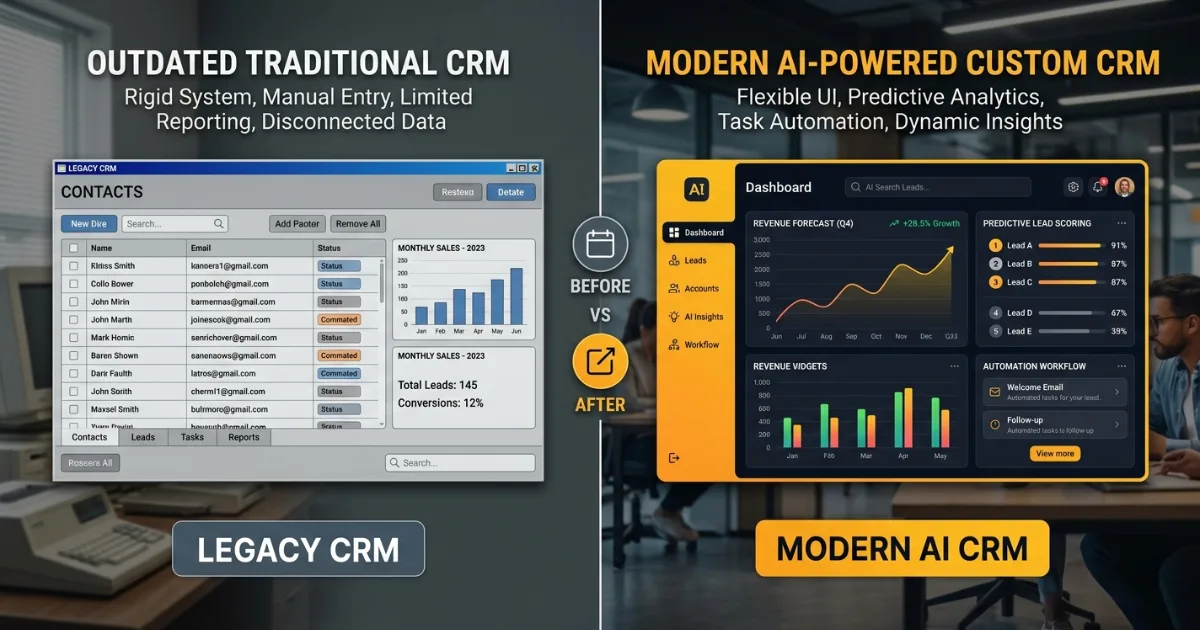
The modern business landscape has shifted dramatically toward personalization. Customers today expect businesses to understand them on a deeper level, including their preferences, past interactions, intentions, and motivations. However, many businesses still rely on generic CRM tools that offer limited flexibility and force teams to adjust their workflow to fit the software rather than optimizing the software to meet their needs. This “one-size-fits-all” approach often results in inefficiencies, data silos, and business processes that lack real alignment and integration.
A generic CRM platform may offer basic features, but it doesn’t provide the operational agility needed to support complex or evolving business models. Industries such as real estate, healthcare, retail, logistics, and finance require highly specialized workflows that off-the-shelf solutions simply cannot accommodate. These systems also come with limitations in terms of integrations, reporting formats, automation capabilities, and user experience. As a result, employees may spend more time manually adjusting data or performing repetitive tasks that could otherwise be automated through a more custom-built system.
The need for personalized customer experiences has further fueled the demand for CRM systems that adapt to unique operational requirements. When businesses operate with a CRM platform tailored to their workflows, they can respond faster, deliver better customer experiences, and ultimately scale with confidence. This shift toward customization ensures that every team, whether in sales, marketing, or service, works in perfect alignment with the internal processes of the organisation. Over time, this results in smarter decisions, better productivity, and a more seamless customer journey from lead generation to post-sale support.
Understanding CRM development begins with recognizing that a CRM is more than just a digital address book or sales tracker. CRM development refers to the entire process of designing, customizing, building, integrating, and optimizing a CRM system to match the specific needs of a business. Unlike basic implementation, CRM development focuses on crafting tailored workflows, unique features, automation rules, and dashboards that support real business outcomes.
At its core, CRM development involves understanding how a business operates, how leads come in, how they are nurtured, how conversations happen, how conversions occur, and how customers are retained. Developers then create a system that mirrors and enhances these processes. This includes designing modules for sales, marketing, support, billing, operations, and even employee onboarding if needed. CRM development takes traditional tools and elevates them by adding more intelligence, automation, and integration capabilities that allow businesses to operate smoothly and with greater precision.
A key element of CRM development is the incorporation of emerging technologies such as artificial intelligence, data analytics, workflow automation, and machine learning. These advanced capabilities help businesses predict customer behavior, generate actionable insights, track performance in real time, and automate repetitive tasks that slow down productivity. When CRM development is done strategically, the resulting platform becomes the brain of the business, centralizing data, guiding decisions, and optimizing every customer touchpoint.
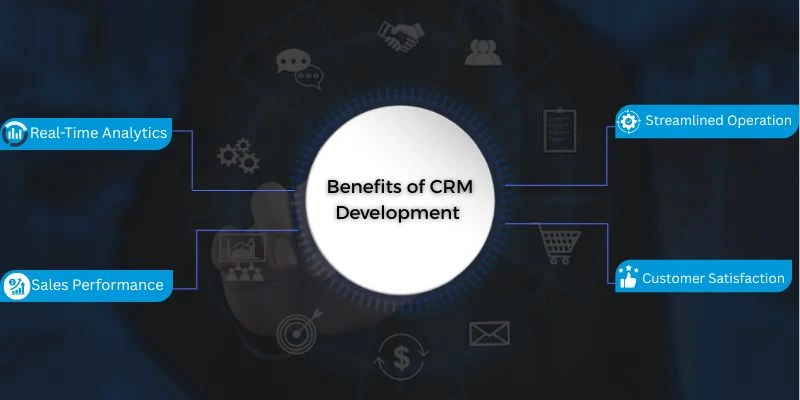
CRM development has evolved into a critical growth engine for modern businesses. As industries shift toward automation, personalization, and predictive analytics, companies need systems that support smarter, not just faster, expansion. CRM development empowers organizations to understand customers better, streamline workflows, and make confident decisions backed by real-time data. When implemented strategically, it enhances sales efficiency, enables seamless cross-department collaboration, and strengthens long-term customer relationships. Below are the most impactful benefits businesses can expect from CRM development in 2026 and beyond.
Real-time analytics is one of the most powerful advantages of CRM development, especially for businesses aiming to understand their customers more deeply. Today, customer behavior changes rapidly, and relying on outdated reports or manual tracking results in missed opportunities. A CRM built with real-time analytics continuously collects, updates, and visualizes customer interactions across channels, email, phone, chat, website, and social media. This helps leaders make faster, more strategic decisions based on accurate data rather than assumptions or intuition.
By identifying trends such as buying patterns, lead behavior, conversion bottlenecks, and customer sentiment, businesses can optimize marketing campaigns, personalize customer journeys, and allocate resources more efficiently. Real-time analytics also improves response times by alerting teams to high-priority actions that could impact customer experience or revenue.
Key advantages of real-time CRM analytics include:
Sales teams often face challenges such as manual data entry, unclear priorities, delayed follow-ups, and disorganized pipelines. These inefficiencies lead to lost leads, longer sales cycles, and inconsistent communication. CRM development eliminates these issues by automating and optimizing the entire sales process. A custom-developed CRM ensures that every lead is tracked, every opportunity is monitored, and every salesperson knows exactly what actions to take next.
Custom CRM development also introduces intelligent lead-scoring mechanisms, automated reminders, and detailed forecasting tools. This helps sales professionals understand which prospects are closer to purchasing and how best to engage them. With standardized pipelines and automated tasks, productivity increases, and human error decreases significantly.
Benefits of CRM development for sales performance include:
When departments operate in silos, it becomes harder to deliver a consistent customer experience. Information gets lost, communication slows down, and decision-making becomes fragmented. CRM development solves this problem by integrating all departments, sales, marketing, customer service, finance, and operations into a single unified platform. This ensures that everyone has access to the same up-to-date customer information, eliminating friction and improving workflow efficiency.
A well-developed CRM platform standardizes processes and reduces dependency on scattered tools, spreadsheets, or manual communication. This promotes better coordination among teams and speeds up internal operations. As a result, organizations can deliver seamless customer experiences, faster responses, and more accurate insights.
Major benefits of operational streamlining through CRM development include:
Customer satisfaction is one of the strongest indicators of long-term business success. CRM development helps companies deliver exceptional service by giving teams immediate access to customer history, preferences, purchase behavior, and communication records. This equips service teams to respond faster and provide relevant solutions without asking customers to repeat information, one of the most common frustrations in customer service.
Besides support improvement, CRM systems enable businesses to build stronger connections through personalized experiences. Automated engagement workflows, such as birthday messages, renewal reminders, feedback requests, and tailored offers, help create ongoing communication that makes customers feel valued. This level of personalization results in higher loyalty, reduced churn, and increased repeat purchases.
Key retention benefits enabled by CRM development include:
Collaborating with a professional CRM development company can significantly accelerate business growth and return on investment. These companies bring experience, technical expertise, and deep industry knowledge that are difficult to achieve internally without extensive IT resources. They understand business processes across multiple industries and know how to design CRM systems that align with complex operational requirements.
A CRM development company ensures faster deployment, cleaner integrations, and optimized user interfaces that meet the needs of employees and customers alike. They also help businesses avoid common mistakes such as choosing the wrong platform, creating unnecessary features, or building workflows that don’t scale. These companies also provide long-term support, ensuring the system evolves as the business grows.
In addition, CRM development companies offer insights into best practices, helping businesses adopt strategies that enhance customer experience, improve efficiency, and boost productivity. Their involvement ensures the CRM project is executed professionally and produces measurable results. When businesses invest in expert-driven CRM development, they benefit from higher accuracy, lower risk, and a faster return on investment.
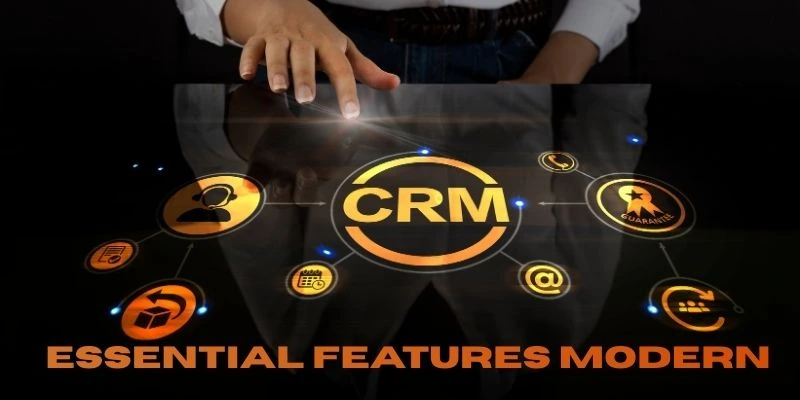
A modern CRM system must deliver much more than basic contact management or lead tracking. As businesses evolve in 2026, CRM development must support advanced automation, intelligent data analysis, and seamless communication across every customer touchpoint. Today’s CRM platforms are designed to enhance productivity, improve collaboration, and strengthen customer relationships through technology-driven features. From AI automation and omnichannel support to workflow customization and enterprise-grade integrations, these capabilities collectively create a powerful digital ecosystem that drives smarter decisions, stronger performance, and scalable growth. Companies choosing CRM development should expect a system that adapts to their workflows, simplifies operations, and delivers measurable business impact.
Essential features modern CRM development should offer:
Industries across the world, from real estate and healthcare to manufacturing and retail, are adopting CRM development as a key driver of growth. In real estate, CRM platforms manage property listings, automate inquiries, track investor interactions, and manage transactions. Healthcare organizations use CRM development to streamline patient interactions, schedule appointments, track case histories, and manage communication. Retailers use CRM systems to deliver personalized shopping experiences, analyze buying patterns, and create loyalty programs.
In logistics and supply chain operations, CRM development helps track shipments, manage vendor relationships, and optimize communication. Educational institutions utilize CRM platforms to manage student inquiries, admissions, and engagement. Manufacturers benefit from CRM development by integrating supply chain modules, managing distributors, and analyzing production cycles. Across each of these industries, CRM development supports operational efficiency, customer satisfaction, and long-term growth.
Businesses worldwide are experiencing measurable improvements through CRM development. For example, companies that implement custom-built CRM systems often report faster lead response times, higher conversion rates, and increased customer satisfaction. With the ability to automate repetitive tasks, businesses reduce manual workloads and allow team members to focus on higher-value responsibilities. Many organizations also experience improved interdepartmental coordination, which leads to more accurate decision-making and better execution of business strategies.
CRM development supports businesses in identifying growth opportunities that would otherwise remain hidden. For instance, by analyzing customer engagement data, companies can identify the best-performing marketing campaigns or the most responsive customer segments. These insights help refine strategies and maximize revenue generation. Over time, the combination of automation, analytics, and personalized workflows contributes to a smarter, more sustainable growth model.
Choosing the right CRM development partner can make the difference between simply adopting software and building a long-term strategic engine for growth. SISGAIN has earned its reputation as a leading CRM development company by delivering intelligent, scalable, and fully customized solutions that empower businesses to operate smarter, not harder. With years of experience across industries such as healthcare, logistics, real estate, retail, education, and finance, SISGAIN understands that no two businesses are the same, so their CRM shouldn't be either.
At SISGAIN, every CRM project begins with a deep understanding of your business model, customer lifecycle, internal workflows, and market challenges. This ensures that every CRM feature, whether automation, analytics, integrations, or custom workflows, aligns perfectly with your operational needs and strategic goals. The team combines advanced technologies like AI, cloud services, predictive analytics, and mobile accessibility to deliver CRM systems that enhance efficiency and drive measurable growth.
Beyond development, SISGAIN focuses on long-term partnership. From continuous optimization and system scaling to technical support and future enhancements, businesses gain a CRM that evolves with them and continually supports smarter decision-making. When speed, accuracy, and innovation matter, SISGAIN delivers solutions designed for impact, adaptability, and real business value.
What Makes SISGAIN a Preferred CRM Development Partner?
Partnering with SISGAIN means investing in a future-ready CRM solution that enhances productivity, strengthens customer relationships, and accelerates smarter business growth. If you’re looking for a reliable CRM development company that delivers innovation with precision, SISGAIN is the partner designed to help you achieve and exceed your growth goals.
As businesses continue to evolve, the need for a customizable CRM becomes more significant. Unlike rigid, preconfigured CRM tools, customizable CRM solutions adapt to changing business needs, industry trends, and technological advancements. They offer the flexibility to add new modules, integrate third-party tools, automate new workflows, and expand features as the business scales.
A customizable CRM ensures long-term growth by providing a system that remains relevant and effective regardless of organizational changes. It allows businesses to embrace innovation, leverage new data insights, and stay ahead of competitors in customer engagement. In essence, customizable CRM platforms future-proof the organization by ensuring the customer experience remains dynamic, responsive, and deeply personalized.
CRM development is no longer an optional investment, it is a strategic necessity for businesses that aim to grow smarter and stay competitive. By aligning custom CRM solutions with real business needs, organizations can optimize workflows, enhance customer experiences, and make informed decisions backed by data. With the right CRM development company, businesses can develop systems that evolve with them and support long-term success. Whether building a custom CRM or transitioning to a customizable CRM platform, the journey begins with understanding what customers truly need and designing solutions that exceed expectations.
SISGAIN, as a leading custom CRM development company, empowers businesses with fully customizable CRM platforms designed to evolve with changing needs. From automation to integration and long-term scalability, SISGAIN ensures your CRM system becomes a true growth engine, not just another software tool.
If you're ready to transform your customer management strategy, partner with SISGAIN today. Let’s build a smarter, more powerful CRM solution tailored to your business goals, starting now.



Start Build Your
Next Digital Solution?
Let’s build scalable, future-ready digital solutions tailored to your business goals. Connect with our experienced technology consultants to discuss your vision, strategy, and growth opportunities — with zero obligation and complete transparency.
Get a free consultation and cost estimate for your digital solution
Our expert will contact you within 24 hours. Check your email for confirmation.
Partner with SISGAIN experts to build secure, scalable AI-powered IT Solutions that transform your business operations.









DUQE FREEZONE Quarter Deck, Queen Elizabeth 2, Mina Rashid, Dubai, UAE

100 Consilium Pl Suite 200, Scarborough, ON M1H 3E3, Canada

C-109, Sector 2, Noida, Uttar Pradesh 201301 India
Project quotes, partnerships, implementation
Open roles, referrals, campus hiring