
 +1 844-445-5767
 +971 56-848-5757
 +91 921-208-0630
For Business & Service Inquiries
Sales Team
Project quotes, partnerships, implementation
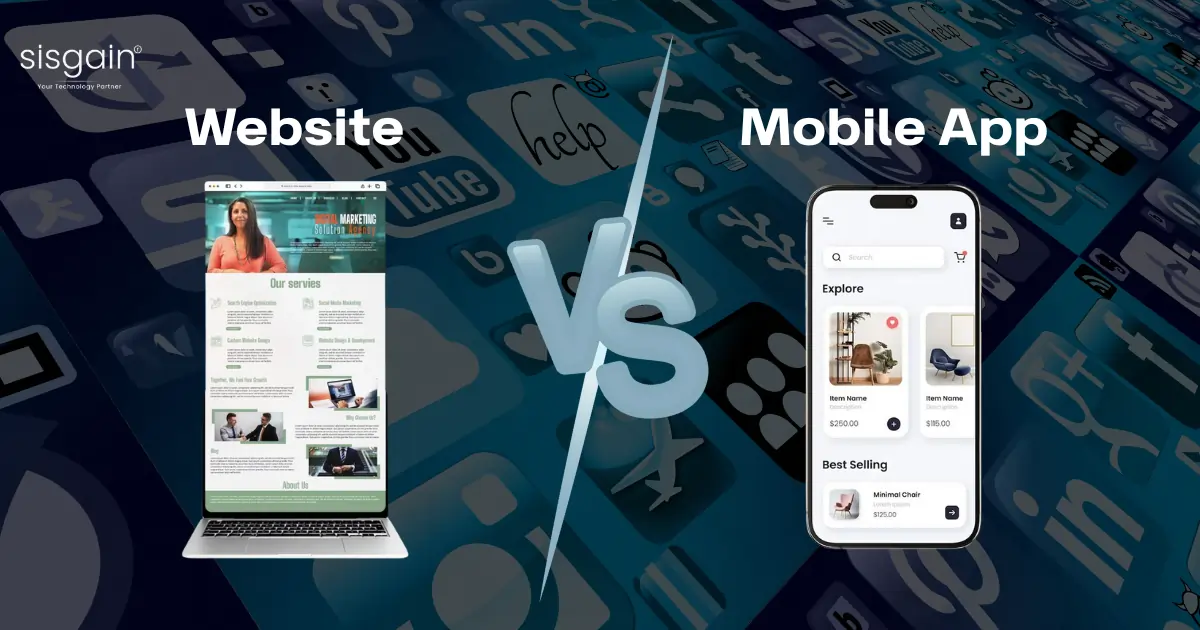
As digital experiences evolve, one thing has become clear: not every brand manages to keep users engaged, even with strong offerings and a polished online presence. Today’s audiences expect instant responses, personalized journeys, and smooth interactions wherever they go. Because of this, the debate between a mobile app vs mobile website has become a crucial topic for businesses trying to stay competitive. With increasing complaints about slow mobile sites, inconsistent performance, and low engagement levels, one important question keeps resurfacing:
Should you invest in a mobile app or continue relying on a website and mobile app setup?
If your audience complains about poor loading speeds, inconsistent interactions, or boring user experiences, you’re not alone. The real difference often lies in the platform they are using. As technology evolves, the shift toward mobile for apps is becoming stronger because mobile apps deliver the kind of speed, stability, and personalization that users now consider standard.
People want interactions that feel personal and effortless. While an app website might be accessible, it cannot match the immersive experience that mobile with apps offers. Businesses now prefer apps because they provide a deeper emotional connection, smoother performance, and better engagement. These are the key advantages of mobile apps that help brands grow faster.
A mobile app is a software application developed specifically for smartphones and tablets. Users download these apps from the Google Play Store or Apple App Store and install them directly on their devices. The integration of mobile apps with the operating system enables smoother performance and greater control over data.
.webp)
A mobile website is a browser-based platform optimized to fit small screens. It does not require installation, making it instantly accessible. While websites are great for sharing quick information, they cannot deliver the same benefits of mobile apps when it comes to speed, personalization, and engagement.
To make an informed decision, it’s important to understand the major differences in mobile app vs mobile website performance. While websites are excellent for information delivery, mobile apps outperform them in speed, offline access, interaction quality, and user retention.
Mobile apps are designed for immersive digital experiences. They utilize device hardware, deliver smooth animations, and support advanced features. A website, however, depends on browser limitations and cannot provide the same automated, fast, or personalized journey.
Choosing between a mobile app vs website can significantly impact how your users interact with your brand. Here are the top reasons businesses prefer mobile for apps today:
.webp)
Speed is one of the most crucial factors that shape user satisfaction, and even a one-second delay can cause users to abandon a page or lose interest entirely. This is where mobile apps outperform mobile websites by a huge margin. Unlike websites that rely on browser rendering and internet strength, mobile apps run natively on the device. This means they are built to work directly with the smartphone’s operating system, resulting in lightning-fast responses and navigation.
Mobile apps preload essential data and store it internally, allowing pages, elements, and features to appear instantly without constant reloading. This significantly reduces lag and eliminates the frustrating delays users often experience on mobile websites especially when network conditions are unstable or slow.
A well-developed mobile app offers:
Because of these advantages, mobile apps deliver a more fluid, efficient, and uninterrupted experience, keeping users engaged longer and encouraging repeat usage. This performance superiority is one of the strongest reasons businesses choose apps over mobile websites.
Nothing makes a user feel more valued than an experience that truly understands them. That’s exactly why personalization has become a must-have in the digital age—and mobile apps lead this space effortlessly. Unlike mobile websites that offer mostly generic interactions, apps have the ability to learn from each user’s behavior, preferences, interests, and activity patterns over time.
Because apps store data securely and work closely with device features, they can shape the entire experience around what each user likes, needs, and interacts with most. This creates a journey that feels smoother, more intuitive, and far more enjoyable.
Here’s how mobile apps elevate personalization
This deep level of personalization is one of the biggest advantages of mobile apps, helping brands build stronger emotional connections, increase engagement, and keep users returning again and again.
One of the biggest conveniences mobile apps offer is the ability to function even when there’s no internet connection at all. Unlike mobile websites—which completely rely on a stable network—mobile apps can store essential data directly on the device. This means users can continue accessing features, viewing saved content, or performing important tasks even in flight mode, underground trains, remote areas, or places with weak connectivity.
This offline capability is incredibly valuable because users don’t want their experience interrupted. Whether someone is traveling, studying on the go, or using an app during network fluctuations, mobile apps provide a reliable and uninterrupted journey that mobile websites simply can’t match.
Here’s how mobile apps make offline access possible and useful:
This offline strength not only enhances accessibility but also builds trust. Users feel assured knowing the app won’t fail them when they need it most—making offline functionality one of the most practical benefits of mobile apps today.
.webp)
Staying connected with users is one of the biggest challenges brands face today—and mobile apps solve this effortlessly through smart push notifications. While mobile websites and app websites require users to open a browser to receive updates, mobile apps can reach users instantly, no matter where they are or what they’re doing.
Push notifications allow brands to communicate in real-time, delivering updates, reminders, offers, alerts, and personalized messages directly to the user’s lock screen. This makes mobile apps far more powerful when it comes to engagement, retention, and long-term loyalty.
Unlike websites that depend on users intentionally visiting a page, mobile apps can proactively initiate interaction. This two-way communication helps businesses stay top-of-mind, increase activity, and guide users back into the app without any effort on their part.
Here’s how smart notifications significantly enhance engagement:
Push notifications act as a direct communication bridge between the brand and the user—a feature mobile websites simply cannot replicate. This makes them one of the most influential benefits of mobile apps, helping companies build stronger relationships, boost engagement, and maintain a steady flow of returning users.
Keeping user data safe is no longer just a feature—it’s a fundamental expectation. In an era where cyber threats are constantly evolving, mobile apps provide a secure environment far superior to mobile websites or app websites. They can integrate advanced security measures directly into the app, protecting sensitive information such as personal details, payment data, or confidential documents.
Mobile apps are particularly crucial for industries like finance, healthcare, e-commerce, and enterprise services, where trust and data protection are essential.
Here’s how mobile apps ensure security:
With these features, mobile apps not only protect sensitive information but also build user trust and loyalty. This makes enhanced security one of the most important benefits of mobile apps for any business.
Modern users expect apps to do more than just display information—they want experiences that feel interactive, intuitive, and intelligent. Mobile apps excel in this area because they can fully integrate with a device’s hardware and system features. Unlike mobile websites or app websites, which are limited by browser capabilities, mobile apps can tap directly into cameras, GPS, microphones, storage, sensors, and other components to create richer, more immersive experiences.
This deep integration allows businesses to offer advanced features that not only improve functionality but also increase user engagement and satisfaction. By leveraging the full power of the device, mobile apps can provide seamless, innovative, and personalized interactions that websites cannot match.
Here’s how mobile apps utilize device hardware to their advantage:
By leveraging these hardware capabilities, mobile apps can create unique, highly functional experiences that significantly enhance user engagement and retention. This level of integration is one of the strongest advantages of mobile apps and a major reason businesses prioritize app development over relying solely on a mobile website.
.webp)
When it comes to turning users into customers, mobile apps have a clear advantage over websites. One of the main reasons is that apps can store user details, preferences, and payment methods securely on the device. This allows users to complete purchases or actions quickly, without repeatedly entering the same information. The result? Smoother transactions, fewer steps, and higher chances of conversion.
Mobile apps create a frictionless experience that motivates users to act immediately whether it’s making a purchase, booking a service, or subscribing to a plan. This seamless process is a key factor behind the consistently higher conversion rates observed in app users compared to mobile website visitors.
Here’s how mobile apps boost conversions effectively:
By providing a personalized, fast, and convenient experience, mobile apps significantly enhance user satisfaction and drive more conversions. This is one of the strongest benefits of mobile apps, particularly for e-commerce, travel, fintech, and subscription-based businesses.
A mobile app is more than just a tool—it’s a permanent presence on a user’s device. Unlike mobile websites, which users may only visit occasionally, once an app is installed, it becomes a constant reminder of your brand. Every time a user opens their device, your app icon is visible, subtly reinforcing brand awareness and staying top-of-mind. This consistent visibility helps build trust, recognition, and long-term loyalty.
Mobile apps also allow businesses to create personalized experiences, loyalty programs, and interactive dashboards, further strengthening the connection between the brand and its users. This ongoing engagement is difficult, if not impossible, to replicate with mobile websites alone.
Here’s how mobile apps enhance brand visibility and loyalty:
By combining visibility with engagement, mobile apps create a strong emotional connection with users. This not only improves brand recall but also encourages ongoing interaction, making mobile apps a powerful tool for boosting visibility and customer loyalty—one of the key advantages of mobile apps over mobile websites.
First impressions matter, and in the digital world, user experience can make or break your brand. Mobile apps excel in delivering high-quality, intuitive, and engaging user experiences that websites often struggle to match. Because apps run in a controlled environment, designers and developers have full control over every element—from layout and animations to navigation and interactivity. This ensures users enjoy a seamless and visually appealing experience every time they use the app.
Mobile websites, on the other hand, are limited by browser capabilities, screen sizes, and network dependencies. This can result in slower load times, inconsistent layouts, and a less polished feel, which can frustrate users and reduce engagement.
Here’s how mobile apps enhance UI/UX:
By offering a polished, reliable, and engaging interface, mobile apps ensure users enjoy every interaction, boosting satisfaction, retention, and loyalty. This superior UI/UX experience is one of the strongest advantages of mobile apps compared to mobile websites.
.webp)
The future of digital experiences lies in innovation, and mobile apps are at the forefront of this transformation. Modern technologies like Artificial Intelligence (AI), Machine Learning (ML), Augmented Reality (AR), Virtual Reality (VR), blockchain, and Internet of Things (IoT) integrate seamlessly within mobile apps, allowing businesses to offer smarter, faster, and more personalized experiences. While mobile websites can provide basic functionality, they are limited in supporting these advanced technologies effectively.
Mobile apps enable businesses to stay ahead of the curve by leveraging innovation to enhance user experience, engagement, and operational efficiency. By using real-time insights and automation, apps help create experiences that feel intuitive, predictive, and adaptive to individual needs.
Here’s how mobile apps harness technologies:
By embracing these innovations, mobile apps become more than just functional tools—they transform into intelligent platforms that anticipate user needs, streamline processes, and provide unique experiences. This makes apps far more future-ready, adaptable, and scalable than mobile websites, reinforcing their position as a critical investment for businesses looking to thrive in a technology-driven world.
When it comes to building cutting-edge digital products, SISGAIN stands out as a trusted mobile app development company offering world-class mobile app development services. With 18+ years of industry experience, SISGAIN develops secure, scalable, and feature-rich mobile apps designed for long-term growth.
Custom Mobile App Development
Every project is tailored to your brand identity, user expectations, and market demands.
Android, iOS & Cross-Platform Expertise
Using Flutter, React Native, and modern tools, SISGAIN builds high-performance apps across all platforms.
Secure, Fast & Scalable Architecture
Your app is built using optimized coding standards, advanced security layers, and robust architecture.
Stunning UI/UX Designs
Expert designers ensure smooth navigation, beautiful layouts, and user-friendly interfaces.
Complete End-to-End Development
From conceptualization to launch and ongoing support, SISGAIN manages everything seamlessly.
Future-Ready Technology Integration
Whether AI, IoT, cloud, AR/VR, or automation—your app becomes smarter, more interactive, and highly competitive.
.webp)
Choosing between a mobile app vs mobile website is more than a technical preference—it’s a long-term business strategy. While websites are essential for online presence, mobile apps clearly win when it comes to speed, personalization, security, engagement, innovation, and user satisfaction.
If you want to grow faster, connect better, and stay competitive, investing in a powerful mobile app is the smartest move in today’s digital era.
And when you’re ready to build one, SISGAIN is your ideal partner. With advanced technology, expert developers, and a user-first approach, SISGAIN creates high-quality, scalable, and future-ready mobile apps that deliver unforgettable experiences and long-term value.




Start Build Your
Next Digital Solution?
Let’s build scalable, future-ready digital solutions tailored to your business goals. Connect with our experienced technology consultants to discuss your vision, strategy, and growth opportunities — with zero obligation and complete transparency.
Get a free consultation and cost estimate for your digital solution
Our expert will contact you within 24 hours. Check your email for confirmation.
Partner with SISGAIN experts to build secure, scalable AI-powered IT Solutions that transform your business operations.









DUQE FREEZONE Quarter Deck, Queen Elizabeth 2, Mina Rashid, Dubai, UAE

100 Consilium Pl Suite 200, Scarborough, ON M1H 3E3, Canada

C-109, Sector 2, Noida, Uttar Pradesh 201301 India
Project quotes, partnerships, implementation
Open roles, referrals, campus hiring