





 Beck
Beck  Beck
Beck  Beck
Beck  Beck
Beck 
 Fawad
Fawad 
 Fawad
Fawad 
 Beck
Beck  Beck
Beck  Beck
Beck 
 Beck
Beck  Beck
Beck 
 Beck
Beck  Nicholas Davis
  Nicholas Davis
  Matthew Jones
  Matthew Jones
  Matthew Jones
  Matthew Jones
  Rohini Singh
  Rohini Singh
  Matthew Jones
  Rohini Singh
  Rohini Singh
  Matthew Jones
  Rohini Singh
  Rahul Sinha
  Rohini Singh
  Matthew Jones
  Priya Mishra
  Rohini Singh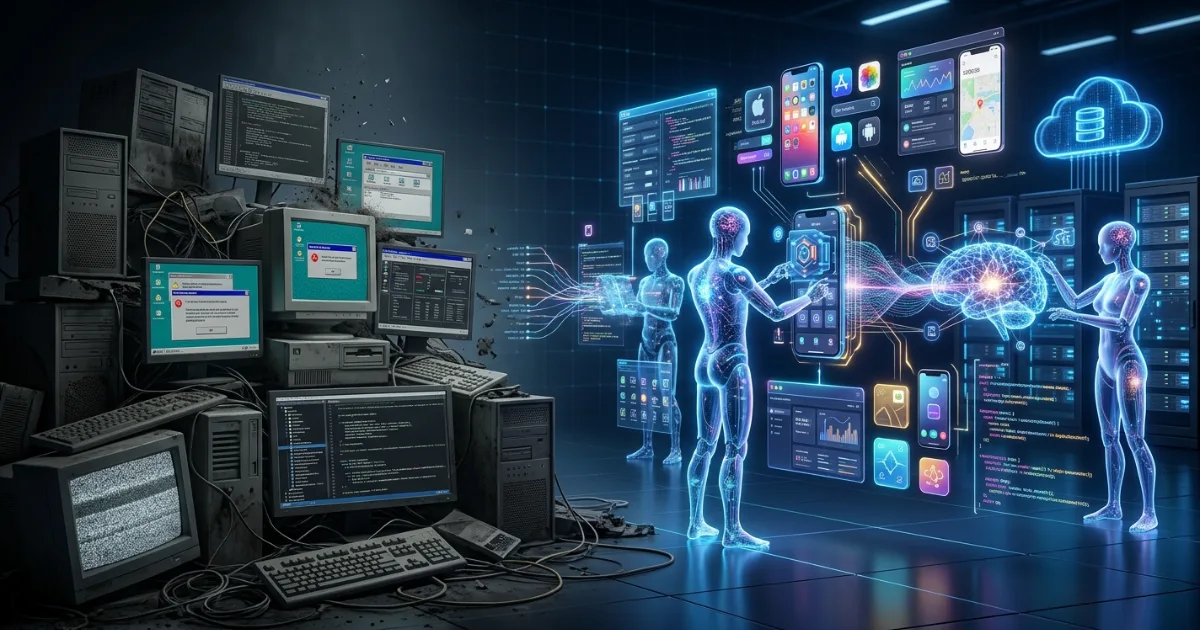









For Business & Service Inquiries
Sales Team
Project quotes, partnerships, implementation

:root { --brand: #0057FF; --brand-dark: #0040C8; --brand-light: #E8EFFE; --accent: #FF4B1F; --ink: #0D0F14; --ink-2: #3A3D47; --ink-3: #6B6F7B; --surface: #F7F8FC; --white: #FFFFFF; --border: #E2E5EF; --radius: 12px; --radius-lg: 20px; --shadow: 0 4px 24px rgba(0,87,255,.10); --shadow-md: 0 8px 40px rgba(0,87,255,.14); --font-display:'Fraunces', Georgia, serif; --font-body: 'DM Sans', sans-serif; } *, *::before, *::after { box-sizing: border-box; margin: 0; padding: 0; } body { font-family: var(--font-body); color: var(--ink); background: var(--white); font-size: 17px; line-height: 1.75; -webkit-font-smoothing: antialiased; } .blog-content { max-width: 820px; margin: 0 auto; } /* SNIPPET BOX */ .snippet-box { background: var(--brand-light); border-left: 4px solid var(--brand); border-radius: 0 var(--radius) var(--radius) 0; padding: 22px 26px; margin-bottom: 44px; } .snippet-box .label { font-size: 11.5px; font-weight: 700; color: var(--brand); text-transform: uppercase; letter-spacing: .08em; margin-bottom: 8px; } .snippet-box p { font-size: 15.5px; color: var(--ink-2); line-height: 1.7; margin: 0; } /* HEADINGS */ .blog-content h2 { font-family: var(--font-display); font-size: clamp(22px, 3vw, 30px); font-weight: 600; color: var(--ink); margin: 56px 0 16px; padding-bottom: 12px; border-bottom: 2px solid var(--border); line-height: 1.25; } .blog-content h3 { font-family: var(--font-display); font-size: clamp(17px, 2.2vw, 21px); font-weight: 600; color: var(--brand-dark); margin: 36px 0 12px; line-height: 1.3; } /* BODY */ .blog-content p { margin-bottom: 20px; color: var(--ink-2); line-height: 1.82; } .blog-content a { color: var(--brand); text-decoration: none; border-bottom: 1px solid rgba(0,87,255,.3); transition: border-color .2s; } .blog-content a:hover { border-color: var(--brand); } .blog-content strong { color: var(--ink); font-weight: 600; } .blog-content em { font-style: italic; } /* LISTS */ .blog-content ul, .blog-content ol { padding-left: 24px; margin-bottom: 22px; } .blog-content li { margin-bottom: 10px; color: var(--ink-2); line-height: 1.78; } .blog-content li strong { color: var(--ink); } /* STAT CARDS */ .stat-grid { display: grid; grid-template-columns: repeat(3,1fr); gap: 16px; margin: 32px 0 40px; } .stat-card { background: var(--surface); border: 1px solid var(--border); border-top: 3px solid var(--brand); border-radius: var(--radius); padding: 22px 18px; text-align: center; } .stat-card .number { font-family: var(--font-display); font-size: 36px; font-weight: 700; color: var(--brand); line-height: 1; margin-bottom: 8px; } .stat-card .desc { font-size: 13px; color: var(--ink-3); line-height: 1.5; } /* IMAGES */ .blog-img-wrap { margin: 36px 0; border-radius: var(--radius-lg); overflow: hidden; box-shadow: var(--shadow-md); } .blog-img-wrap svg { width: 100%; display: block; } .blog-img-wrap figcaption { background: var(--surface); padding: 10px 18px; font-size: 13px; color: var(--ink-3); font-style: italic; border-top: 1px solid var(--border); } /* TABLE */ .table-wrap { overflow-x: auto; margin: 24px 0 36px; border-radius: var(--radius); box-shadow: var(--shadow); } table { width: 100%; border-collapse: collapse; font-size: 14.5px; } thead th { background: var(--brand); color: var(--white); padding: 13px 18px; text-align: left; font-weight: 600; font-size: 13.5px; } thead th:first-child { border-radius: var(--radius) 0 0 0; } thead th:last-child { border-radius: 0 var(--radius) 0 0; } tbody tr:nth-child(even) td { background: var(--surface); } tbody td { padding: 12px 18px; border-bottom: 1px solid var(--border); color: var(--ink-2); vertical-align: top; } tbody tr:last-child td { border-bottom: none; } tbody td:first-child { font-weight: 600; color: var(--ink); } .badge-trad { color: #B45309; background: #FEF3C7; padding: 2px 8px; border-radius: 100px; font-size: 12px; font-weight: 600; white-space: nowrap; } .badge-agent { color: #065F46; background: #D1FAE5; padding: 2px 8px; border-radius: 100px; font-size: 12px; font-weight: 600; white-space: nowrap; } /* HIGHLIGHT BOX */ .highlight-box { border: 1px solid #FED7AA; border-left: 4px solid var(--accent); border-radius: 0 var(--radius) var(--radius) 0; background: #FFF8F5; padding: 18px 24px; margin: 28px 0; } .highlight-box p { margin: 0; font-size: 15px; color: var(--ink-2); } /* CTA */ .cta-inline { background: linear-gradient(135deg, #0040C8, #0057FF); border-radius: var(--radius-lg); padding: 34px 38px; margin: 44px 0; color: var(--white); } .cta-inline h4 { font-family: var(--font-display); font-size: 20px; margin-bottom: 10px; font-weight: 600; } .cta-inline p { opacity: .85; font-size: 15px; margin-bottom: 20px; line-height: 1.7; color: var(--white); } .cta-inline p strong { color: var(--white); } .cta-inline p a { color: var(--white); border-bottom-color: rgba(255,255,255,.4); } .cta-inline a { display: inline-block; background: var(--white); color: var(--brand); padding: 10px 24px; border-radius: 8px; font-weight: 700; font-size: 14.5px; text-decoration: none; border: none; } /* DIVIDER */ .divider { border: none; border-top: 2px solid var(--border); margin: 48px 0 0; } /* RESPONSIVE */ @media (max-width: 640px) { .blog-content { padding: 32px 20px 60px; } .stat-grid { grid-template-columns: 1fr; } .cta-inline { padding: 26px 22px; } } 📌 Featured Definition: AI Agent Software AI agent software refers to autonomous programs that perceive their environment, reason about goals, and execute multi-step tasks without continuous human input. Unlike traditional applications that follow fixed rules, agentic AI applications make decisions, use tools, learn from outcomes, and adapt in real time — effectively operating as intelligent digital employees inside your product or workflow. Introduction: A Shift That’s Already Happening Something seismic is happening in software. Applications that once required thousands of hours of engineering, rigid logic trees, and constant human maintenance are giving way to a new breed — systems that think, adapt, and act autonomously. AI agents are no longer a research curiosity. They are actively replacing traditional software modules, automating workflows that once demanded entire teams, and building entirely new categories of products that simply could not exist before. For CTOs, product leaders, and founders, this is not a distant disruption. Understanding the shift from static applications to AI-driven applications is critical for any organization that wants to remain competitive in the next five years. AI AGENT CORE AGENT_01Reasoning AGENT_02Planning AGENT_03Memory AGENT_04Tool Use TASK_ATASK_B INPUTOUTPUT AUTONOMOUS MULTI-AGENT COLLABORATION ARCHITECTURE Autonomous AI agents collaborate across distributed networks, executing multi-step tasks without human intervention at each step. $52B+ Projected AI agents market by 2030 (CAGR ~46%) 80% Enterprises deploying generative AI in production by 2026 — Gartner 30% Average cost reduction for AI-first companies — McKinsey What Is Traditional Software and Why It Dominated Tech How Traditional Applications Work Traditional software operates on a deterministic model. A developer defines every rule, every input-output relationship, every edge case. The application executes those instructions exactly as written — every single time. A CRM captures customer data when a form is submitted. An e-commerce platform processes a cart when a button is clicked. An analytics dashboard refreshes on request. Each action is triggered explicitly and executes predictably. This model dominated for decades because it is reliable, auditable, and well-understood. Traditional software built the digital economy — from banking infrastructure to SaaS platforms used by hundreds of millions of people every day. Limitations of Traditional Software Despite its dominance, traditional software carries structural limitations that are increasingly costly in a complex, fast-moving world: Brittle logic: Any scenario not explicitly coded for becomes a failure point. High maintenance overhead: Every business rule change requires a developer to update code, test it, and deploy. Zero adaptability: Traditional apps cannot learn from usage patterns without human intervention. Poor context awareness: They process inputs in isolation — no ability to reason about intent. Scaling complexity: As business logic grows, codebases balloon in size and technical debt. Why Businesses Are Moving Beyond Static Applications According to McKinsey, companies that deploy AI at scale report 20–30% cost reductions and significant gains in productivity. Gartner predicts that by 2026, more than 80% of enterprises will have deployed generative AI-enabled applications in production — up from less than 5% in early 2023. Customers now expect software that understands them. Operations teams need tools that make decisions, not just record them. AI-driven applications are increasingly the answer — and the gap between early adopters and laggards is widening every quarter. What Are AI Agents and Agentic Applications Understanding AI Agents An AI agent is a software system that combines perception, reasoning, and action. It receives inputs from its environment, uses a large language model (LLM) to reason about what to do next, executes actions — including calling external APIs, writing code, sending messages, or querying databases — and evaluates outcomes to decide subsequent steps. Unlike a chatbot that responds to questions or a workflow tool that executes a fixed sequence, an AI agent can decompose a complex goal into sub-tasks, pursue them autonomously, recover from errors, and deliver a complete outcome — without step-by-step human direction. AI agent development is now a fast-growing discipline. Frameworks like LangChain, AutoGen, CrewAI, and OpenAI Assistants have made it dramatically easier to build autonomous, tool-using agents that integrate with existing enterprise systems. Agentic Software vs Traditional Apps — Full Comparison Feature Traditional Software Agentic AI Applications Decision Making Rule-based logic Dynamic, context-aware reasoning Adaptability Static — requires manual updates Self-adapts based on new data User Interaction Explicit commands required Natural language and intent-driven Task Execution One step at a time, linear Multi-step, autonomous workflows Learning Does not learn from usage Continuously improves with feedback Integration Manual API connections Autonomous tool use & API orchestration Error Handling Crashes or throws exceptions Self-corrects and retries intelligently Personalization Profile-based, limited Real-time, deeply personalized Dev Speed Months of engineering cycles Faster iteration with AI-assisted dev Key Technologies Powering AI Agents Large Language Models (LLMs): GPT-4, Claude, Gemini, and Llama provide the reasoning engine that allows agents to interpret intent, plan, and generate actions. Function calling & tool use: LLMs can now reliably invoke APIs, run code, and query databases as part of multi-step reasoning loops. Vector databases: Pinecone, Weaviate, and Chroma give agents persistent semantic memory across thousands of documents. Orchestration frameworks: LangGraph, AutoGen, and CrewAI enable multi-agent systems where specialized sub-agents collaborate. Retrieval-Augmented Generation (RAG): Agents ground responses in real-time enterprise data, dramatically reducing hallucination. Multimodal inputs: Modern agents process text, images, audio, and structured data simultaneously. Why AI Agents Could Replace Traditional Software TRADITIONAL SOFTWARE vs AGENTIC AI WORKFLOW TRADITIONAL (RULE-BASED) User Input Fixed Logic Predefined Rules Output No Learning. No Adaptation. AGENTIC AI (GOAL-DRIVEN) AI AGENT Reason / Plan / Act User Goal Tool Use Self-Correct Memory Planning Learning Learns. Adapts. Improves Continuously. Agentic AI workflows replace rigid rule-based pipelines with dynamic, goal-driven loops that learn and adapt in real time. Autonomous Task Execution The single most disruptive capability of AI agents is autonomous, multi-step task execution. Consider a sales operations workflow that traditionally requires a human to pull a lead from a CRM, research the company on LinkedIn, draft a personalized email, schedule a follow-up, and log the interaction. An agentic AI application executes this entire sequence end-to-end — in seconds, without human involvement at each step. This is not automation in the traditional sense. It is goal-directed software that navigates ambiguity, handles exceptions, and delivers outcomes. Self-Improving Applications Perhaps the most existentially threatening capability for traditional software is continuous self-improvement. Agentic AI applications can analyze their own performance, identify failure patterns, refine reasoning strategies, and deliver better outputs over time — without a developer writing a single line of new code. Traditional software gets better only when engineers update it. AI-native applications get better simply by running. This compounds over time, creating a widening gap between early adopters and laggards. Personalized Software Experiences Traditional software personalizes at the segment level — rules applied to user groups. AI agents personalize at the individual level, in real time, based on actual context, history, and inferred intent. This is not a marginal improvement in UX — it is a category difference in the value software can deliver. Real-World Examples of AI Agents Replacing Software AI Agents in Customer Support Customer support was one of the first enterprise functions to face displacement from agentic AI, and the results have been dramatic. Intercom’s Fin AI agent autonomously resolves over 50% of customer queries without human escalation across thousands of businesses. Klarna reported that its AI agent handled the equivalent of 700 full-time customer service agents in its first month — managing 2.3 million conversations. These are not simple chatbots routing tickets. They are agentic systems that understand intent, access account data, process refunds, update subscriptions, and resolve complex multi-step issues — replacing entire modules of traditional help desk software. 💡 SISGAIN builds production-ready AI customer support agents for enterprises. Our AI Chatbot Development and AI Development Services help businesses deploy agents that resolve issues autonomously, 24/7. AI Agents in Software Development GitHub Copilot has evolved well beyond code completion. Copilot Workspace now allows developers to describe a feature in natural language and receive a fully scaffolded implementation, complete with file edits, tests, and pull request descriptions. Devin by Cognition AI demonstrated an AI agent capable of completing entire software engineering tasks — setting up environments, writing and debugging code, and deploying applications autonomously. One senior engineer with AI agent tooling can now do work that previously required a team of five. This is compressing software development costs and timelines across the industry. AI Agents in Business Operations Enterprise AI development solutions from Salesforce (Agentforce), Microsoft (Copilot Studio), and ServiceNow are embedding agentic capabilities directly into business operations. Salesforce’s Agentforce allows businesses to create autonomous AI agents that take actions across the entire CRM ecosystem without human instruction at each step. This represents a new category of enterprise software — not a feature update. The Rise of AI-Native Applications What Makes an AI-Native App Different An AI-native application is built from the ground up with AI as the core operating principle — not as an add-on feature. The distinction matters enormously. Bolting a chatbot onto a traditional SaaS product does not make it AI-native. AI-native apps share several defining characteristics: The primary user interface is conversational or intent-based, not form-driven. The application’s behavior adapts dynamically based on context and history. AI agents handle complex tasks that would traditionally require human judgment. The product improves continuously through learning, not through software updates alone. Integrations are handled autonomously by the agent, not by pre-configured workflows. Examples of AI-Native Platforms Cursor: An AI-native code editor approaching 500,000 active users within months of launch. Perplexity AI: An AI-native search engine synthesizing answers from multiple sources, challenging Google’s dominance. Glean: An enterprise AI platform acting as an intelligent knowledge layer across a company’s entire data stack. Salesforce Agentforce: Purpose-built agentic AI embedded across the enterprise software ecosystem. Why Startups Are Building Agent-First Products Legacy SaaS companies carry enormous technical debt — millions of lines of code supporting rule-based workflows that are extraordinarily expensive to reimagine. Startups building from scratch have no such constraint. By building agentic AI applications from day one, startups can deliver with smaller teams, compress time-to-market, and offer experiences that incumbent SaaS vendors simply cannot match without rebuilding their core products. This is a rare strategic window, and the most ambitious founders are sprinting through it. How AI Agents Are Changing Software Development AI-Generated Applications Tools like GPT-4o, Claude, and Gemini can now generate complete, production-ready application code from natural language descriptions. Platforms like Bolt.new, Lovable, and v0 by Vercel allow non-engineers to build functional web applications by describing what they want in plain English. What once required weeks of engineering can now take hours. This is a fundamental compression of software development timelines that will reshape team structures, hiring strategies, and product roadmaps across the industry. Autonomous Debugging and Testing AI-powered testing tools like Mabl, Testim, and GitHub’s built-in AI review capabilities can autonomously generate test suites, identify regressions, and suggest fixes — all without human direction. Agents can now watch production systems in real time, detect anomalies, trace root causes through complex distributed systems, and compress mean time to resolution from hours to minutes. Continuous Self-Improving Software AI systems can monitor their own performance metrics, identify optimization opportunities, implement changes in staging environments, run tests, and promote fixes to production — all within a single automated loop. This is the future of autonomous software development: code that maintains and improves itself. Ready to Build AI-Native Applications? For organizations looking to build and deploy next-generation agentic systems, partnering with a specialized AI app development company is the fastest and most cost-effective path. Rather than building in-house expertise from scratch, businesses can leverage AI application development services from teams that have already shipped production agentic systems across multiple industries. SISGAIN is a leading AI software development company with proven experience delivering custom AI app development across enterprise, healthcare, fintech, and SaaS verticals. Explore Our AI Development Services → Industries That Will Be Most Disrupted by AI Agent Software SaaS Platforms The SaaS industry faces the most existential disruption. The core value proposition — software accessible over the internet, updated automatically, priced by subscription — does not disappear. But AI-native competitors are emerging that don’t just help users manage work, they autonomously execute it. The SaaS companies that survive will successfully transition from tools users operate to agents that operate on users’ behalf. Customer Support Systems Customer support software is already in radical transformation. The traditional model — ticket routing, a knowledge base, and a human agent — is being supplanted by autonomous AI systems that resolve the majority of issues without human involvement. Zendesk, Intercom, and Salesforce Service Cloud are all aggressively integrating agentic AI to stay competitive. Marketing Automation Tools Rule-based marketing automation — “if this trigger, then that action” — is fundamentally limited. AI-driven applications are replacing these rigid workflows with agents that dynamically personalize campaigns, adjust bidding strategies, generate content, and optimize conversion funnels in real time. The trajectory points toward fully autonomous marketing agents managing entire campaign lifecycles. Data Analytics Platforms Traditional BI tools require users to know what questions to ask. AI agents are eliminating this friction entirely. Natural language interfaces to data allow anyone in an organization to query complex datasets and receive synthesized insights. The next evolution — autonomous analytics agents that proactively surface insights without being asked — makes traditional dashboards look like static artifacts by comparison. Challenges and Risks of AI-Driven Software Security Risks Agentic AI systems introduce a new attack surface. An agent with access to email, file systems, databases, and external APIs is a high-value target. Prompt injection attacks — where malicious content in the agent’s environment manipulates its behavior — are a real and underappreciated threat. Responsible enterprise AI development solutions require robust permission scoping, input sanitization, and comprehensive audit logging. AI Decision Transparency When an AI agent approves a refund, escalates a ticket, or rejects a loan application, that decision must be explainable. Regulatory requirements in healthcare, finance, and insurance demand auditability. Organizations deploying AI powered app development must invest in explainability tooling and governance frameworks alongside core technology. Over-Automation Concerns Not every process should be fully automated. Agentic AI systems are impressive but they make mistakes — sometimes confidently and at scale. The framework of “humans in the loop for high-stakes decisions, agents handling everything else” is a reasonable starting point. Thoughtful implementation, not maximum automation, is the goal. Will Traditional Software Really Die? The honest answer is: no, not entirely — but it will evolve beyond recognition. Traditional software will not disappear overnight. The global installed base of legacy systems is enormous, switching costs are real, and many applications genuinely do not require agentic capabilities. A payroll processing system that runs reliable, deterministic calculations does not need an AI agent — it needs to be accurate and compliant. What will change is that traditional software will increasingly exist inside AI-enhanced platforms rather than as standalone applications. The spreadsheet does not die when AI can generate and interpret spreadsheets — it becomes a surface within a more intelligent environment. The CRM does not disappear when AI agents operate within it — it becomes the data layer that agents act upon. The more accurate prediction is not the death of traditional software but its absorption. Rigid, rule-based modules will be wrapped in, augmented by, or gradually replaced by agentic AI layers — creating hybrid systems that combine the reliability of deterministic code with the adaptability of AI reasoning. The Future of AI Agent Applications Autonomous Digital Employees The logical endpoint of agentic AI is software that operates as a digital employee — an autonomous agent with a defined role, persistent memory, access to relevant tools and data, and accountability for measurable outcomes. Within three to five years, role-specific AI agents will be standard components of enterprise workforce strategies, with businesses routinely managing teams of humans and digital agents in coordination. AI Software That Builds Other Software The recursive potential of AI in software development is extraordinary. AI agents that can write code, run tests, debug failures, and deploy applications are already functional. The next step — AI systems that architect and build entirely new AI agent systems from high-level business requirements — is actively being pursued by leading AI research organizations. Multi-Agent Collaboration Systems The most powerful near-term development in agentic AI is multi-agent collaboration — systems where specialized agents work in parallel, coordinating through shared state and communication protocols. Microsoft AutoGen and CrewAI are pioneering frameworks for orchestrating multiple agents. This architecture mirrors how human teams operate and enables a level of sophistication that single-agent systems cannot match. How Businesses Can Prepare for the AI Agent Era The transition to AI-native software is not a technology decision alone — it is a strategic, organizational, and operational transformation. Here is a pragmatic roadmap: Audit your software stack for AI displacement risk. Identify which applications handle tasks that AI agents could automate — customer support, data entry, report generation, and basic decision-making are all high on this list. Start with high-value, bounded use cases. Customer support, internal knowledge retrieval, and sales outreach are proven starting points with measurable ROI. Invest in data infrastructure. AI agents are only as good as the data they can access. Clean, well-structured, accessible data is the foundational investment. Build AI literacy across your organization. Invest in education alongside technology — the businesses that execute best will be those where leaders at every level understand agent capabilities and limits. Partner with a specialist AI software development company. Custom AI app development requires deep knowledge of LLM behavior, agent orchestration, safety guardrails, and production deployment. Working with experts allows you to move faster, avoid costly architectural mistakes, and deploy AI powered app development capabilities that deliver measurable ROI from day one. Conclusion: The Agent Era Is Here Traditional software is not dying — it is being transformed. The rigid, rule-based applications that powered the digital economy for three decades are giving way to autonomous, adaptive, and continuously improving AI-driven applications that can perceive, reason, and act at a level no static codebase can match. For businesses, the implications are as significant as the shift from mainframe to PC, or from on-premise to cloud. The organizations that recognize this early and invest in AI powered app development strategies will build advantages that are extremely difficult for slower movers to close. The question is no longer whether AI agents will reshape software — they already are. The question is how quickly your organization will be part of building the next generation of applications. Ready to build your first AI agent application? Explore SISGAIN’s AI Application Development Services → ...





 Matthew Jones
 Tariq Al Zarooni
 Matthew Jones
 Matthew Jones
 Matthew Jones
 Matthew Jones
 Matthew Jones
 Rohini Singh

 Rohini Singh
 Rohini Singh

 Rohini Singh
 Anaya Srivastava
 Rahul Sinha
 Rahul Sinha
 Anaya Srivastava
 Matthew Jones
 Matthew Jones
 Rohini Singh
 Lacy Evans
 Rohit Mittal

Fill up the form and our Team will get Back to you within 24 hours
Connect with Sisgain and discover how our innovative software solutions can transform your business. Reach out today—we’re ready to help!
Trusted by businesses worldwide for innovative software solutions.










DUQE FREEZONE Quarter Deck, Queen Elizabeth 2, Mina Rashid, Dubai, UAE

100 Consilium Pl Suite 200, Scarborough, ON M1H 3E3, Canada

C-109, Sector 2, Noida, Uttar Pradesh 201301 India
Project quotes, partnerships, implementation
Open roles, referrals, campus hiring