
 +1 844-445-5767
 +971 56-848-5757
 +91 921-208-0630
For Business & Service Inquiries
Sales Team
Project quotes, partnerships, implementation
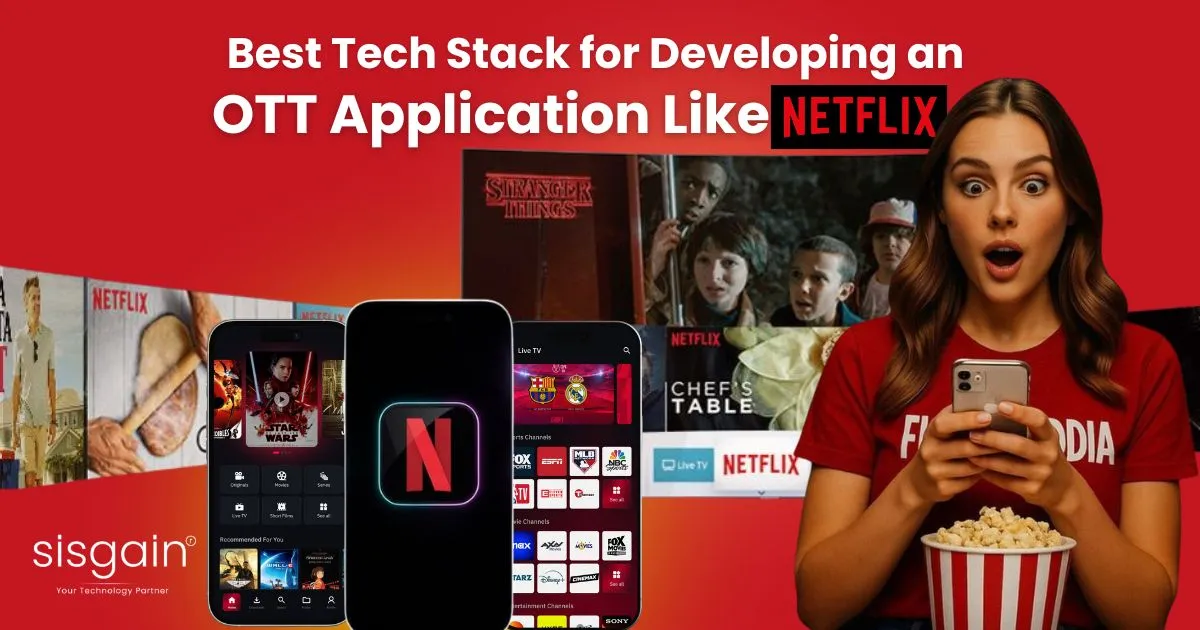
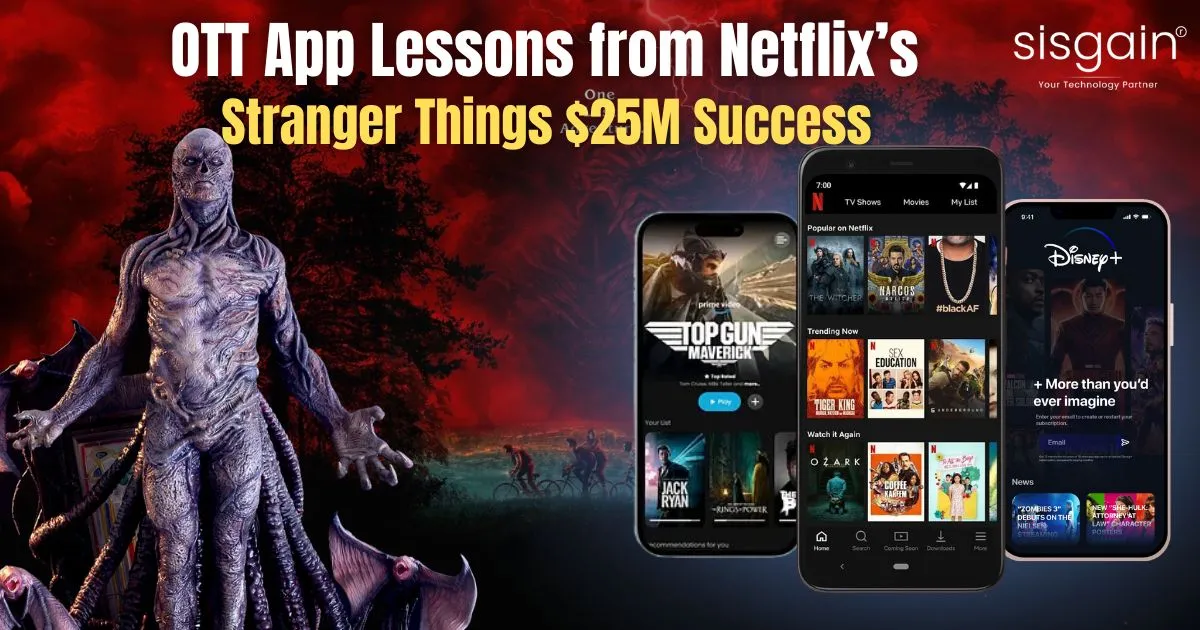
The way people consume entertainment has changed completely over the last decade. Traditional television schedules have been replaced by on-demand, personalized streaming experiences that allow users to watch what they want, when they want, and on any device. This shift has fueled massive demand for OTT app development services, as businesses aim to launch platforms that match the scale, performance, and user experience of Netflix. If you are planning to enter this space, selecting the best tech stack for developing an OTT application like Netflix is one of the most critical decisions you will make. The right technology combination ensures smooth streaming, faster load times, strong security, and the ability to scale as your audience grows. From startups launching niche platforms to enterprises expanding digital offerings, a well-planned OTT strategy supported by the right tech stack can define long-term success. In this blog, we will walk you through the complete technology stack required to build a scalable and future-ready OTT solution. From frontend and backend technologies to streaming protocols, security, and analytics. The goal is to help you clearly understand how professional OTT streaming app development services build platforms that users love. Why Choosing the Right Tech Stack Matters Selecting the right technologies is not just about choosing popular tools or frameworks. It is about building a strong foundation that supports long-term growth, smooth performance, and easy upgrades. A well-chosen tech stack helps your OTT platform remain scalable, stable, and ready to adapt to future technologies and changing user expectations. Performance & Scalability An OTT platform must be capable of handling thousands or even millions of users streaming content at the same time. The right tech stack ensures smooth video playback, faster loading times, and minimal buffering. It also allows the platform to scale easily during peak traffic without affecting user experience or system stability. Cross-Platform Experiences Modern users expect to watch content seamlessly across smartphones, tablets, smart TVs, and web browsers. A balanced combination of frontend and backend technologies helps deliver a consistent experience on every device. This ensures your OTT App feels familiar, responsive, and reliable, regardless of the screen or operating system being used. Security OTT platforms deal with premium content and sensitive user information, making security a top priority. A strong tech stack supports advanced encryption, secure APIs, and DRM integration to protect digital content. These security measures help prevent piracy, safeguard user data, and build long-term trust with viewers and content partners. Core Components of an OTT Application Like Netflix Before we dive into specific technologies, it’s important to understand the primary building blocks of a high-quality OTT service: Content Management System (CMS) – For organizing and updating video libraries. User Management & Authentication – Signup, login, profiles, and permissions. Streaming & Video Delivery (CDN) – For delivering video efficiently worldwide. Search & Recommendations – Powered by AI/ML for personalized experiences. Playback & DRM – Smooth player experience with rights protection. Analytics & Monitoring – Track engagement, performance, and errors. Billing & Subscription Management – Handle payments, renewals, and pricing tiers. These components form the backbone of any modern OTT Platforms, and the tech choices you make here will determine your product’s success. Frontend Tech Stack for an OTT App The frontend of an OTT app is what users see and interact with. It plays a major role in user engagement, navigation, and overall satisfaction. A clean design, fast response time, and smooth animations are essential. Web App Frontend For browser-based streaming: React.js – A highly efficient JavaScript library used for building interactive UIs. Next.js – Adds server-side rendering (SSR) for enhanced performance and SEO. Redux – For application state management across large interfaces. These tools together create smooth, responsive user interfaces essential for OTT App experiences accessed through web browsers. Mobile App Frontend For iOS and Android experiences: React Native – Allows writing shared code for iOS and Android while delivering native performance. Swift (iOS) and Kotlin (Android) – For optimized platform-specific performance. Flutter – Google’s UI toolkit that builds compiled apps with consistent UI across devices. Mobile devices account for a significant portion of streaming views, so integrating excellent mobile app development services into your tech stack ensures users enjoy seamless and fast playback. Backend Tech Stack for OTT Streaming Apps The backend is the backbone of an OTT platform. It handles user data, content delivery logic, recommendations, subscriptions, and integrations with third-party services. Programming Languages Node.js – Fast, event-driven runtime ideal for handling multiple connections — crucial for streaming. Python – Widely used for server logic, APIs, and integrating AI models for personalization. Java – Known for stability and scalability in complex backend systems. Choosing the right backend language influences performance, development speed, and maintenance. Databases NoSQL (MongoDB, Cassandra) – Perfect for flexible data models like user profiles and preferences. SQL (PostgreSQL, MySQL) – Best for structured data like billing and transactions. Hybrid data architectures combine NoSQL and SQL to balance performance and reliability for OTT platforms. Server & Hosting Docker & Kubernetes – Containerization and orchestration tools that make your infrastructure scalable and easier to manage. Cloud Providers (AWS, Google Cloud, Azure) – Provide scalable compute, storage, and CDN services essential for global video distribution. These backend technologies allow a future-ready architecture that scales with your user base and content library. Video Streaming & Delivery Technologies Video streaming is the heart of any OTT platform. Without a reliable delivery system, even the best content will fail to engage users. Content Delivery Network (CDN) A CDN is a geographically distributed network of servers that delivers video content fast by caching copies close to user locations. Popular options include: CloudFront (AWS) Akamai Fastly Streaming Protocols HLS (HTTP Live Streaming) – Widely supported and adaptive for network conditions. DASH (Dynamic Adaptive Streaming over HTTP) – Open standard with adaptive bitrate streaming. Using adaptive streaming technologies ensures content plays smoothly even on fluctuating connections. DRM (Digital Rights Management) Protecting licensed content is essential. Technologies like Widevine, FairPlay, and PlayReady help secure media and prevent piracy. Together, these technologies form the delivery pipeline that distinguishes a high-quality OTT Platforms experience from a poor one. AI & Analytics for Next-Level Personalization Personalization is one of the biggest reasons behind Netflix’s success. AI-driven recommendation engines analyze user behavior, watch history, and preferences to suggest relevant content. Recommendation Engines Machine Learning Models analyze user behavior to suggest titles. Tools like TensorFlow, PyTorch, and AWS Sagemaker help build smart recommender systems. Real-Time Analytics Capture user engagement, watch times, drop-off points, and streaming quality. Tools like Google Analytics, Firebase, and custom dashboards help monitor performance. Integrating strong analytics into your stack enables data-driven decisions that improve retention and growth. DevOps & CI/CD for Faster Releases OTT platforms require frequent updates, bug fixes, and feature enhancements. DevOps practices ensure smooth development and deployment cycles. CI/CD Tools: Jenkins, GitHub Actions, GitLab CI Monitoring & Logs: Prometheus, Grafana, ELK Stack Error Tracking: Sentry, Bugsnag These tools create a culture of rapid iteration — crucial for feature-rich solutions like Netflix-style OTT Apps. Security Best Practices for OTT Apps Security is critical when dealing with user data and premium content. Secure authentication methods, encrypted data transfer, and regular security audits protect both users and businesses. A strong security framework builds trust and ensures compliance with global data protection standards. Security is non-negotiable in streaming platforms: OAuth2 & JWT for secure login and session management. Encryption (TLS/SSL) for all data in transit. Server hardening and WAFs (Web Application Firewalls) to prevent attacks. Regular audits and penetration testing to find and fix vulnerabilities. Choosing a tech stack that supports robust security features is central to maintaining user trust and content protection. Choosing the Right OTT Software Development Company Selecting the right development partner is just as important as choosing the right technology stack. A reliable company offering OTT app development services brings deep expertise in video streaming technologies, cloud infrastructure, security, and user experience design. Their experience helps you avoid common pitfalls, optimize performance, and build a platform that is stable, scalable, and ready for real-world use. Beyond development, the right partner provides long-term support and strategic guidance. They ensure your OTT platform evolves with changing user behavior, new devices, and emerging technologies. Continuous maintenance, performance optimization, and feature enhancements help keep your platform competitive and relevant in the rapidly growing OTT market. Deployment & Maintenance Strategy Stages of Deployment Prototype & MVP – Launch a minimal version to collect feedback. Beta Testing – Release to a select user group. Public Launch – After thorough testing and performance optimization. Maintenance Once live, you need: Regular security updates Content updates via CMS Performance monitoring Feature rollouts This ensures your OTT platform development service stays competitive and user-focused. Cost Factors in OTT App Development The overall cost of developing an OTT application depends on multiple technical and business factors. The choice of tech stack and any third-party licensing directly affects development and maintenance expenses. Backend infrastructure requirements, including cloud hosting and scalability needs, also play a major role in determining long-term operational costs. Additional costs come from CDN usage and bandwidth consumption, especially as your user base grows. DRM integration, live streaming features, multi-language support, and advanced analytics dashboards further influence the budget. Understanding these cost drivers helps businesses plan effectively, control expenses, and invest in features that deliver the highest impact and user value. Case Study: Building a Netflix-like OTT App — Tech Choices Here’s a sample tech stack for a Netflix-like OTT app: Layer Technology Frontend Web React.js + Next.js iOS App Swift Android App Kotlin Cross-Platform React Native / Flutter Backend Node.js + Express Database (User Data) MongoDB Database (Transactions) PostgreSQL Streaming HLS/DASH via CDN (AWS CloudFront) DRM Widevine / FairPlay AI/ML TensorFlow Analytics Firebase / Custom Dashboards DevOps Docker + Kubernetes + CI/CD This stack delivers high performance, scalability, and device compatibility — key to successful OTT Platforms. Future Trends in OTT Tech Stack The OTT industry is rapidly evolving, and staying updated with the latest technology trends is essential to remain competitive. Emerging innovations in network speed, immersive media, and content security are shaping the future of OTT Platforms and applications, creating opportunities for richer user experiences and more secure delivery. 5G & Edge Computing The rollout of 5G networks and edge computing will revolutionize streaming experiences. Faster internet speeds reduce buffering and latency, enabling smoother high-definition and even 4K or 8K video streaming. Edge computing allows content to be delivered closer to users, improving load times and reliability. These advancements will be a game-changer for next-generation OTT Apps. AR/VR Integration Augmented Reality (AR) and Virtual Reality (VR) technologies are opening new avenues for immersive content consumption. Future OTT Apps may allow viewers to interact with shows, explore virtual environments, or experience live events in 3D. Integrating AR/VR can significantly enhance user engagement and differentiate platforms in a competitive market. Blockchain for DRM Blockchain technology has the potential to strengthen content security and rights management in OTT platforms. By using decentralized ledgers, content ownership, licensing, and transactions can be securely tracked, reducing piracy risks. This approach ensures creators and distributors are fairly compensated while maintaining trust and transparency across the ecosystem. SISGAIN – Your Trusted Partner for OTT App Solutions SISGAIN is a trusted technology partner delivering advanced OTT app development services that help businesses create scalable, secure, and feature-rich streaming platforms. Our experienced team combines cutting-edge technology, intuitive design, and performance optimization to ensure your OTT solution engages users and drives long-term success. From high-quality video streaming to personalized content recommendations, we turn ideas into seamless digital experiences. In addition, SISGAIN provides reliable mobile app development services, enabling smooth multi-device access across smartphones, tablets, and smart TVs. With our expertise and proven track record, we help businesses launch user-friendly, robust, and secure OTT platforms that audiences love and trust. Conclusion Building a Netflix-like OTT application is an exciting opportunity, but it comes with significant technical challenges. Selecting the right technologies lays the foundation for high performance, seamless scalability, and an exceptional user experience. From frontend frameworks like React and Flutter to backend engines such as Node.js and Python, every decision influences how well your platform performs and grows over time. Partnering with a trusted OTT software development company ensures expert guidance through every stage of development, from architecture planning to deployment and maintenance. With careful planning, the best tech choices, and continuous innovation, you can create a robust and engaging OTT platform. Start building your next-generation streaming experience today with SISGAIN!
The way people consume digital content has fundamentally changed over the last decade, and by 2026, over-the-top streaming will no longer be considered an alternative to traditional television—it will be the primary medium. From entertainment and sports to education, fitness, corporate training, and religious broadcasting, OTT platforms have become the backbone of modern digital media distribution.As internet penetration increases and smart devices become more accessible, audiences now expect seamless, personalized, and on-demand access to content across all devices. This shift has created massive opportunities for businesses and creators looking to launch their own streaming services. However, the success of an OTT business depends heavily on choosing the right technology partner and platform.With dozens of OTT video platforms available in the market, selecting the best one can be challenging. Each platform offers different capabilities related to content delivery, scalability, branding, monetization, and performance. This blog provides an in-depth analysis of the 12 best OTT platforms to launch your service in 2026, helping you understand their strengths, ideal use cases, and long-term potential.Understanding What an OTT Platform IsA common question many businesses ask before entering the streaming space is what is an OTT platform. OTT, or over-the-top, refers to digital content delivery that occurs directly over the internet without the involvement of traditional cable or satellite television providers. An OTT platform enables users to stream video content on demand or live using connected devices such as smartphones, tablets, laptops, smart TVs, and streaming sticks.An OTT platform typically combines several critical components into a single ecosystem. It includes a content management system that acts as an OTT CMS replacement for organizing and publishing videos, a secure OTT server for hosting and delivering content, and a user-facing application or website designed to provide a smooth viewing experience. In addition, modern OTT solutions support monetization, analytics, user management, and content security.The primary advantage of an over the top media service is that it allows content owners to maintain complete control over distribution, branding, and revenue. Instead of relying on third-party broadcasters, businesses can build direct relationships with their audience, gather valuable insights, and scale globally without geographical limitations.Why 2026 Is the Right Time to Launch an OTT ServiceBy 2026, OTT adoption will be driven not only by entertainment consumption but also by enterprise and niche use cases. Educational institutions will rely on OTT live streaming for remote learning, fitness brands will offer subscription-based workout content, sports organizations will broadcast live matches, and corporations will use OTT platforms for internal communication and training.The growing demand for personalization, combined with advancements in cloud infrastructure and video compression technology, makes it easier than ever to create OTT platform solutions that are scalable, secure, and cost-effective. Businesses can now launch a fully branded OTT experience without the massive upfront investments that were once required.With this context in mind, let us explore the top OTT platforms that stand out in 2026.1. SISGAINSISGAIN leads the list as one of the most advanced and flexible OTT platforms available in 2026. Designed to serve startups, enterprises, broadcasters, and content creators, SISGAIN offers a complete end-to-end OTT solution that covers everything from content hosting to user engagement and monetization.What sets SISGAIN apart is its ability to deliver highly customized OTT platforms tailored to specific business needs. Whether the goal is to launch a video-on-demand service, a live sports streaming platform, or a hybrid OTT live streaming model, SISGAIN provides the technical foundation required for long-term growth.The platform supports secure OTT server infrastructure, ensuring reliable content delivery even during high traffic periods. It also includes a robust content management system that functions as a modern OTT CMS replacement, allowing administrators to manage content libraries, user access, subscriptions, and analytics from a centralized dashboard.SISGAIN places strong emphasis on branding and user experience. Businesses can design a fully branded OTT experience with custom UI, features, and workflows aligned with their brand identity. This level of flexibility makes SISGAIN an ideal choice for organizations looking to differentiate themselves in a competitive OTT market.2. Muvi Muvi has gained popularity for its no-code approach to OTT platform creation. It enables businesses to launch streaming services without requiring deep technical expertise or development teams. This makes Muvi particularly attractive to startups and creators who want to test their OTT ideas quickly.Muvi offers a complete video streaming OTT solution that supports both live and on-demand content. The platform includes built-in monetization tools, content management features, and multi-device app support. Users can manage subscriptions, upload content, and track performance using a unified interface.While Muvi provides ease of use and rapid deployment, it is best suited for businesses with straightforward requirements rather than highly complex or enterprise-grade customization needs.3. VPlayed VPlayed is designed for businesses that require a high level of control over their OTT infrastructure. As a white-label OTT platform, it allows organizations to build fully customized streaming services with advanced features and security.The platform supports large-scale deployments and offers extensive configuration options related to monetization, content protection, and user management. VPlayed’s infrastructure is built to handle high volumes of traffic, making it suitable for broadcasters and enterprises targeting large audiences.VPlayed also supports OTT live streaming and integrates advanced analytics tools to help businesses understand viewer behavior and optimize content strategies.4. UscreenUscreen focuses primarily on subscription-based OTT services. It is widely used by fitness instructors, educators, and independent creators who rely on recurring revenue models.The platform simplifies the process to create OTT platform solutions by offering pre-built templates, branded apps, and integrated payment systems. Uscreen supports both live and on-demand content, allowing creators to engage their audience through exclusive streaming experiences.Uscreen is particularly effective for businesses that prioritize community building and direct audience engagement.5. Vimeo OTT Vimeo OTT is a trusted name in the video streaming industry, offering a scalable OTT solution for businesses and creators. Known for its video quality and reliability, Vimeo OTT supports global content delivery across multiple devices.The platform allows businesses to monetize content through subscriptions and pay-per-view models. It also provides analytics tools to track viewer engagement and performance.Vimeo OTT is a strong option for brands that value high-quality video presentation and established infrastructure.6. DacastDacast is primarily focused on live streaming, making it an ideal choice for organizations that broadcast events, conferences, sports, or webinars. The platform provides professional-grade streaming tools and secure monetization options.Dacast’s OTT solution includes features such as access control, real-time analytics, and global content delivery. While it also supports video-on-demand, its core strength lies in OTT live streaming performance.7. Accedo One Accedo One is built for large media organizations and broadcasters that demand advanced personalization, performance, and superior user experience across devices. The platform focuses on data-driven content delivery, ensuring viewers receive relevant and engaging content based on behavior and preferences.Accedo One combines powerful analytics, audience insights, and user engagement tools with flexible content management capabilities. This allows businesses to efficiently manage large content libraries, optimize viewer journeys, and deliver highly personalized OTT experiences at scale while maintaining consistent performance across web, mobile, and smart TV platforms.8. Brightcove Brightcove is a cloud-first OTT platform recognized for its reliability, performance, and enterprise-level streaming capabilities. It provides a secure and scalable OTT server environment, making it ideal for organizations managing high traffic volumes and complex streaming requirements.Brightcove supports both live streaming and video-on-demand, along with advanced analytics and global content delivery capabilities. Its robust infrastructure ensures consistent video quality across regions and devices. Due to its scalability and security, Brightcove is widely adopted by large enterprises and media companies targeting international audiences.9. WebnexsWebnexs offers customizable OTT solutions designed to support diverse industries such as education, entertainment, fitness, and corporate streaming. The platform provides flexibility in content delivery and supports multiple monetization models, including subscriptions, pay-per-view, and ad-based streaming.Webnexs allows businesses to design OTT platforms that align closely with their operational goals and audience needs. With flexible branding options, scalable infrastructure, and efficient content management capabilities, it enables organizations to launch tailored OTT services while maintaining control over user experience, revenue strategies, and platform growth.10. OTTcloudsOTTclouds focuses on delivering white-label OTT platforms that are simple to deploy and easy to customize, making them suitable for businesses entering the streaming market. The platform supports seamless multi-device streaming across web, mobile, and smart TVs, ensuring consistent user experiences.OTTclouds also provides built-in tools for monetization, content management, and user control, helping businesses manage their streaming services efficiently. Due to its straightforward setup and flexible features, OTTclouds is an ideal choice for startups and mid-sized organizations seeking to launch OTT platforms with minimal technical complexity.11. Sweet.tv Sweet.tv is a consumer-focused OTT service that delivers live television channels and on-demand content tailored to specific regions. Although it does not function as a traditional OTT platform provider, it stands as a strong example of how localized streaming strategies can achieve success.Sweet.tv highlights the importance of regional content curation, language-specific programming, and targeted audience engagement. By focusing on local preferences and viewing habits, the platform demonstrates how OTT services can build loyal user bases and thrive within competitive regional OTT ecosystems.12. Oneplay Oneplay represents the new generation of OTT platforms that prioritize niche content offerings, including sports, live events, and premium entertainment. The platform demonstrates how a focused content strategy, rather than a broad content library, can effectively attract and retain dedicated audiences.By combining specialized programming with a reliable streaming infrastructure, Oneplay delivers consistent viewing experiences across devices. Its approach highlights the growing importance of content differentiation in the OTT market, where audiences increasingly seek platforms that cater to specific interests. Oneplay serves as an example of how niche-driven OTT platforms can build strong user loyalty, improve engagement, and achieve sustainable growth in a competitive streaming landscape.How to Choose the Right OTT PlatformSelecting the right OTT platform requires a clear understanding of your content strategy, audience, and business goals. Factors such as scalability, OTT CMS replacement capabilities, monetization flexibility, branding, and security should be carefully evaluated.A well-chosen OTT solution not only ensures smooth content delivery but also supports long-term growth and innovation.Why Choose SISGAIN for OTT Platform DevelopmentSISGAIN provides advanced ott platform development services that help businesses build scalable, secure, and fully customized streaming platforms. With a focus on performance, branding, and future readiness, SISGAIN enables organizations to launch OTT services that stand out in a competitive market.ConclusionThe OTT industry in 2026 presents immense opportunities for businesses and creators willing to invest in the right technology. From comprehensive solutions like SISGAIN to creator-focused platforms such as Uscreen and enterprise-grade options like Brightcove, the market offers diverse choices.By understanding what an OTT platform is, evaluating your specific needs, and choosing a solution that aligns with your long-term goals, you can successfully launch and grow an OTT service that delivers value to your audience and sustainable revenue for your business.


























Start Build Your
Next Digital Solution?
Let’s build scalable, future-ready digital solutions tailored to your business goals. Connect with our experienced technology consultants to discuss your vision, strategy, and growth opportunities — with zero obligation and complete transparency.
Get a free consultation and cost estimate for your digital solution
Our expert will contact you within 24 hours. Check your email for confirmation.
Partner with SISGAIN experts to build secure, scalable AI-powered IT Solutions that transform your business operations.









DUQE FREEZONE Quarter Deck, Queen Elizabeth 2, Mina Rashid, Dubai, UAE

100 Consilium Pl Suite 200, Scarborough, ON M1H 3E3, Canada

C-109, Sector 2, Noida, Uttar Pradesh 201301 India
Project quotes, partnerships, implementation
Open roles, referrals, campus hiring